The Island of Apples

In reading up about Samhain in Celtic tradition, it’s believed that apple bobbing (called “apple dookin'” in Scotland) is a reminder of the journey across the seas that the ancestors took to find fresh fruit.

There was thought to be a magical land, Emhain Ablach, known as the “Island of Apples” that had wonderful apples that imparted wisdom to those lucky enough to find one.

It was also believed that the festival of Samhain taught humans about their “shadow-sides,” all the fears, misgivings, negativity, and unresolved issues within them that should be recognized, accepted, and reclaimed. Celtic wisdom taught that no person could be fully whole without their shadow side, and that ignoring or fighting against your shadow in such a way that you buried it created fragile beings who were easily broken by their ego, by other warriors, and by the hardships of the world.

Samhain, rather than insisting that you ignore the ugly side of your human nature, took you down into the depths of the fear (literally, tons of tales about descent into the pits of the world were told at Samhain) so that you could wrestle with yourself and wake up whole.

It sounds very Jungian, right?

It’s actually just ancient wisdom that we keep forgetting and “discovering” again and again…

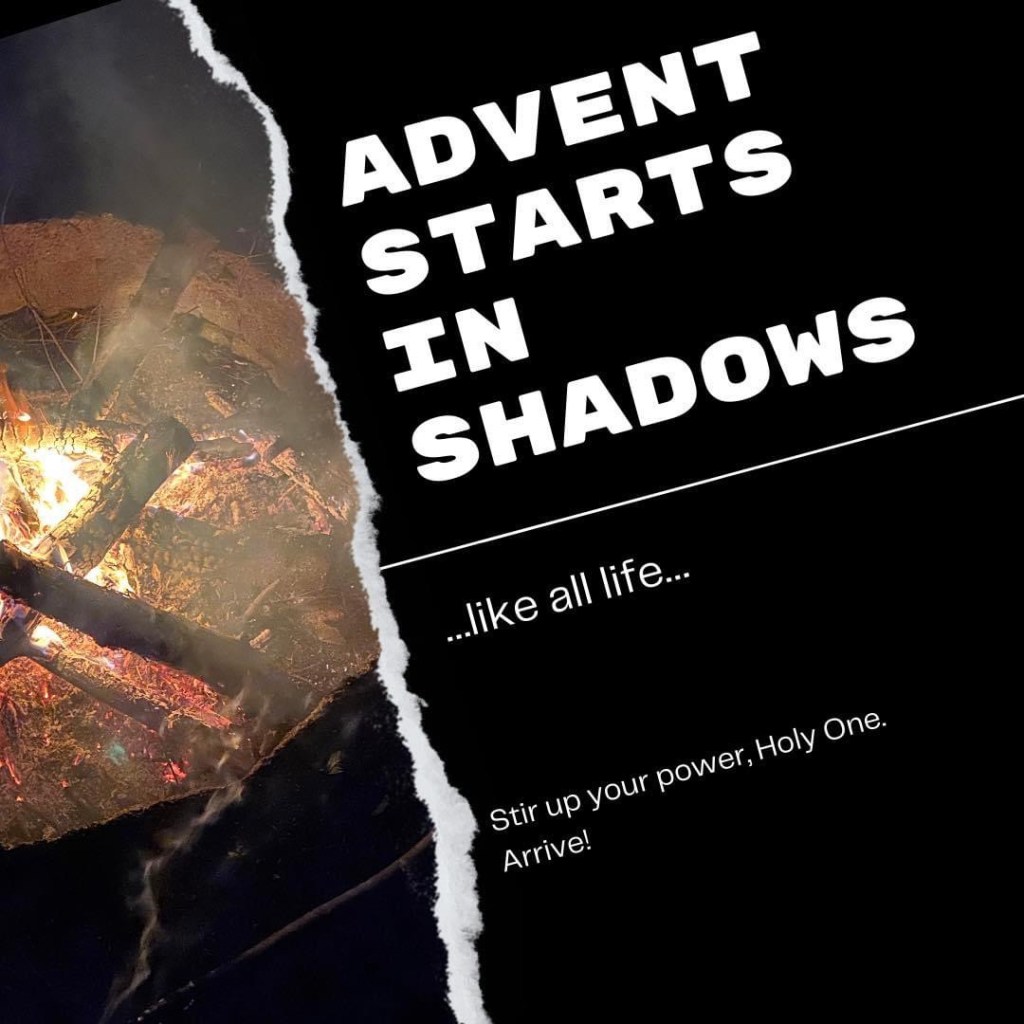
Lean Into the Shadows and Learn from Them

For the ancient Celts, October was a special month. All hinge points in the wheel of the year were seen as an opening into the next phrase.

January is Winter’s portal into Spring. April is Spring’s portal into Summer. July is Summer’s portal into Autumn, and October is the Autumn portal into Winter.

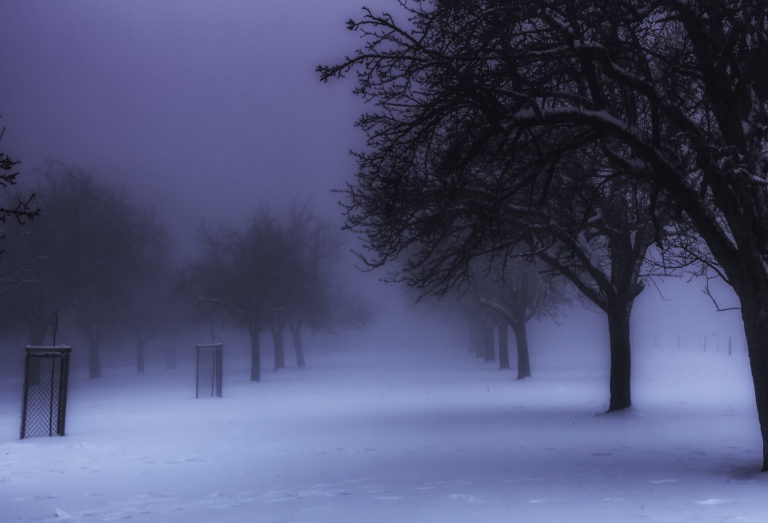
But within those four portals there was seen to be two great portals: the invitation into the light, and the invitation into the shadows.

April, with it’s growing light as our star decided to hang around longer and longer each day, was an invitation into the light half of the year.

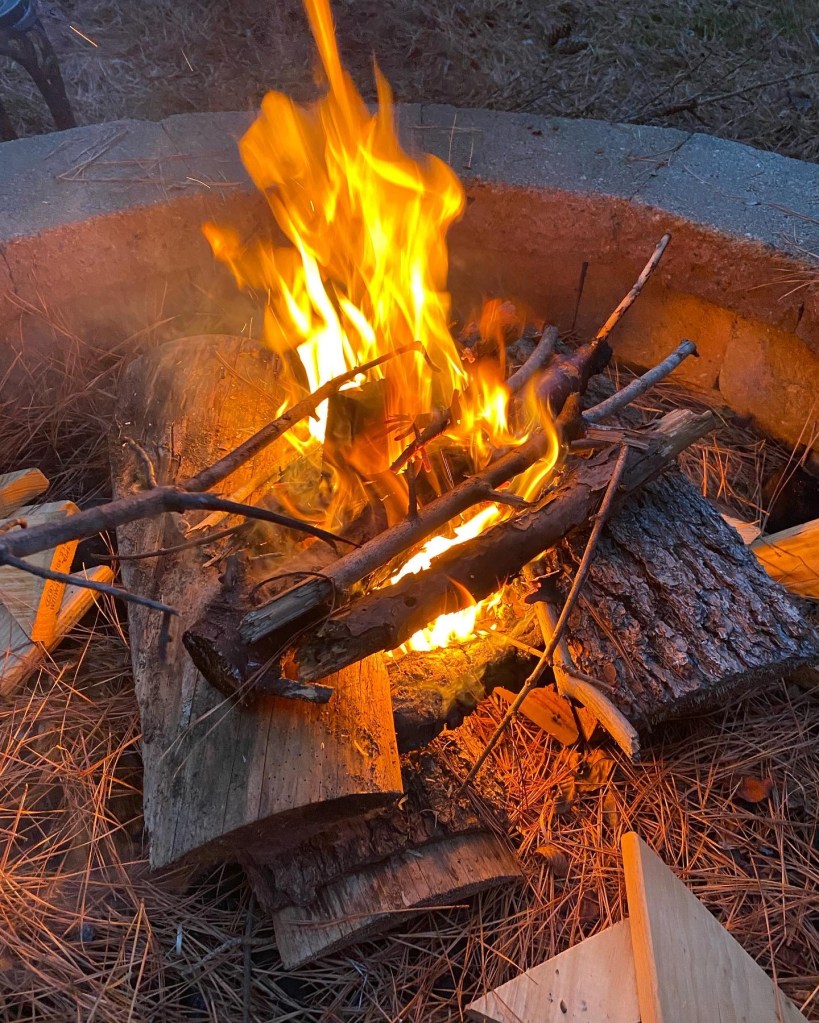
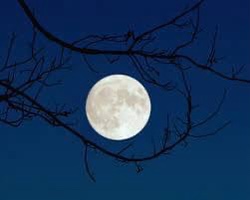
October, with it’s lingering moon, was an invitation into the shadow half of the year, and was known as the “season of frost and firelight.” Indeed: we’ve lit a fire the past few mornings in our own house.

The Celts called the festival at the end of October “Samhain” (pronounced “sow-wen” in Gaelic). It literally means “summer’s end.” This festival was Christianized around the 7th Century as Hallowmas (or All Hallow’s Eve) and, on November 1st, All Hallow’s Day (All Saints’ Day).

That phrase continued to evolve and is now colloquially Halloween.

Rather than some sort of time to celebrate evil or goblins or whatnot, Samhain was actually a time where the Celts explored and ushered in the gifts and mysteries of the shadow-half of the year.

Why do things seem to “go bump” in the night?

Why do we take fire for granted until we can’t see anything anymore?

What does it mean to take seriously the idea that rest and fallowness are necessary for life?

How does family time change when we’re all stuck inside, and what does that mean for us? Could it be possible that, in these intense family times, dead family members join us around the fire (as specters or ghosts)?

Why, in the shadows, are we more tempted to do what we should not? How do we ward off such tempters? (One solution was the Jack-o-lantern)

The shadow-side of the year, like our own shadow-sides, is not to be feared but, as the Celts did, explored and held and learned from.

Like all good mysteries.

Beneath the Ivy Moon

The ancient Celts found October to rest under the Ivy Moon. Now half past the month, the harvest is pretty much done and everything is starting to wear its nakedness.

But they called this Autumn moon Ivy Moon because ivy has a difficult time dying, and can live on even after the host plant has died. Ivy, for them, was a reminder that everything goes on in some form or fashion: life, death, rebirth.

It’s the way of things.

Ivy is strong, evergreen, resilient. Though the Earth is wearing their nakedness in these days, Ivy reminds us that the wheel is turning, not dying. It is spinning, not stopping.

Life renews itself.

October Magic

For the ancient Celts, October signaled the end of their Autumn and opened the door for the shadowed half of the Celtic year.

Samhain (which literally means “summer has ended”) marks the final feast day of the season, and the convergence of the shadows and the weather inclined the Celts to believe that spirits were able to walk among the living causing mischief, curses, and sometimes blessings.

Practically it meant bringing in the cattle and the sheep down from the summer hillside and into the byre and the stable, now full of the harvested hay brought in throughout August and September.

It was also the time to slaughter the animals and prep them to last as far through winter as possible with salts, cold storage, cottaging, and drying.

The very last bits of barley, wheat, turnips, and apples were picked from the now naked fields, because come November the faeries would start breathing on all the fruit, frosting them and making them inedible.

While the sun still glowed it was also time to get the wood and peat stacked and ready for use. No one wanted to chop and gather in the frigid days coming.

This was a joyous month for the Celts, as the whole family was regularly gathered in the house and the barn: baking, salting, prepping, and preserving, envisioning the coming winter feasts and the cozy days ahead.

The summer sun now became the warm, dim room, and the noisy insects would be replaced with long talks and stories from family and visiting friends.

October has come.

Apples and Love

As our days grow darker and colder, I’m drawn again to my Celtic past and the rituals of these days.

Have you ever bobbed for apples at a Halloween party?

This game is actually ancient, and hails from the Celtic Christians who married the practices of the past with the realities of the present.

The apple was known as the fruit of temptation in Christian circles, but was also a harvest fruit. In the ancient Celtic world, you’d bob for apples to determine who would be married next. The person with the fruit would be visited in their dreams by their true love.

When Christianity came to the Celts, the game took on a more festive Biblical character, as it was associated with the idea of temptation in the days of shadows. Lust, after all, was bad…right?

Every practice has a practical history.

Balance

On the Autumnal Equinox, my mind is brought back to those ancient Celts who knew the Earth was not just alive, but provided us with secrets on how to live.

Balance, Beloved, is more than hard to find…it is also hard to keep. The Earth only finds it twice a year, and is only able to keep it for 24 hours at a time.

But when it does, everything changes!

At the Vernal Equinox the world springs forth with color and newness.

And today? Well, Camus said that Autumn is a “second spring,” where “every leaf is a flower” beginning to blaze.

For the Celts, with over half of the fields cleared by now, it was time to take stock of the harvest, both within the barn of the heart and the barn outback. They would prepare for winter, using what the year so far has given to plot the next phase of life.

Blessed Equinox! Lean into the balance a bit, and learn how to live.

Bringing in the Sheaves

As it approaches midday on September 2nd, I’m meditating on my ancestors (like I find myself doing a lot).

The ancient Celts viewed September as the month of hard field-toil and transition. You gave thanks for the harvest as you took it in…there would be time for a formal celebration at the end of autumn.

But right now? Right now was meant for nose-to-the-grindstone, hard work. August was spent picking the early crops, but now the field is ripe and ready. The rich berries are plump against the azure sky, even as the sun takes its time getting up now, and heads to bed early.

They labeled September as the month of “creative fire,” because the hands were hard at work creating a way through winter, and as the month drew on, the need for morning and evening fires came earlier and earlier.

It is a month of changes, both in the atmosphere and in the home, as we begin turning our full attention to the coming winter.

September is a month where humanity began to regain some balance with the Earth.

The old hymn “Bringing in the Sheaves” reminds me of this. That song was based off of a Psalm, but truly the rhythm of the Psalmist was known in those northern islands even before they knew any part of the Psaltery: this is the rhythm of life, Beloved.

We sow, we wait, we reap, and we celebrate.

Now is the time for reaping, working, regaining balance as we head back into the habits on the far side of summer.

Welcome September

For the ancient Celts, September marked the mid-point of their Autumn life. In these blazing days that might sound strange to our ears (it hardly feels like Autumn to most of us), but on the wheel of the year this quarter is earmarked for “harvest.” Their wheel, their internal rhythm even (and ours!) has the mid-month of every season as the transitional one:

February-Mar-April-Spring
May-June-July-Summer
August-Sep-Oct-Autumn
Nov-Dec-Jan-Winter

That middle month is the one of transitions with the equinox or the solstice of the season lying in its belly.

September is a season of invention and harvest. The crops are pulled in fully in this month. The fireplace starts to roar at night not only around dinner time, but longer into the evening as cool air sweeps through the house and the canning and drying and preserving that needs to happen for the coming Winter gets underway.

The fire in the hearth is mirrored by the fire starting to show up in the leaves now gloried on their way to death, and the drying fields calming themselves, preparing for new birth next year.

Toward the end of this month, to honor the final bit of the harvest, dried pieces of wheat and barley would be woven into a crown and hung on doors and windows, or worn on the heads of children.

The whole town would come together as the last sheaf was brought in and they’d have a large feast where the last sheaf of the field was woven and decorated. They’d toast the sheaf, saying “Here’s to the one that helped us with the harvest!” Then they’d take the decorated sheaf and hang it in a place of prominence.

This is where we get our modern day “autumn wreaths” that adorn our own doors and fill up your local Michael’s or Kohl’s in the “home decor” section. Today we see these as pretty and festive. For the ancient Celts they were a sign of thanksgiving and triumph, as the harvest gods had once again provided.

Welcome, September, the month of transitions. We thank you once again for the harvest.

The First Month of Summer

For the ancient Celtic Christians, May was the first month of summer. It may feel strange to think of the rhythm of the year in this way, mostly because we’ve been conditioned by society to see May as still part of “spring,” but for those Celts who paid attention to how things look and feel, rather than acquiescing to what others told them to feel, they knew that the change of May meant the beginning of summer.

Their wheel for the year was:

November-December-January: Winter (the cold would set in, ground would freeze, and things took a dormant nature…which is why in the middle of December you’d celebrate the undying light of Christ, reminding yourself that the sun/Son always shines)

February-March-April: Spring (things start to break through the ground, thaws happen, tulips push up and animals stir and mate…which is why Easter is the capstone to the season, the eternal “emergence”)

May-June-July: Summer (heat sets in, you start to do all things out-of-doors, you plant and tend, and the midpoint is the celebration of John the Baptizer/Summer Solstice where you remember that St. John the Baptizer said, “I must decrease so that Christ may increase”…and the sun starts setting a little earlier each day)

August-September-October: Autumn (you celebrate the waning heat, you harvest, you prep and store, and prepare for the winter, with the capstone of the season being All Hallow’s Eve where you give thanks for the harvest and the faithfully departed, knowing winter is coming where nature reminds us that all things die)

This cycle was the year life, but imbued into all of this was the sense of death and regeneration.  It was an Easter life. 

In our modern days where we’re so tossed back and forth between this event and that event, seeing so much of it all as isolated incidences that rock our boats, we forget the golden thread, the rhythm, or as the ancient Celts would call it, the “heartbeat of the Divine” running through it all. 

If we tilt at every windmill, we never stand up straight.  The ancient Celts understood this, and so they were able to weather most any storm knowing what season it was. 

Now? Now is the start of summer. The season of “out-of-doors.” Take advantage, live into the newness around you, and breathe deeply into the now. 

Because now it’s about living life.