
Shadow Side

In reading up about Samhain in Celtic tradition, it’s believed that apple bobbing (called “apple dookin'” in Scotland) is a reminder of the journey across the seas that the ancestors took to find fresh fruit.

There was thought to be a magical land, Emhain Ablach, known as the “Island of Apples” that had wonderful apples that imparted wisdom to those lucky enough to find one.

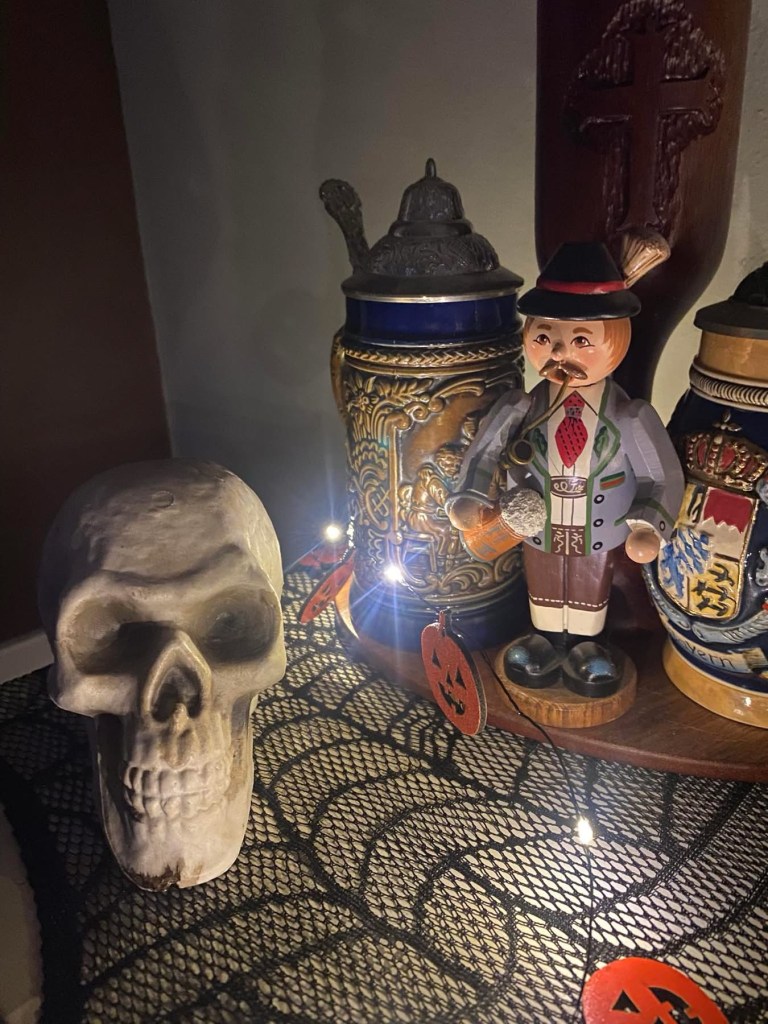
It was also believed that the festival of Samhain taught humans about their “shadow-sides,” all the fears, misgivings, negativity, and unresolved issues within them that should be recognized, accepted, and reclaimed. Celtic wisdom taught that no person could be fully whole without their shadow side, and that ignoring or fighting against your shadow in such a way that you buried it created fragile beings who were easily broken by their ego, by other warriors, and by the hardships of the world.

Samhain, rather than insisting that you ignore the ugly side of your human nature, took you down into the depths of the fear (literally, tons of tales about descent into the pits of the world were told at Samhain) so that you could wrestle with yourself and wake up whole.

It sounds very Jungian, right?

It’s actually just ancient wisdom that we keep forgetting and “discovering” again and again…
You Can Call Him Al

On October 26th the Church packs a bunch of saint commemorations into one. The musicians Gerhardt, Nicolai, and Heerman are technically remembered on this day, but seeing as there is not an official saint on the Lutheran calendar for October 25th, I proposed we move them to that day (see yesterday’s post).

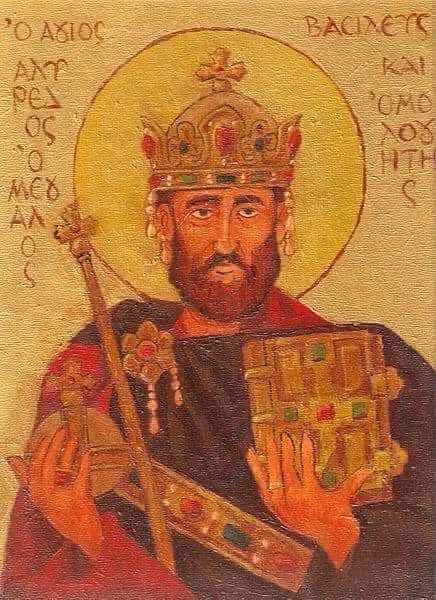
That movement let’s them have their own moment in the musical sun, and allows a new dawn to shine on this obscure but really cool saint also commemorated today: Saint Alfred the Great, Benevolent Monarch and Defender of the Poor.

Just recently added to the Lutheran calendar in 1979, Saint Alfred the Great has long been lauded in Celtic and British circles not only for his wise rule, but also for his kind demeanor.

Born the youngest of five sons to Kin Aethelwulf in 849 CE, King Alfred assumed the throne of the West Saxons after his father and all four of his brothers died, one after another, in short order. In these days the Danish tribes were wreaking havoc on Wessex, and Saint Alfred was able to protect his people and drive the warring tribes off the island.

But here’s the thing: the remnants of Danes who remained in Briton? Saint Alfred was kind to them, offering them refuge and a place in the community. He reached deep into his faith and opened schools for both lay people and clergy, reviving education in the land that became famous throughout northern Europe. He had important theological texts translated into English for his people, and he protected the poor from unfair labor and usury practices.

Saint Alfred was also a lover of the arts, and encouraged creativity and artistry, helping it to flourish in these otherwise kind of shadowy times.

Because Saint Alfred encouraged learning, was kind to his enemies, protected the poor, and inspired creativity in his people, it is he alone out of all the English soveriegns who is called “the Great.”

He died on this day in 899 CE and his grave can still be found in Winchester.

Saint Alfred the Great is a reminder for me, and should be for the whole church, that it is not dogma or rigidity, but rather creativity, education, and kindness are what make a person (or institution?) “great.”

Let those with ears to hear, hear.

-historical bits from Pfatteicher’s New Book of Festivals & Commemorations

-icon written by Padre Del El Torro