
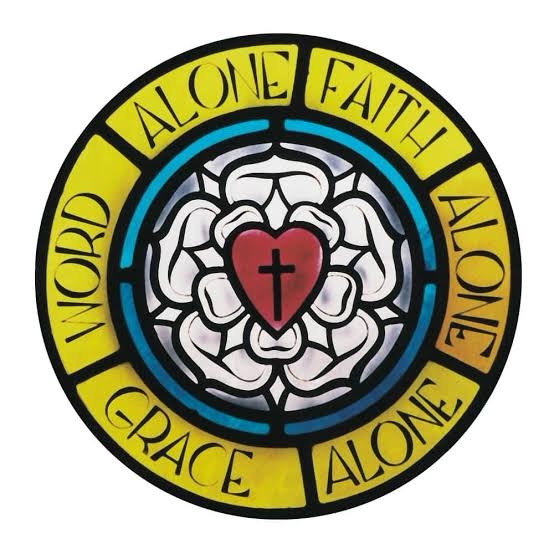
Reformation

Churches around the world are also honoring Reformation Sunday this Sabbath.

It’s important to note that each liturgical denomination has a day that honors a formative experience in the life of their particular vein of Christianity. The Eastern Orthodox church celebrates “The Triumph of Orthodoxy” to usher in Lent. The Roman Catholic Church has the Feast of the Chair of St. Peter (February 22nd), emphasizing the founding of the church on Peter’s shoulders. The Anglican Church honors the day the Book of Common Prayer was published, uniting the communion into one.

For Lutherans, it is Reformation Day, when we sing “A Mighty Fortress” and “Lord Keep Us Steadfast in Your Word” and dress in red, the color of both the martyrs and the fire of the Holy Spirit.

At its worst the Reformation is celebrated as a triumph. At its best it is a feast day that is simply a continuation of the perpetual change and shift that must happen in a church that is wedded to a God who is known and revealed inside of time.

Historically it does mark a time in history when a break, for better and for worse, happened in the church. This break deserves an autopsy every year in an effort to remember, reaffirm, and repair as much as a possible the schisms that arose from it.

The date of the Reformation, the 31st of October, comes from the lore that Luther nailed his 95 Theses on the Castle Church door in Wittenberg, intending for it to be widely read by everyone who attended the All Saints Sunday mass the following day. We’re not sure this is historically accurate, but because it is so much a part of the narrative around the events of autumn in 1517, we give a nod to its church-changing truth, if not its actual veracity.

A better date to honor the Reformation might actually be June 25th, the date that the Augsburg Confession was presented. Like the Anglican Church with the Book of Common Prayer, the Confession is the binding document of all the reformation churches.

Regardless, tradition compels us to keep the date, to wear red, to remember, and to continue to reform.

-historical bits from Pfatteicher’s New Book of Festivals & Commemorations

-opinions mine
Musicians for the Ages

Today I would lobby the church honor three 17th Century musicians for the ages: Philipp Nicolai, Johan Heermann, and Paul Gerhardt.

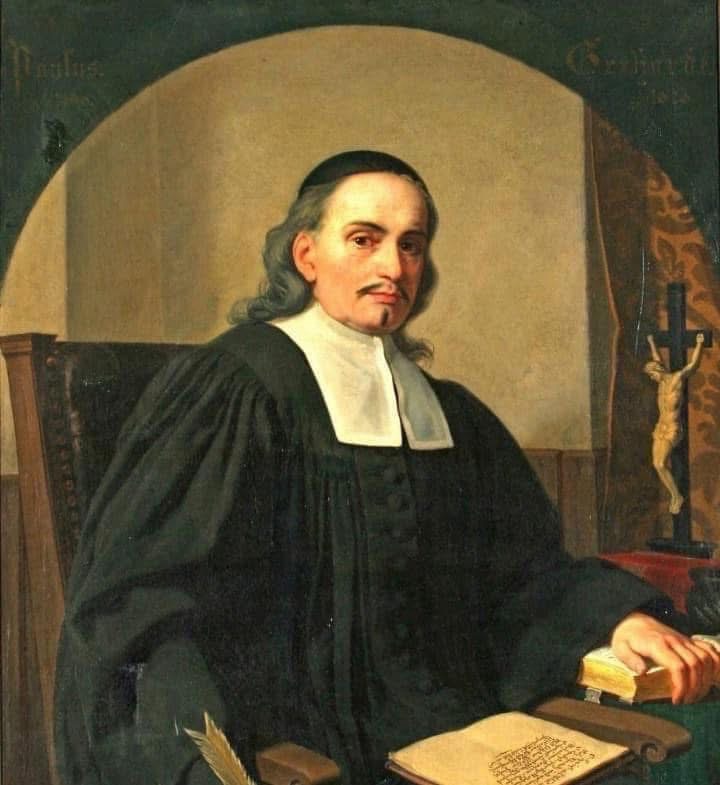
I’m going to focus just a bit on Paul Gerhardt because he is, in my estimation, not only the best Lutheran hymnwriter to date, but a superb theologian.

St. Gerhardt was born in 1607 near Wittenberg, and he studied theology there in the mid 17th Century even while the Thirty Year’s War was a plague upon the land. He got work out of University as a tutor, and ended up marrying one of the daughters of the family he taught (kind of a no-no today, but back then was not unheard of).

Being of great skill both in writing and composing, St. Paul’s hymns appeared in a music publication of the day compiled by the cantor at St. Nicholas’ Church in Berlin, one Johann Cruger.

At the ripe old age of forty-five, Gerhardt finally formally used that theology degree, was ordained, and entered the pulpit as the Senior Pastor at Middenwalde, near Berlin. From there he moved on to St. Nicholas in Berlin as an associate pastor, but quickly became the congregational favorite because his sermons were wise, witty, and relatively short.

Pastors: take note.

Unfortunately Reformation strife was continuing throughout Germany, and in-fighting and back-biting were common as the theologians tried to figure out what was, and wasn’t, orthodox from the Lutheran lens. To his credit, Paul refused to sign a pledge not to discuss controversial things from the pulpit.

The Gospel is often controversial. Congregation members: take note!

Because he refused to promise not to say tough things from the pulpit or bring up doctrinal issues, he was removed from St. Nicholas and went without a parish for some years.

Side note: lots of pastors find themselves in a similar situation today, no?

To add tragedy to tragedy, during this tough period his wife and a son died (three previous children had already died). He only had one son left.

In May of 1669 he was appointed as archdeacon of Lubben, a really harsh parish who didn’t really care for how wonderful he was, and he lived there with his only remaining son for a few years until he died in 1676.

Saint Paul Gerhardt wrote 113 hymns in his day, translating difficult doctrines for the modern ear with modern (for his day) melody.

Finally, I want to reinforce what I said in that first thought: that all three were not just hymnwriters, they were theologians. The theology we sing affects the theology we trust, Beloved. The tune is the hook, but the words are the bait, the thing we swallow, the thing we start to subconsciously believe.

In other words: be careful what you sing because it will become what you say you believe.

Out of the three of these hymnwriters, Paul Gerhardt is the one you’ll know the best if you grew up in a Lutheran church. While we sing the works of all three of these giants of the hymnic faith, Gerhardt is no doubt the greatest Lutheran hymnwriter.

He also, no doubt, had the most unusual facial hair.

Want to look up some of their tunes?

In your Evangelical Lutheran Worship you’ll find Nicolai on hymn 308 (“O Morning Star, How Fair and Bright!” sung at Epiphany), 436 (“Wake, Awake, for Night is Flying” sung at Advent), and 786 (“O Holy Spirit, Enter In” Nicolai only wrote the tune for this one, and I’ve rarely sung it).

Heeraman’s work can be found on 349 (“Ah, Holy Jesus” sung every Lent), 675 (“O Christ, Our Light, O Radiance True” sung in Ordinary Time), and 806 (“O God, My Faithful God” sung in times of crisis).

And the seminal Gerhardt tunes can be enjoyed on 241 (“O Lord, How Shall I Meet You” sung at Advent), 273 (“All My Heart Again Rejoices” sung at Christmas), 340 (“A Lamb Goes Uncomplaining Forth” sung during Lent), 351 and 352 (“O Sacred Head, Now Wounded” sung during Holy Week…a favorite of mine!), 378 (“Awake, My Heart, with Gladness” an underappreciated Easter hymn), 568 (“Now Rest Beneath Night’s Shadows” a very sweet evening hymn), 761 (“Evening and Morning” a lovely song on trust), and 788 (“If God My Lord Be for Me”…sung in times of trial).

-historical bits from Pfatteicher’s New Book of Festivals & Commemorations

-painting of Paul Gerhardt by Herrmann Schwender