Christian Ideas of “Controversial” are Screwed Up…

This poor homeless statue of Jesus is still having trouble finding a home without controversy.

Appropriate, I think.  It challenges our sensibilities in a way that I think only Jesus does.

But, here’s the thing: this is not controversial from a Biblical perspective.

index


If Jesus wasn’t actually homeless (for a dude who might have had a home, he doesn’t hang much there in scripture), he certainly was found with the homeless and destitute, probably sleeping many nights under a sheet with the sky as a roof.

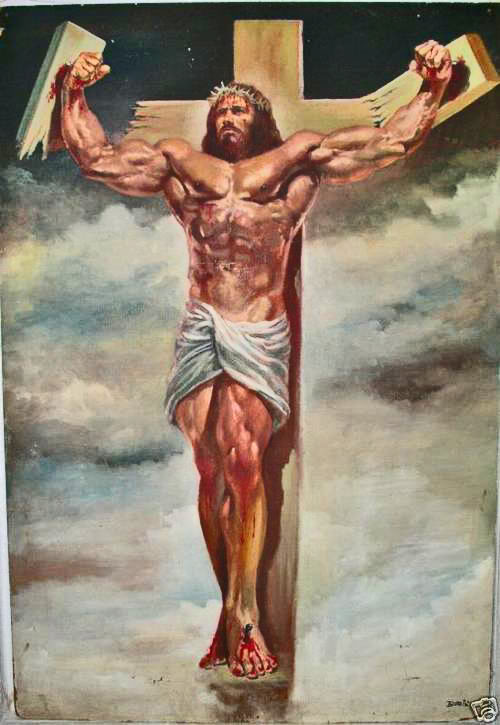
But this?  This is absolutely controversial:

muscular-jesus-breaking-cross

OMG, Jesus! Where did you get those quads from? Biking?


I’d say it’s damn near blasphemous…and that’s coming from someone who doesn’t think much is very blasphemous.

This is pretty controversial, too:

jesusarm-wrestlingwithsatandemon

Ugh…dualisms make me want to punch someone. Exorcising them from Christianity is like arm-wrestling the devil. Wait a sec…


Look at how crazy creepy that really white Jesus is wrestling with the good-guy from the Hellboy comics…

An uproar over this statue…that’s screwed up.  We see Jesus as Jesus is and get all offended.  That’s a teachable lesson for those with eyes to see and ears to hear.  But I haven’t heard much said about those other pics or others like them that appear on bulletin covers, emails, Facebook memes, or bumper stickers…in fact, I’d dare guess that most Christians would see them and not think two things about them: their veracity, their message, their scandal.

And they’re far more scandalous…

Want to know what else doesn’t seem to cause much controversy?  The fact that people die of starvation in the city of Chicago, one of the wealthiest cities in the world.

Or the fact that farm owners are committing suicide because they can’t make a living anymore, what with our demand for everything cheap and mass produced and all.

Or the fact that $600,000 was stolen from smiley Joel Osteen’s mega church a few weeks ago, and that was just one Sunday’s offering from plate-giving. For some perspective, that is almost double my faith community’s total operating budget.

Don’t let Jesus be shown homeless, but it’s sure ’nuff OK for the imago dei to be starving and dying while hundreds of thousands are collected each week from one place…and the only thing we can say is that we can’t believe someone would have the nerve to steal that money from a “church”…

Where’s really-ripped abs Jesus when you need him?


Progressive Christians: We Need to Talk About Jesus…

Glasses on Open Bible

Please note: Not all theological progressives wear glasses.

I’m a theological progressive.

When I fell away from faith, I fell away from a faith that was absolutely confused about its identity.  I was interacting in worlds that didn’t seem to speak the same language.  One world I lived in included people I knew and loved who were of intellect and not willing to take the Bible literally, people of different sexual orientations, people of different faiths.

And I also lived in a world of religion that didn’t seem to encompass that other world very well.  Or, if it did, it marginalized the people who didn’t fit well into certain categories, namely “Bible-believing,” “straight,” and “Christian.”

For a while my solution, then, was to leave the faith…at least in spirit.  I still moved in both worlds, but my heart was with the first world and turned against the second world.

And then I came back to faith…a faith re-figured.  A faith that could encompass the first world and still remain in the second.  In fact, it merged the two worlds so completely together that now, for me, they are one cohesive world.

I came out as a theological progressive.

To me this means a couple things:

I have a heart for justice.  Sometimes people call it “social justice,” but I think that phrase is laden with all sorts of issues and assumptions.  My justice is not just for society, though.  It’s for the world in sum.  Shalom is a better Biblical term for it.  I have a heart for Shalom, God’s good balance and peace.   Ensuring that people live with dignity, that the world we live in is respected, and that we keep an eye toward balance and harmony as we all eek out our God-given existence.

-I have a sincere respect for other faith traditions. The sincerity part comes from the realization that we are all trying to navigate life in a way that bends toward not putting ourselves at the center of it all.  We’re all trying to navigate life through the lens of deeper truth.

I talk about Jesus. Yes, I do.  Sometimes I call Jesus “the Christ,” or sometimes I refer to God as “the Divine,” but I do so because different language helps, not hurts, our understanding of God.  For a long time language has boxed God in…and we need to break God out of the box.  But that doesn’t mean, though, that I don’t talk about Jesus.  In fact, I think we have a lot of Christians who are afraid to talk about Jesus because they don’t want to be “that” type of Christian.  I get that.  But our silence isn’t doing Jesus’ rep any favors.  Why?  Because the Franklin Grahams and Glenn Becks (how did he become a Christian spokesperson, btw?) of this world do talk about Jesus.  And their Jesus does not look like my Jesus…

I want to be inclusive.  Lots of people are excluded from faith communities for things they’ve done or not done, or for things other people think are “sin,” usually things they do with their bodies.  In truth: I think we sin a lot more with our checkbooks than we do with our bodies.  Funny thing about the Jesus we find in the Gospels: he doesn’t spend a lot of time making people feel guilty for their sin, real or imagined.  In fact, Jesus doesn’t really talk a whole lot about specific sin if you read carefully.  What Jesus does talk about, though, are people who think they have no sin, or that they lead sinless lives.  “Because you say, ‘I am not blind,’ your sin remains,” Jesus says to the Pharisees, these archetype characters in John’s Gospel for those who think they’re above sin.  So, in modeling Jesus, I want to be inclusive.  Of everyone.  It’s dangerous; I know.  Try it out, though.  You might just find Jesus lurking in people you never thought possible…

To me being theologically progressive doesn’t mean:

I’m politically progressive. I know plenty of theological progressives who don’t fit into political categories.  Honestly, I’ve never been able to vote with a clear conscience.  And your church shouldn’t be a para-political organization, either.  Your church’s mission shouldn’t sound like a party platform.  Sure, faith is political.  My faith certainly informs and shapes my politics.  In fact, I think that pastors can’t help but be political.  After all, in the polis we deal with money, health, life, and death…all things Jesus talked about extensively.  But if Jesus were running for office, no party would claim him.

I don’t take the Bible seriously.  Actually, I take the Bible very seriously.  So seriously, in fact, that I take into consideration its origin, its writing styles, its editing, its historical conditioning…all of it.  I would claim that anyone who just takes anything at face value doesn’t take it seriously at all!  They’re ignoring so much in their quest for simplicity.  But life isn’t simple.  The books of the Bible aren’t simple.  God isn’t simple!  Let’s stop pretending that you have to be an idiot to be a believer. The only thing someone reading the Bible at face value takes seriously is their own desire for absolute certainty at the expense of their brain.

I’m a Communist.  Again, idiocy leads to this conclusion, or any other label of fear-mongering that people come up with to keep you from actually engaging with others in this world.  The best way to combat idiocy is to remove your head from your buttocks.

I have a church that won’t grow. Our church is growing.  We need not worry that fear and false certainty are the only ways to grow faithful Christians.  And as a parent, I want to help my son hold tension with faith, not inadequately resolve tension with easy answers and cheap grace.

So, theological progressives, here’s the deal: we have to talk about Jesus more.  Especially in this time of crappy Jesus movies and headlines of Christian charities being…well…uncharitable, and mega-church pastors claiming Jesus wants them to be wealthy, and Catholic bishops getting in hot water for building million dollar mansions.  Because Jesus is getting a bad rap.  And we shouldn’t be afraid to claim that we’re people of progressive faith.

And, sure, Jesus has a quiet way about him.  This is true.  Real Godly work doesn’t sound the trumpet in the temple, but locks itself in the closet.  And God sees in secret.

But, as a parishioner of mine recently said in a conversation about this issue, “We’re not doing Jesus any favors by being quiet.”

And she’s right.

“A Response to World Vision Bullies” or “On the Backs of Children”

I found out this afternindexoon that World Vision reversed their decision to allow people in same-sex monogamous relationships to have the pleasure of being employed by the largest Christian charity in the world.

It’s taken me this long to calm down and write a response…

Look, I’m not that mad at World Vision.  If you, from a charitable perspective, were facing thousands of sponsored children losing their sponsorship (food, education, clothing, shelter, companionship, medical care…you know, basic dignity), you might also have second thoughts about retaining the policy that caused the defection.

From a charitable perspective it makes some business sense.

But one ethical dilemma gives way to another…

World Vision not only reversed their policy decision, but they’ve also “asked for forgiveness.”

And, to me, the group that needs to ask for forgiveness are the bullying bigots who forced World Vision’s reversal.

Less snark in this one.  Snark isn’t called for.

This is a come-to-Jesus moment, as a former Sunday School teacher of mine would say.  And Jesus is not to be found with the bullies.

How dare you?

You hold up the clobbering texts that tout a very ancient understanding of homosexual behavior (that hold very little in common to same-sex monogamous relationships in the modern understanding), and you forsake hundreds of other Biblical texts, texts about feeding the poor and needy, texts about loving neighbor as yourself, texts about welcoming the stranger in the name of God.

All things that World Vision, at its best, does. And all things you were willing to chuck out the homophobic window just because World Vision might hire someone in a same-sex relationship.

Any ethicist will tell you that the one wrong does not cancel out the other.

And any playground attendant will tell you that this “I’m taking my marbles and going home” stunt you pulled is nothing more or less than an old-fashioned shake-down.

You’re bullies.  Plain and simple.

Have you read Luke 17?

Let me refresh your memory

Jesus said to his disciples, “Occasions for stumbling are bound to come, but woe to anyone by whom they come! 2It would be better for you if a millstone were hung around your neck and you were thrown into the sea than for you to cause one of these little ones to stumble. 3Be on your guard! If another disciple sins, you must rebuke the offender, and if there is repentance, you must forgive. 4And if the same person sins against you seven times a day, and turns back to you seven times and says, ‘I repent,’ you must forgive.”

Bullies who withdrew support from World Vision, listen up: you just caused stumbling.

Should we now tell our children that when we don’t get our way we just get to go home no matter the consequences?  You don’t think your children are watching?  “It’s OK, Johnny, to not feed those children because first you have to hand it to that same-sex partnered person, and it’s no good coming from their hands.”

In what freaking world is that defensible?

Because it’s not in the Christian world.  That mess only works on the playground.  But, perhaps, you think this whole life thing is one big playground; one big game of tit-for-tat.

Grow the hell up.

See, I think that you don’t even realize the consequences.  Many of the people, most of them children, that World Vision helps are continents away from your theological smugness.  You can withdraw support and never feel the pinch.  It’s far away from you and your lovely privilege.

Lord, isn’t it nice to “believe” all the right things if you’re privileged enough to have the time and resources to do so?

And all the while these World Vision folks saw children losing support…you forced their hand.

Some might say “shame on them” for giving in to bullies.  Fine; we can say that.  There is some truth there.

But you want to know what I bet?

I bet the World Vision folks are betting that the theologically progressive Christians who are in support of their briefly-held new hiring policy won’t pull their support now that they reversed the decision.

And you know what?

They’re damn right.

But I’ll go to bed alright tonight, knowing that my actions, both the support of their briefly-held hiring policies and my gifts to the people they help, are as pure as possible.  I am not sinless, but I am not on the wrong side of this issue.

You who bullied them into this, on the other hand, please know that you leveraged what you called a “gospel issue” on the backs of children.

And that is never gospel.

Would be better to have a millstone thrown around your neck, so I hear.  If that’s not a literal stumbling block (have you ever tried to walk when dying of starvation?  I imagine there’s quite a bit of stumbling involved…) I don’t know what is.

But, take heart.  There is always a chance for repentance.  There is always forgiveness.  I’m serious about that.  Whether or not World Vision switches their policy back, I plead that you repent.

If anything, you’ll sleep better. And nothing is better than forgiveness.

And if you don’t go to bed a little uneasy tonight, well, that’s indicative of a whole host of other issues.

Finally, a quick word to my theologically progressive friends: don’t pull your support from World Vision.

We won’t be bullies.  Millstones don’t belong around necks.  We cannot play these games.

So we pray, we watch, we encourage, we lift our voices.

And we feed children.

Because that’s what the Christ calls us to.


“Hey, Did You Hear About the Time the Largest Christian Charity Actually Lived Into It’s Name?” or “Good Job World Vision”

stolen-scream-noam-galai

World Vision announced yesterday that they would start hiring Christians in same-sex relationships.

And then the arrows started flying from all the usual bows.  Thanks to my sister Katie Kather for alerting me to the madness…

Franklin Graham was his normal, eloquent self, offering up a response in mere hours.  Just a few weeks after claiming that Russian President Vladmir Putin has “the right idea” about gays, he burst onto the scene with this little gem of questionable scholarship.

Did you read Graham’s thoughts?  No, c’mon, click it.  It takes two minutes to read. Graham is, if anything, shallow…which means it doesn’t take long to read.

Read it? Good.  Now, let me clear some things up for you for reference sake: the Bible, throughout the Old and New Testaments, gives a variety of marriage situations, and even supports most of them, and while they usually involve men and women, the idea that all of them involve just one man and one woman is an outright lie.  Read Leviticus.  Or maybe the Abraham story where good ‘ole Abe impregnates a couple of women to make sure his family has heirs.

Most of the marriage arrangements in the Bible you probably wouldn’t recognize as “Christian” these days.  But, see, Graham thinks he can just say something and make it true.  He doesn’t think you’ll actually go do research.  Shame on him.

You’d think someone like Graham, coming from a family of such influence, would have spent the money to get a decent undergraduate education where this could be pointed out to him…

But I digress.  Enough snark.  Well, no, not enough.  Cause I’m kind of mad in this post.

World Vision notes that they’re changing the hiring policies to “unite the church,” a nod toward churches who do have Christian men and women in same-sex partnerships.  The same great work continues, it’ll just be done by people who actually represent the wide swath of the Christian landscape.

Funny how an organization called “World Vision” would actually want to cast a vision that represents the larger world.  Whoda thunk?

And now there are reports that some people and organizations are dropping their sponsorships because of this move.  I was pointed to this fact by “Rage Against the Mini Van,” a lovely little blog run by, what appears to be, an insightful writer and advocate for all things awesome.

Uhm, let me say that again because I don’t know that you sufficiently heard me.

People are deciding not to feed and clothe children because a partnered person may or may not be the middle man.

To quote MJ, “Makes me want to scream.”

What about that action, I’d like to know, do they think is Christian?  Because I hope to hell they aren’t getting a latte from Starbucks, an equal opportunity employer.  I hope they aren’t shopping at Aldi or Kroger, ordering from Amazon or buying music from iTunes…all equal opportunity employers.

I hope they’re divesting from every single organization that may or may not have partnered gay employees, forcing them to eat the food they grow in their backyard, give up all TV channels (because, well, all providers are also equal opportunity here in the States), stop buying clothes and start making them, and cancel all of their utilities.

C’mon bigots, stick to your guns.  If you’re going to divest from a charity because it hires openly partnered gay people, I want you to go ahead and divest from every organization, charity or not, Christian or not, who may or may not have a partnered gay person on the payroll.

I’m pretty sure divesting from every organization that hires partnered gay employees would leave you destitute.

And then, by the grace of God, I’d sponsor you with food and shelter and clothing.  And I mean that, literally.  By the grace of God.

Because whether or not you agree with me on this theological issue, I do not want you to die or go without.  Nay, I’m not allowed to let you die or go without.

Why?

Because the Bible tells me so.

I’m just wondering what their Bible is telling them…

You’re Married, Not Besties

So, I hear “I’m marrying my best friend”…and I cringe just a bit.

It’s said honestly, and I don’t mean to belittle the sentiment at all.  But, just in time for V-day, perhaps knowing that you don’t have to share your bed with your best friend will provide some comfort to someone.

My best friend and I would never write in the sand.  Probably.

My best friend and I would never write in the sand. Probably.little bit.

And I’m not against you and your partner being, in some ways, friends.  Or even “best __________” in many ways.

But I do not think that you must (or maybe even should) be “best friends” with the person you marry.

You need to be great partners.  You need to be great lovers.  You need to be great confidants and plan out a common trajectory.

But you need a different best friend.

See, many marriages fall into the trap of “all-needs-met.”

“All-needs-met” is the syndrome where one, or both persons, in a relationship feel that all their needs will be met by this one person, in this one relationship.

And it’s just not going to happen.

Especially needs that fall within the realm of “social needs.”

Sexual needs, deep emotional needs, partnership needs…these can be met within the marriage unit.

But many friendship needs can’t, and probably shouldn’t, be met there.

Why?

Because you need to dance well together.

There was an interesting interview last night during the Olympics where a reporter was grilling a couple competing in ice dancing.  She said, “We know you spend so much time together, and that you’re best friends…”

And the couple gave such a look to the woman and to one another, you’d have thought that lobsters were crawling out of the interviewer’s ears.

They weren’t best friends.

They had a deep bond, an emotional bond, and they spent a lot of time together working hard at their craft, laughing, joking, crying, helping one another up, and making beautiful movements gliding through this world.

But they weren’t best friends because they needed to dance together, and to do that well, they couldn’t be best friends.

The term “best friends” probably has a different meaning to most everyone, I think.  So perhaps the confusion is on my end.  I may not need to cringe when I hear it.

But, then again, perhaps it’s just a truth that needs to be named: you don’t need to be best friends to be married.  In fact, maybe you shouldn’t be.

The marriage covenant is deeper than friendship.  And your marriage cannot meet all your social needs.

It shouldn’t meet all your social needs.

Because you need to dance with intimacy and having/being a family and setting a common life trajectory and, well, a complex support system needs to surround you because those things are hard enough without trying to throw “being besties” in there.

And I think this confusion lies especially within the church who often sets marriage up as the container that holds all relational meaning.  The church has set marriage up on this pedestal, has made it the culmination of everything and all things, and doesn’t mention enough that marriage is a call that not everyone feels, and that marriage will not satisfy every human longing within the heart.

We all need friends, I would say “best friends,” outside of marriage.  And we all need to know that that is OK.  It does not make your marriage anything less to say that your spouse is not your best friend.

They are more important than that.  They are your partner.  They are your lover. They are your family.

They don’t have to be your bff even if you have covenanted to be together forever.

Because you have to dance together, and even in dancing you need a certain amount of distance between the people to do it well.

Otherwise you’re just tripping over one another…

My Obligatory Post about the “Evolution vs. Creatonism” Debate

…I didn’t watch it live.earth-space

We watched Dallas Buyers Club instead, starring a gaunt Matthew McConaughey and even more gaunt Jared Leto.  And ate pork tacos that I made myself from ingredients I cobbled together from the store.

It was a great movie, based on a true story.  And I make great tacos.

And, dare I say, the movie and the tacos had more to do with reality than the so-called debate.

I’m an evolutionist when it comes to how things have ended up the way they have; no mistake about that.  It’s the theory I think best explains the questions it sets out to explain (at least, so far). But to think that these two people were actually debating the same topic is naive (I watched the debate online this morning).

They weren’t debating the same topic.  It might have appeared like they were, but they weren’t.

It appeared like they were debating how the world came to be and why there is “something” rather than “nothing.”

But really, Ham was talking about a worldview, and Nye was talking about science as a way of discovering truth.

Those are not the same thing.

Science is a method of discovery.  A worldview is composed of convictions on what the person feels has already been discovered.

So it’s no wonder why, when asked what would change each of their minds on the supposed topic, Ham said “Nothing” and Nye said “Evidence.”

Science is a method of discovery based off of evidence. It changes because more, different, or better evidence is found (or previous evidence appears unfounded). We could say that the sum total of Nye’s thoughts, some of which are informed by science, comprise his worldview (so far).  Nye’s worldview includes science, but I wouldn’t say that science is his worldview.  Science probably answers the “how” questions for Nye, like it does for most of us, but it doesn’t answer every question.

A worldview, however, is the total sum of all conceptions in one place.  Ham was debating his worldview.

Changing a worldview doesn’t take evidence. It takes a life-changing encounter…or a series of life-changing encounters. And Ham was describing his worldview where everything (dare I even say even relationships and love?) are contained within what he considers to be Scripture.  Especially questions like “how.”  His worldview says that “how” questions are found in Scripture. He’d have to encounter something that would dramatically shift him out of that way of thinking for his worldview to change.

An encounter is not a discovery; it is the absolute disruption of a worldview regardless of the method of discovery used.

Suffice to say, anyone who makes a “Creationism Museum” (and I use”museum” here in the sense that “things are on display”…like a thimble museum…it is not, in my opinion, a museum in the same way as The Field Museum here in Chicago) is not open to many life-changing encounters, I would think.

That’s just my assumption, but I think there is evidence to support it.

I would venture to guess that Ham feels like he’s already had his life-changing encounter…and doesn’t need any other ones.

And that, by and large, is my biggest beef with that mindset.  It’s the idea that things are “settled.”  So Nye could have shown him anything, said anything, and Ham still wouldn’t budge.  Because his worldview doesn’t allow for that…doesn’t allow for more, better, or different evidence.  It’s not based on evidence.  It’s based on being, and remaining, settled.

And a worldview that is settled is static, not dynamic.

And I think that we, the church, should encourage dynamic worldviews. And we need to be encouraging dynamic faith, too.

Evolution is mysterious.  It’s amazing.  In fact, Nye used “mysterious” multiple times when speaking! It’s how a simple thing becomes complex in structure and, yet, retains some simplicity even amidst it all.  It’s so interesting!

Creationism is static.  “Boom,” it is said, “a fully developed tree with rings and everything.”

It’s…uninteresting to say the least.

One of the common critiques about accepting evolution as an answer to” how things are as they are” is that it erodes “God’s glory” (although I’m unclear of what the critics mean by that phrase).

God’s glory isn’t diminished because God might use a mechanism like evolution to create.  In fact, I think that enhances God’s glory (and by “glory” here I mean God’s “awe-inspiring traits”).

God’s glory is diminished, I think, when we assume God would take the road that we would take…the road of least resistance.

Because, let’s be honest, I often just want things to *poof* be as I’d want.  Creationism is what I would do.  Hopefully God is more inventive than me…more awe-inspiring than me.

This reluctant Christian hopes people don’t think last night was a real debate.  Real debates need to be on the same topic intending to influence people. I would be astounded to hear that anyone changed their mind about creationism or science by hearing it.

You want to know what I think would be a good debate?  The debate between static faith and dynamic worldviews; between static and dynamic faith.  What are the pros and cons between thinking you have it all figured out and continually searching?

Tag, NPR, you’re it.

On Naming the Dead and why I’ll say Philip Seymour Hoffman’s Name Next Sunday in Church

There are only two community worship experiences that we do where we name a list of all of the recently departed in a row: All Philip-Seymour-Hoffman-Saints (in November) and the Easter Vigil (the night before Easter).

And slowly and surely I’ve started to include not just the saints of the church who have passed on in recent years, but also celebrities, activists, politicians, and local heroes.

And I’ve started naming them on Sundays, too, when we give thanks for the saints who have gone before us. Like today I read out Pete Seeger’s name as a faithful witness in this world to the life of God shown in the Christ.

Was Seeger a Christian?  I don’t know.  I know he had a godchild.  I heard an interview with her on NPR. But there are plenty of people who have godchildren and don’t identify as “Christian.” I don’t think it matters in this case.  If there’s anyone who lived into the Beatitudes as a peacemaker, I feel Seeger is it.

We named him.  And we’ll name Philip Seymour Hoffman next week, too. Because it is less about how they identified themselves, and more about how God has identified them: child of God.

And, to be honest, Philip Seymour Hoffman touched me, and so many people, in his work that I think we’d do collective harm in not publicly grieving for him in some way; in some faithful way.  And I’m a firm believer that one of the ways that the Holy Spirit works in this world is through the arts, and I believe that God moved through him and his gifts.

Lord, he had gifts…

We name the saints not because of what they did  in life (though that is certainly part of it), but more because of who God claims them to be.

And there were demons there, now come to light, which we all have.  And if people knew the full truth of any of us, I think they’d balk at having our names read in any list of so-called “saints.”

And yet, my name is there.  And so is yours.  And so is any of ours.

So, if you worship in a community and there is a time to call out the dead, name him.  Do it.  Or when the Vigil comes around to your community and your pastor knocks on the parish door to invite the dead to worship in the resurrection, make sure his name is there along with Pete’s (we don’t ever do last names, so technically I’ll just say “Philip Seymour”).

Or if you’re making a list for All Saints, include him there.

Him, along with everyone else you know personally who has died this year.  Him, along with every other faceless, nameless person suffering from addiction who will die this week that we won’t ever hear about.

Because, and here’s the main point, in naming Phillip Seymour, I hope and pray I’m also naming about 100 other people who will die this week in Chicago of an OD that we’ll never hear about, and no one will care about.

And if we can’t care, in some small way, who will?  If we can’t point to this and all other deaths, especially tragedies, and say, unequivocally, “there lies a child of God, loved and redeemed even now,” of what use is the church in truth-telling?

May light perpetual shine upon Pete and Philip and all the other nameless ones we’ve lost this week. Amen.

I Want My Children to Know This About Faith

Having a kid changes your perspective.  I used to roll my eyes when I heard parents say that, but it’s true.Father-Son-Shadow

Like, for instance, how I’m much more willing than I used to be to just drop those last papers and emails and meeting notes to get home before bedtime.  I still work late…but I’m much more willing to let it all go to snuggle a snotty face, read Jimmy Buffett’s “Jolly Mon” storybook, and change a diaper before the little guy goes to sleep.

And as we’re raising this little guy, and as a pastor, there are a few things I want this little guy to know about faith.

First, faith and religion won’t give you self-esteem.  It’s not meant to.  It’s not meant to make you feel good.  It’s purpose is not to get you to love yourself.  Don’t stick with the faith because it makes you feel good.  If you’re doing it to feel good, you’re an addict, not faithful.  Get more vitamin K.

But…

But sometimes the faith can love you when you can’t love yourself.  Sometimes hearing that God chooses you can replace those moments in your life when you feel like you can’t choose yourself, don’t love yourself, can’t believe in yourself.  There have been times in my life where I’ve let the faith believe things about me that I couldn’t muster myself to believe…and it made all the difference in taking the next step the next day.

Secondly, faith isn’t about getting answers.  Faith isn’t about knowing certainty, “figuring it all out,” or attaining a perfect worldview that will put all the pieces together.  If you’re looking for your faith to do that you will be disappointed.

But…

But faith is intended to help you ask better questions about your life.  It is intended to provoke your thoughts about yourself, about purpose, about others around you in such a way that you see the world differently than the world tries to get you to see it.  It is provided to help you celebrate the life of the mind rather than the pursuits of greed, fame, and fortune.  It is the antithesis to a world that says “Success is the mark of a life well lived.”  No. “Pursuit of a purpose bigger than yourself, specifically the purpose shown in the life of the Christ in sacrificial love…that is the mark of a life well lived.”

While we’re on the subject of answers, the Scriptures are not meant to explain everything in this world.  They are not meant to explain how the world came to be, or how sexual orientation should be understood, or how psychology is understood.  No.  Faith is the quest for “why” not “how.” The Scriptures are inspired words by inspired people about the history of the quest for “why.”  Why is there something rather than nothing?  Why am I to love even if I don’t feel like I want to?  Why is humanity connected in such a way that makes me feel responsibility toward someone else?

Faith is meant to help you embrace mystery, hold tension, and walk well in a world that wants to polarize you into this answer vs. that answer.  Your dad is a reluctant Christian because this has been largely lost.  I want you to be a Christian, too (even if you’re reluctant like your old dad…)

Thirdly, faith isn’t supposed to make you feel superior.  There are no “poor souls…”  You are as poor as any soul out there.  And if your job in the world is to “save” someone, you better be a lifeguard.  Only the Divine can save.  All you can do is be Christ’s hands and feet.

But…

Faith is something that I think you should share.  Not in the “I think this and you should, too…” sort of way.  But rather, in the “Here’s something I find really true…” sort of way.  In the “Here is my hope…” sort of way.  In the “Here’s what moves me…” sort of way.  And never be afraid to ask someone else what moves them, either.  Their beliefs do not threaten yours.  There is much to learn from one another.  I want you to have friends who believe and think different things than you do, and I want you to talk to them about it.  Often.

Finally, I want you in a faith community.  Why?  Because I don’t know how else to help make sure that God doesn’t end up looking like you.  And I want you in a multi-generational faith community where you have to interact with lovely old ladies and hold little babies. Hopefully it can be racially and ethnically diverse, too.  I don’t care if it’s big or small, I just want it to be diverse.  I want you to be in a faith community where questions are encouraged, where mystery (specifically in the sacraments) are lifted high (because then maybe you’ll see how the Thanksgiving table in November is like the thanksgiving table on Sunday mornings, and live in response to that bounty).  I want you to remember that you are loved and redeemed and meant to be a light in this world that too often is full of shadows, and the only way I can think that you’ll be reminded of that often enough is when you gather with other people to read and hear ancient words, to shake hands, to eat and wash together, and to drink strong coffee (optional).

There’s more to say this morning to you, buddy, but the freezing temps outside have closed your daycare, which means I’m in charge of lunch.  But this is a good start…

“Love is Heavy, but Hate is a Burden” or “The Old Switch-a-Roo”

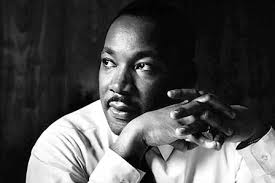
“I have decided to stick with love. Hate is too great a burden to bear.”-Martin Luther King, Jr.index

Love is heavy.

It brings with it many frustrations and tears.

I walk with people caring for aging parents and see this to the fullest.  They are tired, weary, worn.  They love their parents…but it is a heavy burden.

I walk with new parents and see the same thing, after a while.  They are tired, weary, worn.  They love their children…but they’re a burden.

Or parents of children with special needs.  Or adults who work primarily in the service industry.  Or adults who work in social services, or nurses, or educators, or hospice workers.

Or people who do justice work.

Because, and this is a truth about humanity that I think is under-appreciated by those who don’t work daily, one-on-one, with a wide swath of humanity: people suck.

They do; no two ways about it.

But sometimes the general nature of people can get the best of us.  Especially those of us who fancy ourselves as doing justice work.

How easily justice work can turn into hatred.  I’ve seen that too many times.  Justice work becomes full of “us and them” dichotomies when the heart is left unattended.  The unattended heart easily turns to hate over time.  Calcification is the natural state of everything that is left alone.

The heart is no exception.

We like to think that love and hate are opposites.  No; they are cousins.  Love and apathy are opposites.  Hate and apathy are opposites.  Love and hate are cousins who quickly dress alike in their zeal and passion when left unattended.

Love and hate are like those twins you dated in high school.  You’re always wondering if they’ve pulled the old “switch-a-roo” on you.

It does no good to hate the oppressor…MLK knew this in a powerful way that is instructive for us all.

Working against an oppressor must be a labor of love, not a labor of hate.  If it’s not, then pain is just transmitted instead of transformed.

This, of course, is easy for me to say as a white, able-bodied, heterosexual, male.

But even there, too, I must be careful.  In my zeal for justice work I can get sucked into reactionary hate against my status and privilege.

I must learn to give up my privilege as best I can.  Hating it does very little to change things.  Only in giving things up can we change them.

Jesus understood this.  “Father, forgive them, they don’t know what they’re doing.”

As I said, MLK knew this.  He gave up his justifiable hatred for a humanity that moved…moves…too slowly toward justice and peace.

But that’s indicative of a heart attended to.  Attending to the heart is heavy work.

But letting the heart calcify…that’s the work of the dying and dead.

I think the task of justice work these days is to work against systems of oppression while also attending to the heart.

Unfortunately I don’t see it very often.  Too much “us and them” talk coming from liberal circles.  Too much silence from conservative circles.

The radical circles are the ones speaking against justice while attending to the heart.  MLK was a radical, not letting the heart calcify to the point of hate.  I think he knew that, to do otherwise would be to replace one burden for another.

And Lord knows we have too many burdens to add anymore to this world.

One Thought on God and Suffering

For some reason my entry “5where-is-god-suffering Phrases I Think Christians Shouldn’t Say” is getting a lot of traffic again.

And I’m getting a lot of push back because of my thoughts on suffering and “God’s plan.”

So, in an attempt to clarify it all, let me say this:

I will not endorse the notion that it is God’s plan that people get cancer.  I will not endorse the notion that it is part of God’s plan, specific or otherwise, that children die by gunfire.  I will not endorse that Hiroshima was part of God’s big plan.

I cannot do any of these things because I have sat by too many bedsides and buried too many children, even in my short pastorate.

Now, have I seen beauty in death?  Absolutely.  But have I seen senselessness?  Senselessness that goes far beyond any sort of platitude like “God’s wisdom is foolishness” or any other attempt to bend the words of Scripture to make meaning out of the meaningless?

Damn right.

And that’s the thing.  Such theologies that try to put God at the helm of these tragedies or, even worse, try to say that God is a passive bystander, are attempts to make concrete meaning out of meaninglessness.

We all make meaning out of life.  We all do; there’s no escaping it.  I have heard and known people calling their disabilities beautiful tools they use to learn about life.  I have heard people say that the death of their child was instructive for them.

I do not deny that these things are true.

What I deny is that a particular truth was intended to be drawn from them.  What I deny is that a particular truth was in the Divine mind as those tragic events happened.

What I deny is that God is in the dirty pain business.

Now, I think that God has caused me pain; causes me pain. I experience the pain of being wrong all the time (perhaps in this instance, too?).  I experience the pain of having my ego subverted, my best-laid intentions crumbled, my pride blown away, my intellect shattered by a God who speaks a word of grace to me when my greatest desire is for retribution.

But I do not think that God has caused my car accident so that I learn to drive better.  I may thank God for an accident that taught me a life lesson, but I don’t think God was passively watching it.

I think God was in the pit of fear and hell that I was in while going through it.

And that is a theology of the cross that, I think, truly speaks to the crucifixion story and the Good News of God.

The crucifixion story is one that speaks of Jesus’ suffering not as something apart from humanity, but a part of humanity.  I am not one to believe that God caused the crucifixion for some atonement.  I think that when you act and talk like Jesus, you die for it because our power systems (even the power systems that try to make sense out of the senseless) don’t like it.

So, do I think that it is all part of God’s plan that your foot was amputated?  That your brother or sister died in the Iraq war?  That your father has prostate cancer?

No.  I don’t. And we can quibble about philosophical categories for God, and whether God knows all, can do all, is everywhere…all of that.  We can quibble until the end of time, and I don’t think we’ll be any closer to the truth than if we just allowed God to say, “I’m not going to make sense out of senselessness…I’m going to make resurrection.”

Then maybe we can learn to die to our need to make sense of it all, and be resurrected as people who can hold tension well…a tension taught to us by a life that includes suffering, joy, and all in between.