My Obligatory Post about the “Evolution vs. Creatonism” Debate

…I didn’t watch it live.earth-space

We watched Dallas Buyers Club instead, starring a gaunt Matthew McConaughey and even more gaunt Jared Leto.  And ate pork tacos that I made myself from ingredients I cobbled together from the store.

It was a great movie, based on a true story.  And I make great tacos.

And, dare I say, the movie and the tacos had more to do with reality than the so-called debate.

I’m an evolutionist when it comes to how things have ended up the way they have; no mistake about that.  It’s the theory I think best explains the questions it sets out to explain (at least, so far). But to think that these two people were actually debating the same topic is naive (I watched the debate online this morning).

They weren’t debating the same topic.  It might have appeared like they were, but they weren’t.

It appeared like they were debating how the world came to be and why there is “something” rather than “nothing.”

But really, Ham was talking about a worldview, and Nye was talking about science as a way of discovering truth.

Those are not the same thing.

Science is a method of discovery.  A worldview is composed of convictions on what the person feels has already been discovered.

So it’s no wonder why, when asked what would change each of their minds on the supposed topic, Ham said “Nothing” and Nye said “Evidence.”

Science is a method of discovery based off of evidence. It changes because more, different, or better evidence is found (or previous evidence appears unfounded). We could say that the sum total of Nye’s thoughts, some of which are informed by science, comprise his worldview (so far).  Nye’s worldview includes science, but I wouldn’t say that science is his worldview.  Science probably answers the “how” questions for Nye, like it does for most of us, but it doesn’t answer every question.

A worldview, however, is the total sum of all conceptions in one place.  Ham was debating his worldview.

Changing a worldview doesn’t take evidence. It takes a life-changing encounter…or a series of life-changing encounters. And Ham was describing his worldview where everything (dare I even say even relationships and love?) are contained within what he considers to be Scripture.  Especially questions like “how.”  His worldview says that “how” questions are found in Scripture. He’d have to encounter something that would dramatically shift him out of that way of thinking for his worldview to change.

An encounter is not a discovery; it is the absolute disruption of a worldview regardless of the method of discovery used.

Suffice to say, anyone who makes a “Creationism Museum” (and I use”museum” here in the sense that “things are on display”…like a thimble museum…it is not, in my opinion, a museum in the same way as The Field Museum here in Chicago) is not open to many life-changing encounters, I would think.

That’s just my assumption, but I think there is evidence to support it.

I would venture to guess that Ham feels like he’s already had his life-changing encounter…and doesn’t need any other ones.

And that, by and large, is my biggest beef with that mindset.  It’s the idea that things are “settled.”  So Nye could have shown him anything, said anything, and Ham still wouldn’t budge.  Because his worldview doesn’t allow for that…doesn’t allow for more, better, or different evidence.  It’s not based on evidence.  It’s based on being, and remaining, settled.

And a worldview that is settled is static, not dynamic.

And I think that we, the church, should encourage dynamic worldviews. And we need to be encouraging dynamic faith, too.

Evolution is mysterious.  It’s amazing.  In fact, Nye used “mysterious” multiple times when speaking! It’s how a simple thing becomes complex in structure and, yet, retains some simplicity even amidst it all.  It’s so interesting!

Creationism is static.  “Boom,” it is said, “a fully developed tree with rings and everything.”

It’s…uninteresting to say the least.

One of the common critiques about accepting evolution as an answer to” how things are as they are” is that it erodes “God’s glory” (although I’m unclear of what the critics mean by that phrase).

God’s glory isn’t diminished because God might use a mechanism like evolution to create.  In fact, I think that enhances God’s glory (and by “glory” here I mean God’s “awe-inspiring traits”).

God’s glory is diminished, I think, when we assume God would take the road that we would take…the road of least resistance.

Because, let’s be honest, I often just want things to *poof* be as I’d want.  Creationism is what I would do.  Hopefully God is more inventive than me…more awe-inspiring than me.

This reluctant Christian hopes people don’t think last night was a real debate.  Real debates need to be on the same topic intending to influence people. I would be astounded to hear that anyone changed their mind about creationism or science by hearing it.

You want to know what I think would be a good debate?  The debate between static faith and dynamic worldviews; between static and dynamic faith.  What are the pros and cons between thinking you have it all figured out and continually searching?

Tag, NPR, you’re it.

On Naming the Dead and why I’ll say Philip Seymour Hoffman’s Name Next Sunday in Church

There are only two community worship experiences that we do where we name a list of all of the recently departed in a row: All Philip-Seymour-Hoffman-Saints (in November) and the Easter Vigil (the night before Easter).

And slowly and surely I’ve started to include not just the saints of the church who have passed on in recent years, but also celebrities, activists, politicians, and local heroes.

And I’ve started naming them on Sundays, too, when we give thanks for the saints who have gone before us. Like today I read out Pete Seeger’s name as a faithful witness in this world to the life of God shown in the Christ.

Was Seeger a Christian?  I don’t know.  I know he had a godchild.  I heard an interview with her on NPR. But there are plenty of people who have godchildren and don’t identify as “Christian.” I don’t think it matters in this case.  If there’s anyone who lived into the Beatitudes as a peacemaker, I feel Seeger is it.

We named him.  And we’ll name Philip Seymour Hoffman next week, too. Because it is less about how they identified themselves, and more about how God has identified them: child of God.

And, to be honest, Philip Seymour Hoffman touched me, and so many people, in his work that I think we’d do collective harm in not publicly grieving for him in some way; in some faithful way.  And I’m a firm believer that one of the ways that the Holy Spirit works in this world is through the arts, and I believe that God moved through him and his gifts.

Lord, he had gifts…

We name the saints not because of what they did  in life (though that is certainly part of it), but more because of who God claims them to be.

And there were demons there, now come to light, which we all have.  And if people knew the full truth of any of us, I think they’d balk at having our names read in any list of so-called “saints.”

And yet, my name is there.  And so is yours.  And so is any of ours.

So, if you worship in a community and there is a time to call out the dead, name him.  Do it.  Or when the Vigil comes around to your community and your pastor knocks on the parish door to invite the dead to worship in the resurrection, make sure his name is there along with Pete’s (we don’t ever do last names, so technically I’ll just say “Philip Seymour”).

Or if you’re making a list for All Saints, include him there.

Him, along with everyone else you know personally who has died this year.  Him, along with every other faceless, nameless person suffering from addiction who will die this week that we won’t ever hear about.

Because, and here’s the main point, in naming Phillip Seymour, I hope and pray I’m also naming about 100 other people who will die this week in Chicago of an OD that we’ll never hear about, and no one will care about.

And if we can’t care, in some small way, who will?  If we can’t point to this and all other deaths, especially tragedies, and say, unequivocally, “there lies a child of God, loved and redeemed even now,” of what use is the church in truth-telling?

May light perpetual shine upon Pete and Philip and all the other nameless ones we’ve lost this week. Amen.

I Want My Children to Know This About Faith

Having a kid changes your perspective.  I used to roll my eyes when I heard parents say that, but it’s true.Father-Son-Shadow

Like, for instance, how I’m much more willing than I used to be to just drop those last papers and emails and meeting notes to get home before bedtime.  I still work late…but I’m much more willing to let it all go to snuggle a snotty face, read Jimmy Buffett’s “Jolly Mon” storybook, and change a diaper before the little guy goes to sleep.

And as we’re raising this little guy, and as a pastor, there are a few things I want this little guy to know about faith.

First, faith and religion won’t give you self-esteem.  It’s not meant to.  It’s not meant to make you feel good.  It’s purpose is not to get you to love yourself.  Don’t stick with the faith because it makes you feel good.  If you’re doing it to feel good, you’re an addict, not faithful.  Get more vitamin K.

But…

But sometimes the faith can love you when you can’t love yourself.  Sometimes hearing that God chooses you can replace those moments in your life when you feel like you can’t choose yourself, don’t love yourself, can’t believe in yourself.  There have been times in my life where I’ve let the faith believe things about me that I couldn’t muster myself to believe…and it made all the difference in taking the next step the next day.

Secondly, faith isn’t about getting answers.  Faith isn’t about knowing certainty, “figuring it all out,” or attaining a perfect worldview that will put all the pieces together.  If you’re looking for your faith to do that you will be disappointed.

But…

But faith is intended to help you ask better questions about your life.  It is intended to provoke your thoughts about yourself, about purpose, about others around you in such a way that you see the world differently than the world tries to get you to see it.  It is provided to help you celebrate the life of the mind rather than the pursuits of greed, fame, and fortune.  It is the antithesis to a world that says “Success is the mark of a life well lived.”  No. “Pursuit of a purpose bigger than yourself, specifically the purpose shown in the life of the Christ in sacrificial love…that is the mark of a life well lived.”

While we’re on the subject of answers, the Scriptures are not meant to explain everything in this world.  They are not meant to explain how the world came to be, or how sexual orientation should be understood, or how psychology is understood.  No.  Faith is the quest for “why” not “how.” The Scriptures are inspired words by inspired people about the history of the quest for “why.”  Why is there something rather than nothing?  Why am I to love even if I don’t feel like I want to?  Why is humanity connected in such a way that makes me feel responsibility toward someone else?

Faith is meant to help you embrace mystery, hold tension, and walk well in a world that wants to polarize you into this answer vs. that answer.  Your dad is a reluctant Christian because this has been largely lost.  I want you to be a Christian, too (even if you’re reluctant like your old dad…)

Thirdly, faith isn’t supposed to make you feel superior.  There are no “poor souls…”  You are as poor as any soul out there.  And if your job in the world is to “save” someone, you better be a lifeguard.  Only the Divine can save.  All you can do is be Christ’s hands and feet.

But…

Faith is something that I think you should share.  Not in the “I think this and you should, too…” sort of way.  But rather, in the “Here’s something I find really true…” sort of way.  In the “Here is my hope…” sort of way.  In the “Here’s what moves me…” sort of way.  And never be afraid to ask someone else what moves them, either.  Their beliefs do not threaten yours.  There is much to learn from one another.  I want you to have friends who believe and think different things than you do, and I want you to talk to them about it.  Often.

Finally, I want you in a faith community.  Why?  Because I don’t know how else to help make sure that God doesn’t end up looking like you.  And I want you in a multi-generational faith community where you have to interact with lovely old ladies and hold little babies. Hopefully it can be racially and ethnically diverse, too.  I don’t care if it’s big or small, I just want it to be diverse.  I want you to be in a faith community where questions are encouraged, where mystery (specifically in the sacraments) are lifted high (because then maybe you’ll see how the Thanksgiving table in November is like the thanksgiving table on Sunday mornings, and live in response to that bounty).  I want you to remember that you are loved and redeemed and meant to be a light in this world that too often is full of shadows, and the only way I can think that you’ll be reminded of that often enough is when you gather with other people to read and hear ancient words, to shake hands, to eat and wash together, and to drink strong coffee (optional).

There’s more to say this morning to you, buddy, but the freezing temps outside have closed your daycare, which means I’m in charge of lunch.  But this is a good start…

“Love is Heavy, but Hate is a Burden” or “The Old Switch-a-Roo”

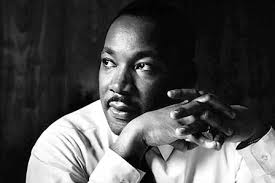
“I have decided to stick with love. Hate is too great a burden to bear.”-Martin Luther King, Jr.index

Love is heavy.

It brings with it many frustrations and tears.

I walk with people caring for aging parents and see this to the fullest.  They are tired, weary, worn.  They love their parents…but it is a heavy burden.

I walk with new parents and see the same thing, after a while.  They are tired, weary, worn.  They love their children…but they’re a burden.

Or parents of children with special needs.  Or adults who work primarily in the service industry.  Or adults who work in social services, or nurses, or educators, or hospice workers.

Or people who do justice work.

Because, and this is a truth about humanity that I think is under-appreciated by those who don’t work daily, one-on-one, with a wide swath of humanity: people suck.

They do; no two ways about it.

But sometimes the general nature of people can get the best of us.  Especially those of us who fancy ourselves as doing justice work.

How easily justice work can turn into hatred.  I’ve seen that too many times.  Justice work becomes full of “us and them” dichotomies when the heart is left unattended.  The unattended heart easily turns to hate over time.  Calcification is the natural state of everything that is left alone.

The heart is no exception.

We like to think that love and hate are opposites.  No; they are cousins.  Love and apathy are opposites.  Hate and apathy are opposites.  Love and hate are cousins who quickly dress alike in their zeal and passion when left unattended.

Love and hate are like those twins you dated in high school.  You’re always wondering if they’ve pulled the old “switch-a-roo” on you.

It does no good to hate the oppressor…MLK knew this in a powerful way that is instructive for us all.

Working against an oppressor must be a labor of love, not a labor of hate.  If it’s not, then pain is just transmitted instead of transformed.

This, of course, is easy for me to say as a white, able-bodied, heterosexual, male.

But even there, too, I must be careful.  In my zeal for justice work I can get sucked into reactionary hate against my status and privilege.

I must learn to give up my privilege as best I can.  Hating it does very little to change things.  Only in giving things up can we change them.

Jesus understood this.  “Father, forgive them, they don’t know what they’re doing.”

As I said, MLK knew this.  He gave up his justifiable hatred for a humanity that moved…moves…too slowly toward justice and peace.

But that’s indicative of a heart attended to.  Attending to the heart is heavy work.

But letting the heart calcify…that’s the work of the dying and dead.

I think the task of justice work these days is to work against systems of oppression while also attending to the heart.

Unfortunately I don’t see it very often.  Too much “us and them” talk coming from liberal circles.  Too much silence from conservative circles.

The radical circles are the ones speaking against justice while attending to the heart.  MLK was a radical, not letting the heart calcify to the point of hate.  I think he knew that, to do otherwise would be to replace one burden for another.

And Lord knows we have too many burdens to add anymore to this world.

One Thought on God and Suffering

For some reason my entry “5where-is-god-suffering Phrases I Think Christians Shouldn’t Say” is getting a lot of traffic again.

And I’m getting a lot of push back because of my thoughts on suffering and “God’s plan.”

So, in an attempt to clarify it all, let me say this:

I will not endorse the notion that it is God’s plan that people get cancer.  I will not endorse the notion that it is part of God’s plan, specific or otherwise, that children die by gunfire.  I will not endorse that Hiroshima was part of God’s big plan.

I cannot do any of these things because I have sat by too many bedsides and buried too many children, even in my short pastorate.

Now, have I seen beauty in death?  Absolutely.  But have I seen senselessness?  Senselessness that goes far beyond any sort of platitude like “God’s wisdom is foolishness” or any other attempt to bend the words of Scripture to make meaning out of the meaningless?

Damn right.

And that’s the thing.  Such theologies that try to put God at the helm of these tragedies or, even worse, try to say that God is a passive bystander, are attempts to make concrete meaning out of meaninglessness.

We all make meaning out of life.  We all do; there’s no escaping it.  I have heard and known people calling their disabilities beautiful tools they use to learn about life.  I have heard people say that the death of their child was instructive for them.

I do not deny that these things are true.

What I deny is that a particular truth was intended to be drawn from them.  What I deny is that a particular truth was in the Divine mind as those tragic events happened.

What I deny is that God is in the dirty pain business.

Now, I think that God has caused me pain; causes me pain. I experience the pain of being wrong all the time (perhaps in this instance, too?).  I experience the pain of having my ego subverted, my best-laid intentions crumbled, my pride blown away, my intellect shattered by a God who speaks a word of grace to me when my greatest desire is for retribution.

But I do not think that God has caused my car accident so that I learn to drive better.  I may thank God for an accident that taught me a life lesson, but I don’t think God was passively watching it.

I think God was in the pit of fear and hell that I was in while going through it.

And that is a theology of the cross that, I think, truly speaks to the crucifixion story and the Good News of God.

The crucifixion story is one that speaks of Jesus’ suffering not as something apart from humanity, but a part of humanity.  I am not one to believe that God caused the crucifixion for some atonement.  I think that when you act and talk like Jesus, you die for it because our power systems (even the power systems that try to make sense out of the senseless) don’t like it.

So, do I think that it is all part of God’s plan that your foot was amputated?  That your brother or sister died in the Iraq war?  That your father has prostate cancer?

No.  I don’t. And we can quibble about philosophical categories for God, and whether God knows all, can do all, is everywhere…all of that.  We can quibble until the end of time, and I don’t think we’ll be any closer to the truth than if we just allowed God to say, “I’m not going to make sense out of senselessness…I’m going to make resurrection.”

Then maybe we can learn to die to our need to make sense of it all, and be resurrected as people who can hold tension well…a tension taught to us by a life that includes suffering, joy, and all in between.

On Why I Will Allow (and Encourage) My Kid(s) to Believe in Santa Claus

Just like the perennial “Waimagesr on Christmas” creeps its Grinch-like head around this time of year, so do the calls for people to abandon Santa Claus, the “Elf on the Shelf,” and other child-pleasing myths that we’ve come to associate with this season.

Apparently because we celebrate the birth of Jesus at this time of year, everything else must come to a halt…lest we overshadow the “reason for the season.”

Well, to be honest, if we’re trying to get back to the “reason for the season” at its roots, we should probably leave Jesus out of the equation, too.  December 25th was not originally known as “Christmas,” and didn’t become so for many years after Christianity had been around.  “The Feast of the Undying Sun” was marked on December 25th, an acknowledgment of the solstice that would now ebb away into increasing daylight.  A nice pagan festival in the dead of winter.

We invited Jesus to the party late.  He wasn’t the original reason for celebrations at this time of year.

Christians now celebrate the “Feast of the Undying Son” (I should trademark that little monicker because I think it’s pretty darn clever), but we should be honest and recognize that it’s not our original festival to claim.  And it certainly wasn’t chosen because it was the date of Jesus’ birth.

Face it, we put the “Christ” in Christmas.  Any attempt to “keep” Christ there are done so because we cemented him there…

But back to Santa and the crazy Elf on the Shelf: I say “do it.”

As a pastor, as a father, as someone who thinks that life is more than water and trace elements forced to eek out an existence, I say “do it.”

As I preached this last Sunday, St. Nicholas can provide a real depth of meaning in this season where we celebrate Jesus’ birth (for Christians) by buying one another a Lexus adorned with a huge bow.

St. Nicholas was known for his giving…not for getting whatever he wanted.  And by keeping St. Nick in this season, we too, can focus our children on the giving of the season, rather than the receiving.

“Keep Christ in Christmas” the bumper sticker reads…on the gas guzzling car.  What about keeping Christ in consumerism? In fact, if you want to eliminate the real issue with this season, it has nothing to do with saying “Happy Holidays” or burning effigies of the jolly fat elf.  It has everything to do with buying and selling and how and why and where we do it.

But I digress.

Even more than the historical St. Nicholas, there is a bit of wonder and awe that is lost from this season if we don’t allow our children (and our adults) to play around in the great mystery that comes from things not being dark forever, from lights that shine out of a tree planted in the living room, from characters that point to good virtues and mischievous glee.

I encourage you to believe in Santa Claus, who is chief giver in a season where our natural inclination is to conserve and save-up to survive the winter.  Likewise, believe in the elf that creates havoc in the middle of the night.  Lord knows we all need another example to follow when our tendency to look out for ourselves butts up against the command to look out for our neighbor’s needs first.  Lord knows we all need a reminder that, though things seem to run havoc in the darkness, a little light can expose the havoc and encourage us to laugh at it all.

Santa and the Elf and the like can encourage our children, and even us, to live deeply in the season, look lightly at ourselves, and look wondrously at life.

The real trouble, I think, happens when we start teaching our children that believing in Santa Claus is analogous to belief in God.  That is the real fear behind inviting these characters into the season: belief and attention to them will point away from “true” belief and attention to Jesus.

But if we start holding Jesus and Santa at the same level, when we teach that belief in the Elf on the Shelf is like belief in God, and that you can’t hold both at the same time, then we do a real disservice.  Dolly Parton and Kenny Rogers sing that wonderfully awful song, “I Believe in Santa Claus” where they also claim to believe in magic, in God, and in human destiny…as if it’s all on the same level…and we’ve bought into that perspective.  It doesn’t help the situation.

They are different types of belief.

I don’t trust Santa like I trust God.  Santa is a mental assent I allow myself at certain times with a wink and nod; hopefully a mental assent that points me toward a deeper truth in the world.

But God…I don’t allow myself to mentally assent to God’s existence.  I tried to do that and ended up an atheist for a while.  Rather, I trust God’s existence and lean on it (for more on this line of thinking, see what I wrote here).

Santa, the Elf on the Shelf, it all lends itself to wonder and awe and joy.  I say that you shouldn’t take that away from children.  But also don’t make belief in it all analogous to trust in God.  That’s the real problem with this whole season, I think.  We feel we’re in competition for “belief resources.”

In fact, the God who invites imagination, who inventively sung creation into being (and sung salvation into being through a lullaby), pulls out of me the desire to embrace these traditions.

They’re not harmless; they’re helpful.

And they’re only hurtful when we put them on par with faith.  And sometimes I’m a reluctant Christian because that’s exactly what Christians have done.

So, Findley will be finding some presents from Santa on Christmas morning (and we’ll probably address some from the cats as well even though they don’t have the opposable thumbs needed to wrap presents).  It won’t be the primary focus of our festival, but it’ll be there. And he’ll squeal with joy and, for a moment, feel the wonder in the magic of the season where a jolly fat guy fits down a non-working fireplace and cats wrap presents to give to their owners.

And while we don’t do the Elf on the Shelf thing (mostly because I find the elf’s proportions creepily elongated) if that’s your bag, go for it.

And if Christmas bells deliver your presents, or if Santa rides a donkey, or if gnomes put presents in stockings…all traditions from around the world…allow yourself the wonder and awe to believe that this world might just be a little bigger than we want to make it.

Perhaps you’ll find yourself caught up in joy that points to Joy greater than itself.  Perhaps you’ll figure out why the ancient church put Jesus’ natal day on December 25th.  In the time of darkness, the lightness that comes from such joy is a welcome guest.

On Why Clergy Don’t Need Tax Exempt Housing

Recently a federal juindexdge in Wisconsin ruled, in a suit filed by the Freedom from Religion Foundation, that clergy person’s tax-exempt housing is unconstitutional.  You can read more about it here.

The reason why clergy have tax-exempt housing in the first place is baffling to me.  It’s not necessary.

True, it’s a nice perk in a job where the burn-out rate is almost on par with air traffic controllers.

But they don’t get tax-free housing.  Hell, I don’t even think they get free unlimited plane flights…and they help land the things!

It’s not necessary.  In fact, I think it’s a problem.

Because if you look at the marriage between the clergy tax-free housing status and the government that granted it, you’ll find that this all arose in the 1920’s at a time when modern American exceptionalism was merging with revived religious fervor.  And you know the trajectory: revivals, the end of the Third Great Awakening bleeding into two World Wars and then a Fourth Great Awakening, the marriage of American cultural values and “Christian values.”

The church became the backbone of a social structure where everyone lived in little pink houses (for you and me), waved the flags that stood near the crosses next to the altars, and believed that God’s protection was over the USA.

At least, that’s the pretty picture painted by many.

Lost in the shadow of this false utopia that many look back on with fond affection is a series of systems that held racism iron-locked, held fear of the “other” as a value, and held crippling poverty as something you shy away from looking at (remember Robert Kennedy’s national tour?).

I think it is no accident that the “social gospel” of the Third Great Awakening was largely stifled in the 20’s-30’s and fell out of influence as we tumbled into the World Wars as now religious structures, who had been given a hand-out by Uncle Sam, began focusing on the individual rather than society.

Enter the Fourth Great Awakening with altar calls and personal commitments to Christ and civic duty…

What happens when Caesar sends you a gift? You become hesitant to critique Caesar.  You begin to scratch political backs.

The systems of the Great Society became largely solidified as religious and civic powers walked in lock-step.  Why is it, do you think, that Martin Luther King, Jr. wrote his prophetic letter to white pastors from that jail cell?

Their silence was deafening!

And all the while they were taking their tax breaks from a system that didn’t find it important that people of all races vote.

I’m happy to give up my tax-free housing allowance.  I hope other clergy are, too.  I don’t think I can take personal money from a system that continues to cut SNAP benefits, continues to feed fat insurance companies even in medical care reform, that continues to fight wars at considerable expense but refuses to fight poverty with any like measure.

I am not an advocate for being against things simply to be against something.  But there is much in our world that does not exhibit righteousness, “right-relationship,” and I must be free to speak against those ills.  Let’s give tax breaks to people that really are persecuted.

Perhaps this move will free clergy up to advocate for such a position.

An Argument for Keeping Churches Small*

12SmallChurchAdvantage_400_478515996*A quick qualifier before we begin: “small” has yet to be defined with precision.

Because I think small doesn’t have everything to do with numbers (although, I think that at a certain point it does).

So, I’ve been getting some push back for my last article on why I dislike mega-churches.  A lot of it is warranted.  I think that if you put something out there, people should be able to push back.  And please note, I also dislike a lot of small churches (also in the article).

But that piece was written in response to a piece by a colleague who says he doesn’t like “mega,” but then never actually digs into “mega” at all in a substantial way.  Perhaps that wasn’t his point.  But there is something to be said there…and I wish he would. I think there is a real argument to be had for keeping faith communities on the small side.  I really do.

Here’s a part of that argument:

Look, we have a depression problem in the communities of faith, by and large.  This is well diagnosed.

Little churches are depressed that they  aren’t mega, and I think mega-churches have depression as well, though not of the psychological nature.  Mega-churches are depressed, and depressive, in that the consolidation of resources, while seemingly allowing for unlimited amplification of good, actually depresses the good they can be and do.

I’ll get to that in a moment.

But first, let’s define “small.”

Small to me is manageable.  For every community the particulars of that will be different, I think.  Some of it will depend on the leaders (clergy and others), some of it will depend on other factors such as location and mission (locus and focus).

But small does not mean deficient.  And it certainly doesn’t mean “bad” or “not living into it’s potential.”

I think many churches are small in size because of unconscious choices they make: who the power brokers are, what the internal fights are, their ability to welcome and adapt to change, etc.  Very few of these choices have to do with Jesus, btw.

But I think that communities of faith can be small by choice for reasons that absolutely have to do with Jesus.  That is, they can take their own temperature and decide when their connections are becoming so strained that they need to send some folks to start new communities of faith.

Because Christ was about making connections and reaching the margins…not about consolidation.  The need to consolidate is the need to control.

Control is a nice little illusion.

Let’s go back to mega a bit.  Because I think mega is about control.  That’s how mega is depressive.

Here’s the thing:  mega churches are hierarchical…like most churches (there are some notable exceptions, like the Quakers).  And the broader the base, the smaller the top.  And although there may be many leaders in a mega church (there should be many leaders in any size church!), when message lies in the lonely top, when perspective lies in the lonely top, when generation and impetus lies at the lonely top, it depresses the ability for the people to grow out on their own.

It truly does.

And it creates rock stars rather than ministers which, to me, is a real problem.

And these rock stars then become the interpretive lens for the parishioner rather than Jesus, because, well, how can you challenge someone who obviously has so much influence and control? They must know what they’re talking about…

This is, I think, why mega-churches have a large rotation of regular attendees…people who come for a few years, and then move on.  Consolidation at the top doesn’t allow things to “trickle down” in the way people want it to. The inability to actually have agency, to grow together while challenging each other, is depressive.

My parishioners and I don’t all agree on every point, theological or otherwise.  But we have a relationship that allows us to continue to do mission together, even while acknowledging where we diverge.  That just doesn’t happen in the same way in the mega world, to the detriment of the church and individual spirituality.

And, by and large, I find that mega churches perpetuate that mega-mentality that “more is better,” but practice a “more is not better” when it comes to leadership and messaging, as the lead pastor’s sermon is video streamed into each campus regularly despite the availability of other pastors to craft other sermons.

This, I think, doesn’t connect people in the way it’s intended.  There’s dissonance there.

I think it actually depresses mission; it doesn’t expand it.

And finally, let’s talk about the big elephant in the room: ego.

We must always be on guard when it comes to the ego.

The ego of small-in-numbers churches is offended that they’re not bigger…and so sometimes they fall into patterns of behavior to keep themselves numerically small as a way to fulfill their doom-prophecy.

They call themselves “friendly.”

When I hear or see “friendly” on a church sign or on a church website, I automatically think “dysfunctional.”  Because they’re trying to make up for the fact that others aren’t in the room by proclaiming that they’re super-nice.

If they were truly welcoming, though, and open to change, others would be in the room, right?  Maybe.  Most likely.

In contrast, the ego of the mega church leader is never kept in check as the church begins to grow but is never sent.  As the base gets bigger, the ego gets bigger.  Things seem to be “working,” and there’s nothing more delicious for a hungry ego than to see things “work.”  And so how do we keep things working?  By keeping control.

And the ego of the mega church attender is, likewise, fed by size.  “I must be doing something right because I go to a successful church! Look how big it is and how many programs it has!”  Red Riding Hood did a similar comparison before being eaten by the wolf…

People at this point will say things like, “God never intended you to live a mediocre life,” or “God has big dreams, you should too” or start quoting Proverbs or other parts of scripture to lay a foundation for bigger and successful is better.  And this is, I think, a secret in the world of mega: self-help tidbits that we pass off as spiritual.  Make me feel good, and I’ll serve you forever.  Feed the mega-ego until it’s stuffed.

But Jesus rarely made people just “feel good.”

If we look at Jesus (and really, all scripture should be seen through the lens of Jesus), we don’t see that.  Abundant life didn’t have to do with numbers or feeling good.  It had to do with reliance on God.  Reliance on God keeps the ego in check.  Humility.  Passionate giving.  Love that is sacrificial.

Look, I don’t know if your church is too mega or too small.  And I, by no means, think I have it all figured out.  My ego is trouble…just ask my wife.

But I think a good beginning question a faith community could delve into would be, “Do we think more is necessary?  Is more better?  Or are we confident that God has equipped us with all that we need?”

And really ask it!  Wrestle with yourself, with your church.

Keeping a church small intentionally involves asking those question.

And, I should be clear, I think there are small churches with 30 on a Sunday morning, and small churches with 3000 on a Sunday morning.

Both will have difficulty staying small, though.  There seems to be an in-between that aids in this kind of work.

Because mega is so tempting.

So constant questions, checks and balances, and the ability to really ask if you’re depressed or depressive is necessary.

I guess I would say, let’s keep it small.  Seriously.

Why I Dislike Mega-Churches (No, Really…)

willowcreek-megachurch_thumb

A colleague of mine wrote a blog post today entitled, “Why I Hate Mega-Churches.”

But it’s a bait-and-switch (which he admits halfway through).  He likes mega-churches and, by his writing (in this and other pieces I’ve read), would probably like to lead one or build one.

Fine, I guess.  But when I look around the world, one thing I don’t tend to say to myself is, “Gosh, this world needs another mega-church.”

Just saying.

A good thing about mega-churches?  They have a lot of resources to do a lot of good in the world (should they choose to).

The consolidation of people and money under one mega-roof creates mega-possiblities (a quick qualifier: if one does some math to subtract the ecological and sociological impact from a mega-building, mega-pastors, mega-salaries, mega-parking lots, and mega-messaging-machines that often tout a message that I’d consider more damaging than helpful, the possible good shrinks considerably).

A bad thing about mega-churches?

They’re mega.

No, seriously, I think that’s a bad thing.  The anonymity that’s possible by slipping into stadium seating creates this wonderful silo-effect for the participant.  It makes you feel like the mega-speaker in the mega-space is speaking directly to you…and yet you never actually interact.

And there’s no need to!  You have thousands of others around you who can take up their time.  Why should you?

Also, I imagine it’s a little difficult to talk about giving yourself up for your neighbor when you’re sitting on a building whose footprint is effectively the size of a neighborhood.  Can we talk about the God who empties for the sake of humanity if we’re looking to fill our lives with mega?  Is there no cognitive dissonance there?

And, from my office, another problem with mega-churches is that it’s mega-taxing as a pastor to care for so many people…so, often you don’t.  It doesn’t happen.  The voice of Sunday morning is not the voice of the hospital or home visit. That’s not always bad, mind you.  Lots of people can and should do such care.  But there’s something about knowing the people you’re serving, and knowing them well.

Listen, I feel taxed enough keeping 300 people’s issues, concerns, schedules, and needs clear in my head. The possibility of 10,000 people sends me into convulsions.

Another problem I have with mega-churches is that I think  mega-churches teach, implicitly or explicitly, that mega-blessings and mega-sized programs and mega-sized hopes and dreams are what fuels the world and counts for success in life.

And they’re not.

My colleague says in his opinion piece that mega-churches seem to understand that God is found amongst the poor and the lonely because of all the good work they do for the poor and the lonely with their mega-resources.

If I may be so blunt: bull.

Such romanticizing of mega-sized resources  and mega-sized programs for the poor is a mega-sized dream.

If it is true that mega-sized churches really did believe God is best found amongst the poor and the lonely, the pastors would lead the charge there by putting the mega-sized buildings up for auction or, as a little church here in Wrigleyville (Chicago) has done, take out the pews and allow the homeless to sleep on the floor during the week.

That’s mega-voice with a congregation of 40 on a Sunday morning.

Finally, I guess I’ll also say that I don’t like mega-churches because it just feeds the mega-monster in the American (not exclusively, but largely) personality that bigger is better, success is godly, and fancy is freeing.

Again, bull.

Jesus, who had a large following but just over a dozen main players, who had no job, no home, and by any modern measure of success was, well, not successful, gives me no indication that mega-churches are anything but mega.

They are no more church than any other size gathering, no matter how you spin it.  And despite my colleague’s parsing of “God in mystery” and “God that repels” as motivating factors for church size,  I don’t think the argument for building church empires lies in how people relate to God.

By and large I think the truth lies in how people relate to egos, to money, and to what typical “success” is supposed to look like.  This is why we have mega-churches: because we like mega for all the wrong reasons.

But, lets be honest, I don’t like many small churches, either.

Mostly because I usually find that they think they should be mega, and get depressed because they’re not.  Or because they say they don’t want to be mega, but secretly do.

I like churches who are honest about themselves, who they are, and confident that in God, they can do all they are called to do in this world.

Mega is so attractive on paper…

Funny.  Nothing about Jesus is attractive on paper.

If Church Websites Could Talk

Hi. Welcome to our siindexte. Do you like my stock photos of people who don’t go here representing a diversity that isn’t actually present?

Hi. Welcome to our site. Check out the “Our Beliefs” section where, when you scroll to the bottom, you’ll see that we think people who don’t agree with the tenets above end up in an eternal hell.  It’s at the bottom of the section…because we’re hoping you won’t get there.

Hi. Did you check out the “Our Beliefs” section yet?  Because it gives you the impression that you should believe those things, too.  And if you don’t, we’re going to ask that you start believing them, especially if you want to hold any sort of position in church leadership.

Hi! Did you notice how many exclamation points we use in our text?!  That’s because it’s exciting to be here!  Much like the YMCA!  Or any summer camp!

Hi. Welcome to our website.  It’s true that over half of the buttons on the site are “under construction.”  We just kind of figured that having a site up would be enough.

Hi. Welcome to our church website.  Does it look like we’re selling something?  It’s because we’ve commodified Jesus as something you lack and need, and something we sell.

Hi. Welcome to our website. Did you notice that there are no women in leadership?  Please ignore that…we think women are important, just not authoritative.

Hi. Welcome to our website. You won’t find it said on this page, but if you’re gay we’re not OK with that.

Hi. Welcome to our website.  Do you like the pic of the silhouetted person looking up over the body of water with arms outstretched as if they’re having a spiritual experience at the edge of the ocean?  It’s neat, right?  That’s what every service is like.  Promise.  It’s like standing at the edge of the world reaching up toward God.  Promise.

Hi. Welcome to our website. We’ve decided to use background music on every page.  It’s digitized hymns and not annoying.

Hi. Welcome to our website. We haven’t really updated the announcements since Christmas.  Yes, we know it’s July.  Just think of it as Christmas in July!

Hi. Welcome to our website.  We’ve listed the heads of all the different committees on the “About Us” page.  Because we want to show you all the things we’re going to lobby you to join and/or head up when the person listed there gets burned out.  It’s not confusing or overwhelming, is it?  Don’t you know what the Evangelism Committee does?  They partly designed this website…

Hi. Welcome to our website. We’re going to say that you can believe whatever you want to come here, but really we’re going to insist that we and we alone hold the truths of the world.  And we have answers.  Lots and lots of answers.  In fact, we’ve got it all figured out!  And most of the answers to your problems include the words “Jesus” and the phrase “Have more faith.”

Hi. Welcome to our website.  What makes us different from the other church meeting in that other gym down the street?  What makes us different from that other big-box church the next suburb over?  What makes us different from the other church who uses these same stock images?

Good question.