
From the Sidewalks of Life

World Affairs from the Sidewalks of Life
-Erik Rittenberry

All of us, thrown into the slaughterhouse
of history, thrown into a world
of assassinated Caesars
and crucified Christs,
into a woeful world
of useless wars and mayhem, a
world one madman away
from nuclear annihilation,
a world of technocratic schemers
and censored truthtellers, a world
where cancer eats the flesh,
inflation eats the earnings,
and progress eats the soul.

I emerge from a dingy dive bar
on E 4th Street and sit on a
graffiti-covered bench in the sun
to watch the frantic folks babble on phones
and walk with an unholy detachment
on the sidewalks of an evanescent
empire.

Everything is hectic and zooming by,
fast fast fast,
the great symphony of modernity —
cheap amusements, diversions, billboards of
smiling stooges, steel and cement and wifi,
guns and knives and needles,
conmen, thieves, and murderers,
fat wallets placed in the back pockets
of adderall-souled bigshots looking for the kill…

but hey, I just sit here half-drunk in the
golden afternoon and admire the girls
because the world is ugly
and they’re still pretty in their rustling skirts,
and their lavender smiles make me smile
as they stroll by my saluting eyes.

O America,
what have you done to your
children, these callous cogs
in a relentless wheel,
these nervous news-watchers,
these swollen toads of bitterness
and anxiety that wage war on
their own lives.

This once beautiful land of Whitman
and Emerson now reeks of mediocrity
and madness.

I say let us burn burn burn
the hollow creeds and the
bureaucratic yoke of this
waiver signing society, and let us
revive the Promethean fire
of the dead poets who have more
to offer us than any of these
wretched talking heads with a
vested interest in keeping you and I
“adjusted” to the soulless algorithm
of the status quo.

Let us burn burn burn
the headlines of treachery
and the flimsy thrones of all these
pallid-hearted politicians, and
let us do away with the life-negating
dogmas and all the
stupidity
corruption
greed
war
murder
and all the childish delusions
that sustain the idiotic inanities
of a belligerent world.

Luckily, my friends, the ravens
still flutter in the demented wind
somewhere out there beyond the
barbwire, and the grass still grows
in the meadows, and the lilies
still bloom on sunlit hillsides
despite it all, yet here I am,
sitting in the golden afternoon
on the incomprehensible
streets of mankind
half-drunk with a 4-day beard
ruminating on nothing valuable,
nothing exceptional,
nothing revolutionary,
just sitting there, alone, in the
feverish gloom of the afternoon
dreaming about pine forests
and jugs of wine
and old trains
slicing through prairies,
quietly awaiting the next
lavender smile
to pass by.
The Gentle Bishop

Today the church honors the start of an ancient feast, Martinmas, named in honor of St. Martin of Tours, Conscientious Objector, and Gentle Bishop.

St. Martin was born in the early 4th Century in modern day Hungary. His family was not Christian, and his father was a distinguished Roman legionnaire.

In his childhood he came under Christian influence, and at the age of ten he took it upon himself to sign up for Catechism classes (imagine that happening today!).

As a young teen, though, his catechumenal exploration was put on pause as he was drafted into the Roman army, a common practice for children of Roman soldiers. He was a good soldier. Very good, in fact, and well-liked by his comrades.

This is a nice tie-in to Veterans Day, no?

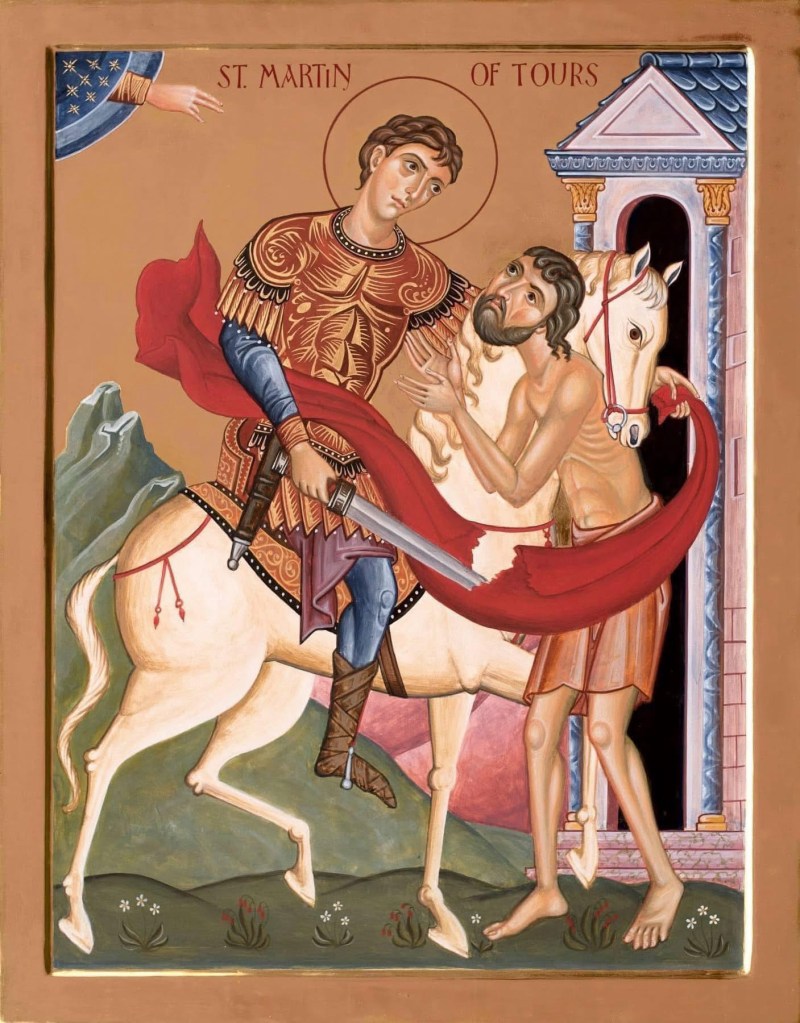
But, as the legend goes, one winter night he was stationed in Amiens, and on night watch he saw a poor old beggar at the city gates shivering in the cold. St. Martin had nothing to give him, so he cut his cavalryman’s cloak, and gave the old man half to wrap himself in. That night St. Martin dreamt that he saw Christ wrapped in his cloak, saying, “Martin, still a catechumen, has covered me with his cloak.”

Well, this sent St. Martin into an existential crisis. Over a period of time he became convinced he could no longer be a soldier because he could no longer justify killing.

He decided to be baptized and asked to leave the army. He was twenty years old.

St. Martin went off to seek Bishop Hilary of Poitiers (see Jan 13th for his feast day) to learn from him. He met with him and decided he wanted to join him in his work in Poitiers, but first wanted to say goodbye (and convert) his family back in Hungary. While St. Martin was journeying back to Hilary after hanging with his family, he learned that Bishop Hilary had been exiled. St. Martin decided then that he, too, would seek a solitary life for a while, and lived a hermits life in a hut outside Poitiers.

The thing is, St. Martin was becoming famous for not wanting to be famous. And so his little hut grew into two, three, thirty…a thriving humble monastery had formed that was providing charitable work all over the French countryside. In 371 the Bishopric of Tours became vacant. St. Martin’s followers tricked him into entering the city, and then would not let him leave until he agreed to be their Bishop.

“Fine,” he said. “But I’m going to do it my way…” (cue Frank Sinatra).

St. Martin, now Bishop, set up his home in a cave on the cliffs of Marmoutier, two miles from Tours. The office for his Bishopric was a hut just outside the cave. And though he had an unusual lifestyle, and an unusual approach, he was unusually effective in reaching the poor countryside people of France with charitable love, good works, and the Gospel message.

He fought for the rights of peasants in front of Emperors, not afraid to advocate on behalf of the poor. He established centers of charity and teaching in places no one else cared about. And when the Church first used capital punishment as the sentence of heresy, as they did in 386, St. Martin strongly opposed the sentence and began to ask tough questions about mixing the church and state.

He thought government and the church should not hold hands too tightly.

St. Martin died in 397. Interestingly enough, his work set much of the foundational work for the Celtic Christian Church, as missionaries trained in his little outposts traveled to the British Isles.

Martinmas, much like Michaelmas, became a festival time in much of Christendom, perhaps even spanning ten days originally. After the Reformation, many Lutherans continued to celebrate Martinmas, but did so to honor both St. Martin of Tours and Blessed Martin Luther (whose birthday is November 10th).

St. Martin’s motto, “Non recus laborem” or “I do not turn back from work” has been the motto of many of the faithful throughout the centuries.

St. Martin is a reminder for me, and should be for the whole church, that catechetical study has been known to significantly alter how people live and work. It has been formative…and could still be.

-historical bits from Pfatteicher’s New Book of Festivals & Commemorations

-icon written by Aiden Hart depicting St. Martin’s formative experience

On Armistice Day

On Armistice Day remembering my grandfathers.

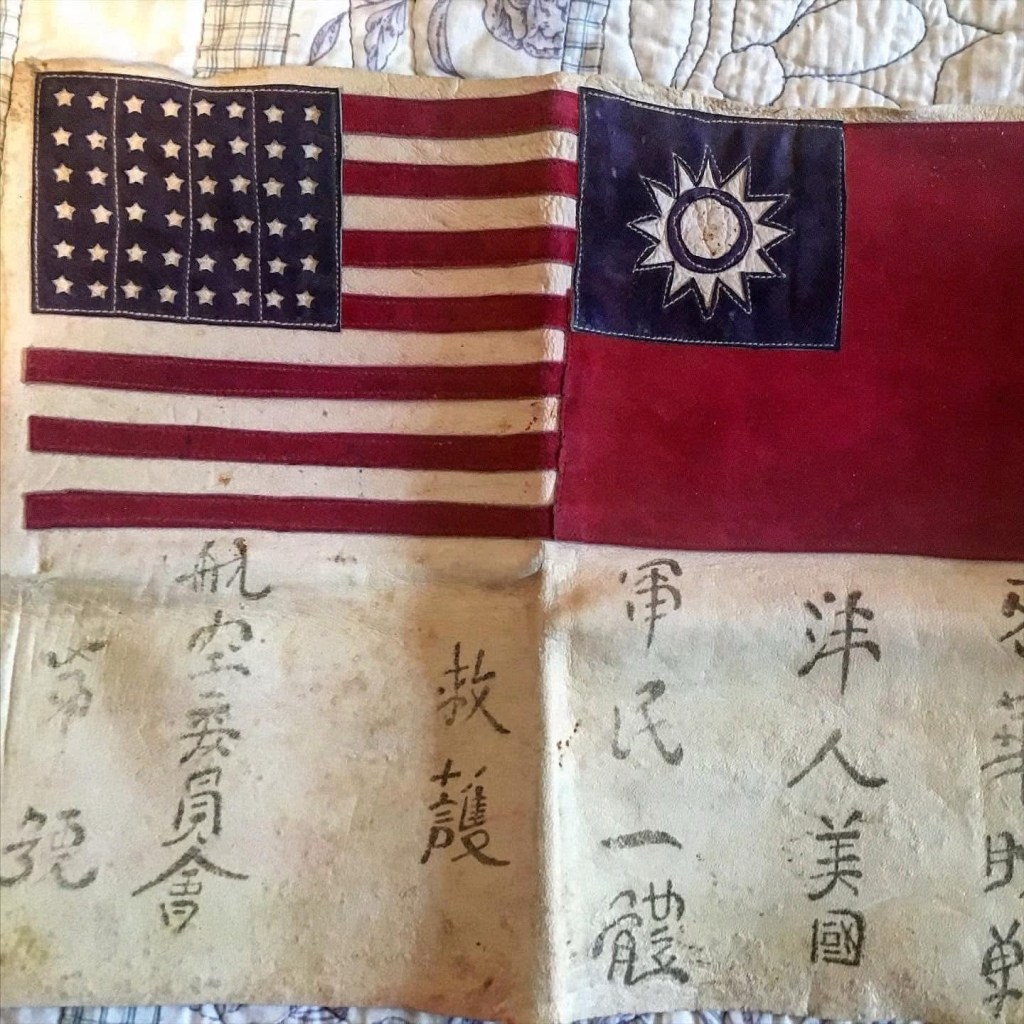
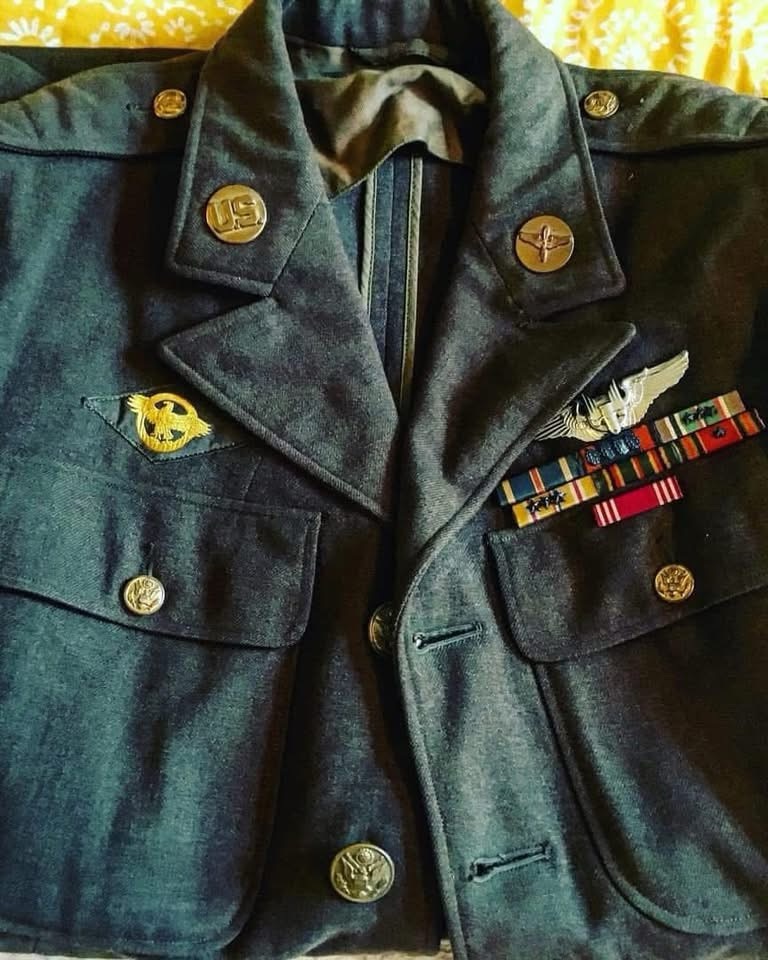
Here is my Grandpa Red’s Army Air Corps jacket, his Distinguished Flying Cross, his Mandarin to English interpreter documents.

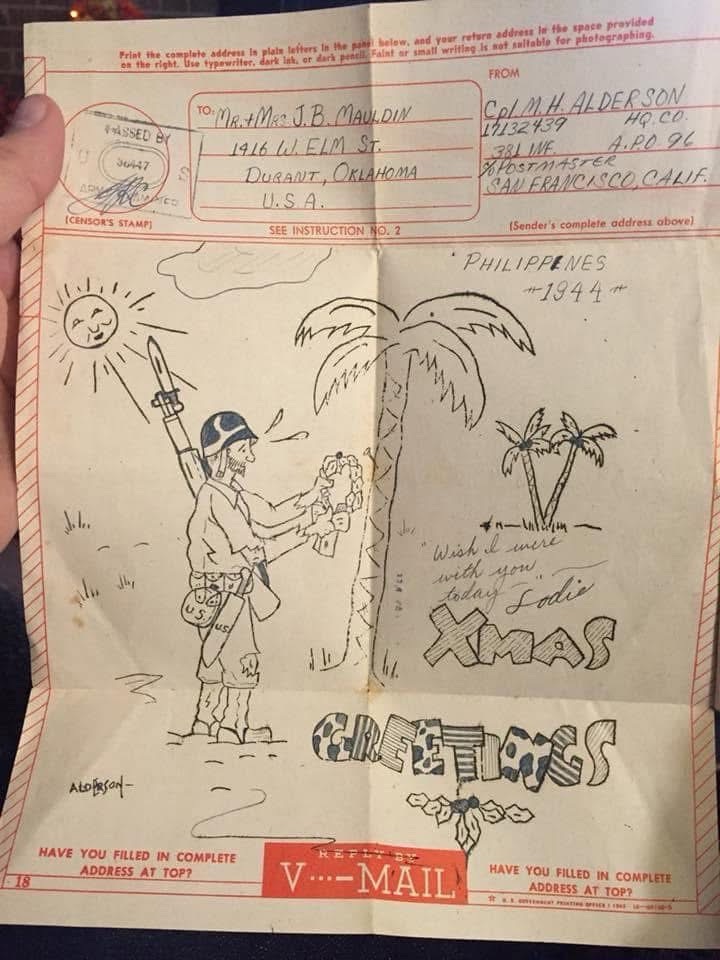
And the other is a unique find. When they called for an end to the war, my grandfather on my mom’s side (called “Sodie” for his love of soda pop), drew this picture via V-Mail and sent it to his sister. Date: 1944.

They shall beat their swords into plowshears.