For the ancient Celts, November was an important time to embrace the next season, the “shadow season” of the year.
They saw the world as having two light sources: the sun, and the hearth.
In the “light season” of the year they would gather around the sun: to play active games, to work hard, and to sweat.
In the “shadow season,” which November ushered in, they would gather around the hearth: to play quiet games, to do small hobbies and care for the family (cooking, cleaning, etc), and to tell and hear stories.
Each season had its own light source. Each season had its own purpose.
They also thought that November was a thin time in the calendar. While Samhain marked the thinnest time, November’s days were also seen as thin, being a time of transitions.
People born in November were thought to have a darker sense of humor and a penchant for forlornness.
More deaths were thought to happen in November. More big decisions made, ready to be executed in the next year.
November is a time of deepening transition as the earth slowly hardens in this hemisphere, and the light continues to dim.
The hearth is now our sun, around which we’ll all wrestle with some thoughts and decisions.
Today the church celebrates All Saints Day, the day in which the formal saints of the church (those canonized) are recognized and remembered as examples of the faith.
This celebration is very old, perhaps dating back to the 4th Century, though it is clear that earlier commemorations of this feast day were held in the spring, sometime between Easter and Pentecost. It was originally intended to celebrate not just any saints, but the martyrs of the faith.
The focus and the date of the day shifted sometime just before or in the early 7th Century. In the British Isles it had already been honored on November 1st, probably in response to the pagan autumn festivals that culminated at the end of October (which many of you participated in last night with ghosts and goblins at your door!). The date stuck for the whole church within the century, and came to have a deeper connection not only with the seasonal cycle on display in the northern hemisphere, but also with pre-Christian sensibilities. One example is this Celtic idea that the arrival of mists and frosts around this time were examples of ghostly/faery visitors, so it made sense to have a day remembering them when they started to make their presence known again.
In the 7th Century the date came to commemorate non-martyrs as well, probably in response to the fact that Christianity became dominant and was less-oppressed…resulting in fewer martyrs of the faith. The faithful who died both naturally and by martyrdom were recognized on this date every year, especially if they had died in that calendar year.
Today Orthodox, Roman Catholic, and Anglican branches of liturgical Christianity still keep this day to honor those canonized saints of the church, reserving the non-canonized dead to be remembered tomorrow on All Souls Day (more on that tomorrow). Lutherans, with our penchant for comingling the idea of “sinner and saint,” usually don’t make such a distinction, and just honor all those who have died in the faith, regardless of status, on this day.
Whatever your proclivity, today is a powerful day when honored with intention, even for those of you who don’t find yourself in any faith tradition. Honoring our ancestors, learning from their stories, embracing their goodness and foibles, is an important part of the human experience in my estimation. We all are, after all, an unwilling product of those who came before us, but we continually have a choice in deciding what we’re going to carry with us from those past ancestors, and what we’re not going to let continue into the next generation.
All Saints Day is a reminder for me, and should be for the whole church, that those who came before still speak into our present, and that the Divine who seems in love with continual creation also seems in love with some measure of continual, constant, though hidden and obscure (like through a mirror darkly?) preservation.
-historical bits from Pfatteicher’s New Book of Festivals & Commemorations
“Forget the hearth, Forget the roof, Set the wheel aside: Leave your weaving, Warp and woof, Steal out to us this Samhain-Tide.
Steal out to us, our tossing hair Sets sun and moon and stars aflare. The racing winds are hounds beside the cloud-maned horses that we ride. Come ride with us, have heart to dare the plunging steed; the steeps of air; the swirling, high, tumultuous flight, the aery hooves–this Samhain Night!”
Churches around the world are honoring Reformation Sunday this Sabbath, a rare treat in that the Sunday and the actual Festival Day almost align.
It’s important to note that each liturgical denomination has a day that honors a formative experience in the life of their particular vein of Christianity. The Eastern Orthodox church celebrates “The Triumph of Orthodoxy” to usher in Lent. The Roman Catholic Church has the Feast of the Chair of St. Peter (February 22nd), emphasizing the founding of the church on Peter’s shoulders. The Anglican Church honors the day the Book of Common Prayer was published, uniting the communion into one.
For Lutherans, it is Reformation Day, when we sing “A Mighty Fortress” and “Lord Keep Us Steadfast in Your Word” and dress in red, the color of both the martyrs and the fire of the Holy Spirit.
At its worst the Reformation is celebrated as a triumph. At its best it is a feast day that is simply a continuation of the perpetual change and shift that must happen in a church that is wedded to a God who is known and revealed inside of time.
Historically it does mark a time in history when a break, for better and for worse, happened in the church. This break deserves an autopsy every year in an effort to remember, reaffirm, and repair as much as a possible the schisms that arose from it.
The date of the Reformation, the 31st of October, comes from the lore that Luther nailed his 95 Theses on the Castle Church door in Wittenberg, intending for it to be widely read by everyone who attended the All Saints Sunday mass the following day. We’re not sure this is historically accurate, but because it is so much a part of the narrative around the events of autumn in 1517, we give a nod to its church-changing truth, if not its actual veracity.
A better date to honor the Reformation might actually be June 25th, the date that the Augsburg Confession was presented. Like the Anglican Church with the Book of Common Prayer, the Confession is the binding document of all the reformation churches.
Regardless, tradition compels us to keep the date, to wear red, to remember, and to continue to reform.
-historical bits from Pfatteicher’s New Book of Festivals & Commemorations
Today the church honors two unsung, and largely unknown, first Apostles: St. Simon and St. Jude, Companions of Jesus.
St. Simon the Zealot (sometimes called “Simon the Less” to distinguish him from Simon-Peter) and St. Jude (sometimes called “Jude the Obscure” because he is largely known for not being Judas Iscariot) were numbered in those first twelve apostles, saw Jesus post-resurrection, ate with him, and were sent out to preach the Gospel.
But that’s all we really know about them.
Luke is the writer who calls Simon a “Zealot,” which could mean that he was a member of the Zealot party in ancient Palestine, a radically “anti-Roman rule” faction. It’s worth highlighting that, if Simon was a Zealot, then it meant he walked with Matthew the Tax Collector in shared mission…an anti-Roman activist and pro-Roman bureaucrat working together in Jesus’ inner-circle.
Let that sink in…Jesus’ inner circle had people with diametrically opposing viewpoints…
St. Jude (who some think wrote the epistle of Jude) is sometimes called Thaddaeus or Lebbaeus in Matthew, perhaps to distinguish him from Judas Iscariot.
There is a little-known apocryphal book called “The Passion of Simon and Jude” that says that St. Jude preached for a decade in Mesopotamia and that he and Simon labored in Persia together where they were martyred in tandem (hence why they are commemorated together today).
St. Simon is rumored to have been sawn in half…which is why he’s often depicted with a saw. St. Jude is often depicted with an ax because…well…you get the picture.
There is also a little fun legend about St. Jude healing the King of Edessa, and other stories about them fighting against Zoroastrianism in the ancient world.
Today, St. Jude is probably best known as being the namesake of hospitals and organizations that provide care to the most critical causes. In fact, in Roman Catholicism St. Jude is the patron saint of “hopeless causes.”
Why, you might ask?
Well, because St. Jude is so obscure and had no cultic following, Roman Catholic theologians thought that perhaps he might welcome and be attentive to the most desperate prayers.
St. Simon the Zealot is a reminder for me that the church has always had radicals within its walls, and was political from its very inception.
St. Jude is a reminder for me that sometimes the people who seem forgettable and least important become the ones we lean on the most in our most desperate hours.
-Pfatteicher’s New Book of Festivals & Commemorations helped with the historical pieces of the saints
O hushed October morning mild, Thy leaves have ripened to the fall; Tomorrow’s wind, if it be wild, Should waste them all. The crows above the forest call; Tomorrow they may form and go. O hushed October morning mild, Begin the hours of this day slow. Make the day seem to us less brief. Hearts not averse to being beguiled, Beguile us in the way you know. Release one leaf at break of day; At noon release another leaf; One from our trees, one far away. Retard the sun with gentle mist; Enchant the land with amethyst. Slow, slow! For the grapes’ sake, if they were all, Whose leaves already are burnt with frost, Whose clustered fruit must else be lost— For the grapes’ sake along the wall.
In reading up about Samhain in Celtic tradition, it’s believed that apple bobbing (called “apple dookin'” in Scotland) is a reminder of the journey across the seas that the ancestors took to find fresh fruit.
There was thought to be a magical land, Emhain Ablach, known as the “Island of Apples” that had wonderful apples that imparted wisdom to those lucky enough to find one.
It was also believed that the festival of Samhain taught humans about their “shadow-sides,” all the fears, misgivings, negativity, and unresolved issues within them that should be recognized, accepted, and reclaimed. Celtic wisdom taught that no person could be fully whole without their shadow side, and that ignoring or fighting against your shadow in such a way that you buried it created fragile beings who were easily broken by their ego, by other warriors, and by the hardships of the world.
Samhain, rather than insisting that you ignore the ugly side of your human nature, took you down into the depths of the fear (literally, tons of tales about descent into the pits of the world were told at Samhain) so that you could wrestle with yourself and wake up whole.
It sounds very Jungian, right?
It’s actually just ancient wisdom that we keep forgetting and “discovering” again and again…
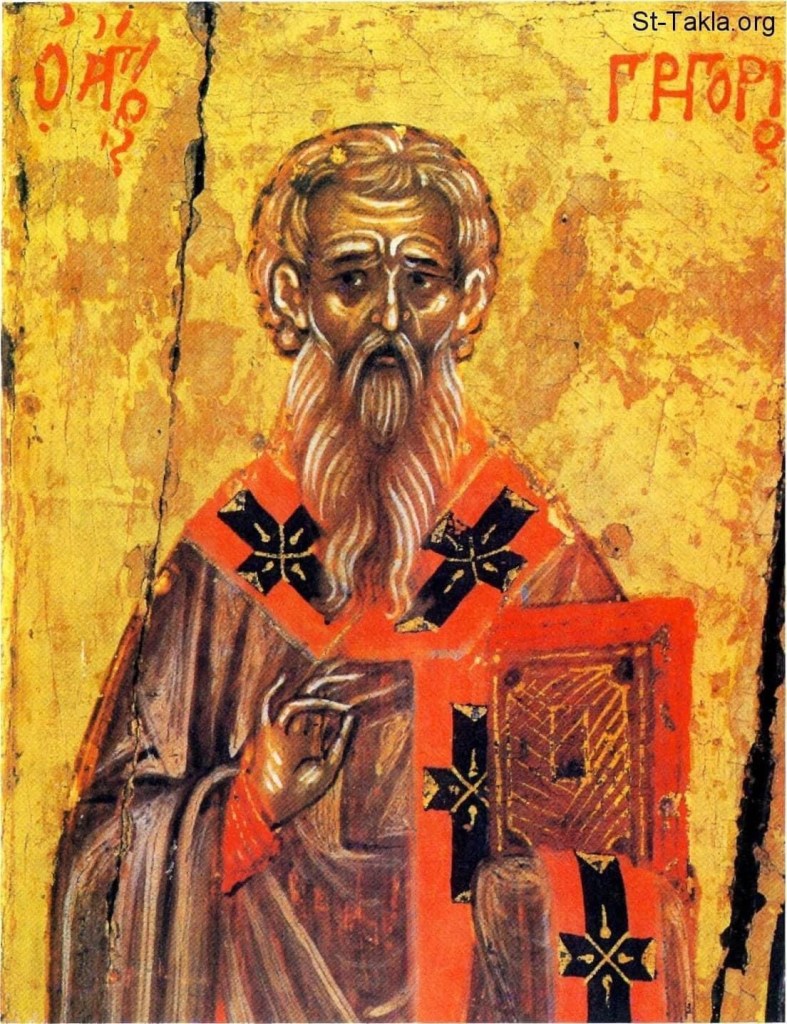
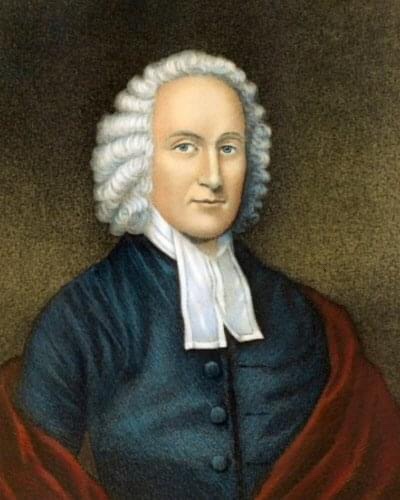
Today the church honors three 17th Century musicians for the ages: Philipp Nicolai, Johan Heermann, and Paul Gerhardt.
This year I’m going to focus just a bit on Paul Gerhardt because he is, in my estimation, not only the best Lutheran hymnwriter to date, but a superb theologian.
St. Gerhardt was born in 1607 near Wittenberg, and he studied theology there in the mid 17th Century even while the Thirty Year’s War was a plague upon the land. He got work out of University as a tutor, and ended up marrying one of the daughters of the family he taught (kind of a no-no today, but back then was not unheard of).
Being of great skill both in writing and composing, St. Paul’s hymns appeared in a music publication of the day compiled by the cantor at St. Nicholas’ Church in Berlin, one Johann Cruger.
At the ripe old age of forty five, Gerhardt finally formally used that theology degree, was ordained, and entered the pulpit as the Senior Pastor at Middenwalde, near Berlin. From there he moved on to St. Nicholas in Berlin as an associate pastor, but quickly became the congregational favorite because his sermons were wise, witty, and relatively short.
Pastors: take note.
Unfortunately Reformation strife was continuing throughout Germany, and in-fighting and back-biting were common as the theologians tried to figure out what was, and wasn’t, orthodox from the Lutheran lens. To his credit, Paul refused to sign a pledge not to discuss controversial things from the pulpit.
The Gospel is often controversial. Congregation members: take note!
Because he refused to promise not to say tough things from the pulpit or bring up doctrinal issues, he was removed from St. Nicholas and went without a parish for some years.
Side note: lots of pastors find themselves in a similar situation today, no?
To add tragedy to tragedy, during this tough period his wife and a son died (three previous children had already died). He only had one son left.
In May of 1669 he was appointed as archdeacon of Lubben, a really harsh parish who didn’t really care for how wonderful he was, and he lived there with his only remaining son for a few years until he died in 1676.
Saint Paul Gerhardt wrote 113 hymns in his day, translating difficult doctrines for the modern ear with modern (for his day) melody.
Finally, I want to reinforce what I said in that first thought: that all three were not just hymnwriters, they were theologians. The theology we sing affects the theology we trust, Beloved. The tune is the hook, but the words are the bait, the thing we swallow, the thing we start to subconsciously believe.
In other words: be careful what you sing because it will become what you say you believe.
Out of the three of these hymnwriters, Paul Gerhardt is the one you’ll know the best if you grew up in a Lutheran church. While we sing the works of all three of these giants of the hymnic faith, Gerhardt is no doubt the greatest Lutheran hymnwriter.
He also, no doubt, had the most unusual facial hair.
Want to look up some of their tunes?
In your Evangelical Lutheran Worship you’ll find Nicolai on hymn 308 (“O Morning Star, How Fair and Bright!” sung at Epiphany), 436 (“Wake, Awake, for Night is Flying” sung at Advent), and 786 (“O Holy Spirit, Enter In” Nicolai only wrote the tune for this one, and I’ve rarely sung it).
Heeraman’s work can be found on 349 (“Ah, Holy Jesus” sung every Lent), 675 (“O Christ, Our Light, O Radiance True” sung in Ordinary Time), and 806 (“O God, My Faithful God” sung in times of crisis).
And the seminal Gerhardt tunes can be enjoyed on 241 (“O Lord, How Shall I Meet You” sung at Advent), 273 (“All My Heart Again Rejoices” sung at Christmas), 340 (“A Lamb Goes Uncomplaining Forth” sung during Lent), 351 and 352 (“O Sacred Head, Now Wounded” sung during Holy Week…a favorite of mine!), 378 (“Awake, My Heart, with Gladness” an underappreciated Easter hymn), 568 (“Now Rest Beneath Night’s Shadows” a very sweet evening hymn), 761 (“Evening and Morning” a lovely song on trust), and 788 (“If God My Lord Be for Me”…sung in times of trial).
-historical bits from Pfatteicher’s New Book of Festivals & Commemorations
Today I would lobby hard for the church to remember and honor a modern saint who was able to stand tall while still being seated: Rosa Parks, Activist and Inspiration.
Rosa Parks was born in 1913 in Tuskegee, Alabama to a teacher and a carpenter, and at a young age learned how to work well with her hands, making quilts and dresses on her own. She attended some secondary school, but primarily worked to help care for ill family members. One of her earliest memories was having to walk to school, because the school bus was reserved for white children, and how when the KKK marched down her street in front of her house, her grandfather took up post at the front door with a shotgun.
These memories left a mark.
Rosa married Raymond, a barber and NAACP member in 1932. At her husband’s urging, she finished her High School studies, and in 1943 was elected secretary of their local NAACP chapter, having become an active member herself. Even within the NAACP chapter in Alabama she was a trailblazer, being the only woman in active leadership. In her work there she aided investigations on rape, unlawful incarceration, and discrimination. She eventually was trained at the famous Highlander Folk School on Monteagle, Tennessee, and was able to successfully register to vote on her third attempt.
Her third attempt.
Louder for folx in the back because we continue to see voter intimidation and racially-tinged roadblocks put in place still today…the issue has morphed, it hasn’t disappeared.
To get around Montgomery, Parks walked or took the bus. Now, in 1900 Alabama had passed a law that bus segregation was up to the discretion of the driver. They could assign certain rows as “colored” rows, and increase or decrease the rows depending on their whims.
They could even just remove the sign altogether, making the whole bus for white people only.
Rosa boarded a bus one day, paid the same as the rest of the passengers, but was told by the driver, a James F. Blake, that she had to exit and enter from the rear door. When she exited to enter from the rear door, Blake put the bus in gear and took off before she could board, robbing her of her fare and leaving her in a downpour.
He could take her fare, but she vowed that he would never again rob her of her dignity.
On December 1st in 1955 after working a full day, Rosa Parks got on a bus at 6pm and sat in the first row reserved for people of color. It was the 11th row in a long bus, the first ten rows being reserved for white passengers. As the bus went on its route, the first ten rows began to fill. The driver that day was familiar to Rosa…it was James F. Blake, and at the third stop he moved the segregation sign three rows back, telling a number of passengers that they had to give up their seats for white patrons.
Three of her fellow passengers moved, but Rosa just scooted toward the window, freeing up space but refusing to relocate toward the back of the bus. Blake noticed Rosa refused to stand and relocate and said that, if she did not, he would call the authorities to have her arrested.
“You may do that,” Rosa said plainly.
Now, some try to soften this story by saying that Rosa was “tired,” and didn’t want to give up her seat due to fatigue. But in her own account she refutes that softening noting that she wasn’t physically tired, but rather that she was tired of being treated as a second class citizen, and tired of having her humanity stripped away.
“I was tired of giving in,” she said.
Parks was arrested, and the incident effectively kicked off the Montgomery bus boycott. In rain or shine, the black community banded together and refused to give a nickel to the unjust system for 381 days as the official case slowly worked through a cumbersome courts system. It was eventually deemed unconstitutional to segregate the buses in this way.
Parks became an icon in the Civil Rights movement working to elect black leaders (John Conyers), fought for women’s rights (serving on the board of Planned Parenthood), and lobbying for those unjustly incarcerated. All the while she received death threats and continual persecution, even having to leave Montgomery directly after her arrest because she could not find work due to her national standing.
Yet, she persisted.
In 1987 she co-founded the Rosa and Raymond Parks Institute for Self Development (note the name order!) which helps to teach young people about the importance of Black history and the Civil Rights movement (which continues on).
She died on this day in 2005 at the age of 92.
Rosa Parks is a reminder for me, and should be for everyone, that the fact that something is legal does not make it just, and sometimes you have to stand tall in a situation even if it means keeping your seat.
-historical bits from public sources
-icon “Rosa Parks Iron Man” written by Bart Cooper, an ode to her fortitude