Though not an official saint day, I would lobby hard for it to become one.
Today the church (should) honor the 49 pulses stopped too soon in the Pulse Nightclub shooting, an act that was both domestic terrorism and hate crime wrapped into one bloody night.
In the days following I remember giving blood, and upon entering the waiting room, finding a number of young adults in tears, waiting. A young woman walked up to the attendant, asking, “How old do you have to be to give? If I bring my mom in, can she sign for me? She’ll give too.”
So much blood. On the dance floor. On the hands of a country that refuses to adequately deal with the scourge of gun violence. In vials filled to help the 53 victims wounded in the act.
And especially now when it seems to be increasingly dangerous for LGBTQIA+ folks due to hateful legislation being passed around the country targeting their representation, their stories, their families, and their dignity, we need to hear the call of the Saints of Pulse and act. We must not remain silent.
Pride month is a month of celebration; yes. But even more so it is a protest against the powers and principalities that seek to harm the splendid diversity of humanity through intimidation, violence, and laws that target rather than protect.
The Saints of Pulse remind the church, and all of us, that until we tackle both the hate of the heart and the lack of regulations that allow people to wantonly act on that rage in mass murder, we’re not done.
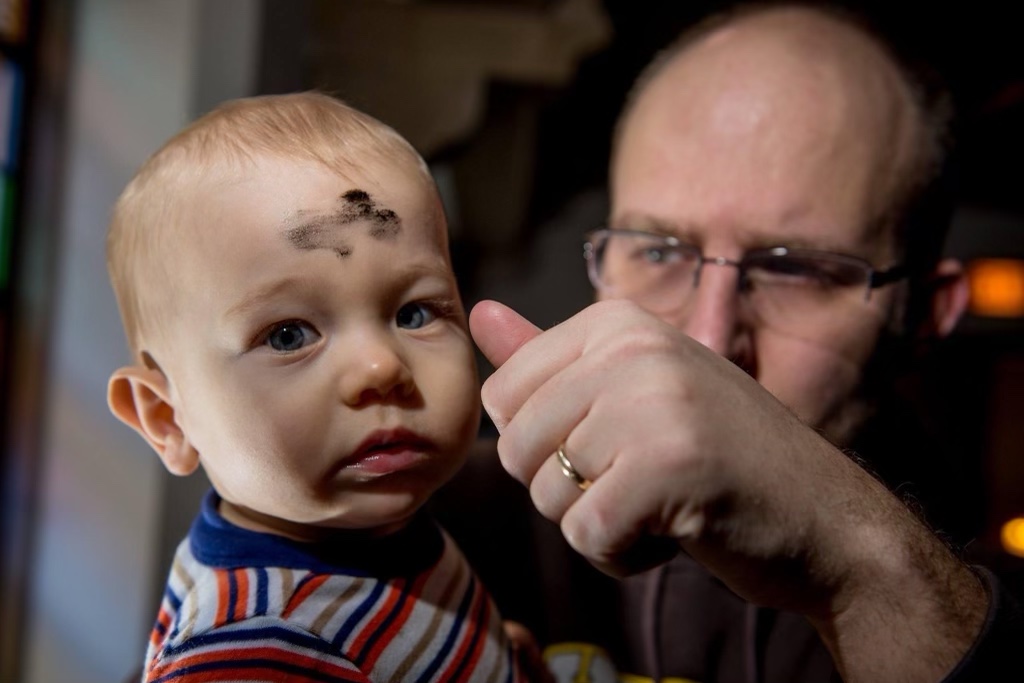
“You thumbed grit into my furrowed brow, marking me with the sign of mortality, the dust of last year’s palms. The cross you traced seared, smudged skin, and I recalled other ashes etched into my heart by those who loved too little or not at all.” -Elizabeth-Anne Vanek
Today the church holds a somber fast traditionally known as Ash Wednesday which dates back to the 11th Century.
In a number of places in the Hebrew scriptures ashes were associated with penance and remorse. The books of Jonah, Amos, and Daniel all note the practice of heaping ashes upon your head as a outward display of how guilt and penitence feel inside.
As the church year begins to ponder the death of the Christ in anticipation for resurrection, a more introspective, prayerful, and yes, honest tone is kept. Ash Wednesday is the start of that long road to Calvary.
While some might consider the practice to be sad or even scary (after all, who likes considering their mortality?!), the wise mystics of all faiths remind us that we must ever keep death before our eyes if we are to truly live.
You cannot outrun mortality, Beloved.
You cannot out-diet, out-exercise, out-supplement, out-buy, or out-smart the quiet, pervasive truth that all creation is indeed, dust at our core (beautiful stardust, to be exact), and we will all one day return to that dust.
There is no out.
And yet, as is true with all paradox, there is a certain amount of freedom that comes with embracing this hard truth. Being Wonder Woman and Superman for too long weighs on us all, and we’re really not meant to fly anyway.
We’re meant to walk, which means we stumble like all walking beings do from time to time. The reality of our imperfection is, too, a gift of grace.
After the church and the empire had joined hands, the rhythm of the church year was overlaid on the rhythm of the ancient celebrations of humans.
Ash Wednesday, the day of penitence, became a massive event; a “full Nineveh moment” in the face of the “holy” church’s Jonah proclamation: “Repent, lest ye be damned!”
Sackcloth. Ashes. Solemnity. That was the prescription. Interestingly enough, the diagnosis was proclaimed by the entity who also claimed to have the cure. Religion tends to do that…
But the people, used to more festive holidays, demanded some revelry before the fast. Intrinsic in our human bones, divorced of any religious pietistic profundity, we all know that a fast is seen best through the lens of a feast, and vice versa. A little bit of denial needs a little bit of indulgence to truly know what you’re missing, right?
And so Carnival was declared, a time to fatten our stomachs, our spirits, and our souls before the sobriety of Lent.
Masks were handed out so that, if you were in hiding for a crime, you could come out of your shelter and join in the fun. A hall pass of sorts. Acts of extreme gluttony are best done anonymously, right? On Carnival, everyone is criminal in some way, everyone is queen and king of their universe for just a bit.
The time for bending a knee will come; for sure. One day all masks fall.
But today is a day for reclining, gesticulation, and for pretending we don’t fear fat and sumptuousness, if only for a bit!
“O Lord, refresh our sensibilities. Give us this day our daily taste. Restore to us soups that spoons will not sink in, and sauces which are never the same twice.
Raise up among us stews with more gravy than we have bread to blot it with, and casseroles that put starch and substance in our limp modernity. Take away our fear of fat, and make us glad of the oil which ran upon Aaron’s beard.
Give us pasta with a hundred fillings, and rice in a thousand variations.
Above all, give us grace to live as true folk–to fast till we come to a refreshed sense of what we have and then to dine gratefully on all that comes to hand.
Drive far from us, O Most Bountiful, all creatures of air and shadows; cast out demons the demons that possess us; deliver us from the fear of calories and the bondage of nutrition; and set us free once more in our own land, where we shall serve thee as thou has blessed us–with the dew of heaven, the fatness of earth, and plenty of corn and wine.
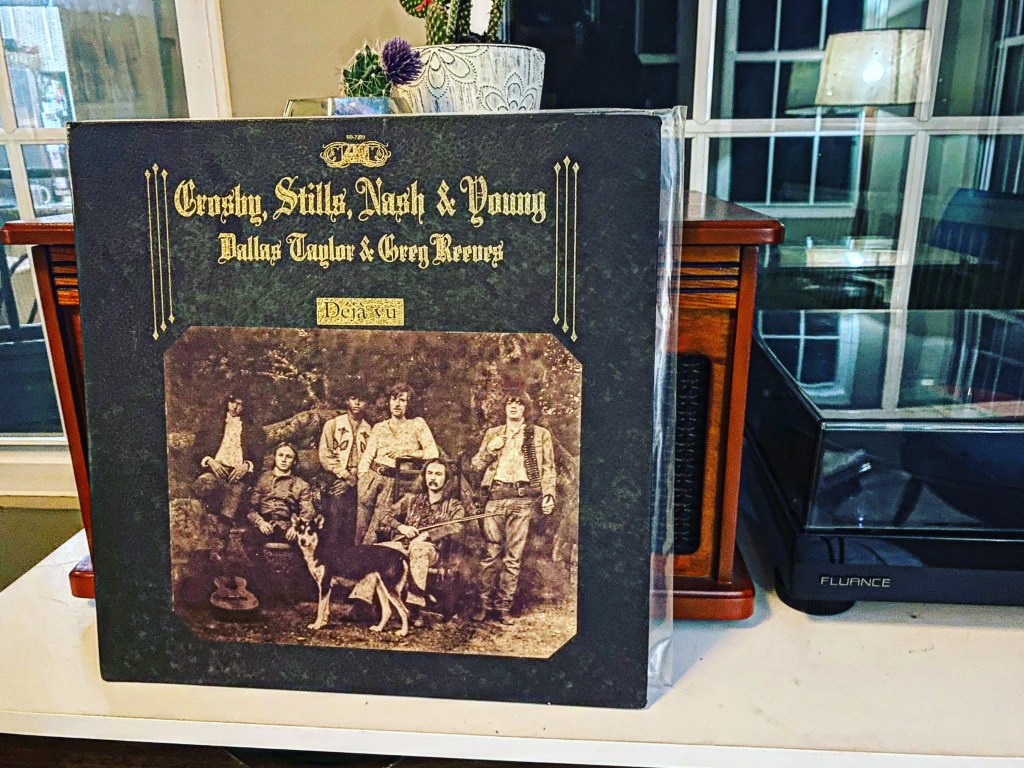
Crosby, Stills, Nash, and Young was one of the first bands I ever fell in love with.
I blame my Pops. And I thank him for it.
David Crosby was not a perfect human. He had issues, and his history with the band bore them out.
But I hope none of us are remembered for the worst things we’ve done.
He was a musical genius in so many ways. And he made me look to the stars, to see the Southern Cross. And he made me Teach My Children Well (I think). And he made me look at Our House.
On the 12th Day of Christmas I will now list for you the 12 most horrible, and obscure, Christmas songs…that I still love to listen to:
-“Our Love is Like a Holiday,” by Michael Bolton.
Terrible chorus: “I’ve been to Paris, London, L.A. I feel the tropical sun in my face This Christmas we don’t need to get away Cause our love is like a holiday”
-“Christmas Through Your Eyes,” by Gloria Estefan.
Notable lyrics: “I see the rain, you see the rainbow Hiding in the clouds Never afraid to let your love show Won’t you show me how Wanna learn how to believe again”
-“Jingle Bell Rock,” by Hall and Oats.
Please note: theirs is the worst version of this song…and the video is, literally, the worst. I’m obsessed.
-“8 Days of Christmas,” by Destiny’s Child.
This modern take on the 12 Days not only gets the number of days wrong, but also includes this gem: “On the eighth day of Christmas my baby gave to me/A pair of Chloe shades and a diamond belly ring”
-“Hard Candy Christmas,” by Dolly Parton.
This is my favorite on this list. Killer verse? “Hey, maybe I’ll learn to sew Maybe I’ll just lie low Maybe I’ll hit the bars Maybe I’ll count the stars until dawn Me, I will go on”
-“Go Power at Christmas Time,” by James Brown.
If you ever needed proof he was often high, look no further…
-“This Christmas (Could Be the One),” by Ledisi
Never heard of this one? Consider yourself amongst the lucky…
-“Christmas Wrapping,” by The Waitresses.
This mono-tone little ditty exemplifies all the reasons why you’ve never heard of this group.
-“Go Tell it on the Mountain,” by Andy Griffith.
This is normally a great song. You didn’t know Andy Griffith sings, you say? He doesn’t.
-“Christmases When You Were Mine,” by Taylor Swift.
Tay Tay, what are you doing?!
-“Christmas for You and Me,” by Brian McKnight and Vince Gill.
Looking for that special song that mentions cheese this Christmas? Here you go! “It’s 11 o’clock and I’m almost home I’m just calling to let you know Leave on the light for me Soon we’ll make us some brie”
-“Candy Cane Christmas,” by Darius Rucker.
Vomit along to these lyrics: “Angels sittin’ high upon a tree Watchin’ over presents patiently Milk and cookies on a plate Santa Clause is on his way The kids should be fast asleep”
“I once heard you should never vote for a politician who tells you how to pray, and you should never listen to a pastor who tells you how to vote,” their parting email said.
The family would be leaving the church because I was “too liberal,” even though I had never told anyone how to vote, from the pulpit or otherwise. I mentioned this fact, by the way, and he said, “Yes, but we can tell what you think about it and how you’d wish we would vote…”
That’s a big assumption.
No goodbye in the office. No farewell. Just an email with no subject line.
It hurts when people leave your church over politics. It still stings me, even now, to think on that family and a number of others.
It feels like a failure of some sort, like you couldn’t keep people together.
By the way, the translation of the above phrase actually should be, “you couldn’t keep people happy,” which is absolutely true. A pastor’s call is not to keep people happy, anyway, despite what the people will tell you…
It hurts when people leave because they see you have a bumper sticker for a different candidate than they prefer (this actually happened, btw).
It hurts when people leave because you were just trying to keep them safe with masks and social distancing and they wanted to “trust Jesus” rather than “trust the science,” pitting Jesus against science in a way that I think would make Jesus himself scratch his ancient head.
It hurts when people leave because you talk about tending the poor and needy and they hear “socialist!” instead of hearing Isaiah, Amos, Micah, Jesus, and Paul.
It hurts when people leave because you say “Black Lives Matter,” because it’s just true and Jesus was a person of color and all they hear is the filtered funnel of the media.
It hurts when people leave because you mentioned the existential threat of gun violence in that one sermon because, honestly, it is an existential threat that is killing our babies (and if mental health is such an issue…which is certainly is…suicide alone is enough reason not to keep a gun in the house!), and all they heard was that you think all guns are terrible.
The honest truth is that it hurts like hell. Even if you know that they won’t be upset all the time anymore, and even if you know that this kind of a break is coming, and even if you know that you won’t have to sweat when opening your email inbox on Monday because they’re perturbed by something they heard or thought they heard or pretended to hear on Sunday, it hurts.
Even when you see it coming from a mile away, it hurts.
No two-ways about it.
And you know what? It hurts even more when you see them at the grocery store around town, or see their social media posts about how happy they are at their new church where the pastor “never talks about politics” (translation: doesn’t talk about political things I disagree with). It hurts even more when they still hang out with the people who stayed and you see them at parties, but you don’t talk to them, or feel like you can, because no matter what the truth about their leaving is, it feels like it’s because of you.
You.
And it is at this point where you might expect I’d say something like, “They’re better off,” or “You don’t need them,” or “Shake the dust from your feet and move on,” or “But look at all the new people joining!” or “It’s not you, it’s them.”
But I’m not going to, because I can’t.
While all of those platitudes might be true, none of it heals the other deep truth that it. just. hurts.
In this Advent season I clutch perpetual hope tightly, hanging on as if my life depends on it (which it probably does). But I do wonder if pastoring in these hyper-partisan times is perhaps the hardest in recent history, and I’m not sure where hope plays into that in the immediate moment.
Even so, pastor, I hope the pain recedes in time.
And I hope those people, even in my life, are happy how they find themselves.
And I hope that one day political partisanship won’t split the pews and the pulpits.









 Reluctant Xtian