In May the Celts would turn their sights toward the land and the seeds to be buried in hope and prayer.
They’d pull out their ploughs and pray these instruments be sturdy to do the good work ahead of them, keeping their promise to help produce life-giving food for the land.
Here’s a modern Blessing of the Plough adapted from an ancient blessing (and also happens to be a nice one for those prepping for Holy Trinity Sunday):
Blessed be, God of all creation. Give softness to the land. Give us skill to work the land. This plough is sign to us of Your blessing. Give us softness of heart. Give us skill to serve You. Blessed be God–Creator, Christ, and Spirit, Three of Glory, Three of Light, Three of Life. Blessed be the Bright Three forever. God speed the plough. God speed the plough.
-prayer from Llewellyn’s The Celtic Wheel of the Year
For the ancient Celtic Christians, May was the first month of summer. It may feel strange to think of the rhythm of the year in this way, mostly because we’ve been conditioned by society to see May as still part of “spring,” but for those Celts who paid attention to how things look and feel, rather than acquiescing to what others told them to feel, they knew that the change of May meant the beginning of summer.
Their wheel for the year was:
November-December-January: Winter (the cold would set in, ground would freeze, and things took a dormant nature…which is why in the middle of December you’d celebrate the undying light of Christ, reminding yourself that the sun/Son always shines)
February-March-April: Spring (things start to break through the ground, thaws happen, tulips push up and animals stir and mate…which is why Easter is the capstone to the season, the eternal “emergence”)
May-June-July: Summer (heat sets in, you start to do all things out-of-doors, you plant and tend, and the midpoint is the celebration of John the Baptizer/Summer Solstice where you remember that St. John the Baptizer said, “I must decrease so that Christ may increase”…and the sun starts setting a little earlier each day)
August-September-October: Autumn (you celebrate the waning heat, you harvest, you prep and store, and prepare for the winter, with the capstone of the season being All Hallow’s Eve where you give thanks for the harvest and the faithfully departed, knowing winter is coming where nature reminds us that all things die)
This cycle was the year life, but imbued into all of this was the sense of death and regeneration. It was an Easter life.
In our modern days where we’re so tossed back and forth between this event and that event, seeing so much of it all as isolated incidences that rock our boats, we forget the golden thread, the rhythm, or as the ancient Celts would call it, the “heartbeat of the Divine” running through it all.
If we tilt at every windmill, we never stand up straight. The ancient Celts understood this, and so they were able to weather most any storm knowing what season it was.
Now? Now is the start of summer. The season of “out-of-doors.” Take advantage, live into the newness around you, and breathe deeply into the now.
The Christian Celts (and the pre-Christians Celts, even, celebrating the newly thawed ground and the emergence of Spring) would celebrate Easter week with signs of new life and abundance.
Children would go about looking for nests in trees and underbrush, collecting any eggs they could find. They’d hide them in cubbies in their rooms, or under their houses, and on Easter they’d haul their findings out into the woods and have a pre-dawn breakfast of roasted eggs with the other children of the town.
On Easter Sunday the town would come together, having reserved some of those eggs for cake baking, and they’d present a village cake called a “prioncam cake,” which loosely means “capering cake” or “dancing cake.” It was decorated with woodland animals and a garland of wildflowers.
They’d put the cake in the middle of the gathering, and around it they’d dance and prance to fiddle and pipe. The best dance won the prize, the cake, hence that old saying, “That takes the cake!”
Now, on this week after Holy Week, there may still be some eggs, some treasures still hidden to surprise you…
In Celtic tradition, the month of March is associated with the great ash tree. The ash tree is one of three trees that the pre-Christian Celts held sacred (ash, oak, and thorn), and according to tradition, Yggdrasil, the “world tree” was an ash tree from which all life was birthed.
Because ash trees are so tall, they were seen as the connection between the heavens and the earth, and therefore were understood to be powerful symbols of good in the world. In fact, it was rumored in ancient times that snakes were so afraid of the ash tree that they wouldn’t even slither over its shadow.
Snakes are an interesting evil symbol, too, until you remember that in the ancient world the snake was very scary: quiet and often venomous. It would attack you in your sleep, often looking for warmth in the bed of a person. Or it might strike you in the field, shaded by the grass.
Our modern zoological minds may wonder at this ancient symbol of evil, but our pre-modern ancestors just knew “stay away!” This, and its unusual form, is why it’s often a representation of evil in the ancient world. After all, snakes are not bad creatures, just misunderstood by humans who think they have to understand everything.
Celts would often carry ash leaves in their pockets to ward off evil, and would sometimes put ash leaves in their shoes to help with foot problems.
Beyond the magical and practical, though, the metaphorical can speak to our lives today. The ash tree can be a reminder for all of us to tap into our strengths in this month of March, trying to balance our lives a bit, bridging the heavens (ideals) and the earth (reality) of our being.
Today is the Vernal Equinox, and we find nature yelling “balance!” as March oscillates between warm and cool, trying to decide how it will birth April.
Today the sun and the moon will show the weather by example how to find equilibrium.
On the Equinox my Celtic Christian ancestors would bless the brief balance seen in the sky. Even the ancients knew that balance is rare in life.
So here’s a blessing for balance by Celtic poet John O’Donohue:
For Equilibrium
Like the joy of the sea coming home to shore, May the relief of laughter rinse through your soul.
As the wind loves to call things to dance, May your gravity be lightened by grace.
Like the dignity of moonlight restoring the earth, May your thoughts incline with reverence and respect.
As water takes whatever shape it is in, So free may you be about who you become.
As silence smiles on the other side of what’s said, May your sense of irony bring perspective.
As time remains free of all that it frames, May your mind stay clear of all it names.
May your prayer of listening deepen enough To hear in the depths the laughter of God.
(from To Bless the Space Between Us: A Book of Blessings)
March is often a wet and blustery month. In primary school we learned that March comes, “In like a lion, and out like a lamb.”
Though that school was a very strict kind of Christianity, the deep truth that teacher (much beloved by me still) remains: March to the ancient Celts was known as a temperamental month. In fact, those born in March were known to be ones of swings in mood (and their mirror companions born in October are the same).
But with all the drenching wetness of March came a realization that all bodies of water, no matter how big or small, are of a sacred nature.
Water is life, Beloved. The ancient Celts knew this, and often named their waters after the godesses and gods they found gave life. There are still tons of rivers on those ancient islands named after Brigid (the feminine yang to Patrick’s yin) and others.
The amniotic fluid of birth, the well of life, the river of eternal life in scriptures: water was known by those ancestors, and still known today, as the thing that sustains.
This is why the atrocities in Jackson, Mississippi, and still in Flint, Michigan (and yes, Engineers, I realize you say their water meets standards, but the hell they had to go through to get there is still HELL…and it’s not yet all cleaned up), and Palestine, Ohio is just terrible.
Water is life.
It’s why we don’t baptize in whiskey or Coke.
The ancients knew this, and March is the season to embrace the truth.
The world needs to catch up to the ancient wisdom.
For the ancient Celts, March was the second month of Spring on the wheel of the year. For them the seasons blossomed like a flower, slowly coming into their own, with that middle month in the triad being the hinge point.
March was the season where the candles were no longer needed at night, and so they’d ceremoniously put them away as a family. Some would even replace the wax candle on the family table with a wooden candle, a reminder for them that they need not strain their eyes at night anymore and were welcome to re-adopt the rhythm of the sun and the moon as their clock.
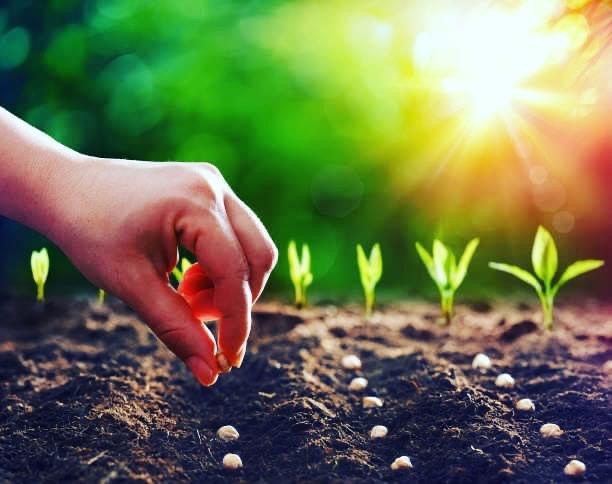
In mid-March, near the Vernal Equinox, each family would gather in their field, and sometimes whole clans would gather in a shared plot, and facing the sun they’d drop the first seeds in the ground to start the harvest, beginning with grains and root vegetables. Then they’d grab some soil, mix it with some ash from their home hearths, and paint the backs of their beast with the dirt invoking Divine blessing on their work. It was a blessing of both gratitude for the gift of the animal, and a pleading prayer for a prosperous harvest.
March is still a time of preparation for humans. The snow is melting in many places, though we know that there will probably still be snows to come. Ground is being broken, though we know we can’t go into full-planting mode yet. Windows can stay open for brief periods of the day, though a full-on breeze would still be too chilly for many.
But things are changing, Beloved. The Celts understood how to lean into and embrace the change. They welcomed the natural changes of life.
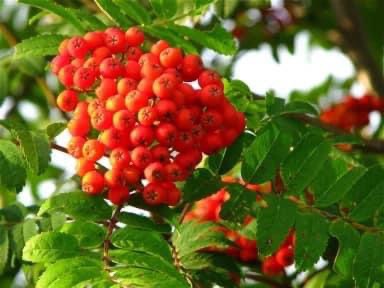
In Celtic spirituality, February is associated with the rowan tree. Its red berries were thought to guard against all sorts of bad things.
They’d put rowan branches on their cattle sheds and dairy barns to keep the meat and milk fresh and free of disease, and across Celtic lands crosses of rowan twigs were tied with red thread and carried in pockets or sewn into the linings of coats for traveling mercies.
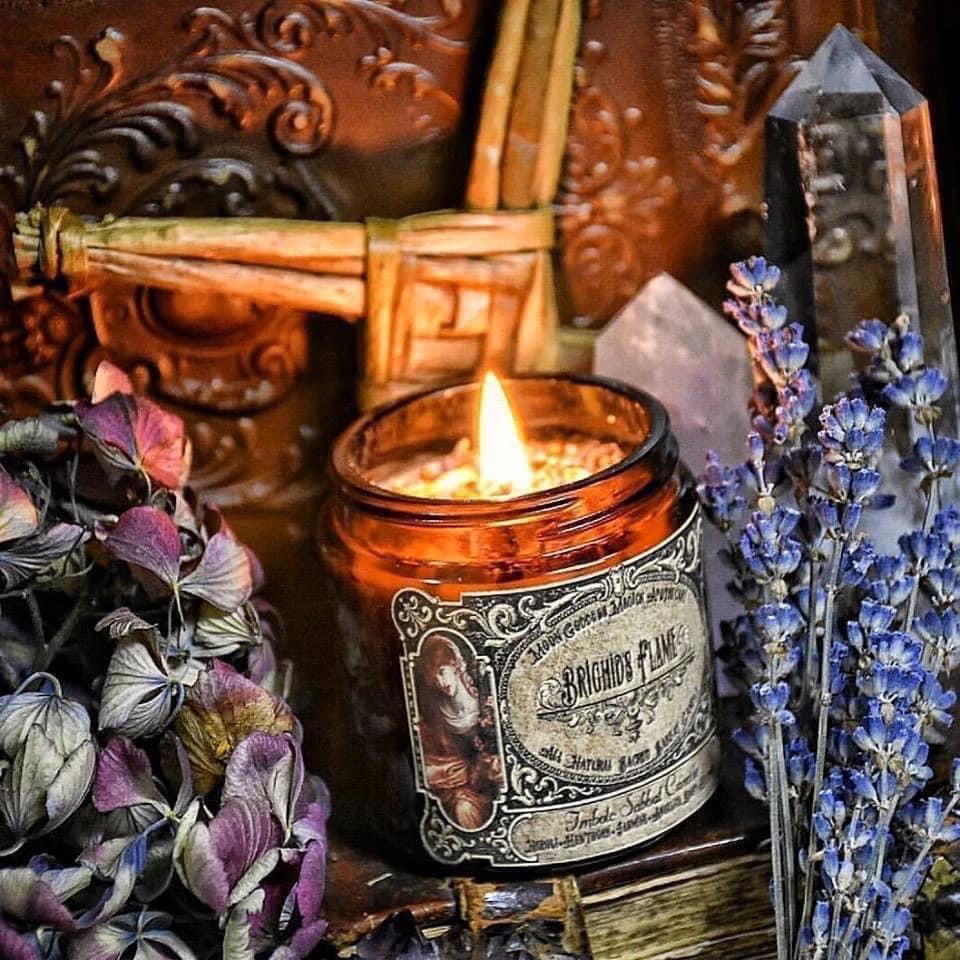
Since the saint of the month, Saint Brigid, was associated with flame and fire, the blazing red berries were thought to be little glimpses of her favor.
I found a modern Celtic prayer to say under the Rowan Moon (February’s moon). And since it’s the almost the last day one can say it, I thought I’d throw it out there.
What I love about this prayer is that, while images of Christ/love and the sun are really common, we don’t get many images of Christ/love being seen in the moon. But in the month where the moon still outshines the sun, it makes sense to have a prayer that highlights this truth, right?
Bright glory, bright moon, the moon that shines on Brigid, lamp of the poor, love, light, illumined by God. Bright moon of glory, teach me good purpose toward all creation. Bright moon of grace, teach me good prayer in accord with Christ’s heart.
Fiery moon of great light, be in my heart be in my deeds be in my wishes. Teach me your grace. Bright moon over Brigid, your light my hope, your light on my purpose here, in accord with God’s satisfaction.
Bright fire, bright moon, point my heart to God’s repose. Point me to my rest, with the Son of Tranquility.
In America this may be Groundhog’s Day, but in Celtic spirituality these days are known as Imbolc, or “in the belly,” because you’re at the halfway point between the equinox and the solstice, and you’re emerging into spring.
Christians celebrate Candlemas today, where new candles are blessed, as the ones lit at the Solstice are now spent. And in services many will hear about the Presentation of Christ, where the ancient prophets Simeon and Anna lift him up and bless him as the light of the world.
The symmetry is stunning and intentional.
These hinge days between seasons are worth paying attention to, as our mothers and fathers did.
So bless your new candles, because you’ve spent the old ones in these winter days, and start opening the shades.
It’s time to wake from our hibernation, blink, and live again.
In January the ancient Celts (and us modern Celts, too) find themselves under the Birch Moon.
When a forested area burns, the birch is the first tree to be reborn in the ashes, and so this is the tree that hovers over the first month of a new year.
In January the Celts felt that it was important, particularly in the early part of the month, to resolve all arguments that lingered from the previous year, and forgive or pay or negotiate all debts still loitering in the ledgers of the hearts and notebooks of neighbors and kin.
January was to be welcomed without any old ties to the past. Like the birch tree, January would be a season of new growth out of the old ashes of yesteryear.
As January comes to a close, Beloved, what things in your heart need forgiving? What debts need settling?







 Reluctant Xtian