Perhaps

Maybe our insides are like the wilderness: a secluded wood, dense and mysterious and full of shy, wonderful creatures that we can only see when we dare to venture deep.

Perhaps this is why we often claim to find ourselves again when in the woods.

On Water

March is often a wet and blustery month. In primary school we learned that March comes, “In like a lion, and out like a lamb.”

Though that school was a very strict kind of Christianity, the deep truth that teacher (much beloved by me still) remains: March to the ancient Celts was known as a temperamental month. In fact, those born in March were known to be ones of swings in mood (and their mirror companions born in October are the same).

But with all the drenching wetness of March came a realization that all bodies of water, no matter how big or small, are of a sacred nature.

Water is life, Beloved. The ancient Celts knew this, and often named their waters after the godesses and gods they found gave life. There are still tons of rivers on those ancient islands named after Brigid (the feminine yang to Patrick’s yin) and others.

The amniotic fluid of birth, the well of life, the river of eternal life in scriptures: water was known by those ancestors, and still known today, as the thing that sustains.

Water is life.

Water is a right. For everyone on the planet.

We all have a right to clean water.

It’s why we don’t baptize in whiskey or Coke.

The ancients knew this, and March is the season to embrace the truth.

The world needs to catch up to the ancient wisdom.

A Breakthrough

March is, for the ancient Celts, the second month of Spring.

It may be odd to see it as that, especially as so much of the Northern Hemisphere continues to be frozen, and much of it under snow. But the ancient Celts understood that growth happens even if you can’t see it, and that March would be the “break-through” month for much of creation.

It would literally break through the ground in bits and pieces.

I remember one March in Toledo, Ohio, listening to the radio as the snow fell on a Sunday night. Those wonderful words I had longed to hear finally came out of the announcer’s mouth, “No School for Trinity Lutheran Church and School,” and my brother’s and I cheered from our beds that we’d have a snow day that next day.

And as I lay in that bed and looked out the window, I saw the large tree next to my window, snow-covered, with small buds hanging off the branches.

It was ready to bloom, even as a blanket of ice and snow covered it.

And I remember feeling both glad for no school, but also quite sad for that tree that was ready for a break-through, and I resolved at that moment not to wish or pray for anymore snow that March, even if it meant no more snow days, so that tree could have a chance.

A quaint little story, for sure. But impactful for me. I had both extreme naivete (as if my prayers had caused or hastened snow), and some profundity, feeling connected with nature and a responsibility to allow it to do its thing.

March is the break-through month. The vernal equinox will balance life for a bit. The Earth will feel more and more alive with each day.

March is associated with the ash tree. In Nordic mythology Yggdrasil, the world tree, was an ash tree. It represented for the Celts the connection between the heavens and the earth, and in the month where the light and shadows balance for a moment, it makes sense they’d choose this tree.

We can meld our intentions with that of creation and allow each and the other to “do its thing.”

Plant the seeds you’re waiting to sow.

Stick daffodils behind your ear (a common practice for the ancient Celts to honor the Spring).

Embrace a new idea, aligning your inner life with the outer burgeoning life around you.

March is the break-through month.

What is breaking through for you?

Second Month of Spring

For the ancient Celts, March was the second month of Spring on the wheel of the year. For them the seasons blossomed like a flower, slowly coming into their own, with that middle month in the triad being the hinge point.

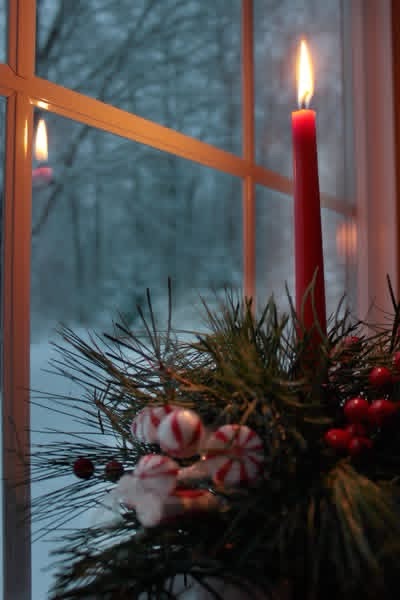
March was the season where the candles were no longer needed at night, and so they’d ceremoniously put them away as a family. Some would even replace the wax candle on the family table with a wooden candle, a reminder for them that they need not strain their eyes at night anymore and were welcome to re-adopt the rhythm of the sun and the moon as their clock.

In mid-March, near the Vernal Equinox, each family would gather in their field, and sometimes whole clans would gather in a shared plot, and facing the sun they’d drop the first seeds in the ground to start the harvest, beginning with grains and root vegetables. Then they’d grab some soil, mix it with some ash from their home hearths, and paint the backs of their beast with the dirt invoking Divine blessing on their work. It was a blessing of both gratitude for the gift of the animal, and a pleading prayer for a prosperous harvest.

March is still a time of preparation for humans. The snow is melting in many places, though we know that there will probably still be snows to come. Ground is being broken, though we know we can’t go into full-planting mode yet. Windows can stay open for brief periods of the day, though a full-on breeze would still be too chilly for many.

But things are changing, Beloved. The Celts understood how to lean into and embrace the change. They welcomed the natural changes of life.

We should, too.

Rowan Tree

In Celtic spirituality, February is associated with the rowan tree. Its red berries were thought to guard against all sorts of bad things.

They’d put rowan branches on their cattle sheds and dairy barns to keep the meat and milk fresh and free of disease, and across Celtic lands crosses of rowan twigs were tied with red thread and carried in pockets or sewn into the linings of coats for traveling mercies.

Since the saint of the month, Saint Brigid, was associated with flame and fire, the blazing red berries were thought to be little glimpses of her favor.

I found a modern Celtic prayer to say under the Rowan Moon (February’s moon). And since it’s the almost the last day one can say it, I thought I’d throw it out there.

What I love about this prayer is that, while images of Christ/love and the sun are really common, we don’t get many images of Christ/love being seen in the moon. But in the month where the moon still outshines the sun, it makes sense to have a prayer that highlights this truth, right?

Bright glory, bright moon,
the moon that shines on Brigid,
lamp of the poor,
love, light,
illumined by God.
Bright moon of glory,
teach me good purpose
toward all creation.
Bright moon of grace,
teach me good prayer
in accord with Christ’s heart.

Fiery moon of great light,
be in my heart
be in my deeds
be in my wishes.
Teach me your grace.
Bright moon over Brigid,
your light my hope,
your light on my purpose here,
in accord with God’s satisfaction.

Bright fire, bright moon,
point my heart to God’s repose.
Point me to my rest,
with the Son of Tranquility.

Seasons

Here’s the beautiful thing about the Celts: they understood the rhythms of both nature and humanity. This is why they instituted a marker, a point of note, every six weeks. Every six weeks nature changes and, whether we like it or not, every six weeks humanity needs a re-connecting point to nature, and their true selves, to come back to center.

Imagine, Beloved, if you knew that, in the midst of your depression, a new season was just around the corner and you’d be gathered again with your fellow world travelers to mark it?

The rhythm was not just to keep time, but it was intended to help humans be kept whole by time.

Which is why, on the eve of February, the Celts would note that we are indeed “Imbolc,” or “in the belly” of winter. For us in the USA this means we look toward Groundhog’s Day, a secular throwback to when our ancient ancestor’s looked to the animals to see where they were in the seasonal clock. We find this in all cultures, by the way. Different groups looked to bears, birds, and, yes, groundhogs to tell the story of nature.

The festival of St. Brigid and Imbolc, for the Celts, was a festival of remembrance. It embraced two truths: that winter must happen, and we must deal with it (both literally and metaphorically, Beloved), and also that it doesn’t last forever.

For all my friends who have fallen into depression, for all of us regardless of how we take this season, this wisdom is transformative!

Winters in our lives, happen. We must deal with them.

But, Beloved, they do not last forever.

My Celtic ancestors remind me of this today.
A Blessing Might Be Needed

The ancient Celts had a thing for travelers.

Perhaps it was because there were so many who wandered the old roads, usually long past nightfall, trying to make the most of their feet and miles, looking for a pint and stew at the end of the day.

Traveling at dusk was not unusual.

Tonight, on the eve of St. Brigid’s Day (Feb 1st), they’d leave a scarf out on their outside bushes or porch, knowing that the yin to St. Patrick’s yang might be passing by.

They’d bank that she’d bless the scarf, and thereby bless those who donned it over the next year.

But we’re too scientific and sophisticated for such nonsense.

Still…a blessing might be needed.

Maybe leave the scarf just in case, right?

Birch Moon

In January the ancient Celts (and us modern Celts, too) find themselves under the Birch Moon.

When a forested area burns, the birch is the first tree to be reborn in the ashes, and so this is the tree that hovers over the first month of a new year.

In January the Celts felt that it was important, particularly in the early part of the month, to resolve all arguments that lingered from the previous year, and forgive or pay or negotiate all debts still loitering in the ledgers of the hearts and notebooks of neighbors and kin.

January was to be welcomed without any old ties to the past. Like the birch tree, January would be a season of new growth out of the old ashes of yesteryear.

As January comes to a close, Beloved, what things in your heart need forgiving? What debts need settling?

What newness is coming to life?

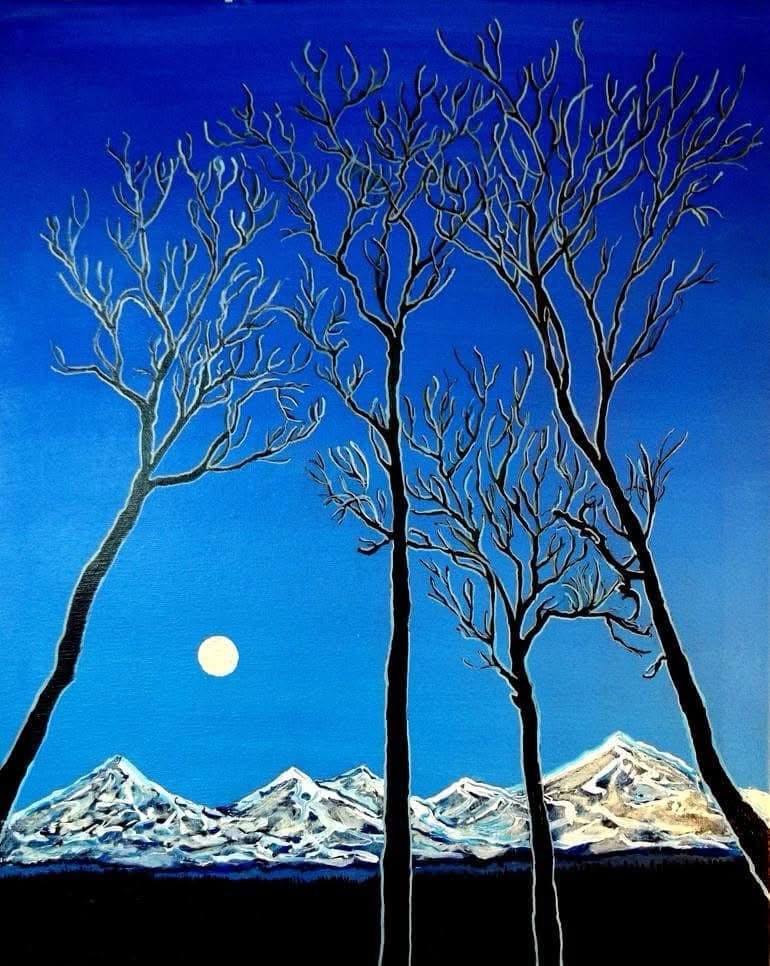
-Painting by Jon Holmes

Burns Night

Tonight my Celtic ancestors will honor a more recent addition to the feast day lists: Burns Night.

Burns Night is a nod to poet Robert Burns (b. 1759), a Scottish dear, and tonight they’ll light fires, make traditional Scottish food, and recite the poems of the dearly departed.

Curiously, though Burns Night is meant to honor the birth of the great poet of Auld Lang Syne, it was first celebrated on January 29th in 1802…though they’d soon find he was born four days earlier!

Tonight they’ll eat haggis, a curious mix of organs and grains made into a kind of pudding and eaten with both great pride and great disgust (for those not accustomed to it), along with a recitation of his most wonderful poems.

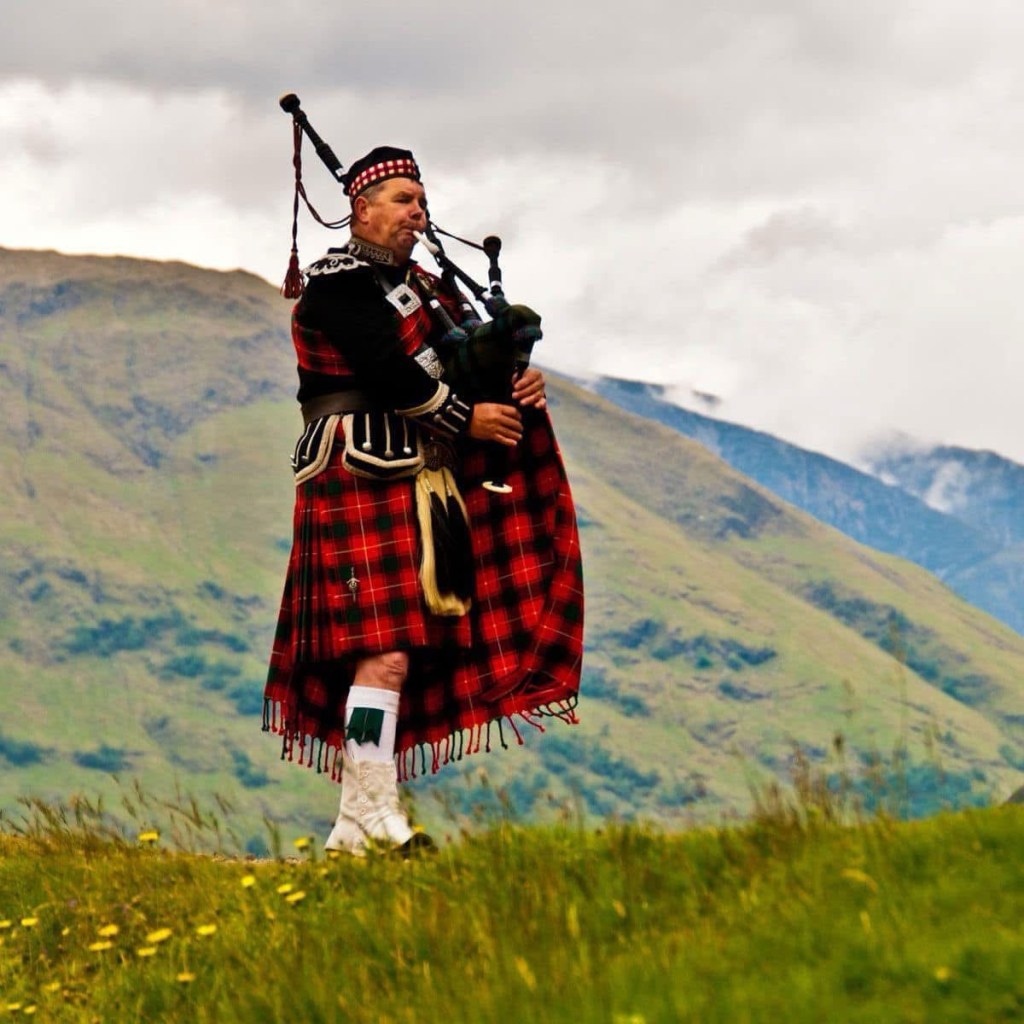
Burns Night is a night to wave your tartans and give thanks for the poets who came before us.

So, should old acquaintance be forgot and never brought to mind, I’m grateful for the family shoulders I stand on, and the days of auld lang syne.

Van Gogh Can You Tell Me

Van Gogh, Can You Tell Me

By David Lerner

van Gogh, can you tell me
how many martyrs does it take to open up a
blood bank

van Gogh, can you tell me
where does beauty go when it dies?

van Gogh, can you tell me
why saints live on car exhaust
and are lonely as crushed acorns

while enormous suppurating blisters of men
sleep on beds made of dollars, their pillows
the breasts of fantastic women

van Gogh, can you tell me
you who made paint scream
who drew the expressions of the wind

and portrayed leaves and stars
writhing in agony
as though they were human

tell me which of the satellites
circling the earth
is mine

how many pairs of shoes does it take to
walk to infinity

do you believe the world will ever learn how to
cry in unison

van Gogh, with your skin like scorched leather
from too much time spent in the wheatfields
on your knees, shooting dice with God
over who gets to color sunset

didn’t you ever feel like an asshole

incapable of self-preservation
always crossing at the end

van Gogh, can you tell me
as the sun comes down around my ears in
chunks today

as hummingbirds hover at my window
cursing me in tiny voices

why roads drag you down them
how you are finding light in Paradise
and if you have your own easel
of if God allows you to paint on the sky