Loneliness Can Be a Killer

Today the church remembers a saint pivotal to the Christian movement who doesn’t get a lot of press, but continues to get a lot of emulation: Saint Antony, Abbot in Egypt, Earnest Seeker and Embracer of Extremes.

We should cut to the chase: Saint Antony of Egypt is the founder of Christian monasticism.

Born in Egypt in 251 A.D. at the outset of this new way of living in the world, Antony heard the Gospel edict, “Go and sell all you have and give it to the poor” (Matt. 19:21) when he was just a young man and, for better or worse, took it very seriously.

He sold everything…and he had a lot. His family was extremely wealthy, and he inherited quite the ancient fortune.

Nevertheless, Saint Antony didn’t see much wiggle room in the Gospel call, and so he sold it all and went to live the solitary life in Upper Egypt as an anchorite, ascetic, and prayerful penitent, dedicating his life to following the Divine.

To put bread on his table he wove baskets and sold them at the local market, and he lived in total solitude for twenty years.

The thing is: he saw how living alone could be dangerous for some. It only took him twenty years to figure it out, but in this spiritual experiment he found that loneliness was a sordid companion and had dangers of its own. To combat that the dangers of solitude, Saint Antony gathered the other lonely anchorites and ascetics who were emulating his lonely life and knit them together into a community that could hold one another accountable while also providing some friendship. He drew up some organized rules for their life together, and created a pattern of life that included work, prayer, and worship. In this community fraternal love and a reasonable sense of order created the scaffolding not only for helping those seeking to dedicated their life to following the Divine more sustainable, but inadvertently created a model of being that has grown into a network of souls dedicated to living a life of devotion lasting thousands of years.

For Saint Antony, though, solitude was not so bad. After organizing this initial monastic order, he once again retreated into the womb of his own being, spending the remainder of his life alone in a cave on Mount Kolzim in the Eastern Desert near the Red Sea. People would seek out his lonely cave, asking advice and desiring to glean the pearls of wisdom that fell from his spiritually well-seasoned tongue. He occasionally would also venture out to visit his followers in their little pockets of apocalyptic people and hermitages. He even made the trek to Alexandria in his old age to argue against the heresy of Arianism, though he was more measured in his words.

Funny thing about Saint Antony: he was never ordained and never took any holy orders. He was a lay person his whole life, and had lived over a century when he took his last breath. The Monastery of St. Antony still exists today and remains a pilgrim point for many in the monastic world, and he is commonly now known as Saint Antony the Great.

Saint Antony of Egypt is a reminder for me, and should be for the whole church, that sometimes loneliness for clergy can be a killer, and we need to have some formal structures in place to combat this. I’ve seen this in my own life…and continue to see it all around me.

Let those with ears to hear, hear.

-historical bits gleaned from Pfatteicher’s New Book of Festivals & Commemorations

-icon written by Fr. Theodore Koufos over at Legacy Icons

The Quakers

Today an obscure saint is remembered by the Church, one of the founders of the Religious Society of Friends: George Fox.

Fox, born in England, left his home at eighteen to follow a religious quest, and reportedly had many visions and spiritual awakenings along the way.

He arrived, in time, to the idea that God speaks to the inner-soul, not through the forms and norms of the established church, which put him at odds with his Puritan surroundings. This inward insight became the plumb-line for guidance and faith, above clergy, doctrine, and even scripture itself.

Because of these stated beliefs, as well as his peculiar habits (he wore leather suits and never took his hat off), he was beaten, stoned, and jailed numerous times. Nonetheless, followers continued to flock to his message, including William Penn and Robert Barclay.

His followers became known as “Quakers,” an unpleasant term used to describe these people who refused to make pledges, pay tithes, or make oaths to authority.

Because of Fox and his message, the state passed the Toleration Act of 1689 which formally outlawed religious discrimination (though it continued informally), and left an impression on courts forcing them to struggle with what it means to be “equal before the law.”

-Summary from Pfatteicher’s “New Book of Festivals & Commemorations”-

You Can Be That Servant

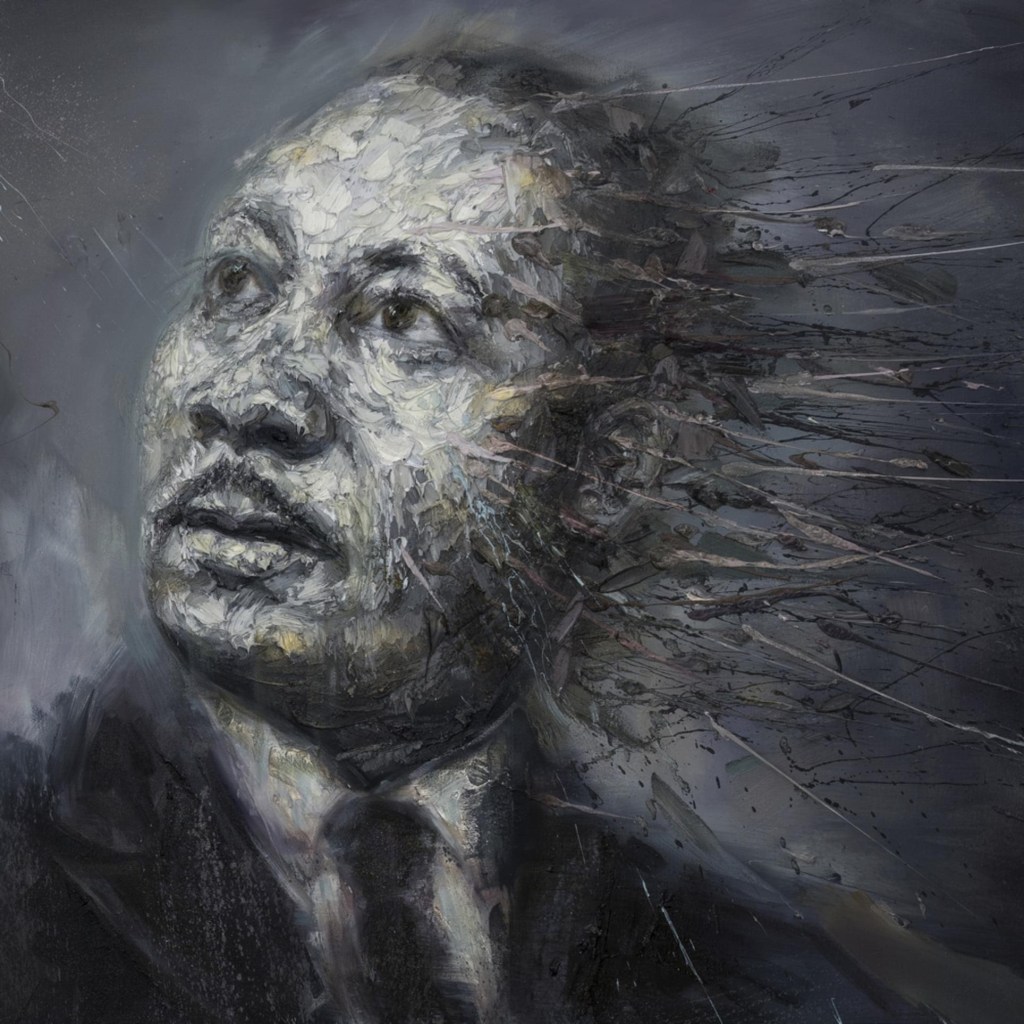
Though today is Martin Luther King, Jr’s birthday, the church reserves his commemoration for April 4th, conforming with the practice they do with all martyrs by remembering him on the day of his death.

Nevertheless, it is certainly appropriate to honor him today (as well as on the civic holiday next Monday).

To do that, I’ll share my favorite quote from King, one that doesn’t get a lot of circulation, though you may have heard it before. It’s from “The Drum Major’s Instinct.”

“If you want to be important–wonderful. If you want to be recognized–wonderful. If you want to be great–wonderful. But recognize that he who is greatest among you shall be your servant. That’s your new definition of greatness. And this morning, the thing that I like about it…by giving that definition of greatness, it means that everybody can be great.

Because everybody can serve.

You don’t have to have a college degree to serve. You don’t have to make your subject and your verb agree to serve. You don’t have to know about Plato and Aristotle to serve. You don’t have to know Einstein’s theory of relativity to serve, you don’t have to know the second theory of thermodynamics in physics to serve.

You only need a heart full of grace.

As soul generated by love.

And you can be that servant.”

-painting by Mathieu Laca

Buck the Bishops

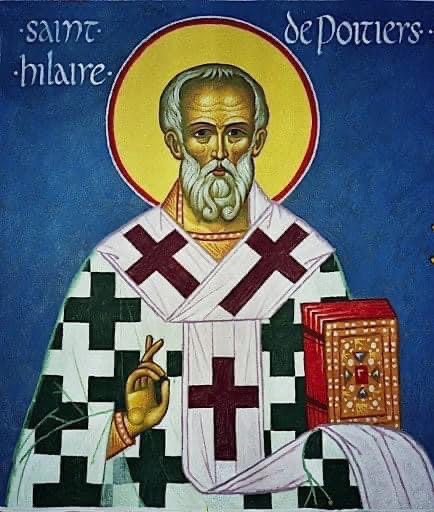
A 4th Century Saint is honored by the church on January 13th: St. Hilary, Bishop of Poitiers and Hymnwriter.

Hilary (think “happy” or “hilarious,” because his name is derived from the Latin for fun/cheerful) was born in Gaul to powerful pagan parents. He was not baptized until relatively later in life, at age 30, and in the year 350 he was made bishop of Poitiers by popular demand, though he was already married and had never been ordained!

Throughout history, good order has often been circumvented by the desires of the masses, for good and for ill.

St. Hilary bucked Emperor Constantinus in not going along with the Emperor’s demand that Western Bishops adhere to a compromised Nicene faith, and for this he was banished to Phrygia in Asia Minor.

There he continued his work as a theologian, writing On the Trinity while in exile, a foundational document for the early church.

In 360 he was allowed to return to his post at Poitiers to great acclaim, and he became the most respected Latin theologian of the time, and is lauded as one who brought Eastern wisdom into the Western church largely due to his time in exile and learning from those in Asia Minor.

He is also remembered as having written the first Latin hymns. Having been influenced by Greek hymns during his exile, he brought many back and created Latin versions of them while also writing new hymns altogether for the Western church. He was disappointed with the ability of the people in Gaul to carry a tune, however, and complained that they were “unteachable in sacred song.” I guess you can’t always have a win.

Hilary is remembered as being one intensely focused on Orthodoxy, but also as one who, due to his life experience, broadened and expanded the practices of the church.

Oh, and fun fact: I passed by the parish of St. Hilary weekly when I lived on the north side of Chicago.

St. Hilary is a reminder for me, and should be for the whole church, that sometimes spending some time in exile, on the outs, at the margins, can be a blessed time of learning where the gems of the wilderness can be mined and brought back into the center of life.

-historical pieces gleaned from Pfatteicher’s New Book of Festivals & Commemorations

On Holy Water

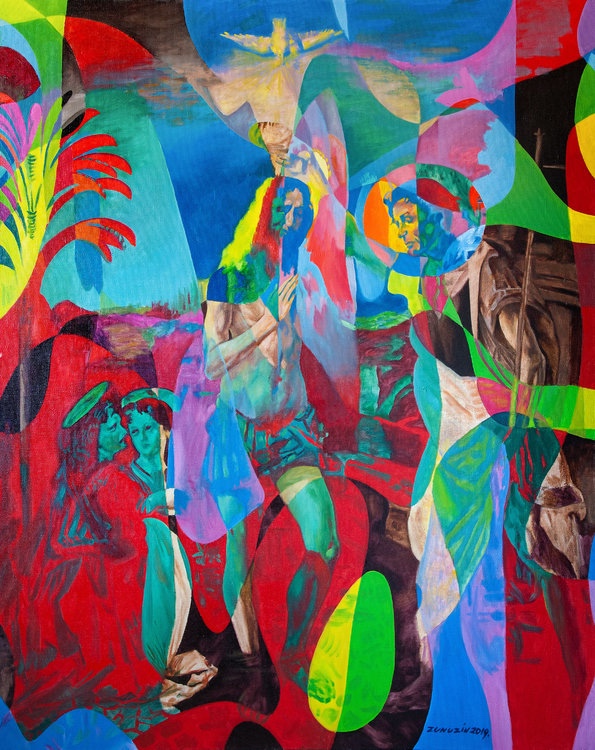
Along with honoring Saint Balthazar, the church also celebrates one of its moveable feasts today: The Baptism of Our Lord.

Falling on the first Sunday after The Epiphany, The Baptism of Our Lord honors the first recorded calling into ministry that the Gospel accounts have for Jesus. I say “first recorded” because, well, who knows what was going on in that head and heart that led him to the waters of the Jordan that day.

Water rituals are pervasive across religions. Judaism, Islam, Hinduism…all of them involve some sort of washing.

Christianity’s baptismal practice is a riff off of the Jewish cleansing baths. John (who, though Luke claims was Jesus’ cousin, was probably a rival street preacher and wandering prophet, of which there were many in those ancient days) changes the washing practice a bit, invoking repentance as an integral part of it all. The fact that Jesus takes John’s invitation has confounded Christians for thousands of years.

Why does someone who is thought to be sinless need to be baptized?

Rather than give an answer to that question (there are lots of thought trails you could follow there), perhaps it is enough to just say that Jesus, who is made of mostly water and trace elements (like all humanity) needs to wash like the rest of us.

The scene, though, is striking: the source of all creation bathed in the stuff of all creation.

On this Feast the church honors water, forgiveness, a golden thread through all faiths, and the humble bath as being holy.

It’s enough to make you think that, perhaps, all water is holy…

-art by Vladimir Zunuzin

See Yourself in the Stoty

Today is a feast day that, while not honored throughout the church, is especially reverent in African communities throughout Argentina, Paraguay, and Uruguay: Saint Balthazar, King of Macedonia and one of the Magi who sought out the infant Christ.

Saint Matthew’s Gospel does not name the Magi, nor does the writer even number them. The names, and their numbering, are all part of lore. So, where did we get the names of the Magi?

I’m glad you asked!

The names of the Magi are derived from a 6th Century Greek manuscript that was translated into Latin and widely distributed. There we read that the Magi who visited the Christ after following astrological signs were named Caspar, Melchior, and Balthazar. Of the three, Balthazar developed a particularly powerful following, mostly because it was purported that he was the Magi who carried the myrrh, the most mysterious and tragic of the “gifts” given to the infant Jesus.

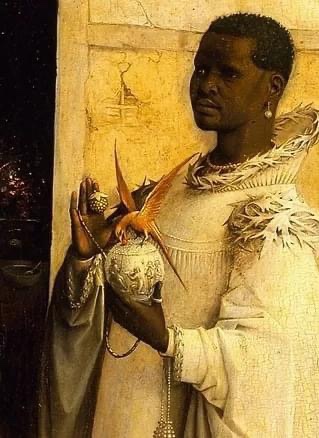
The Venerable St. Bede describes him as being a black man with a long beard which, while surely conjecture, struck a tone with many parts of the church that were under represented in depictions of the scriptures, especially as the whitewashing of the Bible had largely been completed by then.

In short: Saint Balthazar provided an opportunity for much of Christendom to see themselves in the story when they had largely been erased and replaced.

Today in many parts of South America, in non-Covid days, you’d find festivals and street parades honoring St. Balthazar and his elegantly morbid gift of myrrh. He is the patron saint of those who work with saws, thunder, those with epilepsy, and those who manufacture playing cards (I have no idea why), and of the three kings of lore, is the most popular.

Tradition has him being entombed at Cologne Cathedral in Germany, having been moved there from the original resting place of Constantinople (or is it Istanbul?). There the legend says his remains are kept with his other two companions at the Shrine of the Three Kings.

Now, all of this is legend and lore, from the top to the bottom. So why bother noting this feast day at all?

We must remember that while religion is Divinely inspired is is held in cracked clay jars of the human imagination. This feast day speaks to a wide swath of humanity and, in the Biblical narrative, plays an important part in Matthew’s Gospel. The gift of myrrh to the infant Jesus is a foreshadowing of his death, a little “flash forward” the Gospel writer provides for the ending of the story.

Indeed: the Jesus story is no story at all without the myrrh-y part.

So Saint Balthazar is a reminder for me, and should be for the whole church, of at least two things:

First: the whitewashing of the Bible (making all the characters European) is a disgrace and should absolutely be repudiated as a practice.

And secondly: the legends and lore of the faith still speak, and are still worth remembering and honoring as long as that remains true.

Icon written by Hieronymous Bosch

Water, Water, Everywhere

This Sunday many churches will conflate two festivals, and with good reason.

Those without Epiphany services will integrate a migration of the Magi at the beginning, but focus on the Baptism of Christ for the meat of the service.

By the by: If you’ve never done this hybridization, let me know. I’m happy to pass along a worship guide.

But to aid you in your inspiration and sermon writing, even at this late hour, check out what Tamika and Jason have to say on the readings (link below).

And, if you just want a bit of inspiration, remember that the ancient Celts held that water was not only necessary for life, but the lifeblood of all things. Water feeds and destroys, breeds and bears forth in this world.

If the Christ was to do some saving, he needed to be drenched in the source of life we have on earth.

Here’s what Thoughtcast has to say on the topic: https://anamcaracommunity.org/thoughtcast

Worth It

Today the Church celebrates the Feast of the Epiphany.

This is much more than just a story of Magi visiting the Christ child.

This day is all about awe and wonder. It is about recognizing the cosmic impact that the Divine incarnation has, as even the heavenly bodies testify to the greatness of God through the stars.

It is about the global impact that the embodiment of the Word of God would have, as people from the far corners of the Earth are embraced by God’s holy in-breaking, compelled to seek it out.

It is about Christ’s nature: precious as gold, fragrant as frankincense, and self-giving as the myrrh used to wrap the dead in that final act of love.

The journey of the Magi will be echoed by the journey of those women who walk with spices to the empty tomb on Easter morning.

The symmetry is striking. The whole arc fills you with awe.

In these days between Epiphany and Transfiguration the church will continually ask, “Who is this Jesus?” And with story after story we’ll hear a variety of answers to that question.

But today we just get this one answer: the embodied Word is worth searching for, worth giving things up for, and worth defying the powers of this world for.

The Magi, like Jesus himself, will practice civil disobedience in an effort to keep their conscience intact, by God.

That truly is awesome.

-icon written by Puerto Rican artist Fernan Mora

For a Bit of Levity on the 12th Day of Christmas

On the 12th Day of Christmas I will now list for you the 12 most horrible, and obscure, Christmas songs…that I still love to listen to:

-“Our Love is Like a Holiday,” by Michael Bolton.

Terrible chorus:
“I’ve been to Paris, London, L.A.
I feel the tropical sun in my face
This Christmas we don’t need to get away
Cause our love is like a holiday”

-“Christmas Through Your Eyes,” by Gloria Estefan.

Notable lyrics: “I see the rain, you see the rainbow
Hiding in the clouds
Never afraid to let your love show
Won’t you show me how
Wanna learn how to believe again”

-“Jingle Bell Rock,” by Hall and Oats.

Please note: theirs is the worst version of this song…and the video is, literally, the worst. I’m obsessed.

-“8 Days of Christmas,” by Destiny’s Child.

This modern take on the 12 Days not only gets the number of days wrong, but also includes this gem: “On the eighth day of Christmas my baby gave to me/A pair of Chloe shades and a diamond belly ring”

-“Hard Candy Christmas,” by Dolly Parton.

This is my favorite on this list. Killer verse? “Hey, maybe I’ll learn to sew
Maybe I’ll just lie low
Maybe I’ll hit the bars
Maybe I’ll count the stars until dawn
Me, I will go on”

-“Go Power at Christmas Time,” by James Brown.

If you ever needed proof he was often high, look no further…

-“This Christmas (Could Be the One),” by Ledisi

Never heard of this one? Consider yourself amongst the lucky…

-“Christmas Wrapping,” by The Waitresses.

This mono-tone little ditty exemplifies all the reasons why you’ve never heard of this group.

-“Go Tell it on the Mountain,” by Andy Griffith.

This is normally a great song. You didn’t know Andy Griffith sings, you say? He doesn’t.

-“Christmases When You Were Mine,” by Taylor Swift.

Tay Tay, what are you doing?!

-“Christmas for You and Me,” by Brian McKnight and Vince Gill.

Looking for that special song that mentions cheese this Christmas? Here you go!
“It’s 11 o’clock and I’m almost home
I’m just calling to let you know
Leave on the light for me
Soon we’ll make us some brie”

-“Candy Cane Christmas,” by Darius Rucker.

Vomit along to these lyrics:
“Angels sittin’ high upon a tree
Watchin’ over presents patiently
Milk and cookies on a plate
Santa Clause is on his way
The kids should be fast asleep”