Time is of the Essence

Today the church celebrates the brief life of Saint Elizabeth of Thuringia, Princess of Hungary and Friend of the Outcast.

You’ve never heard of Saint Elizabeth of Thuringia? That’s not surprising. Nestled in the middle days of November, she’s not widely known. But this 13th Century royal made a great impact to those she cared for in her short twenty four years of life.

She was the daughter of King Andrew of Hungary, and was betrothed at the age of one to the son of a local noble whose name was Ludwig. This sealed the political alliance between the king and the count.

She was known to be serious and generous, and even at an early age showed a devout faith. Ludwig was fond of her, despite the forced marriage.

They were married when Elizabeth was fourteen (Ludwig was twenty one) and had three children. Their marriage, by all accounts, was a happy one, and Ludwig supported St. Elizabeth in her increasing generosity. For instance, during a regional famine, Elizabeth gave away most of her own fortune and grain to the local poor. She was heavily criticized by other nobles for this, but Ludwig approved.

St. Elizabeth founded two hospitals during her time as Duchess. She regularly tended the sick and the lame herself, and gave money for the specific care of the ill children, particularly orphans. Ludwig followed Elizabeth’s lead, and tried his best to find jobs for those in the area who had trouble earning a living.

In 1221 Franciscan monks came to town, and Elizabeth was immediately drawn to these kind, poor preachers. She came under the tutelage of Brother Rodeger who taught her the way of St. Francis. She took the example so seriously that she ended up taking a leper into her own home to stay the night when he was wandering aimlessly. Ludwig found him in their bed and, though at first startled, understood that Elizabeth was fulfilling her calling.

On September 11th Ludwig died of the plague while on the crusade. Elizabeth left the castle and went to live in Eisenbach where she found a cold welcome from the townspeople. She was eventually taken under the wing of her uncle the Bishop of Bamberg, and on Good Friday in 1228 she officially took her monastic vows, devoting herself to the way of St. Francis. She secured the safety of her children, built a small house near Marburg, and set up a hospice center for the sick, the aged, and the poor.

St. Elizabeth’s life ended in isolation and austerity. Her confessor, Conrad of Marburg, was not a kindly monk, and seemed to take pleasure in forcing Elizabeth to live in harsh conditions. Her health began to fail, and she died not having yet seen her twenty fifth birthday.

So many hospitals around the world are named for this saint.

The Wartburg castle, in which Elizabeth lived for most of her life, would later have a new resident. our own Blessed Martin Luther, who would pen his German translation of the New Testament there.

St. Elizabeth is a reminder for me, and should be for the church, that time is of the essence. We do not have to wait until tomorrow to make an impact, because we’re never confident how many tomorrows we will have.

So, make an impact.

-historical tidbits from Pfatteicher’s New Book of Festivals & Commemorations

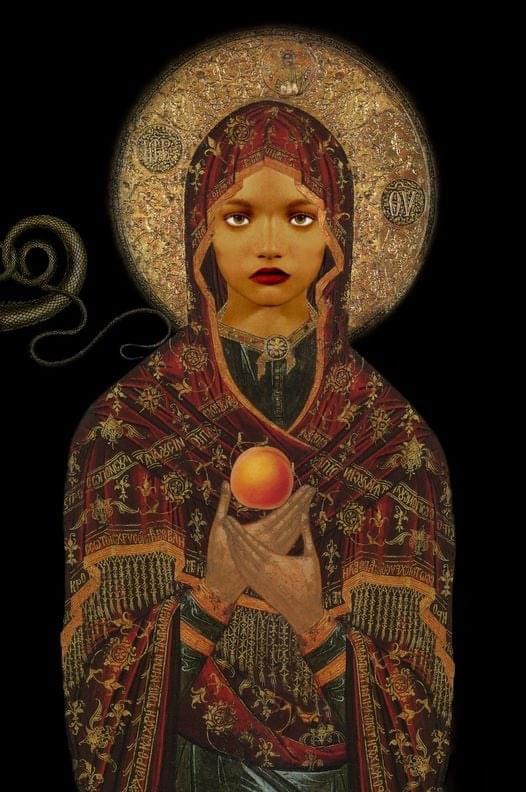
-icon by Theophilia at deviantart.com

Powerful Questions Over Trite Answers

In these November days, an “in-between-time” of the year wrestling with whether it is “fall” or “winter”, we honor perhaps my most favorite theologian and saint who embodied wrestling in his questioning of the struggles of human existence, St. Soren Kierkegaard, Writer, Theologian, and the Father of Existentialism..

Soren was born in Copenhagen in the early 19th Century, the seventh child of aged parents. His father, Michael, was a farm laborer who was born in abject poverty but, through toil and a good bit of luck, succeeded at business and became quite wealthy. There is a story that Michael, deeply unhappy with his life, stood on a hill and cursed God one day…which changed his business fortunes but, in his estimation, also gave him terrible heartache. He believed that God blessed him in business but cursed him in life. His wife and five of his seven children died quite early, and Soren only knew his father as a grieved and sad person.

Soren studied theology and quickly got the sense that God, in retribution for his father’s curse, had summarily cursed the whole family. He tried to cut ties with his father, and lived a quite wild life for a bit, but eventually had a religious conversion that sent him back to make amends. His father died in 1838 and left Soren a considerable fortune.

Kierkegaard eventually finished his theological degree (he was a brilliant student), but never sought ordination because, despite all his study, he could never fully make “the leap of faith,” a phrase he would come to coin and use throughout his work.

In 1849 Soren became engaged to the young love of his life, Regine, but following in the footsteps of his ever-grieved father, was troubled and broke off the engagement when he struggled making sense of inviting someone to share his unhappy existence, this “curse” he felt was still very present.

Breaking off his engagement sent Soren further into a deep and shadowed depression where he publicly (in writing) wrestled with how we know anything at all with certainty.

He began publishing thoughtful works in earnest, using a nom de plume: Either-Or, Fear and Trembling, The Concept of Dread, and many others. The public assumed these were works of fanciful, thoughtful, fiction, but in fact they were Kierkegaard wrestling with life.

As a writer, Kierkegaard became open to public scrutiny, and was engaged in more than a few public feuds with other publications who viewed his work as ridiculous or the mad thoughts of a rich kid who had too much time on his hands. Soren did not take to being mocked, and argued bitterly against his detractors…and all this sent him further into a pit of despair.

His final issue, though, came when Kierkegaard heard officials from the Danish church spout what he identified as sterile theology. Never being able to quite embrace an orthodox faith, Kierkegaard still knew a theology of smoke and mirrors when he saw one, and became quite critical of a church that he felt didn’t take anything seriously and looked to keep people quiet and tamed more than encourage them to adopt deep, thoughtful wrestling.

Soren, in his despair and distress, one day collapsed in the streets of Copenhagen at the age of 42. Doctors diagnosed him with some sort of bone disease, and a month after his collapse he died in November of 1855.

His funeral at the largest church in town was attended by three people: his brother, the priest, and himself.

St. Kierkegaard’s big hang-up with the church, and with life, is the notion of how one could talk with such plain certainty about things that are so unexplainable. The inability or unwillingness of the church to faithfully wrestle with itself and its teachings, even core teachings of Divine existence and what constitutes morality in a world that seemed destined for rule by the privileged, troubled him. How does will, risk, and choice play into our life-trajectory? How can a theology that smacked of status quo even begin to mirror the sacrificial life of the Christ?

Kierkegaard always tried to point the church back to this “troubled truth”: you can’t be certain, so stop pretending you can be.

For Kierkegaard truth was experienced more than taught by scholars in a classroom, and in this way he embodied a very “ground-up” theological stance which, for obvious reasons, chaffed against the hierarchy of the Church.

I deeply resonate with St. Soren’s wrestling with faith and truth, and to say that his works Stages on Life’s Way and Fear and Trembling had an effect on me is to say too little. I continue to consider myself a follower of his particular vein of theological inquiry: questioning, uncertain, and yet always striving.

I also think he is an outstanding writer and that you should read him for that, if for nothing else.

St. Soren is a reminder for me, and should be for the whole church, that the people in our pews can be trusted with a bit of ambiguity, can be invited to a deep (and necessary!) wrestling with the faith, and should not be served the vapid theology and trite moralisms and “pie in the sky” escapism.

Wrestle, by God. It’s uncomfortable, it can even be painful, but it is worth the effort to live an examined life.

-the life of Kierkegaard cobbled together from my own work and Pfatteicher’s New Book of Festivals & Commemorations.

-opinions my own

-do yourself a favor and read Fear and Trembling

-painting by Fabrizio Cassetta

When Catechesis Changed Lives

Today the church honors the start of an ancient feast, Martinmas, named in honor of St. Martin of Tours, Bishop, Conscientious Objector, and Gentle Bishop.


St. Martin was born in the early 4th Century in modern day Hungary. His family was not Christian, and his father was a distinguished Roman legionnaire.


In his childhood he came under Christian influence, and at the age of ten he took it upon himself to sign up for Catechism classes (imagine that happening today!).


As a young teen, though, his catechumenal exploration was put on pause as he was drafted into the Roman army, a common practice for children of Roman soldiers. He was a good soldier. Very good, in fact, and well-liked by his comrades.


This is a nice tie-in to Veterans Day, no?


But, as the legend goes, one winter night he was stationed in Amiens, and on night watch he saw a poor old beggar at the city gates shivering in the cold. St. Martin had nothing to give him, so he cut his cavalryman’s cloak, and gave the old man half to wrap himself in. That night St. Martin dreamt that he saw Christ wrapped in his cloak, saying, “Martin, still a catechumen, has covered me with his cloak.”


Well, this sent St. Martin into an existential crisis. Over a period of time he became convinced he could no longer be a soldier because he could no longer justify killing.
He decided to be baptized and asked to leave the army. He was twenty years old.


St. Martin went off to seek Bishop Hilary of Poitiers (see Jan 13th for his feast day) to learn from him. He met with him and decided he wanted to join him in his work in Poitiers, but first wanted to say goodbye (and convert) his family back in Hungary. While St. Martin was journeying back to Hilary after hanging with his family, he learned that Bishop Hilary had been exiled. St. Martin decided then that he, too, would seek a solitary life for a while, and lived a hermits life in a hut outside Poitiers.


The thing is, St. Martin was becoming famous for not wanting to be famous. And so his little hut grew into two, three, thirty…a thriving humble monastery had formed that was providing charitable work all over the French countryside. In 371 the Bishopric of Tours became vacant. St. Martin’s followers tricked him into entering the city, and then would not let him leave until he agreed to be their Bishop.


“Fine,” he said. “But I’m going to do it my way…” (cue Frank Sinatra).


St. Martin, now Bishop, set up his home in a cave on the cliffs of Marmoutier, two miles from Tours. The office for his Bishopric was a hut just outside the cave. And though he had an unusual lifestyle, and an unusual approach, he was unusually effective in reaching the poor countryside people of France with charitable love, good works, and the Gospel message.
He fought for the rights of peasants in front of Emperors, not afraid to advocate on behalf of the poor. He established centers of charity and teaching in places no one else cared about. And when the Church first used capital punishment as the sentence of heresy, as they did in 386, St. Martin strongly opposed the sentence and began to ask tough questions about mixing the church and state.


He thought government and the church should not hold hands too tightly.
St. Martin died in 397. Interestingly enough, his work set much of the foundational work for the Celtic Christian Church, as missionaries trained in his little outposts traveled to the British Isles.


Martinmas, much like Michaelmas, became a festival time in much of Christendom, perhaps even spanning ten days originally. After the Reformation, many Lutherans continued to celebrate Martinmas, but did so to honor both St. Martin of Tours and Blessed Martin Luther (whose birthday is November 10th).


St. Martin’s motto, “Non recus laborem” or “I do not turn back from work” has been the motto of many of the faithful throughout the centuries.


St. Martin is a reminder for me, and should be for the whole church, that catechetical study has been known to significantly alter how people live and work. It has been formative…and could still be.


-historical bits from Pfatteicher’s _New Book of Festivals & Commemorations_


-icon written by Aiden Hart depicting St. Martin’s formative experience

We Can’t Just Do What We Want…

Today the church honors an important leader in the church that most church-goers have never even heard of, St. Leo the Great, Bishop of Rome and Mediator of the Church.

Long before the church was arguing about the nature of humans and their race and sexuality, the church set about arguing about the nature of Jesus. In the 5th Century, when Pope Leo was consecrated as the Bishop of Rome, the Catholic faith was being torn asunder by schisms over who Jesus was and how Jesus was.

Yes, you read that correctly: how Jesus was.

How was Jesus both Divine and human?

Pope Leo refocused the question on faith rather than nitty-gritty explanation. He affirmed the idea that Christ had two natures and, as he was enlarging the influence of the Papacy around the known world, issued his famous (at least to churchy-people) Tome to Flavian, the Patriarch of Constantinople that had the clearest articulation of Christ as human and yet Divine.

You still talk about this idea, by the way, every time you say the Nicene Creed.

At the time all sorts of schisms were going on inside the church, there were tons of wars being fought in real-time, too. St. Leo kept Rome safe from Attila the Hun in 452, and a legion of Vandals, whom he persuaded not to destroy Rome, in 455. He put restrictions on who (under what training) could enter the priesthood, and affirmed the goodness of “all matter,” rejecting the idea that the created world is evil and we need only wait for some heaven, lightyears away.

He was a devoted liturgist, and further developed the words of the Mass, shaping the words we say yet today.

St. Leo was wise, if not particularly brilliant. He understood how to use power effectively and for twenty-two years led with theological ability and personal resolve.

St. Leo is a reminder for me that wisdom and brilliance don’t always hold hands, and you can certainly be one without the other.

But of all the things that Pope Leo the Great is remembered for, the thing that struck me is how he looked at creation and without hesitation affirmed what Genesis had already said: “this is good.”

Why does it matter?

Because, Beloved, it articulates clearly that everything that is created, matters, and therefore we can’t just do what we want with it…

-historical bits from Pfatteicher’s New Book of Festivals & Commemorations

-editorials by me

Stories Inspire

Today the church remembers an obscure saint, St. Willibrord of Utrecht, Missionary to Frisia.

Willibrord (b. 658) was raised in Ireland where he was ordained a priest in 688.

He was heavily influenced by the Northumbrian monk, Egbert, who told fantastical stories of his travels and work. Willibrord was enamored with these tales, and wanted in on the action. At Egbert’s invitation, Willibrord dedicated himself to exploration and missionary work.

He sailed to Utrecht in Frisia (the Netherlands) where he set up the first official see of the Roman Catholic church in that land (well, the Pope founded it, but gave Willibrord permission to do what he was doing: running it). Willibrord set to work founding schools, parishes, and monasteries. He was consecrated as Bishop by Pope Sergius I in 695, and did much to plant the church in the Netherlands.

In his old age he retired to a monastery he founded in what is now Luxembourg, and died there on this day in 739.

St. Willibrord is a reminder for me, and should be for the whole church, that stories inspire. Hearing Egbert’s tales enticed him to explore the world! The faith is full of inspiring stories, and telling them in such a way that they’re heard as the wonderful tales and testimonies they are should inspire exploration, not entrench people in trite moralisms, stilted orthodoxy, or make the faithful fearful of what’s on the other side of any fence.

A lovely historical development: as one so inspired by stories, he now has so many stories about him shared throughout the Netherlands. These tales of his accomplishments are richly embellished and fantastical, ensuring that this one so moved by stories is the subject of many moving stories himself.

-historical pieces from Pfatteicher’s New Book of Festivals & Commemorations

-also, it should be noted that I will probably look like this old Irish saint when I become an old Irish saint…

Patron Saints of A Topic We Tend to Ignore

Today the church honors two ancient saints of the faith, perhaps the “Patron Saints of Waiting,” St. Elizabeth and Zechariah, the Parents of St. John the Baptizer.

This feast is honored in Palestine on this date, and honoring them begins to turn our collective faces toward the season of Advent, the season of hope and patience.

Zechariah is the pious priest in the line of Abijah, noted by St. Luke in his first chapter. Elizabeth, whose namesake is the wife of Aaron (the brother of Moses), was also of priestly lineage. This makes it, at least in the ancient world, an ideal marriage: pure and priestly.

By the time of Jesus, there were so many of priestly lineage alive that the duties of the temple were afforded by lot, as not all could participate. One day this privilege fell to Zechariah, as the story goes, and he was ordered to light incense in the Temple. As he was performing his priestly duty, an angel appeared to him and announced that he and Elizabeth would, in their old age, have a child.

By the way, if your Biblical mind isn’t brought back to the aged Abram and Sarai and their son Isaac at the mention of this story, you’re not paying attention…these stories are meant to invoke one another, Beloved.

If your Biblical mind isn’t brought back to Hannah and her son Samuel in the telling of this story, you’re not paying attention, Beloved.

Luke, in writing his Gospel, knew what he was doing with these lovely saints…

Elizabeth, that dear saint, did not, for whatever reason, have any children in her young age. In this way, she followed in the footsteps of Sarah and Hannah before her.

By the way, I note “for whatever reason,” because contrary to popular belief at that time (and even today), we have no biological indicators that note that anything was amiss with Elizabeth’s ability to conceive. Indeed, Zechariah could have had an ailment that prevented him from parenting. But, as with all history written by men, for some reason the fault falls on Elizabeth.

I love Saint Elizabeth, and St. Zechariah, too, because their struggle is so relatable to so many today.

Zechariah had a hard time believing that they could have a child, and for this reason he became both deaf and mute for a time being. This is a strange biological development…much like having a child in your old age would be…but the theological development is pretty clear: some things that the Divine makes possible are hard to talk about and hard to listen to.

Zechariah and Elizabeth named their dear child John, defying tradition. At the naming of their child (Zechariah wrote it down for those present), his voice was restored, and immediately he was blessed with a song that we still sing in the church today during the season of Advent, the Benedictus Dominus Deus. It is a song about promise fulfillment and echoes the Magnificat of Mary and the Hebrew Scripture song of Hannah in 1 Samuel.

St. Elizabeth and St. Zechariah are a reminder for me, and should be for the whole church, that sometimes Diving things take a little while to happen, and that patience and hope must continually hold hands in this life.

They are also a reminder for me that the church needs to openly and honestly talk about the difficulty of conception, a topic so few want to discuss because of its delicate nature. But, Beloved, this is such an important and wide-spread issue, the church must talk about infertility with honesty, and forget with the nonsense of “in God’s time” or any such mess that can be hurtful for those who want to be parents but have difficulty for whatever reason.

Let those with ears to hear, hear.

Magic

Today, which is the day after election day in the United States this year, is also a special day in the church that deserves a nod: The Feast of St. Martin de Porres, Defender of the Poor and Renewer of Society.

St. Martin was born in the late 16th Century in Lima, Peru. His mother was an herbal healer, and his father was a Spanish knight (Don Juan de Porres…I kid you not). Since Don Juan had not married Martin’s mother, Ana, he refused to acknowledge that Martin was his son.

St. Martin, raised by his mother, became well versed in both herbal healing and the teachings of the spreading Catholic faith in Peru. He married the two together in his head, heart, and practice, and became a physician-monk, continuing to heal people using herbal remedies and folk-magic while living in the Dominican friary (he entered the order at 15).

He was known for caring for the poor and the sick who came seeking him at the friary gates, especially those who were refused medical help because they were black, too poor to pay, or seriously ill. He became known as a friend of those everyone else forgot and laughed at.

He also became known for his delicate care for animals, both domesticated and wild. There are many wild tales of how he befriended rats and rodents, much to the dismay of those around him.

Finally, St. Martin was a congenial and wise mediator, helping to solve marriage problems, finding ways to help the poor pay dowries, and coming to the defense of those without anyone to defend them.

Many say he had magical powers, but in reading about him, I’d suggest that his real magic was being the embodied Divine for people and animals the world tried to throw away.

He once wrote, “Compassion, my dear Brothers, is preferable to cleanliness. Reflect that with a little soap I can easily clean my bed covers, but even with a torrent of tears I would never wash from my soul the stain that my harshness toward the unfortunate would create.”

He was canonized in 1962 as the patron saint of racial justice and harmony, and good grief if that doesn’t speak loudly on this day, this year.

St. Martin is a reminder to me, and should be for the church, that healing comes in many forms and through many people, and that the ailments of the physical body and the body politic both need attending to by people of faith.

-historical notes from Pfatteicher’s New Book of Festivals & Commemorations

-icon written by Britta Prinzivalli

-opinions mine

For the Rest of Us

Today the church commemorates All Soul’s Day, or “The Day of the Faithfully Departed.”

This festival day is a product of the evolution of the church and its understanding of the departed and how they play into the eschatological and cosmological understanding of all things.

If saints were those who led extraordinary lives, what about the rest of us?

All Souls Day is an answer to that question. Indeed, many people who aren’t technically “saints” in the narrow definition of the term have led wonderfully beautiful and impactful lives. All Souls attempts to honor that fact. It became common practice, for instance, to lift up particular benefactors of parishes on this day, giving a nod to those who made the physical (and spiritual) structures of the faith possible.

In a more pedestrian sense, All Souls Day is, at least for me, a day where we can all embrace the reality that, saint or not, people deserve to be remembered.

In my first parish we had these magnificent stained glass windows put in decades earlier. In them you could see glimpses of not only the artistry of the day, but you could also feel a sort of timelessness that was pervasive, connecting those who had first stared into and through those windows with me and my own children who looked at them now.

Good art does that: it creates connective tissue between the past and the ever-expanding future.

But All Souls Day is a reminder that good theology does that, too. We stand upon the beliefs of the past, hauling some of them with us, and leaving some on the path behind us as signs and markers of thoughts discarded and avenues that were dead-ends.

All Souls Day lifts up the very practical, very pious, and very pedestrian people on whose shoulders we stand. In this way it is even more meaningful than the pomp and circumstance of All Saints Day.

If All Saints Day is the fine-dining establishment in your city, All Souls Day is the little cafe you frequent where you know the owner, have a favorite booth, and don’t need to glance at the menu because you know it by heart.

In other words, All Souls Day is really where most of us will find ourselves: in the ordinary annals of a life that tried its best, did some great things, fell short quite a bit, but is remembered by a small, but faithful, group of loved ones who know our names.

See That Host All Dressed in White

Today the church celebrates All Saints Day, the day in which the formal saints of the church (those canonized) are recognized and remembered as examples of the faith.

This celebration is very old, perhaps dating back to the 4th Century, though it is clear that earlier commemorations of this feast day were held in the spring, sometime between Easter and Pentecost. It was originally intended to celebrate not just any saints, but the martyrs of the faith.

The focus and the date of the day shifted sometime just before or in the early 7th Century. In the British aisles it had already been honored on November 1st, probably in response to the pagan autumn festivals that culminated at the end of October (which many of you participated in last night with ghosts and goblins socially-distancing at your door!). The date stuck for the whole church within the century, and came to have a deeper connection not only with the seasonal cycle on display in the northern hemisphere, but also with pre-Christian sensibilities. One example is this Celtic idea that the arrival of mists and frosts around this time were examples of ghostly/faery visitors, so it made sense to have a day remembering them when they started to make their presence known again.

In the 7th Century the date came to commemorate non-martyrs as well, probably in response to the fact that Christianity became dominant and was less-oppressed…resulting in fewer martyrs of the faith. The faithful who died both naturally and by martyrdom were recognized on this date every year, especially if they had died in that calendar year.

Today Orthodox, Roman Catholic, and Anglican branches of liturgical Christianity still keep this day to honor those canonized saints of the church, reserving the non-canonized dead to be remembered tomorrow on All Souls Day (more on that tomorrow). Lutherans, with our penchant for comingling the idea of “sinner and saint,” usually don’t make such a distinction, and just honor all those who have died in the faith, regardless of status, on this day.

Whatever your proclivity, today is a powerful day when honored with intention, even for those of you who don’t find yourself in any faith tradition. Honoring our ancestors, learning from their stories, embracing their goodness and foibles, is an important part of the human experience in my estimation. We all are, after all, an unwilling product of those who came before us, but we continually have a choice in deciding what we’re going to carry with us from those past ancestors, and what we’re not going to let continue into the next generation.

All Saints Day is a reminder for me, and should be for the whole church, that those who came before still speak into our present, and that the Divine who seems in love with continual creation also seems in love with some measure of continual, constant, though hidden and obscure (like through a mirror darkly?) preservation.

-historical bits from Pfatteicher’s New Book of Festivals & Commemorations

-icon from St. Gregory of Nyssa in San Francisco

-opinions and Celtic reflections mine

A Day of Red

Churches around the world are honoring Reformation Sunday this Sabbath, a rare treat in that the Sunday and the actual Festival Day align.

It’s important to note that each liturgical denomination has a day that honors a formative experience in the life of their particular vein of Christianity. The Eastern Orthodox church celebrates “The Triumph of Orthodoxy” to usher in Lent. The Roman Catholic Church has the Feast of the Chair of St. Peter (February 22nd), emphasizing the founding of the church on Peter’s shoulders. The Anglican Church honors the day the Book of Common Prayer was published, uniting the communion into one.

For Lutherans, it is Reformation Day, when we sing “A Mighty Fortress” and “Lord Keep Us Steadfast in Your Word” and dress in red, the color of both the martyrs and the fire of the Holy Spirit.

At its worst the Reformation is celebrated as a triumph. At its best it is a feast day that is simply a continuation of the perpetual change and shift that must happen in a church that is wedded to a God who is known and revealed inside of time.

Historically it does mark a time in history when a break, for better and for worse, happened in the church. This break deserves an autopsy every year in an effort to remember, reaffirm, and repair as much as a possible the schisms that arose from it.

The date of the Reformation, the 31st of October, comes from the lore that Luther nailed his 95 Theses on the Castle Church door in Wittenberg, intending for it to be widely read by everyone who attended the All Saints Sunday mass the following day. We’re not sure this is historically accurate, but because it is so much a part of the narrative around the events of autumn in 1517, we give a nod to its church-changing truth, if not its actual veracity.

A better date to honor the Reformation might actually be June 25th, the date that the Augsburg Confession was presented. Like the Anglican Church with the Book of Common Prayer, the Confession is the binding document of all the reformation churches.

Regardless, tradition compels us to keep the date, to wear red, to remember, and to continue to reform.

-historical bits from Pfatteicher’s New Book of Festivals & Commemorations

-opinions mine