
A New Morning
Reply

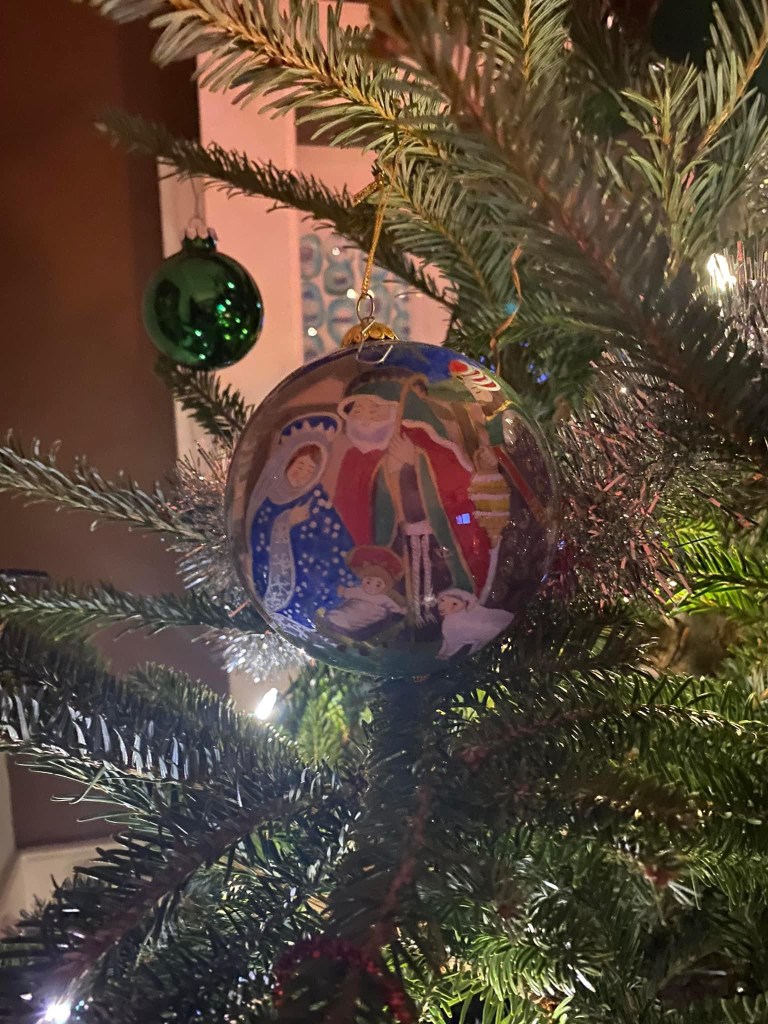
Christ climbed down
From his bare tree
This year
And ran away to where
There were no rootless Christmas trees
Hung with candycanes and breakable stars
Christ climbed down
From his bare tree
This year
And ran away to where
There were no gilded Christmas trees
And no tinsel Christmas trees
And no tinfoil Christmas trees
And no pink plastic Christmas trees
And no gold Christmas trees
And no black Christmas trees
And no powderblue Christmas trees
Hung with electric candles
And encircled by tin electric trains
And clever cornball relatives
Christ climbed down
From his bare tree
This year
And ran away to where
No intrepid Bible salesmen
Covered the territory
In two-toned Cadillacs
And where no Sears Roebuck creches
Complete with plastic babe in manger
Arrived by parcel post
The babe by special delivery
And where no televisioned Wise Men
Praised the Lord Calvert Whiskey
Christ climbed down
From his bare tree
This year
And ran away to where
No fat handshaking stranger
In a red flannel suit
And a fake white beard
Went around passing himself off
as some sort of North Pole saint
crossing the desert to Bethlehem
Pennsylvania
In a Volkswagen sled
Drawn by rollicking Adirondack reindeer
With German names
And bearing sacks of Humble Gifts
From Saks Fifth Avenue
For everybody’s imagined Christ child
Christ climbed down
From his bare tree
This year
And ran away to where
No Bing Crosby carolers
Groaned of a tight Christmas
And where no Radio City angels
Iceskated wingless
Thru a winter wonderland
Into a jinglebell heaven
Daily at 8:30
With Midnight Mass matinees
Christ climbed down
From his bare tree
This year
And softly stole away into
Some anonymous soul
He waits again
An unimaginable
And impossibly
Immaculate Reconception
The very craziest
Of Second Comings
-Lawrence Ferlinghetti-
Christ climbed down
From his bare tree
This year
And ran away to where
There were no rootless Christmas trees
Hung with candycanes and breakable stars
Christ climbed down
From his bare tree
This year
And ran away to where
There were no gilded Christmas trees
And no tinsel Christmas trees
And no tinfoil Christmas trees
And no pink plastic Christmas trees
And no gold Christmas trees
And no black Christmas trees
And no powderblue Christmas trees
Hung with electric candles
And encircled by tin electric trains
And clever cornball relatives
Christ climbed down
From his bare tree
This year
And ran away to where
No intrepid Bible salesmen
Covered the territory
In two-toned Cadillacs
And where no Sears Roebuck creches
Complete with plastic babe in manger
Arrived by parcel post
The babe by special delivery
And where no televisioned Wise Men
Praised the Lord Calvert Whiskey
Christ climbed down
From his bare tree
This year
And ran away to where
No fat handshaking stranger
In a red flannel suit
And a fake white beard
Went around passing himself off
as some sort of North Pole saint
crossing the desert to Bethlehem
Pennsylvania
In a Volkswagen sled
Drawn by rollicking Adirondack reindeer
With German names
And bearing sacks of Humble Gifts
From Saks Fifth Avenue
For everybody’s imagined Christ child
Christ climbed down
From his bare tree
This year
And ran away to where
No Bing Crosby carolers
Groaned of a tight Christmas
And where no Radio City angels
Iceskated wingless
Thru a winter wonderland
Into a jinglebell heaven
Daily at 8:30
With Midnight Mass matinees
Christ climbed down
From his bare tree
This year
And softly stole away into
Some anonymous soul
He waits again
An unimaginable
And impossibly
Immaculate Reconception
The very craziest
Of Second Comings
-Lawrence Ferlinghetti-
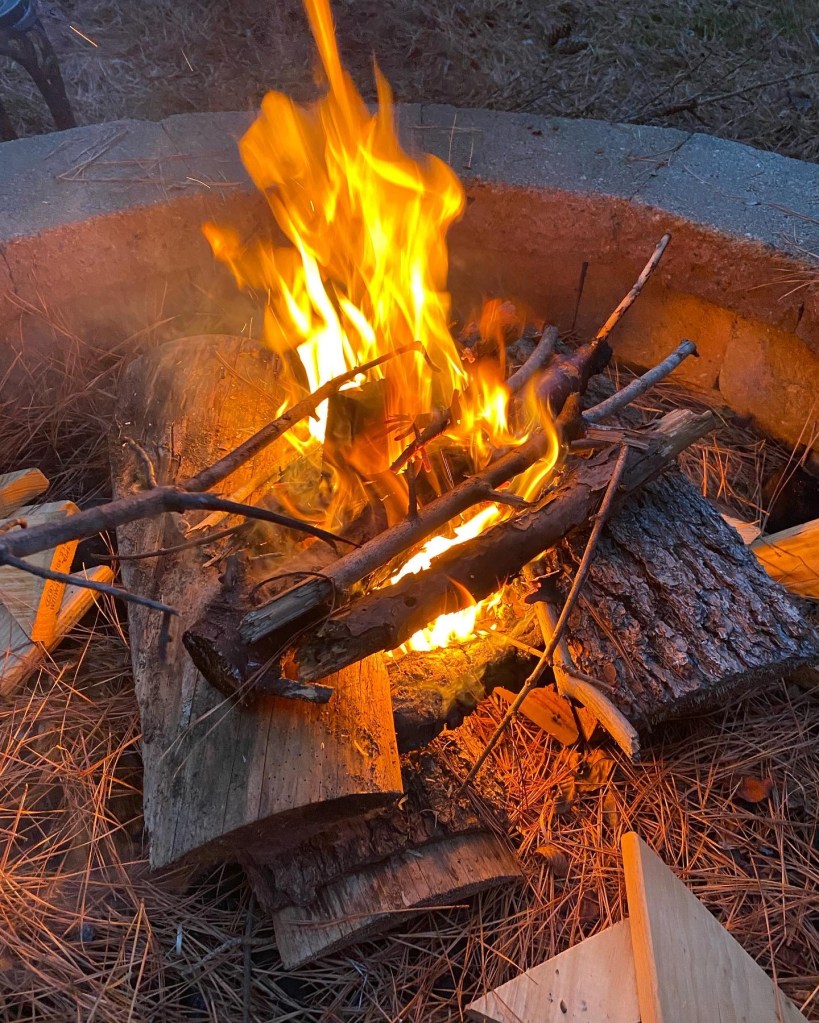
As the sun turns in early this Solstice, I’m keeping vigil with my ancestors and am anxious to spy that Christmas star!
On this night they’d haul in a huge tree; often the whole town was needed to carry it with children riding on top like a sled. They’d cut it, or grab two if needed, and take to either the village gathering place, or split between homes as was necessary.
The ancient Yule Log would mimic the “unconquered sun” in the heart of the home. Winter was seen as a hulking cold beast who swallowed the fire of light, and the only way to overcome that belly was through stoking the fire more mightily.
In later years the log would be large enough to burn through Christmas Day and beyond, a melding of pre and post-Christian practices.
After the log had burned, the ashes were mixed with seed corn, thought to bring luck and good harvest. In most cases a very small portion of the log was kept and safely stored for the following Winter Solstice, a reminder that the sun could always be counted on to return and that the unbroken cycle of light and warmth was promised.

In learning about my Celtic heritage, I stumbled upon a fun tradition of something called “The Yule Lads,” 13 trolls that come from December 12-24 to play pranks. Especially popular in Icelandic lore, these trolls are fun tricksters who, when little children leave their shoes on the window sill, leave candies for good children and rotten potatoes for naughty kids.
December 12th: Sheep Cote Clod visits to harass sheep (but his peg leg prevents him from catching many, and he mostly makes noise).
December 13th: Gully Gawk comes from the mountains to hide in gullies, sneaking into barns to steal milk.
December 14th: Stubby comes to scrape out all the food left in your pans.
December 15th: Spoon Licker licks your spoons.
December 16th: Pot-Scraper scrapes out your pots.
December 17th: Bowl-Licker licks out your dirty bowls.
December 18th: Door Slammer comes late at night to slam your doors while you’re sleeping.
December 19th: Skyr Gobbler arrives. Skyr is a special kind of Icelandic yogurt, but he’ll eat any yogurt…he’s not picky.
December 20th: Sausage Snatcher comes to, well, self-explanatory.
December 21st: Window Peeper comes. A terrible name, this is the kindest of the trolls who is just looking for little snacks to steal by peering through your windows.
December 22nd: Doorway Sniffer comes. He has a strange name, but he’s just sniffing out your cakes and muffins to eat with his strong nose.
December 23rd: Meat Hook comes to eat the Christmas roasts you’re prepping for your holiday feast!
December 24th: Candle Stealer. This harkens back to a day when candles were made from fat and were edible. He waits to take children’s candles to eat!
Fun stuff.
Rotten potatoes for all!

In the 8th Century it came to pass that the traditional twelve day festivals of the Celts was declared a sacred season by the Church. Emphasis was placed on December 25, January 1, and January 6. December 25 was called “Nollag Mor” by the Celts, “Big Christmas.” January 6 was known as “Nollag Beag,” or “Little Christmas.”
Public work and public business was suspended unless you were a butcher, baker, or someone whose livelihood added to the festivities. Our idea of “Christmas break” stems from this ancient pause in public life.
In these days you’d ponder love, both human and Divine, and would openly practice extravagant acts of charity: gifts to workers who you employed, loved ones near and far, and extra meat and bread to those who struggled throughout the year. In this way you emulated both the Sun who gives without asking, and, as religion gained influence, the Son who was said to do the same.
Because there was no work, people had time to dance and sing. So little caroling bands popped up around town dressed in fun costumes, spreading frivolity and sometimes asking for food or trinkets. We continue this tradition in Christmas caroling.
Everything has an origin, a reason, in this season.
In December the ancient Celts found themselves under the Elder Moon.
Known as Ruish (roo-esh) in Gaelic, the elder tree was known to protect against negative forces, including pests like fruit flies and mosquitos, and so elder was often hung from doorways or in kitchen windows throughout the year. It was also sought out as medicine for so many, and is said to have natural antiviral properties. The elder tree was one you sought when you needed help.
The elder tree is bruised easily, but also regrows quickly, which is why the ancients named this moon at this time of year for this tree. Everything feels fragile right now. But, as the Irish phrase goes, “Every beginning is weak” (bionn gach tosach lag). Fragility allows for birth.
December is about beginnings sprouting from endings. As we head closer and closer to the solstice, the days shorten almost to the point of non-existence (or, at least it feels like that). But the ancients believed that the sun that faded-but-never-abandoned them made a new covenant annually with the earth in these days.
When Christianity began to have an influence and decided to place the celebration of Jesus’ birth in this month at the time of the Yule celebrations, it made so much sense to the Celts that they didn’t bat an eye: a new covenant with the Son/sun was appropriate in these shadow days.
The ancient Celts felt that December was a time for wombing, anyway. The fields were fallow. The family tended to be physically lax but mentally focused. In December they did their “inner-work,” pondering how the shadows of their own being (as Jung would say) helped them live into their full selves.
We’d do well to follow that lead.
And we may find that, at the end of December, we, like the elder tree, find ourselves being birthed differently into a new year after doing the inner work under the Elder Moon.
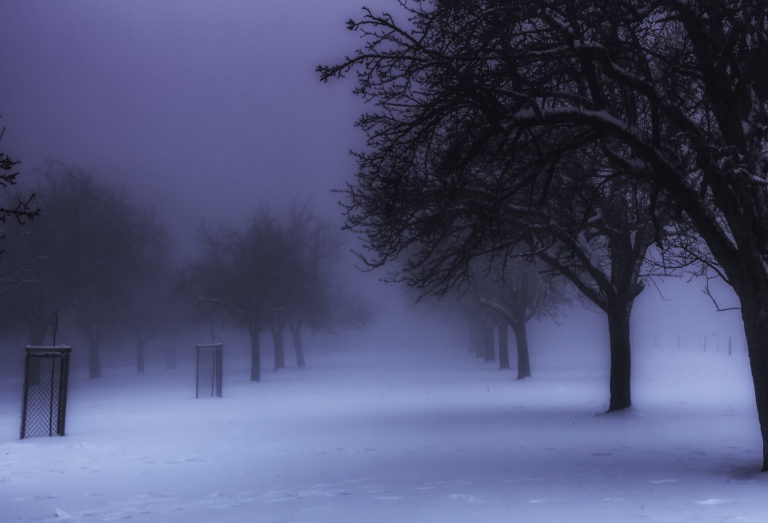
For the ancient Celts, December was a month where they celebrated light being born from winter’s long shadows.
They believed that, on the solstice, the sun would jump up and retreat back down for just a moment, seemingly staying in roughly the same place, signaling that it would once again keep it’s promise to bless the people with its presence the next year.
Every year they believed the sun was born again.
They’d honor this birth with days and days of celebration, usually around twelve, and they would perform ritual acts of welcome including dancing, drama, music, games of feat, and above all, lighting fires that they thought would help the newly-born, fledgling sun gain strength. The “yule log” was both for heat and for fueling the sun back into its summer glory.
Also, interesting tidbit: “yule” is probably where we get the word “jolly” from in English.
Even after Christianity had overlaid its own festival onto the celebrations of Ireland and Scotland, the pagan roots shone (and shine!) through. The Scandinavian settlements of the area had dyed the yule practices in the proverbial wool of the people.
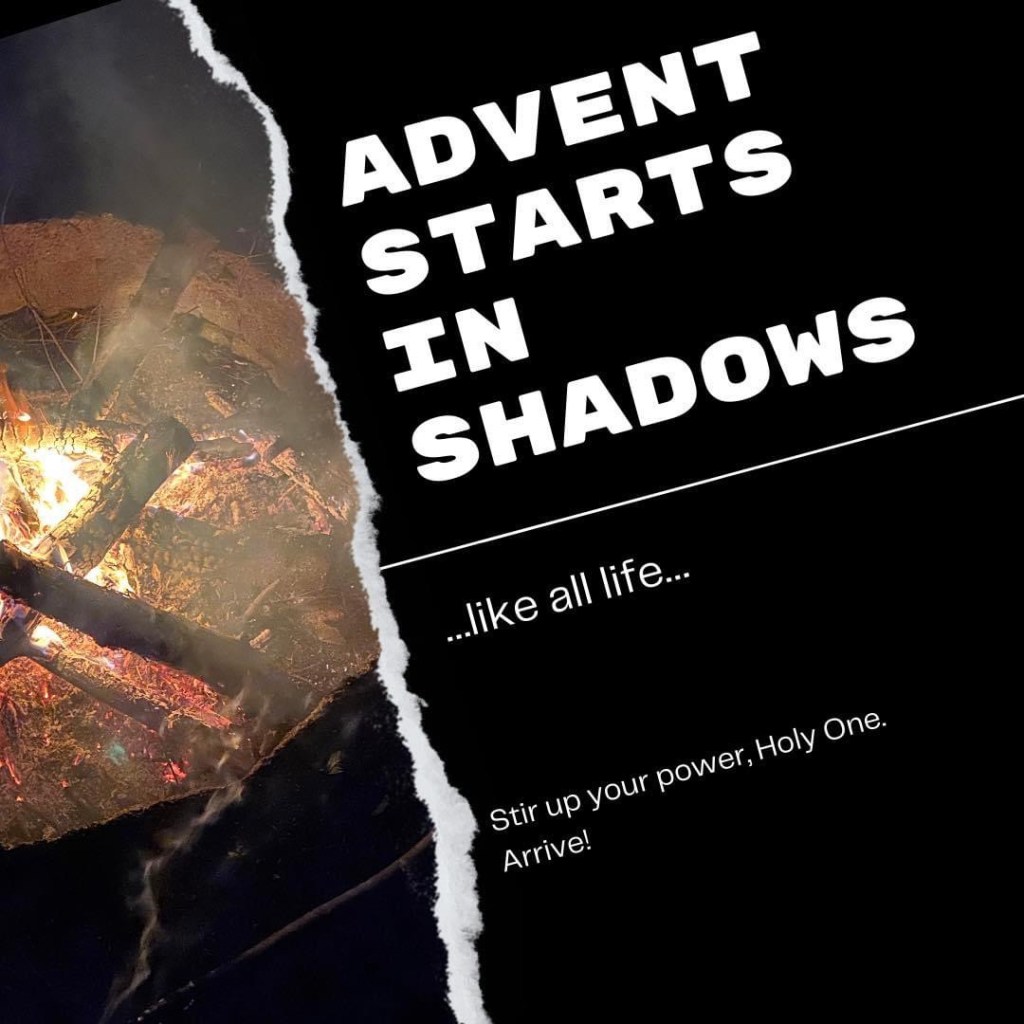
Lent is a spiritual housecleaning.
Advent? Advent is a spiritual housewarming.
We cozy up our homes, and our hearts, like a young one knitting something in a rocker late into the night, expecting something, someone, any day now.
Any day.
But it starts at night, and in the early morn. As the sun hides in these days and the shadows stick around longer, those who follow the church year ponder beginnings and endings by candle light, slowly adding to their number as the waiting intensifies.
Advent starts in the shadows because most of our waiting happens in the shadows, both literal and figurative, as we wrestle with difficult questions.
What does it mean to be another year older and missing those who have gone before?
What does it mean to wonder when we’ll see our last year?
What does it mean to wait for something new to happen…wondering if it will ever happen at all?
What does it mean to practice joy instead of happiness, peace instead of uneasy stalemates, hope instead of certainty?
What does it mean to be open to something new while missing what was?
This is the way of Advent. These are the angst days of joyful wrestling, prayerful pondering, and hopeful expectancy tinged with a good bit of refining doubt.
Christmas crooners croon away, and that’s all we’ll and good, but the true warbling in these days are the wonderful wonderings we wonder with Mary, pondering what newness lies ahead, and inside of us, this year. We cozy up our beings to welcome it.
Advent starts in the shadows of our “hopes and fears of all the years,” as the carol goes.
A beautiful, amazing, ponderful time. Embrace it.


Tonight as we enter the midway of the month, I’m remembering that in November the ancient Celts found themselves under the Reed Moon.
Each month has a moon, usually named after a tree, corresponding to the attribute that the month brought to the wheel of the year. Now, while reeds are not technically “trees,” November was illumined by the reed moon because reeds, when wound together, created tough blankets that would be used for both floor and roof, for both basket and rope.
They are tough as trees when braided.
Reeds were emblematic of how November was a weaving of worlds, ushered in by Samhain and All Saints, the ancestors and the babies creating a tapestry of existence that was most clearly felt as the shadows lengthened and the hearth blazed. For the ancient Celts life existed far into the past and far into the future, and the cycle of life was always rolling. Reeds reminded them of this: woven together to be one whole, and when wind blew over the open reed they believed they could hear the howling voices of the ancestors calling to them from the other side of the veil.
These, of course, became wind chimes and porch pipes.
The Reed Moon inspires us, with its long night-shine life, to remember those who have gone before, the ache in our bones a reminder of their unseen, but ever-felt, presence.
 Reluctant Xtian