In the 8th Century it came to pass that the traditional twelve day festivals of the Celts was declared a sacred season by the Church. Emphasis was placed on December 25, January 1, and January 6. December 25 was called “Nollag Mor” by the Celts, “Big Christmas.” January 6 was known as “Nollag Beag,” or “Little Christmas.”
Public work and public business was suspended unless you were a butcher, baker, or someone whose livelihood added to the festivities. Our idea of “Christmas break” stems from this ancient pause in public life.
In these days you’d ponder love, both human and Divine, and would openly practice extravagant acts of charity: gifts to workers you employed, loved ones near and far, and extra meat and bread to those who struggled throughout the year. In this way you emulated both the Sun who gives without asking, and, as religion gained influence, the Son who was said to do the same.
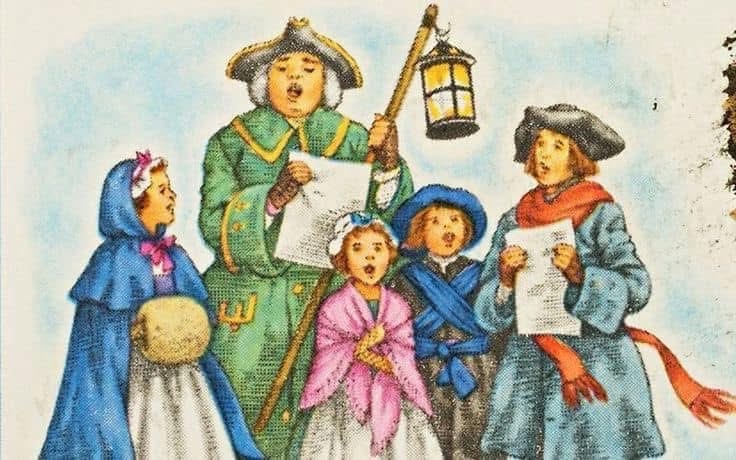
Because there was no work, people had time to dance and sing. So little caroling bands popped up around town dressed in fun costumes, spreading frivolity and sometimes asking for food or trinkets. We continue this tradition in Christmas caroling.
Everything has an origin, a reason, in this season.