“O Oriens!” the church cries on the morning of the Winter Solstice. “O Dawn!” is what it literally means, both a bit ironic and exasperated on this shortest day of the year.
You know, my son Finn was born with two “true knots” in his umbilical cord. In ancient days this sign would have probably been taken as an omen of either his greatness or his mischievousness (and it would have been right on both counts!).
But living in a scientific age we have no need for these signs, right?
Well, I’d suggest the opposite. After another year with so much death, and with depression so rampant, we need reminders of our greatness, Beloved.
It’s all a reminder that, with every dawn, with every dayspring, something amazing is possible.
The dawn, the bright and morning star, is an ever-rising sign that something amazing is possible.
So stick around, Beloved. In case you didn’t know it, it’s good you exist and, well, amazing things are always possible with every dawn…
Today the church uses its parched tongue to cry out, “O Radix Jesse!” or “O Root of Jesse!”
The ask here is that the dead stump of a family line, scourged and ravaged by one conquering after another, eating away at the Family Tree, somehow live again.
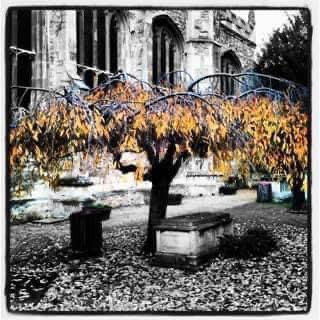
This dead-end of a year may feel very stump-ish to you.
It’s also just true that while we may have eaten from the Tree of the Knowledge of Good and Evil, we have not learned its wisdom. That ancient tree is dead in our hands as we call what is evil, good, and what is good, evil.
On December 18th in Advent the church raises its voice to cry out, “O Adonai!” or “O Lord!”
This is, perhaps, the most honest prayer there is, Beloved. In times of trial and joy, “Oh God” or “My Lord” slips from our lips.
In the ancient context of Advent, this cry is both an invocation and a statement of political priorities. The Empire of old (and now?) would have you believe that power is Lord, that grievance is Lord, that Caesar is Lord.
In fact, all the ancient steles and decrees said just that: Caesar is Lord.
But the church, at its best, says that the Divine is Lord.
It’s a political statement. We’ve forgotten that…but we can remember. There is time.
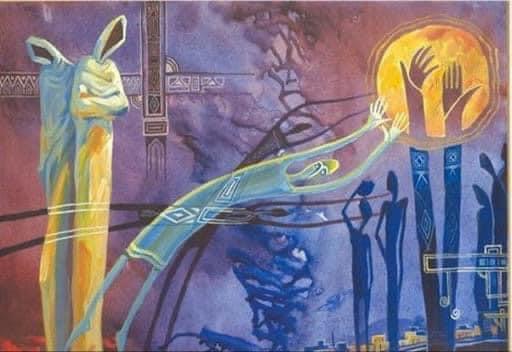
-art is by Michael Adonai, an Eritrean painter, entitled “Back to Homeland.” You can imagine crying out “O Lord” when longing to return to your mother…
The other night I was preparing our week’s menu, and thought outloud, “Is the Solstice on the 21st or 22nd this year?”
It’s the 21st, it turns out, which changed the menu because instead of eating in the kitchen, we’d be eating out at the fire on the new Yule log.
The Yule log is the ancient tradition of hauling a huge log, usually oak (though birch was thought to bring insight and wisdom), into the hearth on Christmas Eve. Sometimes the log was so large (it had to last through the whole twelve days!) that children would sit astride it as it was carried from the forest through town, cheering the whole way. Into this log would be carved prayers, symbols, and depictions of “Mother Winter,” bringing peace and good fortune for the next year. They’d light this fire as a way to embolden the fire in the sky, the sun, and remind themselves that night does not last forever.
A lesson we’d do well to remember in this time of year when seasonal affective disorder is so prevalent.
Another similar tradition which you know of, but may not know why it happens, is the lighting of a Christmas candle in these days. This candle stands in place of the yule log…kind of a mini yule.
Our ancestors (as late as the 1940’s for those of us with Celtic blood) would have a special Christmas candle, usually red (to symbolize the ancient idiom “the red blood reigns in the winter’s cold”), and light on Christmas Eve. It was usually placed in a hollowed out turnip, a shallow wooden bowl, or in later years a very select and decorated fancy holder, and would find a place on the front room window sill.
They’d place this candle in the window to do a few things.
First, it would remind them that there were those in the world without a supper or bed, and that they were to provide that for them. The candle would show a weary traveler where to find rest.
It was also lit to show Mary, Joseph, and the Christ child that a home could be found in their inn of a home. The wandering Holy Family still wanders today, wondering where to lodge.
Finally, especially in the countryside where it was difficult to spy a dwelling in the shadows of the night, these Christmas candles in the windows would show you where your neighbors were…and remind you that you’re not alone, by God. Help is just a flicker away should you need it. A true Christmas miracle-made-real.
So these Christmas lights adorning all the suburban homes in these days, and those stately Colonial-style homes with their window candles aren’t just to be pretty and compete with the neighbors for accolades. If we remember history, these decorations bring more than “oohs” and “aaahs.”
They’re meant to bring hope, be a reminder to care for the “least of these,” and offer a welcome hand to the neighbor.
If you’re so inclined, put a new log in that hearth or fire-pit this year, and maybe write a prayer or two on it for the upcoming season of life.
And maybe stick a candle in that front window with intention this year, reminding everyone (including yourself!) that you’re called to help others in these wintery days.
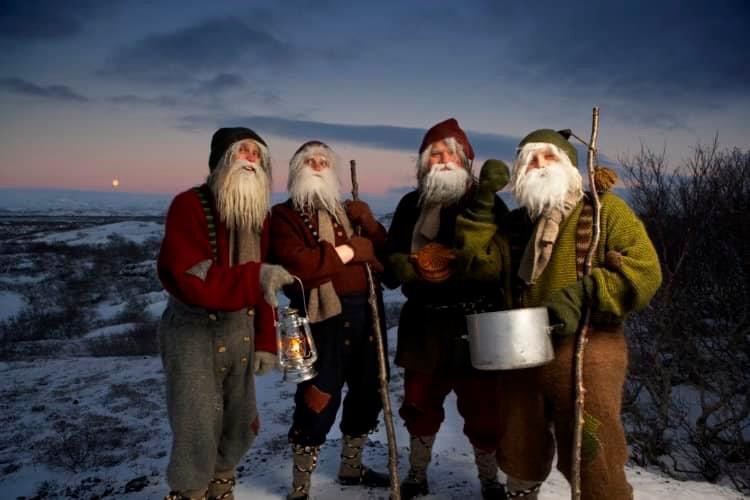
In learning about my Celtic heritage, I stumbled upon a fun tradition of something called “The Yule Lads,” 13 trolls that come from December 12-24 to play pranks. Especially popular in Icelandic lore, these trolls are fun tricksters who, when little children leave their shoes on the window sill, leave candies for good children and rotten potatoes for naughty kids.
December 12th: Sheep Cote Clod visits to harass sheep (but his peg leg prevents him from catching many, and he mostly makes noise).
December 13th: Gully Gawk comes from the mountains to hide in gullies, sneaking into barns to steal milk.
December 14th: Stubby comes to scrape out all the food left in your pans.
December 15th: Spoon Licker licks your spoons.
December 16th: Pot-Scraper scrapes out your pots.
December 17th: Bowl-Licker licks out your dirty bowls.
December 18th: Door Slammer comes late at night to slam your doors while you’re sleeping.
December 19th: Skyr Gobbler arrives. Skyr is a special kind of Icelandic yogurt, but he’ll eat any yogurt…he’s not picky.
December 20th: Sausage Snatcher comes to, well, self-explanatory.
December 21st: Window Peeper comes. A terrible name, this is the kindest of the trolls who is just looking for little snacks to steal by peering through your windows.
December 22nd: Doorway Sniffer comes. He has a strange name, but he’s just sniffing out your cakes and muffins to eat with his strong nose.
December 23rd: Meat Hook comes to eat the Christmas roasts you’re prepping for your holiday feast!
December 24th: Candle Stealer. This harkens back to a day when candles were made from fat and were edible. He waits to take children’s candles to eat!
Today the church celebrates one of the great mystics of history, St. Juan de Yepes y Alvarez, but you know him better as St. John of the Cross, Renewer of the Church and Visionary.
St. Juan was born in Fontiveros Spain, the third son of a Jewish silk merchant. His father died shortly after he was born, and his family placed little Juan in an institution for the poor.
St. Juan was extremely short of stature, even for his day, but showed great skill in craftsmanship from early on, and apprenticed at many places. He enrolled in college and worked his way through school striving to become an exemplary monk.
He was entranced in the Order of the Blessed Virgin (Carmelites), and was ordained. Soon after met St. Teresa of Avila, his spiritual cousin. She had begun to implement her reforms of the Carmelite order, and St. John promised himself to these reforms, adopting the name St. John of the Cross to embody his minimalist and mystic piety.
St. Teresa eventually helped get St. John appointed as Confessor to the Convent of the Incarnation, where she was a sister.
St. Teresa’s reforms were causing division within the Carmelite Order, and some monastics came and seized St. John, imprisoned him in a six foot by ten foot cell, beat him, and attempted to force him to renounce the austere reforms.
St. John refused and after nine months was able to escape, fleeing to a safe monastery in southern Spain.
This is where he began writing down his mystical visions and dreams, having had them in the confinement of his prison cell. His deeply spiritual writings often took the form of poetry. Most notable are The Ascent of Mt. Carmel-the Dark Night, and Living Flame of Love (which is more song than pure poetry).
In 1591 the controversy over the austere reforms rose again, and St. John was banished further south in Spain. It was there that he caught a fever and, though he sought medical care, was poorly treated because the prior of the monastery didn’t want the burden of another monk.
He died uttering the Psalms, saying, “Into your hands, O Lord, I commend my Spirit.” He was deeply beloved by the people, though he was rejected by much of the Church at the time, and was immediately heralded as a Saint.
You may not be too familiar with St. John of the Cross, but you’re certainly familiar with art that is based off of his mystical visions. Salvador Dali’s unique painting of the crucifixion was based on one of St. John’s poems.
St. John of the Cross is a reminder to me, and should be for the whole church, that sometimes the most despised in our midst are the wisest.
Let those with ears to hear, hear.
-historical notes from Pfatteicher’s New Book of Festivals & Commemorations
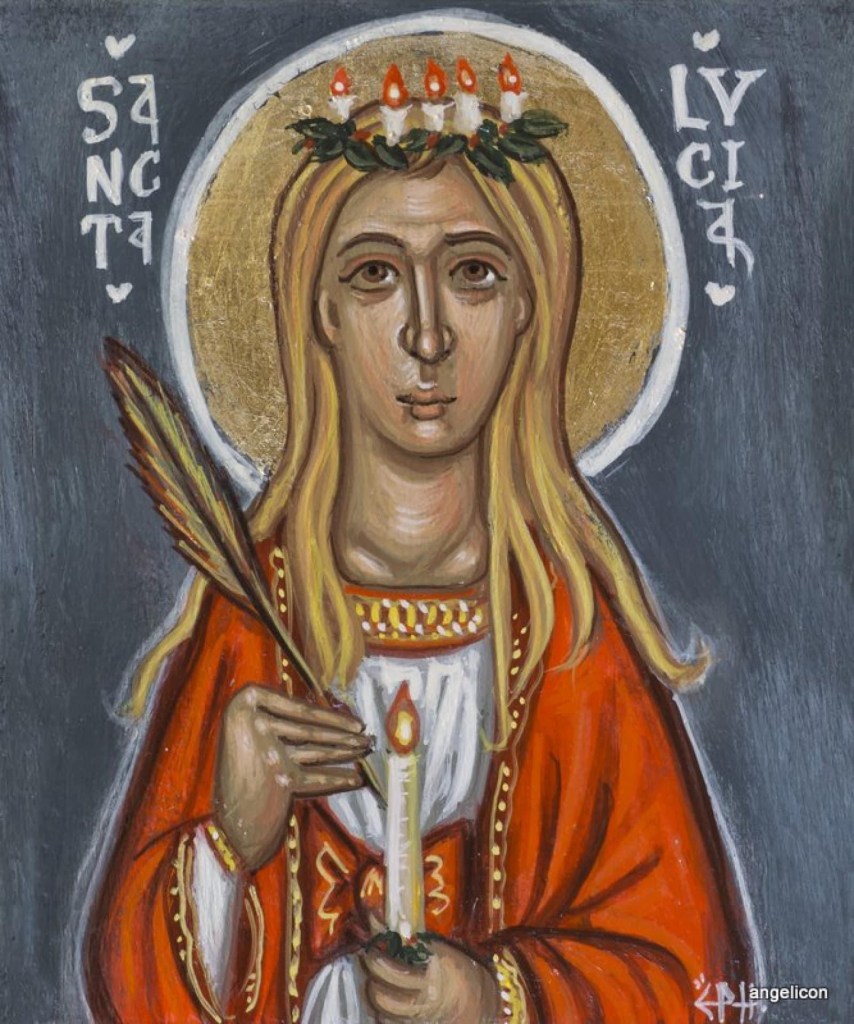
Today the church, especially those of Scandinavian heritage, remembers a young saint and martyr who, in memory, has a taste for sweet rolls and coffee: Saint Lucy, The Light Bearer.
Having lived sometime at the end of the third century in Sicily, Saint Lucy was a victim of the Diocletian Persecution, a purging of Christians in Roman territories. She was said to have lived a good life who had a heart for the poor. Legend goes that her mother fell gravely ill when Lucy was a young maiden, and when she recovered St. Lucy gave all of her bridal dowry to the poor in thanksgiving to God. Her would-be suitor did not like this at all, and turned Lucy in to the authorities for being a secret Christian.
As punishment Lucy was forced to work in a brothel…though she refused to work at all, which frustrated her oppressors. They took her out to the village square and built a fire around her in order to scare her into submission, but she remained unafraid. She eventually died due to these intimidation tactics, and her legend grew in the Christian communities as a brave young woman who had no fear in the face of danger.
Saint Lucy is remembered as the patron saint of the working poor. Her name literally means “light,” which makes the intimidation tactics of her oppressors ironic.
In modern practice Saint Lucy’s memory made its way far north to Scandinavia where she is highly regarded, especially as her feast day is quite near the Solstice.
Saint Lucy, or as she is known in the North, “Sankta Lucia,” is remembered by the procession of a young girl in the house wearing white with a red sash (the sign of a martyr), her head adorned with a crown of candles, bringing breakfast and a blessing to each room. These candles stand for two important symbols in Saint Lucy’s story: both the light that was used to intimidate her, and they also symbolize her eyes (the candle of the body), which prayers to Saint Lucy are reported to protect. A traditional breakfast on this day are Lussekatter, or “cat’s eye rolls” made of saffron and currants.
Oh, and if your home doesn’t have a young girl to process, have no fear. Young boys often dress in red as St. Lucy’s attendants by the name of “Star Boys.” They, too, carry on the tradition with star wands, blessing each room.
It makes sense that in the Scandinavian North around the shortest days of the year the people would seek out signs that the light would never be extinguished. Saint Lucy is one of those ancient signs; an ancient memory that humans have long utilized to remind themselves that though shadows lengthen, the light never dies.
Though the Saint Lucy practices are fun and highly tied to heritage, it is too bad that she is not remembered better as the fierce young woman of lore.
Saint Lucy is a reminder for me, and should be for the whole church, that reminders of hope are necessary for humanity, and stories often provide those reminders.
The story of Lucy the Light Bearer, the fierce and unafraid young woman, is worth remembering.
On this day I often recite a poem by Edna St. Vincent Millay, especially as daylight is at a premium and we’re all overworking:
“My candle burns at both ends it will not last the night. But ah, my foes, and oh, my friends, it gives a lovely light.”
-historical pieces from Pfatteicher’s New Book of Festivals & Commemorations
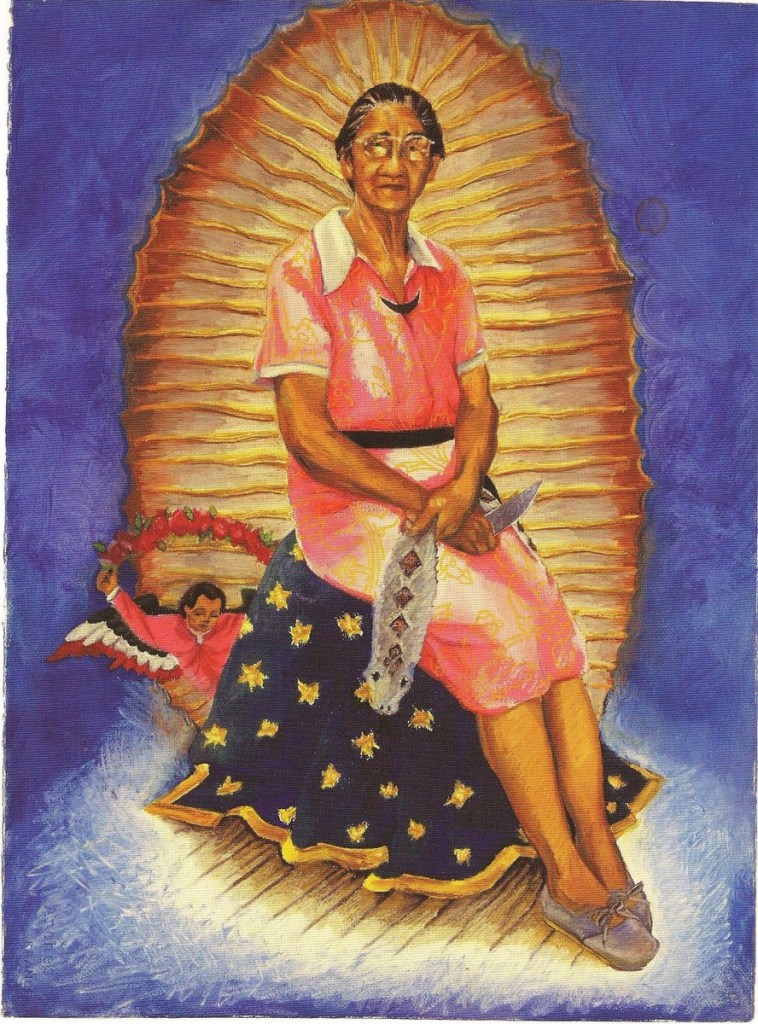
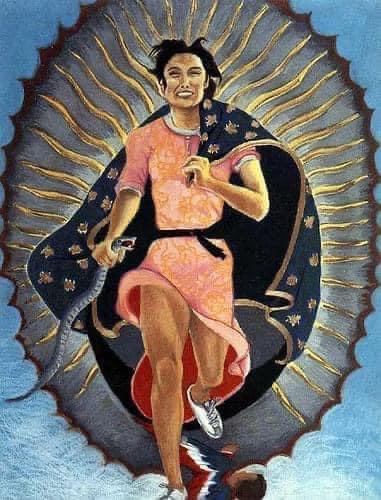
On December 12th many Christians honor Our Lady Guadalupe.
I am not Roman Catholic, nor Latinx, but I do not and cannot underestimate the powerful connection to the Divine that Our Lady of Guadalupe provides for Christians who check both of those boxes. Arturo Perez says it best:
“Guadalupe’s significance is both word and symbol. She provides the answers to the prayers of the faithful people: ‘God is with you!’ Her very appearance, as one of the poor, aligns her with them. Guadalupe’s proclamation can be seen as God’s option for the poor.”
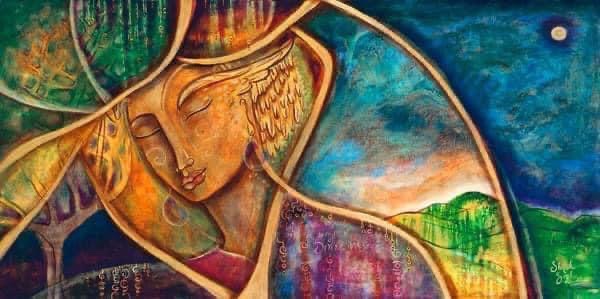
These three depictions, by artist Yolanda Lopez, flow not only from her heritage, but also from her work as a Mujerista Theologian. I find them both engaging and inspiring and, though they’re not traditional icons for this important Feast Day, they moved me.
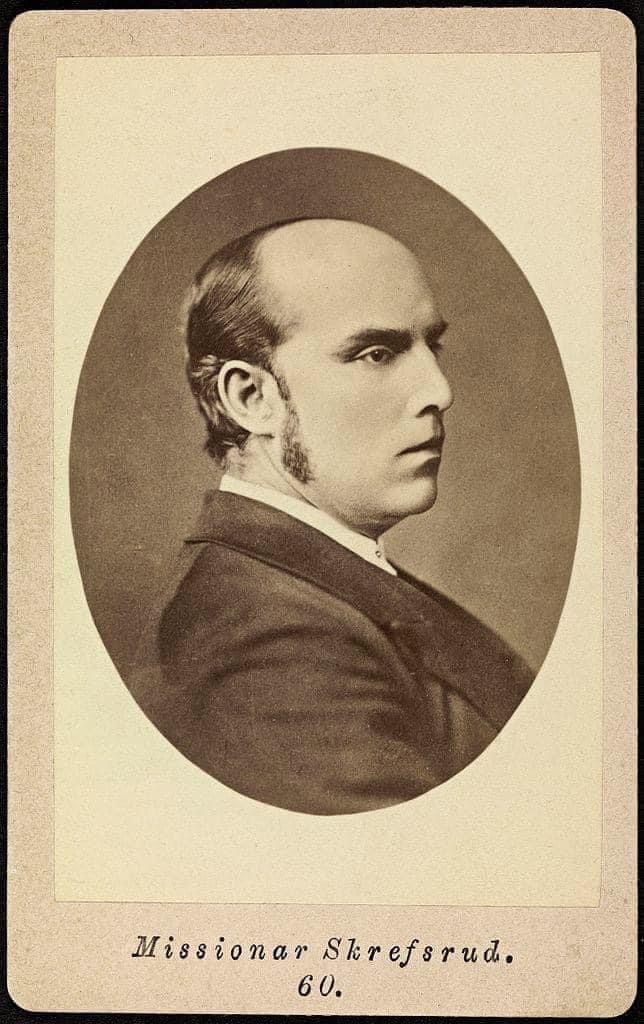
Today the church remembers a more contemporary saint of fascinating and enduring legacy (though you’ve probably never heard of him): Saint Lars Olsen Skrefsrud, Apostle of the Santals and Patron Saint of Second Chances.
Born in mid-19th Century Norway, Lars grew up in poverty and was not really ever formally educated. He studied largely at his local parish and, after being Confirmed, took on an apprenticeship to be a coppersmith.
But St. Lars had more ambition.
He couldn’t afford to pay for an education, and though he took to writing poetry, all of his poems were rejected for publication. He then set his sights on becoming a drummer in the military, but his contemporaries made fun of this idea. All of this compounded together drove Lars to take comfort in the bottle and, after drinking and coercion from those around him, he robbed a bank.
Once arrested, Lars refused to name any accomplices and was sent to prison at the age of nineteen.
In jail, Lars took up the scholarship he was denied in the outside world. He became a model prisoner, and was sent to the sick ward to tend to the ill. Though rejected by his family and friends, one young woman, Anna Onsum, visited him in prison.
Once released (and absolutely without one cent), St. Lars worked as a traveling laborer and made his way to Berlin to the front steps of the Gossner Missionary Society. There he explained his history and his desire to be a missionary. He adopted a monastic way of life and devoted himself to his studies.
In the fall of 1863, St. Lars headed for India. He worked to pay for his passage, and even slept on the deck of the ship. On board he worked alongside people from all over the world, and began to learn the languages of his companions. In 1864 he arrived in Calcutta and was joined by two fellow missionaries and Anna (and they soon married).
Without any aid from any church, the four took up the cause of the Santals, an oppressed tribe in northern India. St. Lars worked day and night to learn the Santali language and adopt their customs and way of living. They built a mission station there, “Ebenezer,” and while they went about their work St. Lars also went about creating a grammar book and dictionary in the Santali language, as well as textbooks, hymnals, and even a translation of Luther’s Catechism.
Most importantly, St. Lars and his companions defended the Santals physically and vocally against their oppressors, and lobbied the British government on their behalf. He aimed to assist them in raising their standard of living.
He said that his ultimate aim was an indigenous Santal church, noting, “We came to the Santals to bring Christianity, not take away their nationality.” In this he was an early adopter of the accompaniment method, rudimentary as it was, of mission work.
In 1873, after the death of his dear Anna, St. Lars took a return visit back to Europe and arrived to much acclaim. The Church of Norway at last ordained him.
At the age of sixty-nine, St. Lars had a massive stroke, but retained the use of his left hand. He continued to write and translate with his left hand until 1910 when he finally died. He was buried in the cemetery at Ebenezer.
The Santal Church continues on to this day, flourishing as a member of the Federation of Evangelical Lutheran Churches in India.
St. Lars is a reminder for me, and should be for the whole church, that accompaniment is the best model for cross-cultural engagement and that everyone deserves a second (and third!) chance.





 Reluctant Xtian