wePhone over iPhone. knowGrace over noGrace.

I didn’t hear it happen.

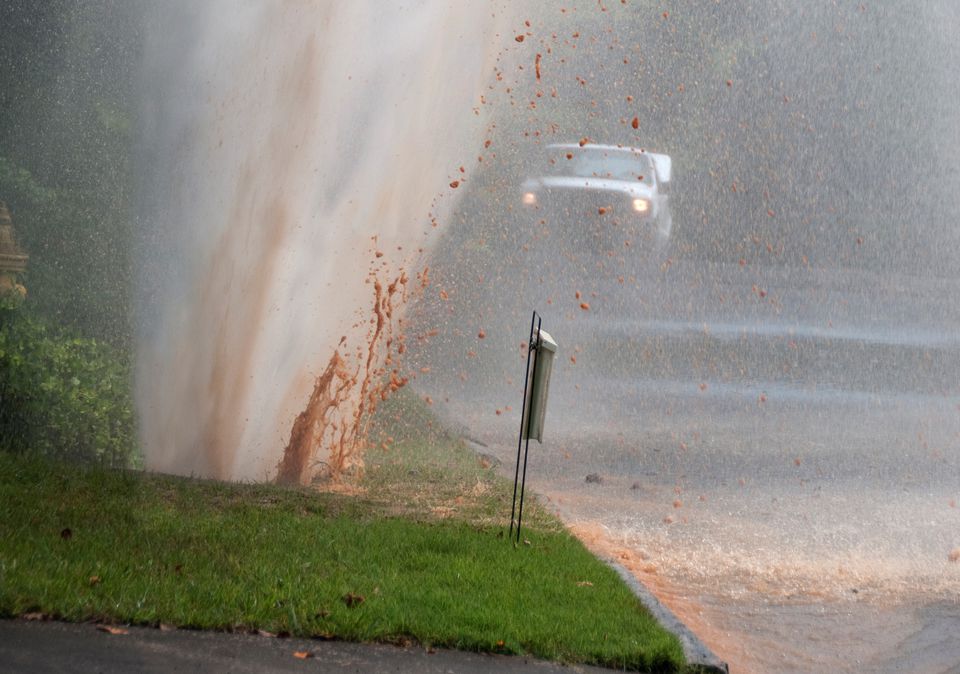
I saw the work out front where the city was modulating the water pressure for the neighborhood, re-chlorinating the system. Water gushed from the pipe into the cul-de-sac and, despite that volcanic water spout, it all seemed copacetic.

Until there was a frantic knock on the door. And my phone rang in the distant room. I’d been trying to live with my phone in the other room for the week, especially when I’m at work and have other screens to dull my brain wrinkles.

It’s interesting: when the phone is in the other room, I don’t feel compelled to answer it. I’m not sure if it’s just the inconvenience of getting up to get it (I haven’t felt that need since childhood and the phone anchored in the den!), or perhaps it’s because lately so many people have been concerned about my car warranty (“God bless their hearts,” as we say in the South).

But, for whatever reason, I didn’t get the phone. Or the door (it’s a work day).

Until the knocking continued, frantic.

I come downstairs to find my neighbor and her dog at my door. She’d been out walking him and noticed that our front yard had become Lake Gaston. Finn’s basketball floated in the center of it, mocking my inattention to the second largest body of water in North Carolina forming amidst our naked rose bushes.

“What happened?!” she asked.

“I’m not sure,” I said, dumbfounded at the water gushing up from the ground like “a’bubblin’ crude” just under our Japanese Maple.

And then I remembered the city doing the water work today and, through some pretty simple logic, figured the pressure modulations had burst our pipes.

I reached for my phone…but it was upstairs.

I thanked my neighbor, ran upstairs and called the city water department.

“We’ll have someone out to you soon,” she said. “Stay by your phone.”

In a week where I was practicing not staying by my phone, I was now being told to stay by my phone. And, sure, it was an emergency, but the dilemma felt real in the moment.

I took it as an opportunity to make some other calls: to my spouse and my parents. And then to Google repair cost averages. And then to Google how much selling a kidney would bring in to pay for said repairs.

I had a hunch the city would not be footing this bill (spoiler alert: they won’t because it’s on our property between the meter and our house).

I put the situation on social media in a humorous way, asking for shipments of “beer and fruit snacks.”

And then the texts started to come. I was “staying by my phone” as the city instructed, and texts of love and support and, yes, offers for beer (from our great neighbor) came in. Offers to house our children overnight if needed. Offers to get us dinner.

The offers haven’t stopped, continuing to this morning.

In the end we’re getting the water taken care of on Monday. And, though it’s an expensive repair, we’ll be alright. It did, however, bring me a renewed empathy and passion for electing officials who understand how tightly families live, and the reality that most of us are a major emergency away from having our savings wiped out.

But, more than anything, it was a moment of true grace for me. I was kicking myself for having to be by my phone in order to get this done. But in the midst of my irritation, I was getting offer after offer of grace far and wide, and I wouldn’t know that grace had I not had that blasted device in the moment.

Being addicted to the phone is bad. But, when in right relationship with it, it can be a medium of grace.

I’ll tell you, honestly, that when I left parish ministry I was concerned we were severing ties with our “village.” I really don’t know how to cultivate community except through a congregation, and we have not landed in a new one as of yet (pandemic, ya know?).

But after this I am not worried we don’t have a village. It was there all along. And in this moment of pinch, the iPhone became a wePhone, and that made a lot of difference.

Bargaining and Meritocracies Have No Place in the Kingdom of God

“Save me, St. Anne,” Martin Luther supposedly said, cowering in a lightening storm, “and I shall become a monk!”

Spoiler alert: he didn’t die. And, I guess it follows that, because he didn’t die, he had to become a monk.

I’d bet that we’ve all found ourselves at the Divine craps table before, making a wager in exchange for an ideal outcome or a blessing. That kind of bargaining is pretty normal for humans, actually. In moments of despair we’ll cling to whatever hook calls itself “hope” at the time.

Luther, though, backed himself into a tough corner there. I wonder what he would have done had he just pushed through the fear and panic without making the wager. Perhaps he would have become a monk all the same. It certainly was on his heart (much to the dismay of his father).

Sometimes we back ourselves into tough corners, too, setting the parameters for Divine agreements that we have no business setting.

I know more than a few people who asked for a miracle and, when it didn’t happen, took it as proof that there was no God. Conversely, sometimes miraculous things do happen (life in general, and biology in particular, is tricky that way…it usually follows norms but, every once in a while aberrations happen and the lotto numbers appear), and people have taken it to mean a Divine blessing has fallen their way.

The problem with both of the above scenarios is that none of that is objectively provable, Beloved. In other words: you make the meaning in both situations. The center for meaning there is not some “Divine plan,” but that “choose your own adventure” you’ve assented to in your own heart.

Humans make meaning. We have to. It helps us love and move and breathe with purpose in this world.

In other situations we do less bargaining and more earning. Through oblations, good deeds, generous donations, self-sacrifice, we secretly or not-so-secretly think we’re earning chips on the Divine poker table, increasing our chances for a nice pay-out.

We’re taught in life that we live in a meritocracy: work hard, reap the benefits.

Except, that’s largely a lie.

The world is not one where the hard-working are rewarded (cough: looking at you minimum wage) and the slackers go without. It’s one where opportunity shines brightly for some, and less brightly for others, due to a complex mix of historical racism, geography, health-factors, gender discrimination, sexual privilege, socio-economic influences, and just sheer luck (or lack of it). And, truthfully, I’m probably missing some factors there…

The tricky thing, of course, is that this “meritocracy lie” is less of an outright fib, and more of a “half-truth” parading around as the whole enchilada. Hard work does, sometimes, get you somewhere for some people. But I know folks who do all the right things and get the short end of the stick anyway. It seems their chip stack at the Divine poker table never grows, no matter how they play their hand…

This Sunday’s Gospel lesson from John’s rendering of the life of Jesus is one that, I think, encourages us to disabuse ourselves of either of the above ways of operating.

People read John 3:13-22 as Jesus writing some greedy wrongs of the Temple in those ancient days, and surely some of that might be true. This act will be, in John’s Gospel, the reason for Jesus’ arrest.

But the larger lesson here, and the one I think is more helpful in shaping our spiritual sensibilities, is the idea that Jesus is actively dispelling the notion that we can bargain for God’s blessing, or that we can buy or earn our way to the miracle-circle of life.

The hope that God provides is not one that ensures a certain outcome, but rather one that says, “No matter the outcome, I am with you.”

I think that, especially in these days of illness and vaccine, storms and cold and “why the hell are we still here a year later?!” where certainly honest prayers for help and concern have been thrown into the universe, perhaps the best thing that the church can do right now, even with all her flaws, is to reorient our people toward the deep truth that bargaining and meritocracies have no place in the Kingdom of God.

It’s natural for humans to do that kind of thing, of course, which is one of the reasons we know it can’t be God’s standard operating procedure.

Instead, God invites us to move away from the craps table and cashes in all her chips on our behalf instead, standing beside us in the lobby of life as a friend, not a dealer, having decided that the “house always wins” mentality the world uses is not only not a good way to live, but certainly isn’t the abundant life the Divine intends for us.

If you’re still not convinced, flip ahead in the story just a bit to where Jesus is praying in the garden in the wee hours before they’ll string him up. There he doesn’t bargain with God, but rather just says what he truly desires, “Don’t let this happen…” he says.

No conditions. No wagering. No, “see how good I’ve been?!”

He just says, “I don’t want this.”

But then he says (in not so many words), in a wisdom that is so instructive for me…for all of us, “But if it happens, walk with me.”

Put down your chips, Beloved. They’re not worth anything lasting, anyway. God’s not dealing out blessing and curses, aces or fives.

God’s alongside us. We don’t need to bargain. We don’t need to earn it. Hear it and live.

No iPhone. No iFunction. iAddicted.

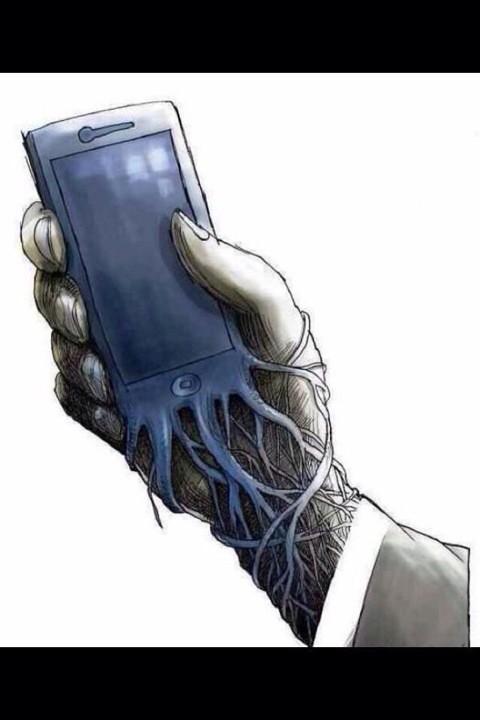
Banksy’s sketch of iPhone addiction

This week’s discipline, severing my ties with my iPhone, is a miserable failure so far.

On Sunday I did put it away. Far away, in fact. Took whole trips without it: on a walk, to visit family, to the store.

I found myself reaching for it. Often.

I sat in the car and waited for our order at St. Bucks of the Stars to be fulfilled wondering what I’d do while I waited…cause, you know, I always have to “do” something. We’re always “doing” aren’t we?

Shamefully, I found myself reaching for it at red lights.

I even found myself reaching for it while doing other things! Like, while watching TV, believe it or not. Absent-mindedly reaching for it, as if my brain now says, “Nope, you’re not overstimulated enough. TV won’t just do it, we have to have something else…”

As I walked out the door I checked my pockets: “Keys? EDC (Every Day Carry) Stuff? Pen? Mask? iPhone? Wallet?” and, when it wasn’t there, a small panic arose in me.

What if I got lost? Or stranded? How would I handle it if I couldn’t call someone?

I mean, it’s not like people didn’t get lost before iPhones, right? And somehow they survived…but my mind and heart races just thinking about the sheer inconvenience of it all.

It’s only Tuesday, but I’ve realized two things about my iPhone:

  1. I realize how much is on there that I use everyday: credit cards, bank apps, music, email. It has replaced my wallet, my radio, my pen and paper, my camera, my map, and (ironically) my phone…because I rarely call anyone on it except for work.
  2. I have a subconscious, learned-dependency on it that is just really unhealthy. It’s part of why I’m doing this whole thing.

So far, I’m crashing and burning though. Sunday I did pretty well, but yesterday and today I find it by my side. I’m literally looking at it right now, sitting there as I’m typing this, begging me to pick it up. Caress its virtual buttons. Explore its connectivity possibilities.

I mean, I don’t mean to sound sensual, but that’s kind of how it is almost. All addictions touch that nerve in us, don’t they? And yes, I can say it: I’m addicted to this thing.

Which is a spiritual issue. All addictions are. They cloud the mind and keep us from clarity.

Be honest with yourself: are you addicted to your iPhone?

I resolve to do better with this. In fact, I’m going to go put it up right now…as soon as I check the weather app.

Ugh.