
Dem Bones…

On the eve of All Saints we do what we love to do: play dress-up.

And it is just play.  Theologies and theologians that glorify Halloween as “Satan’s Day” aren’t good students of history.

That being said, the gore that is often associated with this day doesn’t appeal to me.  I’m a fan of horror flicks; I love a good scare.  But I’ve seen enough real blood in hospital rooms, ER’s, and elsewhere to not need the fake stuff.

But Halloween and All Saints also conjure up in me thoughts about life, mortality, death.

I find myself singing the spiritual

“Dem bones, dem bones, dem, dry bones…”

I’ve written previously about the importance of having  funeral at the time of death.  I still feel that it’s supremely important to honor and celebrate life by acknowledging, grieving, and honoring death.

Yes.  Honoring death.

Not as something to revere or worship, but as something to peer into as mystery.

I live with a biologist.  Carbon returns to carbon; it’s nature’s way.  As I’ve said at every funeral liturgy I’ve ever presided at, “ashes to ashes, dust to dust.”  We certainly shouldn’t labor under the delusion that somehow death is unnatural or evil.  I can understand how some people may come to this conclusion reading certain parts of Genesis and Romans.  Yet there are other sections of scripture, the Lazarus story in John for instance, that give another glimpse at death.

In that story Jesus “tarries” a while…not preventing Lazarus’ death.  One wonders why he might want to.  But in raising Lazarus, what Jesus does is dispel the fear of death.

This idea, I think, is something that the religious individual can grasp tightly.  Death is not to be sought; surely we are not masochists (at least, not most of us).

But neither is death to be feared.

The fear of death is all around, though.  In skin-products that promise ageless beauty.  In caskets lined with gold…perhaps because, the thought is, we can take it with us.  In medical procedures that prolong breathing but cannot prolong life.

We fear death, and we have made a market on that fear in the buying and selling of death-killers.  Surely the market is the death of our modern souls.

Hear now from Rabbi Abraham Joshua Heschel about the wisdom we can mine from the mystery of death:

The greatest problem is not how to continue (living) but how to exalt our existence.  The cry for a life beyond the grave is presumptuous, if there is no cry for eternal life prior to our descending to the grave.  Eterenity is not perpetual future but perpetual presence.  God has planted in us the seed of eternal life.  The world to come is not only a hereafter but also a herenow.

Our greatest problem is not how to continue but how to return. “How can I repay unto the Lord all his bountiful dealings with me?” (Psalm 116:12)  When life is an answer, death is a home-coming. “Precious in the sight of the Lord is the death of the saints.” (Psalm 116:15)…This is the meaning of death: the ultimate self-dedication to the divine.  Death so understood will not be distorted by the craving for immortality, for this act of giving away is reciprocity on our part for God’s gift of life.  For the pious…it is a privilege to die.

My wife gave me a note that someone passed her on the street.  It’s in the shape of a “1 million” dollar bill, and it has written on it, “The million dollar question: Where will you be after you die?”

Such conversion tactics are wasteful in the “throw this away for me” sort of way.  Theologies that only point toward heaven are useless.  If the goal of this life is to get somewhere else, why bother?

My response to the giver of that note would be, “The million dollar question isn’t where will I be when I die, but how have I lived?”

And if I have a million dollars, or perhaps one dollar, that might make heaven a reality for someone here in this existence and I fail to do it, then I have been negligent in my life.

I do not fear death, nor do I seek it.  I trust in the promise of heaven, but my home is here.  And may I do my part to bring heaven to this reality, trusting that what awaits me after my last breath is God’s eternal presence…something I’ve never been separate from.

And at my last breath, I imagine I’ll pray the same prayer that I’ve prayed at every funeral I’ve presided at with all “dem bones” in my body,

May God support us all the day long till the shadows lengthen and the evening comes and the busy world is hushed and the fever of life is over and our work is done.  Then in mercy may God give us a safe lodging and a holy rest and peace at the last.

Amen.
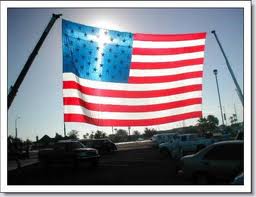
“Political Pandering” or “I Have Issues with ‘Issues'”

I hate election season.

I love election season.

I kind of love to hate election season, if I’m perfectly honest with myself.

For some pastors it is truly a struggle to stand in a pulpit and say…anything.  They struggle out of fear.  There is a fear that connecting the faith with the life of the body politic will illicit the dreaded “email of political shaming.”

Luckily, I don’t get many emails like that.  But I have colleagues who do.

I keep emails that I get telling me that I’m too “political” in my sermons in a special folder.  It’s tentatively labeled “Trash”…but I may change it to “Inconsequential.”

Funny enough, it’s the same folder where I put emails that deride me for not being political enough in my sermons…

It’s not that I discount what people are saying in those emails; I take them seriously.  But I don’t see a way around preaching the way I do.  I think we’ve screwed up our definitions on what is a “political” issue and what is a “faith” issue.

Poverty is not a political issue.  It is a faith issue. It is an ethical issue.  It has just been politicized.

Dignity for the marginalized is not a political issue.  It is a faith issue. It is an ethical issue.  It has just been politicized.

In many respects, how we care for our sick, our elderly, our children, our indigent…these are not political issues. They are faith issues.  They are ethical issues.  They have just been politicized.

I love election season because it has the potential to be an intellectual exchange of ideas that results in action.

I hate election season because it invariably turns into a steaming pile of vacuous rhetoric with sides parading issues as if they and they alone are the standard bearer bringing awareness to them, and that they and they alone care about them.  The opposition not only doesn’t care, but hates the issue and those that hold it dear.

Typical political pandering.

And then I rise in the pulpit on Sunday and say things like, “The early church held all things in common…” (Acts 2:44), or “And Jesus healed the paralytic who was cared for by his friends…” (Mark 2:1-12), or “Joseph and Mary fled with Jesus to Egypt, where he was kept as an immigrant in a strange land until the age of…” (Matthew 2:13)

And what I receive in return are emails that accuse me of preaching socialism, endorsing free health-care, and taking sides on immigration issues.  In effect, those emails are insinuating that these issues are political in nature, and that I’ve made them into faith issues.  Unfortunately, that’s a reversal of reality.

And then I hear issues of personal morality, particularly how we love and how we reproduce, take the stage in spectacularly religious language that seems to drip from pastors mouths in the pulpit laying the bedrock for party platforms.

I wonder if those pastors get emails.

The message is that personal morality fits within the church walls and the political sphere.  Communal ethics, however, are purely political and have no place within the church walls.

Let us not make the mistake of thinking that social issues are God’s good news for a suffering world.  As a Christian I see God’s good news as Christ himself and the work that he did/does in the world for humanity.

But let us also not make the mistake of thinking that we come from a tradition whose sacred texts have no commentary on ethical issues.

I’m a reluctant Christian sometimes because we have a schizophrenic relationship to just how our sacred texts can be used in public life.

To ensure freedom of religion we must have a political process that is free from religion; this is true.

For me, this means that a particular candidates faith tradition, whether it is Christian, Mormon, Muslim, or Atheist, doesn’t affect my vote.

(In our current political season, I care that Romney is a Mormon about as much as I care that Obama is a Christian: I don’t care.  Not one bit)

It means that you cannot use the word “God” to get votes, either in your party platform or in your stump speeches.

It means that if you pick up a baby on the rope line, it better be because you’re checking to see that she’s within the weight ratio for her age, and not to show that you value “faith and family.”

But while we must have a political system that is free from religion, I’m not sure how we can have a religious tradition, that seems to focus intently on how to live together, free from commentary on issues that have been politicized.

My faith is integral to how I treat my neighbor, and how I hope society treats my neighbor.  And to ensure that I keep my faith integrated into my practices, I need a preacher and a church that looks at scripture and civilization together in such a way that we acknowledge personal and communal issues within the church walls.

And I need candidates and political parties who are not opportunists. I need candidates and political parties who don’t look at moral issues through the lens of political manipulation.  I need candidates who shun the vacuous political rhetoric of vote-getting and take up the prophetic leadership voice of one who speaks truth to power even as they seek it.

No more political pandering to my faith, please.

But can we dare to speak about issues in church and not assume that we’re pandering politics?

I don’t know, but I don’t know how to stop doing it.  I have issues with issues.

And if you have an issue with this post, feel free to send an email.  I’ll put it in my special folder…