
Teller of Tales

Today I would lobby hard that the church remember a premier storyteller who has had arguably as much cultural influence as the parables of Jesus: Hans Christian Anderson, Poet, Teller of Tales, and Social Influencer.

Hans was born in the early 19th Century in Odense, Denmark to an illiterate mother and a father who only had a basic elementary education. It is absolutely improbable that he would end up being a literary force, and yet, here we are.

Hans was originally sent to a school for the poor, and there was taught the basics of reading, writing, and arithmetic. At home, however, his father fueled his imagination by giving him Arabian Nights. After his father died, he began apprenticing as a weaver and a tailor, and then eventually went to Copenhagen to seek his fortune as an actor, a path most New York waiters and LA baristas can tell you about.

A director at the Royal Danish Theater took notice of young Hans and sent him on to further education on the Royal dime. Note: a teacher invested in him and encouraged him in his craft…we owe teachers so much, especially because they are often the first line of encouragement for young artists.

Let those with ears to hear, hear.

Unfortunately Hans often had a tough time in school, sometimes because people didn’t believe in him, and sometimes because he was just of a more morose nature and was taken advantage of by others. One of his earliest fairy tales, “The Tallow Candle,” spoke of an unappreciated wax taper, perhaps a glimpse into his own being.

Obviously these obstacles did not stop Hans from excelling at his craft, and slowly and surely through poems, travel diaries, novels, and plays, he made a considerable name for himself, particularly because his tales had direct moral overtones, often ones that echoed some of the Biblical stories he grew up with.

Interestingly enough, however, Hans had a difficult time with religion, and he wrestled with the church. One of his most famous encounters was with fellow wrestler Saint Soren Kierkegaard, who described Hans as kind of a brooding fellow. Perhaps some of this brooding came from his other big wrestling match in life, his sexuality. In many of his letters, and even in some of his tales, he speaks of a loneliness and longing for a love that was unattainable and taboo.

Your heart can’t help but break for him in this way.

He still continued to work and write, shaping the world around him through the most amazing thing that humans have produced: stories. In his old age the Danish government had started to pay him a yearly stipend simply because he breathed. He was that treasured as a person. With “The Little Mermaid,” “The Emperor’s New Clothes,” and “The Snowman” and so many others, Anderson’s tales continue to tingle the imagination and cause our hearts to stir.

At the age of 67 Hans woke up one morning with a start and fell out of bed, severely injuring himself past the point of recovery. His injury caused him to be thoroughly examined, and in the aftermath they found signs of liver cancer.

He died on this day in 1875.

Hans Christian Anderson is a reminder for me, and should be for the whole church, that stories are truly the things that pluck at the human heart and cause us to move and be moved. Indeed, stories are our best gift to humanity, Beloved.

-historical bits from public sources

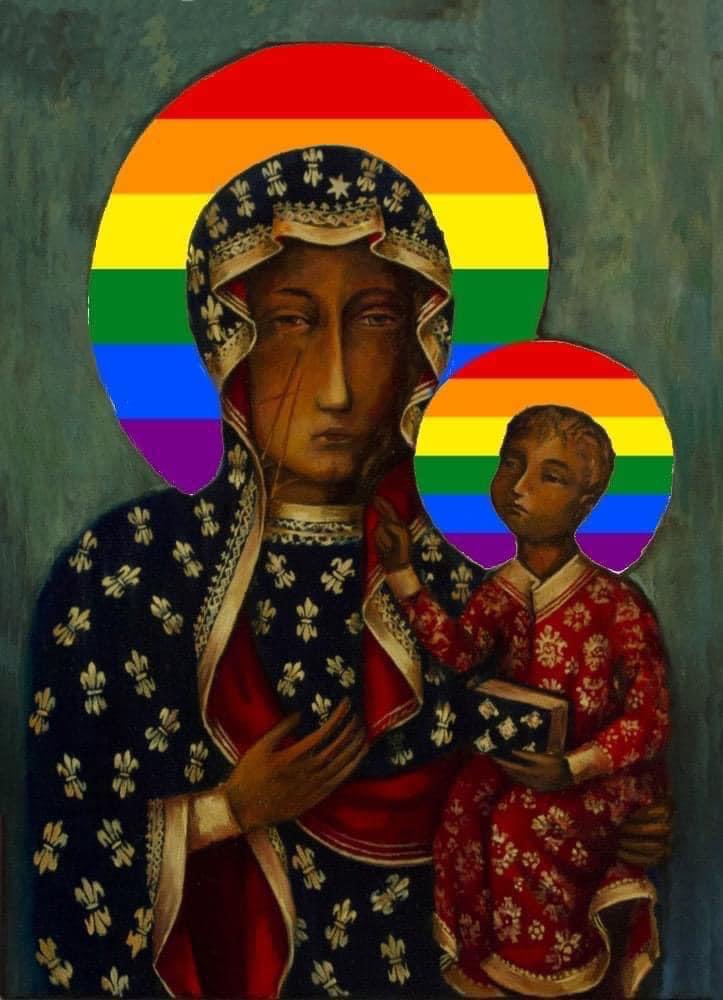
-picture painted by Elle, 2005

Some More on August…

On one of these early August days, I’m reminded that now is the midpoint for the “Summer half of the year” for the ancient Celts, that time between May and November in their (and our) calendar wheel.

For the Winter midpoint of the year the Celts have the festival of Imbolc, or what we in the States call “Groundhogs Day.” It’s a feminine festival, with Imbolc meaning “still in the womb” (and, coincidentally they looked to burrowed animals in those ancient Celtic religions as nature’s alarm clock to wake from winter). For the summer, and specifically August 1st and the days just after, the Celts had “Lughnasadh (loo-nuh-suh)” in honor of Lugh, an ancient deity akin to Rome’s Mercury. I’m not sure their’s a modern American equivalent, except for maybe our flexible notion of “summer vacation.” The idea is similar.

Lugh, the ancient deity, was known as a “jack of all trades, master of none,” and the time is seen as more of a masculine festival in Celtic tradition. He was called a physician, a mystic, a smith, a trickster, and a bard. He did a bit of everything, and so the festival gives a bit of a nod to everything. Just as Imbolc marked the time when the world was emerging from the womb and celebrated was around the hearth, Lugh is an outdoor celebration that marks the days of “last hurrah” and a descent into the harvest, the colder times, the “beginning of the end” as we might say.

To honor the festival they’d reap the first ears of wheat, oats, and barley, and dig the first potatoes. They’d wean the young lambs so that the mothers would mate in order to continue the cycle in the expectant spring. First plump fruits would be picked from the gardens, and it was understood in all of this that the Earth was keeping its harvest promise.

They’d settle bets and business deals, race horses, and everyone would compete in team games for the “glory of today,” because the hard harvest work was about to begin in haste and the night was slowly taking over the sun’s brilliance.

This rhythm and pull between the womb of creation and the “last hurrah” before an ending is still our rhythm, both as humans in society, and as embodied beings.

The Teacher

Today the church remembers one who taught the first Apostles: Gamaliel the Elder, Rabbi, Leader of the Sanhedrin, and Instructor of St. Paul.

It might seem unusual for a Hebrew scholar and Pharisee to be honored as a saint of the church. That is, of course, until you remember that most all of the early church were Hebrew in the beginning, and Jesus himself was a Pharisee (of the scholars who studied Mosiac Law and trusted in a resurrection from the dead).

Rabbi Gamaliel hailed from a long line of scholars, including the celebrated Rabbi Hillel who we believe taught Jesus, or at least informed his thinking (some of Christ’s most memorable lines about the Law were riffs on Hillel). Rabbi Gamaliel shows up in the Acts of the Apostles in the 5th Chapter and is mentioned in the 22nd Chapter as St. Paul’s Hebrew teacher. It is Gamaliel who convinces the rest of the Sanhedrin to stop killing the followers of Jesus, and the scholars followed his advice (though they still didn’t tolerate preaching Christ crucified).

Rabbi Gamaliel is believed to have become a Jewish-Christian, though a secretive one, and lore has it that he was baptized with his son by Sts. Peter and John, together. Lore also maintains that it is Gamaliel who carefully buried the body of St. Stephen, the first martyr of the faith, and even buried another secret disciple of Christ’s, Nicodemus.

Much of Gamaliel’s conversion narrative is conjecture and lore. What is certain, though, is that he shielded the Apostles from being killed, was apparently tolerant of other belief systems, and taught a young Paul in the Mosaic Law.

For this reason Gamaliel is yet another reminder for me, and should be for the whole church, that the faith of the church has always, and will always be, heavily influenced by those outside of the faith. You’d think this would make us a very hospitable and tolerant people, especially to those of other belief systems.

You’d think.

-historical bits gleaned from Acts and publicly accessed resources.

On Not Keeping Up with the Jones’s

Today the church remembers a Russian saint who made Ivan the Terrible terribly ashamed: Saint Basil the Blessed, Erstwhile Fool, Shoplifter, and Prophet.

Saint Basil was born in 1468 to Russian indentured servants, unable to move past their economic station. He apprenticed as a cobbler, an at 16 headed to Moscow to live his life. Once in Moscow he encountered many who were poor and destitute, and took it upon himself to ask for alms for them as a favor, as often they were too proud or too ashamed to ask themselves.

His service to the poor went a step further as he began to shoplift from local wealthy merchants, passing on the goods to those who were in need. To shame those who refused to help those on the margins, Saint Basil eventually swore off clothes and went naked or in rags around the city, wrapped in chains as a symbol of both the economic burdens of a serfdom system, as well as a symbol of the antipathy of those with means to the plight of the poor. He never took a permanent home, but lived as a wandering prophet.

This, as you can imagine, didn’t sit well with the Jones’s.

As he wandered, Saint Basil would give mini sermons warning of misfortunes coming to those who turned their backs on the poor and marginalized, gaining a wide audience. One such audience member was the tsar, Ivan the Terrible. The story goes that one Lenten day Saint Basil offered the tsar a piece of meat, which Ivan rejected in his Lenten austerity. Saint Basil then retorted, “Then why do you drink the blood of humans?!” an indictment of Ivan’s cruel and horrible treatment of innocent people.

Saint Basil the Blessed died on this day sometime in the mid 1550’s (no one is really sure of the year), having lived quite a long life for his era. He was sometimes called Basil the Fool for his eccentricities, but sometimes to get a point across you have to make a scene, ya know?

Saint Basil the Blessed is a reminder for me, and should be for the whole church, that the call of Christ is to alert the Jones’s of the world to the plight of those on the margins. It is not a call to appease the Jones’s so they’ll keep showing up in the pews and giving their offering.

Let those with ears to hear, hear.

-historical bits gleaned from public sources as well as Claiborne and Wilson-Hartgrove’s Common Prayer: A Liturgy for Ordinary Radicals

-icon written by Br. Robert Lentz and can be purchased at Trinitystores.com

On Harvest and Hope

In early August my ancient Celtic ancestors would celebrate the third great festival of the year, Lughnasadh, or “the assembly of Lugh,” the Celtic sun god.

August 1st marks the beginning of Autumn for the Celts, and so this was essentially a festival to give thanks for the harvest that will be collected over the coming months.

Yes, it was giving thanks for something that hadn’t happened yet…sometimes you have to bank on hope, right?

This festival became Christianized in the Middle Ages, commonly called “Feast of First Fruits.”

In these days the ancient Celts would ween the new lambs so that the parents would mate again, giving more lambs in the Spring. They’d begin harvesting, especially the now ripe gooseberries and billberries.

They’d also make something called a Lammas Loaf (a derivation off of the festival name), a loaf of bread baked and shared off of the first wheat harvested from the fields. They’d often make the bread into different shapes, like wheat stalks, owls, or “John Barleycorn” shapes (sometimes known as The Wicker Man), a legendary figure that often stands for the harvest god/sun god.

Since Lughnasadh falls directly opposite of Imbolc on the Celtic wheel, and Imbolc (“in the womb”) was seen as primarily feminine, Lughnasadh was seen as a very masculine festival, with games and outdoor competitions, kind of like a precursor to our State Fairs here in the United States, with rides and feats of strength.

At its heart, Lughnasadh is a reminder that everything dies and is reborn. “Unless a grain of wheat dies,” the Christ says, “it remains a single grain…”

So we give thanks in the right season, banking on hope.

Holy Dissent

On August 1st the church remembered a saint who gets scant, but memorable, mention in the Scriptures: Saint Joseph of Arimathea, Secret Disciple and Finder of Graves.

Saint Joseph is memorable in the Jesus stories largely for his dissent collar. As a member of the Sanhedrin (the council of the synagogue in Jerusalem), the writer of Luke notes that he “did not agree” to the council’s plan to bring Jesus to Pilate as a blasphemer. The writer of John calls him a “secret disciple,” and it is he who goes to Pilate after the crucifixion to ask for the body, and lays Jesus in a grave that was unused.

The reason Saint Joseph is so important is because, well, he gets his name mentioned. In the ancient world you wouldn’t write about somebody unless that somebody was a body that other people would recognize and know. It’s thought that perhaps Saint Joseph of Arimathea was an important part of that early church, and the writers of the Gospels thought it important to include him. It’s also worth noting that he shows up in Luke and John, two Gospels written far apart from one another, without any indication that John (the one written later) used Luke as a guide. This gives us an idea that stories about Joseph of Arimathea were circulating in that ancient church.

That’s a little trip down theological nerdom, but it’s kinda neat.

Legends about Saint Joseph of Arimathea started growing and by the fourth century his fame was widespread. Some of these lager-than-life stories claimed that Joseph was the uncle of Jesus, was a tin smith, and had brought Jesus to the tin mines of Cornwall when Jesus was a young boy. Others said that Saint Joseph was sent by Saint Philip (post-resurrection) to be a missionary in Britain. On that journey it was said that Saint Joseph took with him the Holy Grail! At Glastonbury Saint Joseph struck his staff into the earth and from it grew the Glastonbury Thorn (and Glastonbury is still considered one of the holiest “thin places” in Britain), though the whereabouts of the Holy Grail remain a mystery…

This all means, of course, that you can thank the legends of Saint Joseph for the third installment of the Indiana Jones series.

None of these stories have any historical merit except for the idea that we do think that Saint Joseph of Arimathea was a real human who played a real role in the Jesus event.

Saint Joseph is a reminder for me, and should be for all the church, that sometimes a holy dissent is necessary.

-historical notes gleaned from Pfatteicher’s New Book of Festivals & Commemorations

-opinions mine

-icon written by W. Micheal Shirk. Note both the thorn bush and the grail!

Replay.

“I just keep re-living my mistakes,” he said, face down.

“You mean, you keep making the same mistakes?” his friend asked.

“Not really,” he said. “I mean that I just can’t forget them.”

It was clearer now.

“Remember,” his friend said slowly, “that time you defied the odds and got that recognition for a job well done? It was just like, last year, right?”

He looked up. “Yes,” he said nodding.

“How about you replay that record. You haven’t heard it in a while.” And his friend sat next to him and together they remembered the things worth remembering.

A Paradoxical Life

Today the church remembers a 15th Century monk who would form one of the most fiery Roman monastic orders: St. Ignatius of Loyola, Founder of the Jesuits (Society of Jesus).

St. Ignatius was born to a Basque family with money and prestige. Because of his high status, he had the privilege (if you want to call it that) of being a page in the court of Ferdinand and Isabella, where he spent his days drinking, enjoying lots of carnal pleasures, and really not giving a damn (in a bad way).

This life eventually landed him in some legal trouble. In order to reform his ways he did what so many young persons do to get a grip on life: he joined the military.

In 1521 St. Ignatius was injured in battle while fighting French forces at Pamplona. A cannon ball struck his knee, causing him to limp the rest of his life. While he lay in recovery, he read the life of Christ and hagiographies about the saints, and in those days of recovery he resolved to devote himself in service to the faith.

It’s worth noting that he also loved to read fiction and knight-centered fantasy tales…just to keep it real, ya know?

He took a year off (as only the wealthy can do), and decided to go on a pilgrimage to Jerusalem and enter University in Barcelona, and then eventually in Paris.

He graduated from University at the age of forty-three, proving you’re never too old to get some schooling under your belt. He gathered around him nine companions and took a trip to Rome, calling themselves the Society of Jesus. They offered their services to Pope Paul III in whatever fashion the Bishop of Rome desired.

All ten were ordained into the priesthood, and the Pope Paul III in time approved the Society of Jesus (the Jesuits as they’re commonly known) who organized themselves in the only way Ignatius knew how: military style, with Ignatius as the first Superior General.

Ignatius died July 31st, 1556, having established Jesuit orders throughout Europe, and sending missionaries to Asia, Africa, and the Americas. The Jesuits became known for their self-discipline, adherence to moderation, and frankly a “take no crap” way of being in the world.

The Jesuits today produce some of the most interesting personalities seen in the popular church. Some are militant social justice warriors, with hearts and minds set on bettering humanity, standing up for the poor, and bucking the patriarchy in order to do so. In other cases, some Jesuits strictly toe the doctrinal line, giving no room for error (they were staunchly against the Reformation). How these two types of personalities (and the many that fall between these two poles) find themselves in the same order might cause you to be puzzled…and rightly so. It’s a paradox.

Yet, in this paradoxical way, Saint Ignatius created an order that mirrored his own human existence: having tasted excesses and the strong arm of the law, he had compassion for those who suffer, all the while feeling the need to have safety-rails on his life in order to know how to “stay on track.”

Saint Ignatius is a reminder for me, and should be for the whole church, that it’s never too late to start a movement. Also: when you find yourself within a movement, you might be standing next to someone who joined for a completely different reason…and you have to become OK with that on some level, Beloved.

-historical bits from Pfatteicher’s New Book of Festivals and Commemorations

-icon written by Br. Robert Lentz

Bills More Than Belfries

Today the church remembers a 19th Century saint who found his holy quest utilizing bills more than belfries: Saint William Wilberforce, Renewer of Society and Abolitionist.

Saint Wilberforce was born into wealth and privilege, and to his credit he leveraged these two rolls of the dice for the betterment of humanity. He was extremely devout, and desired to be a priest, but was convinced that Parliament held more sway than the pulpit.

He entered politics, and for forty-five years he fought within the House of Commons for the abolition of the slave trade. In 1798 he began speaking, campaigning, creating flyers and petitions and bills, tirelessly annoying Parliament with his insistence that moral humans and an ethical society could not coexist with slavery.

In 1806 Wilberforce managed to get a bill passed that prohibited slavery in all the British colonies, but his efforts were not done because while slavery was prohibited in the colonies, it still existed elsewhere throughout the British Empire.

Arguing, calling people to gain their moral backbone, backroom dealing, and appealing to their better angels, Wilberforce and his allies finally, in July of 1833, passed a bill that freed all slaves throughout the empire.

He died three days later.

In the early days of his movement Wilberforce was noted to say, “Let the consequences be what they would…I from this time determined that I would never rest until I had effected (slavery’s) abolition!”

Saint Wilberforce is a reminder for me, and should be for the whole church, that sometimes one person with moral backbone can move an empire.

It’s happened before.

-historical bits from Pfatteicher’s New Book of Festivals & Commemorations as well as Claiborne and Wilson-Hartgrove’s Common Prayer: A Liturgy for Ordinary Radicals

-icon written by Sir Thomas Lawrence and hangs in the National Portrait Gallery, London, United Kingdom

Add to the Wave

In the heat of waning July days, the ancient Celts would ready themselves for the August festivals and the beginning of the harvest.

They would take these final days to spend intentional time resonating with the world around them, relaxing in the earth and seeking out sacred spots to bless and in which to be blessed.

You might say this ancient practice is a precursor to our ideas of “vacation” these days. Summer rest is not something we invented, Beloved, but inherited through the long echoes of phenomenological rhythms that pulse throughout the looping threads of time.

Celtic author Mara Freeman notes three ways to honor the earth in these last July days that fall on the cusp of transition.

First, you can give thanks. Find a quiet spot in nature, breath deeply, listen carefully, and be grateful for what is around you. She notes that “a sacred site does not have to be famous or located in a distant country. It can also be a quiet, secret place you have found in the woods or, if you live in the city, a favorite old tree in a local park.” (from Kindling the Celtic Spirit)

Secondly, do some clean up. Whether it is in your backyard, along a well-hiked stream, your local park, or even just bush pruning around the house, caring for nature is an act of sacrifice to the very Earth who will, in the coming months, sacrifice fruit for us. Pruning, by the way, is necessary for many plants, and should be done with the plant in mind, and should not primarily be about how your yard looks from the street.

Finally, take a pilgrimage. Journey to a place where the Earth has been damaged or is in danger of being defiled, calling attention to it. Whether it is the pipeline in the Dakotas, over-fishing off the coasts, or even unwelcome infringement on a natural prairie in your little pocket of creation, walking there, seeing what is happening with your own eyes, and calling attention to it is an act of power and grace. Or, as one theologian puts it, “an actively mobilized process of bearing witness to woundedness and to the mysterious possibilities of the sacred.”

In these acts, the whole Earth becomes an altar upon which our attention, our love, and our gratitude is sacrificed. These acts have rippled throughout the cosmos from our ancient parents until today.

How will you add to the wave?