Today the church honors not a saint, but rather an event: The Conversion of Saint Paul.
This conversion story is thrice told (I just wanted to use the word “thrice”) in the Scriptures, and Paul also references it three times in his letters. This repetition actually makes it one of the most oft-repeated events in the stories of the early church.
Paul, a zealous persecutor of Christians in ancient Palestine, is struck by a blinding vision and, reportedly, the voice of God, which leads him to become a follower of Christ.
This event may be the most influential event for the early church because Paul’s active conversion work (and theology) spread like wildfire throughout the ancient world, especially amongst Gentile communities.
It’s worth noting that this Feast Day also marks the end of the “Week of Prayer for Christian Unity.” It is not an accident that the “Week of Prayer” starts with the Confession of St. Peter and ends with the Conversion of St. Paul, as the two of them did not get along at all. They had different ideas of what the faith should be and do, who should be included in the circle of believers, and yes, it appears they even had different working theologies (of which, I would argue, St. Paul’s ideas won out, for better or for worse).
The one thing they did agree on? To continue working on behalf of the poor.
The church longed for these two pillars of the faith to be reconciled so much that they put them on the same feast day, believing that if they couldn’t be friends in life, they would be companions in death.
The conversion of St. Paul is honestly a feast day I struggle with, mostly due to a long history of colonialism and forced conversions winding through the church’s past. Yet, there is something honest about the fact that Paul, on his own, had an experience with the Divine that made a shift in him, and that can be a force for good, by God.
Christian unity feels a bit like a dream most days. This feast day isn’t even celebrated in the Eastern Church. But, perhaps if we all had a conversion we all might just agree to do that one thing that Paul and Peter agreed on: work on behalf of the poor.
For that to be the case, a lot of the church will have to be converted in the process…
-historical pieces from Pfatteicher’s New Book of Festivals & Commemorations
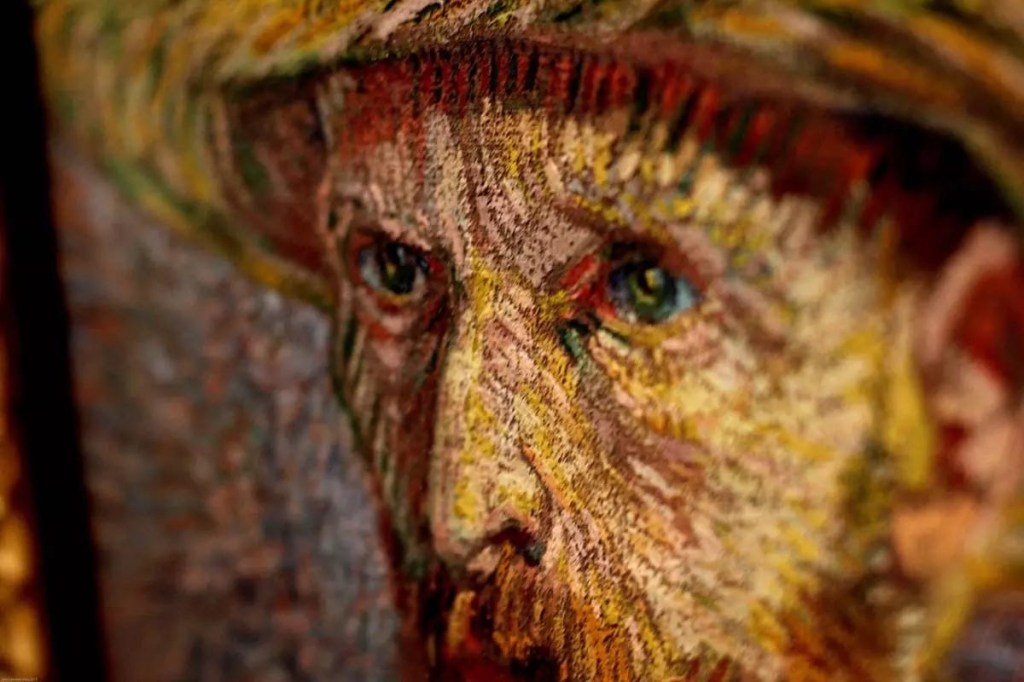
van Gogh, can you tell me how many martyrs does it take to open up a blood bank
van Gogh, can you tell me where does beauty go when it dies?
van Gogh, can you tell me why saints live on car exhaust and are lonely as crushed acorns
while enormous suppurating blisters of men sleep on beds made of dollars, their pillows the breasts of fantastic women
van Gogh, can you tell me you who made paint scream who drew the expressions of the wind
and portrayed leaves and stars writhing in agony as though they were human
tell me which of the satellites circling the earth is mine
how many pairs of shoes does it take to walk to infinity
do you believe the world will ever learn how to cry in unison
van Gogh, with your skin like scorched leather from too much time spent in the wheatfields on your knees, shooting dice with God over who gets to color sunset
didn’t you ever feel like an asshole
incapable of self-preservation always crossing at the end
van Gogh, can you tell me as the sun comes down around my ears in chunks today
as hummingbirds hover at my window cursing me in tiny voices
why roads drag you down them how you are finding light in Paradise and if you have your own easel of if God allows you to paint on the sky
Today the church remembers a 17th Century Saint who was as stubborn as he was prolific: St. Francis de Sales, Bishop of Geneva and Thwarter of Assassins.
Born in Chateau de Sales and educated in the grand cities of France, this St. Francis was ordained a priest (despite his father’s displeasure with the profession), and served for twenty-nine years amidst the uneasy marriage of the Catholics and Calvinists in the Chablais countryside.
He was known around the area for great love for all the people in the land, regardless of their faith. Unfortunately, many others did not regard him with such love, and he had to contend with a few assassination attempts by those who took issue with his Catholicity.
His effective love and preaching did turn many hearts on to the Roman Catholic expression of the church, much to the chagrin of the Calvinists who had worked hard to evangelize in the area.
In 1602 he was appointed Bishop of Geneva, and through this same outlook of love began to slowly change and restructure the diocese, known for being quite difficult and unruly. He gave away almost all of his private money, and lived a simple life. The King of France tried to persuade him to move to Paris, but he opted to skip the pomp of the huge city and remain where he was.
Children are said to have adored him. He took great pains to teach the laity of the church about the faith, something often overlooked by other clergy who preferred to focus on their own scholarly pursuits.
He wrote a number of books, including his twenty-six volume tome, The Love of God.
With Jane de Chantal he founded the Order of the Visitation in 1610 which worked to instruct young women in the faith.
He was stubborn in his love for all people, stubborn in his refusal to live the “high life,” stubborn in his ability to keep living despite the attacks on his life, and stubborn in his belief that God is best known through the eyes of the heart rather than the cold eyes of the head.
Unfortunately St. Frances de Sales died of a stroke at the age of fifty-five. After his death a local Calvinist minister remarked, “If we honored any man as a saint, I know no one since the days of the apostles more worthy than Bishop Frances.”
That kind of love, the love that shines bright enough to cut through animosity and political tension, is rare…and much needed in this world.
St. Frances de Sales is a reminder for me, and can be for the whole Church, that doctrine without love is little more than trite moralism and vacuous philosophical games on parade. Perhaps St. Paul and St. John (and St. George and St. Ringo) were correct: All you need is love.
St. Frances de Sales might have agreed.
-history helped along by Pfatteicher’s New Book of Festivals & Commemorations -Icon written by Theophilia
Today the church remembers the 19th Century Patron Saint of Hawaii: Saint Marianne Cope of Molokai, Mother of Outcasts and Healer.
While the church normally honors saints on the days of their death, Saint Marianne is the rare exception, being honored today, the day of her birth.
She entered the Franciscan order at a young age, and worked as a teacher and hospital administrator early in her life. In 1883 Sister Marianne answered the call of King Kalakaua, the Merrie Monarch of the good island kingdom, asking for desperate help to tend to lepers on the island.
Armed with a warm heart and experience organizing hospitals, she took charge of the mission, founding the first general hospital in Oahu. When the government changed policies, ended the forced exile of lepers, and closed the specialty hospitals, St. Marianne saw that those living with leprosy, and their children, were still being ostracized and demonized by those who didn’t understand the disease.
She stayed to personally care and accompany them .
Because of this care and concern, especially of those who are ostracized, she is seen as the modern matron Saint of not only those who live with leprosy, but also those who live with HIV/AIDS, and those who identify as outcasts.
In these days, many have evoked her name in association with this waning pandemic, especially because her oft repeated mantra to her nurses and doctors is echoing in our halls these days, “Wash your hands!”
St. Marianne Cope is a reminder for me, and should be for the whole church, that we are called to tend to those who are cast out by the world and, even after the powers say the work is done, continue on working with them until ”justice rolls down like a river to wash all oppression away!”
In honor of the good Bishop’s prophetic plea at the National Cathedral, boldly embracing the call, the freedom, to speaking truth to power:
Miriam on the Shores “All the women went out after her with tambourines and dancing.” –Exodus 15:20
Her skirt hangs heavy with seawater, staccato breath after running from death. She can still feel soldiers reaching out to seize her blouse before the waves caved in.
Collapsing on dry earth for a moment, the impulse to dance begins in her feet, spreads slowly upwards like a flock of starlings rising toward a dawn-lit sky.
So many dances in secret before, night-stolen movements after exhausting days heaving stones and harvest. She finds herself now upright, weeping.
To stand here, face to the sun, feeling an irrepressible desire to spin tumble sashay turn shake twirl
Savoring freedom with her limbs as if it were a physical presence like a fierce wind or the breath of labor, shackles slipping off slowly.
She couldn’t help but dance. The story says she picked up her tambourine, which means she had packed it among the essentials. In fleeing for her life, she knew this would be necessary.
How many of us still live enslaved in Egypt, beholden and weary? Do you have the courage to run across the sea parted just now for you? Will you carry your musical instrument and dance right there on the shores?
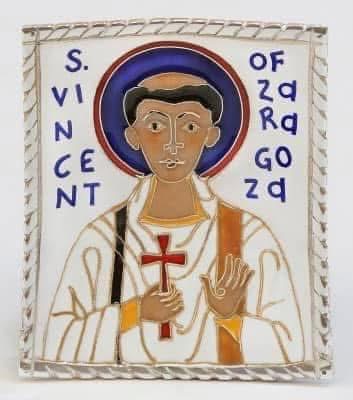
Another 4th Century Saint marks our days on the 22nd of January, and this one is especially dear to those with Spanish heritage: Saint Vincent of Saragossa, Deacon, Martyr, and Voice of the Divine.
St. Vincent is the most celebrated of Spanish martyrs, and he, like St. Agnes of yesterday’s note, died in the Diocletian persecution in 304 A.D.
St. Vincent, though not the Bishop of Saragossa, did the work of a good Deacon in regularly preaching for Bishop Valerius, who suffered from a speech-debilitating stammer. Both Vincent and Valerius were imprisoned for their faith, and while Valerius received the sentence of exile, Vincent received the sentence of torture and death.
Starvation, held in stocks, and tortured by fire, St. Vincent who so regularly preached on behalf of the Divine offered his final sermon to the world with his body, and the world listened. In the Middle Ages, a number of churches throughout England were built in his honor and named for him.
St. Vincent is a reminder for me, and can be for the whole church, that community is a team effort that will threaten powerful people who would rather dominate alone.
-historical helps by Pfatteicher’s New Book of Festivals & Commemorations
I love you early in the morning and it’s difficult to love you.
I love the January sky and knowing it will change although unlike us.
I love watching people read.
I love photo booths.
I love midnight.
I love writing letters and this is my letter. To the world that never wrote to me.
I love snow and briefly.
I love the first minutes in a warm room after stepping out of the cold.
I love my twenties and want them back every day.
I love time.
I love people.
I love people and my time away from them the most.
I love the part of my desk that’s darkened by my elbows.
I love feeling nothing but relief during the chorus of a song.
I love space.
I love every planet.
I love the big unknowns but need to know who called or wrote, who’s coming—if they want the same things I do, if they want much less.
I love not loving Valentine’s Day.
I love how February is the shortest month.
I love that Barack Obama was president.
I love the quick, charged time between two people smoking a cigarette outside a bar.
I love everyone on Friday night.
I love New York City.
I love New York City a lot.
I love that day in childhood when I thought I was someone else.
I love wondering how animals perceive our daily failures.
I love the lines in Cat on a Hot Tin Roof when Brick’s father says “Life is important. There’s nothing else to hold onto.”
I love Brick.
I love that we can fail at love and continue to live.
I love writing this and not knowing what I’ll love next.
I love looking at paintings and being reminded I am alive.
I love Turner’s paintings and the sublime.
I love the coming of spring even in the most withholding March.
I love skipping anything casual—“hi, how are you, it’s been forever”—and getting straight to the center of pain. Or happiness.
I love opening a window in a room.
I love the feeling of possibility by the end of the first cup of coffee.
I love hearing anyone listen to Nina Simone.
I love Nina Simone.
I love how we can choose our own families.
I love when no one knows where I am but feel terrified to be forgotten.
I love Saturdays.
I love that despite our mistakes this will end.
I love how people get on planes to New York and California.
I love the hour after rain and the beginning of the cruelest month.
I love imagining Weldon Kees on a secret island.
I love the beach on a cloudy day.
I love never being disappointed by chocolate.
I love that morning when I was twenty and had just met someone very important (though I didn’t know it) and I walked down an almost empty State Street because it was still early and not at all late—and of course I could change everything (though I also didn’t know it)—I could find anyone, go anywhere, I wasn’t sorry for who I was.
I love the impulse to change.
I love seeing what we do with what we can’t change.
I love the moon’s independent indifference.
I love walking the same streets as Warhol.
I love what losing something does but I don’t love losing it.
I love how the past shifts when there’s more.
I love kissing.
I love hailing a cab and going home alone.
I love being surprised by May although it happens every year.
I love closing down anything—a bar, restaurant, party—and that time between late night and dawn when one lamp goes on wherever you are and you know. You know what you know even if it’s hard to know it.
I love being a poet.
I love all poets.
I love Jim Morrison for saying, “I’d like to do a song or a piece of music that’s just a pure expression of joy, like a celebration of existence, like the coming of spring or the sun rising, just pure unbounded joy. I don’t think we’ve really done that yet.”
I love everything I haven’t done.
I love looking at someone without need or panic.
I love the quiet of the trees in a new city.
I love how the sky is connected to a part of us that understands something big and knows nothing about it too.
I love the minutes before you’re about to see someone you love.
I love any film that delays resolution.
I love being in a cemetery because judgment can’t live there.
I love being on a highway in June or anytime at all.
I love magic.
I love the zodiac.
I love all of my past lives.
I love that hour of the party when everyone’s settled into their discomfort and someone tells you something really important—in passing—because it’s too painful any other way.
I love the last moments before sleep.
I love the promise of summer.
I love going to the theater and seeing who we are.
I love glamour—shamelessly—and all glamour. Which is not needed to live but shows people love life. What else is it there for? Why not ask for more?
I love red shoes.
I love black leather.
I love the grotesque ways in which people eat ice cream—on sidewalks, alone—however they need it, whenever they feel free enough.
I love being in the middle of a novel.
I love how mostly everyone in Jane Austen is looking for love.
I love July and its slowness.
I love the idea of liberation and think about it all the time.
I love imagining a world without money.
I love imagining a life with enough money to write when I want.
I love standing in front of the ocean.
I love that sooner or later we forget even “the important things.”
I love how people write in the sand, on buildings, on paper. Their own bodies. Fogged mirrors. Texts they’ll draft but never send.
I love silence.
I love owning a velvet cape and not knowing how to cook.
I love that instant when an arc of light passes through a room and I’m reminded that everything really is moving.
I love August and its sadness.
I love Sunday for that too.
I love jumping in a pool and how somewhere on the way up your body relaxes and accepts the shock of the water.
I love Paris for being Paris.
I love Godard’s films.
I love anyplace that makes room for loneliness.
I love how the Universe is 95% dark matter and energy and somewhere in the rest of it there is us.
I love bookstores and the autonomy when I’m in one.
I love that despite my distrust in politics I am able to vote.
I love wherever my friends are.
I love voting though know art and not power is what changes human character.
I love what seems to me the discerning indifference of cats.
I love the often uncomplicated joy of dogs.
I love Robert Lax for living alone.
I love the extra glass of wine happening somewhere, right now.
I love schools and teachers.
I love September and how we see it as a way to begin.
I love knowledge. Even the fatal kind. Even the one without “use value.”
I love getting dressed more than getting undressed.
I love mystery.
I love lighting candles.
I love religious spaces though I’m sometimes lost there.
I love the sun for worshipping no one.
I love the sun for showing up every day.
I love the felt order after a morning of errands.
I love walking toward nowhere in particular and the short-lived chance of finding something new.
I love people who smile only when moved to.
I love that a day on Venus lasts longer than a year.
I love Whitman for writing, “the fever of doubtful news, the fitful events; / These come to me days and nights and go from me again, / But they are not the Me myself.”
I love October when the veil between worlds is thinnest.
I love how at any moment I could forgive someone from the past.
I love the wind and how we never see it.
I love the performed sincerity in pornography and wonder if its embarrassing transparency is worth adopting in other parts of life.
I love how magnified emotions are at airports.
I love dreams. Conscious and unconscious. Lived and not yet.
I love anyone who risks their life for their ideal one.
I love Marsha P. Johnson and Sylvia Rivera.
I love how people make art even in times of impossible pain.
I love all animals.
I love ghosts.
I love that we continue to invent meaning.
I love the blue hours between three and five when Plath wrote Ariel.
I love that despite having one body there are many ways to live.
I love November because I was born there.
I love people who teach children that most holidays are a product of capitalism and have little to do with love—which would never celebrate massacre—which would never care about money or greed.
I love people who’ve quit their jobs to be artists.
I love you for reading this as opposed to anything else.
I love the nostalgia of the future.
I love that the tallest mountain in our solar system is safe and on Mars.
I love dancing.
I love being in love with the wrong people.
I love that on November 23, 1920, Virginia Woolf wrote, “We have bitten off a large piece of life—but why not? Did I not make out a philosophy some time ago which comes to this—that one must always be on the move?”
I love how athletes believe in the body and know it will fail them.
I love dessert for breakfast.
I love all of the dead.
I love gardens.
I love holding my breath under water.
I love whoever it is untying our shoes.
I love that December is summer in Australia.
I love statues in a downpour.
I love how no matter where on the island, at any hour, there’s at least one lit square at the top or bottom of a building in Manhattan.
I love diners.
I love that the stars can’t be touched.
I love getting in a car and turning the keys just to hear music.
I love ritual.
I love chance too.
I love people who have quietly survived being misunderstood yet remain kids.
And yes, I love that Marilyn Monroe requested Judy Garland’s “Over the Rainbow” to be played at her funeral. And her casket was lined in champagne satin. And Lee Strasberg ended his eulogy by saying, “I cannot say goodbye. Marilyn never liked goodbyes, but in the peculiar way she had of turning things around so that they faced reality, I will say au revoir.”
I love the different ways we have of saying the same thing.
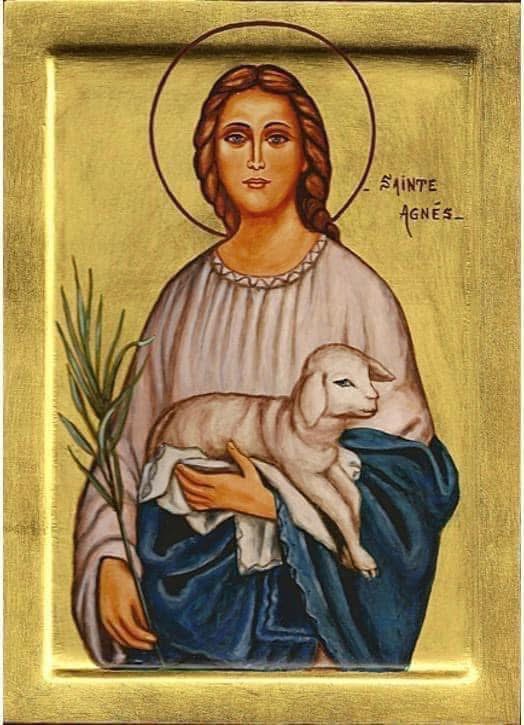
Today the church remembers an ancient Saint of the early church: Saint Agnes, Martyr and Life-Giver.
Not much is known about St. Agnes. She died during the Diocletian persecution in the year 304 AD, and she is listed in that very first catalogue of saints that was drawn up by the early church around the year 354 AD. We know she was well-known and well-remembered in that ancient church because Constantine’s daughter (or maybe his granddaughter) built a church in her honor.
Here’s the thing about St. Agnes: although we don’t know much about her life, we do know something about her death. When Diocletian was terrorizing the fledgling Christian church, St. Agnes offered herself up to the authorities to be captured and killed. The thought was that, once enough Christians were killed to be shown as “an example,” the persecution would stop.
After all, Diocletian was not killing Christians out of spite or real fear, but rather as a political tool. With this motivation, he largely follows all politicians in power who use religion as a sword or a shield rather than as a food trough for conviction. Perhaps St. Agnes thought that, in volunteering her body, she might bring a quicker end to the rampage and save some lives.
Her offer also stands in stark contrast to the number of Roman Christians who were renouncing the faith in order to save their lives (and could you blame them?). Perhaps her willingness was an effort to keep them from having to do such renunciations as well.
Because St. Agnes is so close in name to “agnus” or “lamb,” today two lambs will be presented at the altar of St. Agnese fuori le Mura. They will be blessed by the priest, shorn, and then cared for by the nuns of Santa Ceclia in Trastavere. The wool from these lambs will be used for the white cloth of pallium that the Holy Father gives to archbishops of the church as a sign of affection.
St. Agnes is a reminder for me, and should be for the whole church, that when religion is used for political points no one wins.
-historical bits gratefully gleaned from Pfatteicher’s New Book of Festivals & Commemorations
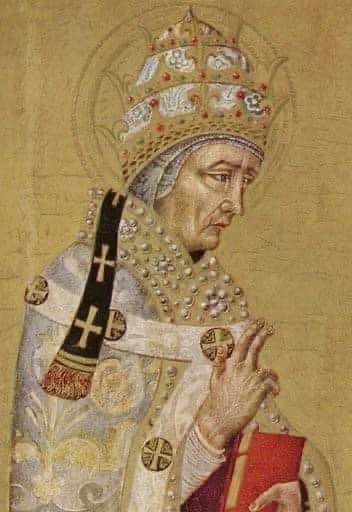
Today the church honors an unlikely Bishop, perhaps only second in unlikeliness to St. Peter himself: Saint Fabian, Bishop of Rome, Martyr, and Snow White Prodigy.
St. Fabian was not clergy. He didn’t even live in Rome, proper. But one day, early in the third Century, he wandered from his farm into the city just as the gathering clergy were meeting to elect a new bishop for the young, fledgling church.
Several names were being tossed about, mostly powerful people within the Christian movement who had gained popularity and notoriety. No consensus could be found, though, until the gathering was interrupted by a descending avian.
A dove flew into the crowd and, like a scene out of Snow White and the Seven Dwarfs, alighted upon the head of Fabian.
The gathered clergy saw this as a sign, and they immediately ordained him and elevated him to the role of Bishop by unanimous acclamation.
Fabian set about doing the work of Bishop from a farmer’s mindset. He divided the city into seven plots, or districts, and set deacons in charge of each area so they could respond to practical and charitable needs as they arose. He took to remembering the ancestors of the faith, the martyrs, venerating them in their catacombs. All of these practices would shape the church forever, even unto today.
For fourteen years Fabian led the church in Rome, eventually dying at the hands of Emperor Decius in the year 250 AD. In his death he was remembered by fellow Bishops as being “incomparable,” and on his grave to the day you can see inscribed in the Catacombs of St. Callixtus, “Fabian, Bishop, Martyr.”
St. Fabian is a reminder for me, and should be for the whole church, that sometimes the most qualified persons aren’t the richest, the most powerful, from the best schools, or who are the most well known.
Sometimes the most qualified persons are those who just appear, almost out of nowhere…kind of like, you know, Jesus. And Fabian.
-historical bits gleaned from Pfatteicher’s New Book of Festivals & Commemorations
The ancient Celts called the first full moon of January the “Wolf Moon.” It was traditional to give a good howl at it, thanking it for its beauty as it kept the night watch.
A few nights ago was that night for 2025. And with all going on, it felt like it was keeping vigil with us all.






 Reluctant Xtian