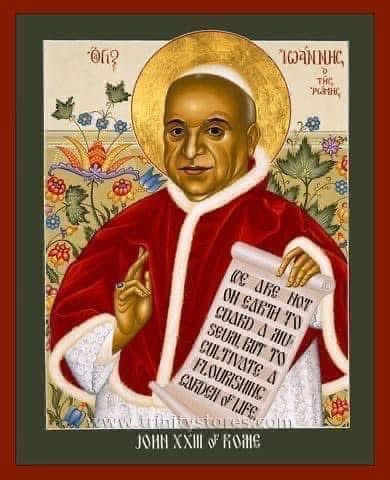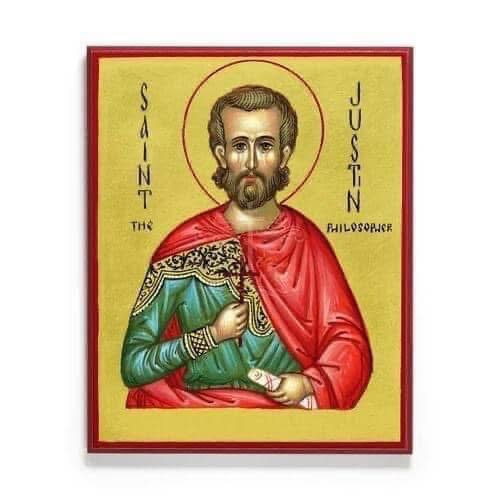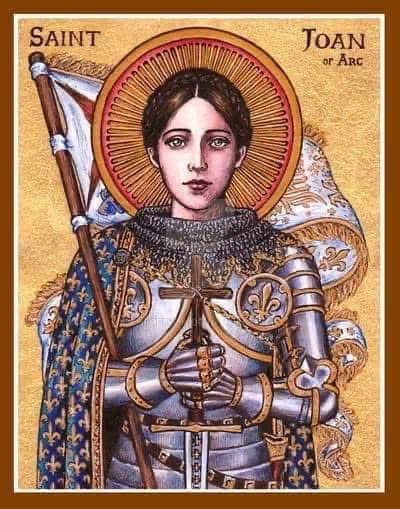
Justice

Today I would lobby hard that the larger church adopt a calendar option that our Episcopal siblings have done, and honor on this day Justice Thurgood Marshall, Warrior for Equality and Trailblazer.

Born in 1908 to former slaves, this Baltimore son was raised hearing court cases as a form of informal education. He attended Frederick Douglass High School, graduated a year early, and entered Lincoln University, an HBCU, where he sat in classes with Langston Hughes and excelled on the debate team.

After graduating and marrying, he went on to Howard University to study law. In his law practice he partnered with the NAACP and became chief council for the organization, arguing a number of historic cases in the pursuit of civil rights, most notably arguing before the Supreme Court in Brown v. Board of Education.

JFK appointed Brother Marshall to the Second Circuit Court of Appeals, but he was prevented from officially taking the chair by a group of Senators (led by Mississippi Democrat James Eastman) who didn’t love the idea of a Black man serving that high in system. Marshall took the seat by recess appointment and, when offered the chance, LBJ elevated him to U.S. Solicitor General, making him the highest-ranking Black government official of his day.

When Justice Tomas Clark left the court, LBJ put Thurgood Marshall’s name forth as the justice to replace him. He was confirmed by the Senate, and described his political philosophy as, “You do what you think is right and you let the law catch up.”

Marshall served on the court for 24 years as the first Black Associate Justice.

In 1991 he retired from the court, citing failing health, and in 1993 he died of heart failure. He is buried at Arlington National Cemetery. It is his personal Bible that Vice President Kamala Harris used in her swearing-in ceremony.

Brother Marshall was not perfect, and nor would he claim to be. But he was fair and sought to champion the rights of those who had few champions with political power at the time. He is a reminder for me, and should be for everyone, that sometimes, well:

“You have to do what’s right and let the law catch up.”

-historical bits from public source materials
-icon written by Christopher Davis

The Navigator

Today the church remembers an Irish saint who honors the ancient truth that the Celts love the word “story” within “hiSTORY”: Saint Brendan the Navigator, Abbot and Pioneer.

Saint Brendan was born around the year 484 in County Kerry. He was trained by those ancient Irish monks and, at the age of 26, ordained a priest. He then began to travel the island, founding monastery after monastery as he went. He was known for being kind and adventurous, and from his early life longed to answer the siren call that the sea had placed on his heart.

Believing that the Garden of Eden could be found just somewhere off the coast of Ireland (most of us of Celtic ancestry believe this to be true because you’d be hard to find a more perfect spot of land, right?), he took to the sea.

And this is how legend about him grew and grew. His sea adventures were passed down through oral tradition, and the first written accounts of it date around the 900’s, though the voyages themselves took place in the early 6th Century.

Saint Brendan was said to have fought with sea monsters in his boat of eager monks. One legend has him finding an island of lush vegetation, only to discover it was the back of a great monster all along!

Tales of his travels mark Irish bookshelves and drip from Celtic tongues, not because these voyages actually happened, but because they are all true.

Saint Brendan eventually grew tired of the sea voyage life and, after visiting the holy island of Iona in Scotland, retired to the monastery he founded at Annaghdown, though his “retirement” was simply more rounds of travel around Ireland and Britain, visiting this community or that. He died in 577 in Annaghdown while visiting his sister, and fellow monastic, Brigid.

Some actually think (and provide some shaky, but present, evidence to the idea) that Saint Brendan made it as far as Greenland, or even the coast of Canada in his voyages. Others think he made it to the Azores or the Canary Islands. Regardless of how far he made it, though, his tales of faith and voyage have sparked, and continue to spark, the imagination of so many. Like all good saints, he refuses to die.

Saint Brendan is a reminder for me, and should be for the whole church, that sometimes very true things just never happened.

They happen.

-historical bits from publicly available sites

-icon written by Theophilia, and can be purchased at Deviantart.com

Field of Junipers

Today the church remembers an unusual 13th Century Saint of the church, Saint Juniper, Fool and Friend.

Juniper was a companion of St. Francis of Assisi, but may have been even more extreme than him when it came to eccentricities. Juniper was known as a “fool for Christ,” and, like your aunt with an unending purse in church, was known for continually giving away all of his possessions and living in such a publicly exuberant way that he was constantly in trouble with authorities.

Eventually his monastic superiors ordered him to no longer give away his outer robe to beggars, which he had a habit of doing. Moments after the directive, he encountered a beggar and is supposed to have said, “I have been told not to give you my clothing, but if you decide to take it off of my back, I will not put up a fight.”

Juniper is a winsome saint who reminds the church, and all of us, that everything we have is always on loan, and in living that way we learn to better enjoy not only what we have, but also the moment we give it away.

On Summer

For the ancient Celtic Christians, May was the first month of summer. It may feel strange to think of the rhythm of the year in this way, mostly because we’ve been conditioned by society to see May as still part of “spring,” but for those Celts who paid attention to how things look and feel, rather than acquiescing to what others told them to feel, they knew that the change of May meant the beginning of summer.

Their wheel for the year was:

November-December-January: Winter (the cold would set in, ground would freeze, and things took a dormant nature…which is why in the middle of December you’d celebrate the undying light of Christ, reminding yourself that the sun/Son always shines)

February-March-April: Spring (things start to break through the ground, thaws happen, tulips push up and animals stir and mate…which is why Easter is the capstone to the season, the eternal “emergence”)

May-June-July: Summer (heat sets in, you start to do all things out-of-doors, you plant and tend, and the midpoint is the celebration of John the Baptizer/Summer Solstice where you remember that St. John the Baptizer said, “I must decrease so that Christ may increase”…and the sun starts setting a little earlier each day)

August-September-October: Autumn (you celebrate the waning heat, you harvest, you prep and store, and prepare for the winter, with the capstone of the season being All Hallow’s Eve where you give thanks for the harvest and the faithfully departed, knowing winter is coming where nature reminds us that all things die)

This cycle was the year life, but imbued into all of this was the sense of death and regeneration. It was an Easter life.

In our modern days where we’re so tossed back and forth between this event and that event, seeing so much of it all as isolated incidences that rock our boats, we forget the golden thread, the rhythm, or as the ancient Celts would call it, the “heartbeat of the Divine” running through it all.

If we tilt at every windmill, we never stand up straight. The ancient Celts understood this, and so they were able to weather most any storm knowing what season it was.

Now? Now is the start of summer. The season of “out-of-doors.” Take advantage, live into the newness around you, and breathe deeply into the now.

Because now it’s about living life.

The Ordinary

Because much of the church honors Saint Solange on May 10th, I would propose we move the commemoration of an 11th Century saint also honored on the 10th to today: Saint Isidore the Farmer, Commoner and Tiller of the Land.

Saint Isidore is by most accounts utterly unremarkable.

This is, of course, why I like him.

He never penned a single thought that we’ve ever found. He never joined a religious order, never wrote a hymn, and never recorded a mystic vision for historical memory.

Instead he lived his life and tried to live it well, and for this he has my heart.

Born in the late 11th Century in Madrid, Spain, Saint Isidore was born into a working poor household and would die as a member of the working poor. He was a farmer by trade (often called a “husbandsman” having less to do with marital status and more to do with how he raised livestock), tilling the land for a wealthy landowner and working the farm, never fully able to buy the land outright. He married a young woman, Maria, and they had a beautiful baby boy who would not live past his elementary years.

Saint Isidore knew beauty and heartbreak, love and loss…like most of us in this mortal coil. He was you and me.

His shadow darkened his local parish hall weekly, and his prayers were said faithfully. He was known to have a lovely glow about him, despite his relatively meager existence. Some reported that they would see angels working with him in the fields, helping to push his plow.

Though Saint Isidore had very little money, he was known for being generous with his parish, with his family, and with his friends in need. Generosity is, after all, not a matter of means but rather a matter of the heart.

I’ll say that louder for the people in the back.

He died on May 15th in the year 1130, but because May is chock full of commemorations, sometimes they’re rearranged to fit them all in. May 11th is a relatively free day when it comes to saints worth remembering, so I’d suggest we lift up Saint Isidore today.

In his meekness he was mighty.

Saint Isidore is a reminder for me, and should be for the whole church, that the ordinary life is extraordinary, by God.

-historical bits gleaned from Clairborne and Wilson-Hartgrove’s Common Prayer: A Liturgy for Ordinary Radicals and common sources

-icon is from Monestaryicons.com written in a classic style

Shepherds

Today the church unofficially honors one of its moveable commemorations: Good Shepherd Sunday.

The lectionary (prescribed calendar of readings for the church) annually incorporates shepherd imagery into this Sunday of Eastertide, giving a nod to both the agrarian notes of the ancient scriptures as well as an allusion to the Davidic tradition within the canon.

The image of a shepherd king is a striking one, though it probably doesn’t feel that way to our modern sensibilities. Shepherds were not highly thought of (they couldn’t testify in ancient courts because they were seen as too “woodsy” and “backwater” to tell the truth), and their work was seen as menial labor. Yet it is from this stock that the Divine chose the preeminent king, David. And it is to these people that the angels first came to sing of the birth of the Christ.

It’s ironic that both Christ’s birth and Christ’s resurrection were first proclaimed to people who couldn’t offer official testimony in court (shepherds and women). God chooses the lowly and marginalized to hold Divine promises.

What passes for popular Christianity would do well to remember this as they pass laws in state houses to further marginalize the marginalized and silence voices who they consider ”other.”

Shepherds in the ancient world would rescue sheep, fight off predators, and sometimes carry errant, injured, or wayward sheep on their shoulders, keeping them with the flock (often despite the sheep’s best efforts).

On this Good Shepherd Sunday, though, perhaps it’s more appropriate to remember that in Jesus we see a God who is not “kind and caring” so much as a person on the margins themselves.

Which makes me wonder: if God is embodied in the marginalized, why do we treat folks on the margins of society so badly?

Let those with ears to hear, hear.

-icon in the Byzantine style

She Persisted

Today parts of the church, especially those of Frankish origin, remember a 9th Century saint whose story is all too familiar: Saint Solange, Patron Saint of Sexual Assault Victims and Resistor of Rape.

Saint Solange was the daughter of poor vineyard workers in central France. She eventually took on the role of shepherdess, tending her sheep in the fields of the area. She was raised devout in the faith.

Her beauty attracted the attention of a local nobleman. She rebuffed his advances, even though he continually sought her out, especially while she was doing her work in the fields, alone.

Yet, she persisted.

Frustrated by her lack of interest in him, he snuck up on her one night and, using brute force, kidnapped her. In the moments after being taken Saint Solange struggled violently and, as a result, fell from the horse he had tied her to as they were crossing a stream. Her abductor was so angry at her reluctance to do what he told her to and give up her body to him, he killed her on the spot.

The year was 880 A.D.

But it was also this year. And last. And every year before it.

She is remembered as a strong woman who, when accosted by the wealthy and powerful men who thought they could do what they wanted to her and with her, resisted. Her tale is one of bravery, fear, and one all too often repeated in this life.

She is a reminder to me, and should be for the whole church, that patriarchal systems of power must never be reinforced, must never be taught and, where they are found, must be resisted and fought against.

And we need to teach this to all our children, regardless of gender.

Let those with ears to hear, hear.

-information gleaned from public sources as well as Daily Magic by Judika Illes

Not Just Cookies

Today the church remembers an obscure, but important saint, especially for those of us who find ourselves Lutheran in the Carolinas.

Today we honor Nicolaus Ludwig, Count von Zinzendorf, who may be considered the founder of the modern Moravian Church.

Zinzendorf was raised in an Austrian Lutheran family, and trained at Wittenberg University. Being of noble heritage, he took up a post in the court of King August the Strong of Saxony.

While there, he opened his home to Austrian Protestant immigrants, mostly of Bohemian descent. His hospitality, and the colony growing under his care, flourished, and he resigned his political post to attend to “the Lord’s watch,” as it came to be known.

He was a little too pious even for the Lutherans, but all the same was considered a Lutheran theologian. He was exiled from Saxony for his extreme piety, and founded communities in the Baltics, the Netherlands, England, the West Indies, and North America.

In 1737 he was consecrated a bishop in the Church of the Czech Brethren, a branch of the church that John Hus followers formed after his death. Because the church was founded around Moravia, it became known as the Moravian Church.

Zinzendorf also had great concern for social justice, a streak which continues in the Moravian Church to this day.

In the United States, and particularly Pennsylvania and the Carolinas, the Moravian Church and the Evangelical Lutheran Church in America maintain a special relationship. Here in Carolina it’s not unusual for families to have both Lutheran and Moravian members, and for churches close to one another to work together in mission. We are close theological cousins, and though there are certainly differences, we share pastors and are in full communion.

While many might know Moravians for their thin, wafer-like sweet cookies (and a pretty good thing to be known for!), they should be known more-so for their continued care for the poor and the oppressed around the world.

Mother

As Mothers Day approaches, I’m compelled to note that today the church honors the mother of mystics, 15th Century icon: St. Julian of Norwich, Enigma and Anchoress.

We know little about St. Julian, though she left us a treasure trove of writings from which to grow from. She became an anchoress of St. Julian’s Church in Norwich, a statement which means little to our ears, but explains that she lived in a shack adjacent to a particular church, in exile and voluntarily alone. She sought the contemplative life without distraction, and at the time this was seen as a benefit to her and her insights. We would later know it was certainly a benefit for our collective knowledge, but may have done her personal harm in the long run.

St. Julian called her insights “showings,” and she has recorded fifteen of them for the world. She was only around thirty years old when these visions happened to her, and they show both her admiration for the Divine and what she believes the Divine was showing her. In these experiences she recounts a God who is close, intimate, and “homely,” according to her description. She draws upon scripture and other medieval writings of the time to extrapolate on these extraordinary experiences.

St. Julian (sometimes called Dame Julian) was sought out for her wisdom. Though she lived as a recluse, others traveled far to hear her thoughts and seek her guidance.

St. Julian of Norwich died in the year 1417, and has long been honored on May 7th or May 8th by much of the church.

My favorite quote of hers, which was scribed while she was on her death bed, is, “All shall be well, all shall be well, and all manner of things shall be well.”

She is a reminder to me, and should be for the whole church, that insight into the Divine can happen to anyone, anywhere. And sometimes the most feeble amongst us holds the most acute lens.

-historical bits taken from Pfatteicher’s New Book of Festivals & Commemorations

-icon written by Marcy Hall of Rabbitroomarts: https://www.etsy.com/shop/RabbitRoomArts?ref=simple-shop-header-name&listing_id=973273358

Winter and Summer

A Celtic poem on a Carolina day:

Winter and Summer

All the sweetness of nature was buried in winter’s grave,
and the wind sings a sad lament with its cold plaintive cry;
but oh, the teeming summer will come bringing life in its arms,
and will strew rosy flowers on the face of hill and dale.

In lovely harmony the wood has put on its green mantle,
and summer is on its throne, playing its string-music;
the willow, whose harp hung silent when it was withered in winter,
now gives forth its melody.
Hush! Listen! The world is alive!

-Thomas Telynog Evans-