I talk with people who have been hurt by religion.
I talk with them quite a bit, actually. It’s part of what I do, and I’m grateful to be a space where people can be brave and safe and admit their doubts, frustrations, fears, and, yes, moments when they’ve been beaten and bruised (both metaphorically and in real life) by religion.
I also talk with folx who have been hurt by what they consider to be hostile political policies these last four years.
And, let’s just get it out of the way, while a less-than-equitable tax code is certainly not fair, and certainly takes advantage of the poor and vulnerable, that’s not the kind of hostility I’m talking about.
What I’m talking about is making fun of a disabled person by the President of the United States.
What I’m talking about is having the phrase “Muslim ban” being thrown around in the halls of power with conviction rather than concern.
What I’m talking about is barring transgender people from serving in the military, and announcing it by Tweet, the way you or I might announce the latest cute thing our kid said into the ether of the world.
What I’m talking about is a President ordering the dispersion of peaceful protestors by MILITARY FORCE so he could take a walk and hold up a Bible for a political headline.
What I’m talking about is the systemic libel of our democratic systems in an attempt to keep and consolidate power.
This is not “snowflake” sort of stuff. These are triggers. They’re abusive behavior.
And the reason I bring it up is because, well, I’ve heard some people tell those who struggle with religion, often due to the coercion or the abuse they felt in those hallowed halls, that they should just “get over it.”
Or that they should “forget about it and move on.”
One of the interesting things about abuse is that, while many of the marks that you can see fade with time, the marks that aren’t visible seem to last.
Imagine waking up every morning not knowing if your spouse was going to hit you or cook you breakfast. Do you think that feeling just immediately leaves when you’re out of that situation?
That crap lingers!
Now replace that “spouse” with the Divine, and instead of breakfast or a slap, it’s a “blessing” or “eternal damnation.” You think that just goes away if you stop going to church?
That crap lingers!
Now replace “the Divine” with the voice from the Oval Office who literally pulls the strings of power in the nation…
…yeah, yeah, save your “separate but equal” lip-service for another blog; I intend to be real. This last administration (much like the Jackson administration they so emulated) has shown that the Executive Branch is the mightiest on the tree when there hasn’t been adequate pruning…
…and imagine that instead of “blessing” and “eternal damnation” it’s replaced by “emboldened privileged existence” and “open season for outright abuse.”
Why do you think racists could march un-hooded through the streets without fear? Why do you think Confederate battle flags and Neo-Nazi flags marched alongside Trump flags when they stormed the Capitol?
So, when people say, “He’s out of office, just move on…” to that I say:
THAT CRAP LINGERS!
It lingers.
And abuse that is not addressed, somehow, continues to harm long past its life-expectancy.
And anyone who says, “words are just words” has never sat with a spouse who was continually dressed down and verbally shamed for years. They’ve never stood next to a kid who was mocked for how they look or what religion they practice (or don’t) or how their family is composed.
Words hurt, Beloved. They move people, for good or for ill. Words have power, they change things, and trying to pretend they don’t is like saying that the abuser isn’t at fault because the ones who are hit let the blows land.
I write all this as a way of explaining why it’s still important that we have some sort of discussion…no, not discussion, a “come to Jesus” about what has happened the last four years.
About why we can’t just “move on,” because we have the serious tendency to “move back again” if we just try to move on.
I write this for everyone wondering why it still matters enough to mention. It still matters because, to be honest, I cringe when I turn on the news, even now, because I wonder what other right has eroded, what safeguard has been crushed, what minority group has been scapegoated…
And, no, elections will not fully prevent those things from happening, but we have seen what happens when an election accelerates it!
And, Beloved, it lingers. In the soul. In the spirit. In the head. In the heart.
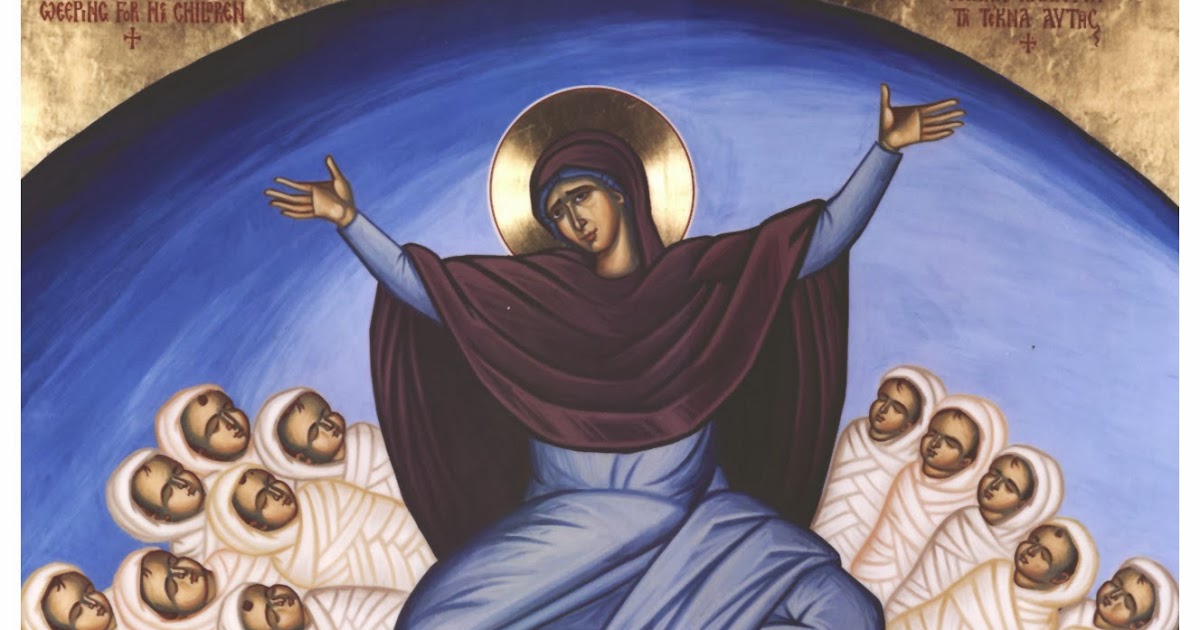
One of the most haunting and touching collisions of the Hebrew Scriptures and the New Testament happens in the Gospel of Matthew where the writer recounts Herod’s rage over the birth of Christ, and the tragic resulting aftermath.
The story is well-known, of course. Herod goes on a rampage and kills all the young boys three years of age and under throughout Bethlehem. This horrific episode is captured in the Christmas carol, “Lully, Lullay,” an ancient song written for a long-lost nativity play that towns and villages would put on during Christmastide.
This song, with the minor tone and lullaby lyrics, “Lully, Lullay, thou little tiny child/bye bye lully, lullay…” is meant to mimic the quiet song the mothers of Bethlehem sang to their little ones to keep them quiet while soldiers went door to door searching for children to kill.
The writer of Matthew, as he is wont to do, overlays Hebrew Scripture prophecy on the scene, recalling an obscure verse from Jeremiah 31 where Rachel, the seminal matriarch of the Hebrew people is crying over the death and exile of her descendants. “She cries,” the prophet shouts, “and she refuses to be comforted.”
She refuses to be comforted.
This whole scene has always moved me, and does so even more so now that I have my own children. It is striking. It is raw. It is a commentary on political power and political fear. It is a testament to the endearing love of mothers, of all parents, for their babies.
I am currently in a program where I’m learning to effectively coach people who are in the process of dying, or who are grieving over those who have died. We talk a lot about the process of death and grief, about saying goodbye well and remembering well.
And we talk a lot about the fact that the dying and the grieving don’t want our pity, and they don’t need our platitudes. After all, a euphemism or a trite moralism is just another way of saying that you don’t know how to care.
Caring doesn’t mean patching over grief, but about walking into the valley of the shadow of death with someone else so that they don’t have to do it alone, by God.
Being in this course (and, by the way, if you’re in need of someone to walk with you in grief, death, or dying, don’t hesitate to reach out), I was reminded of an old midrash, a tale that I know I heard somewhere but that I can’t now place.
It talks of Rachel, and of her seeing the devastation of her ancestors, her babies, and seeking out someone to cry with her. She goes to the patriarchs, but they will not do it. She goes to the angels, but they can’t grieve with her. She finally goes to God and says, “And you? Will you not grieve with me?” And God, in Divine mercy, weeps with her into the night, not consoling her (she refused to be consoled), but simply weeping alongside her.
And that made all the difference.
Rachel didn’t need someone to make her feel better, and she didn’t need someone to “fix” her…she wasn’t “broken.”
She was grieving. Her heart was broken, and that can’t be fixed in any other way than by walking through that valley and grief, and she needed someone to walk with her, to hear her tell the stories of her babies, of her ancestors, to laugh as she pulled out picture after picture, and to cry as she missed them in the night.
I know why Rachel refused to be consoled. I know why Rachel wanted someone to just cry with her.
I’m thinking these days of all the anger and hurt and grief we’re all experiencing today. The losses of normalcy, those loved ones lost to the pandemic and our collective inaction.
I’m thinking these days of the way we assault one another, of how we refuse to hear other perspectives and so easily fall into the trap of conspiracies and group thought that promises easy outs and secret remedies.
We’re grieving, Beloved. We’re grieving.
And what we need to do is, like Rachel, refuse to be consoled for a bit. We need to just let it out, to cry a bit, to stop hanging our hopes on every tilting windmill and instead sit and just be with it all for a little. damn. while.
If I were preaching tomorrow…here’s what I’d preach.
Genesis 1:1-5
In the beginning when God created the heavens and the earth, 2the earth was a formless void and darkness covered the face of the deep, while a wind from God swept over the face of the waters. 3Then God said, “Let there be light”; and there was light. 4And God saw that the light was good; and God separated the light from the darkness. 5God called the light Day, and the darkness he called Night. And there was evening and there was morning, the first day.
Mark 1:4-11
John the baptizer appeared in the wilderness, proclaiming a baptism of repentance for the forgiveness of sins. 5And people from the whole Judean countryside and all the people of Jerusalem were going out to him, and were baptized by him in the river Jordan, confessing their sins. 6Now John was clothed with camel’s hair, with a leather belt around his waist, and he ate locusts and wild honey. 7He proclaimed, “The one who is more powerful than I is coming after me; I am not worthy to stoop down and untie the thong of his sandals. 8I have baptized you with water; but he will baptize you with the Holy Spirit.”
9In those days Jesus came from Nazareth of Galilee and was baptized by John in the Jordan. 10And just as he was coming up out of the water, he saw the heavens torn apart and the Spirit descending like a dove on him. 11And a voice came from heaven, “You are my Son, the Beloved; with you I am well pleased.”
Beloved, when I was eight years old, I was told by my 3rd Grade teacher that I was, “just not good at math.”
I went through the rest of my elementary, middle, and high school years believing what she told me. It was just a fact: I wasn’t good at math.
I carried this truth upon my shoulders until I went off to University where, as part of my Philosophy Minor I had to take a course called “Logic and Critical Thinking.” It involved a number of word problems, proofs, and in that course, at the age of eighteen, a full ten years after I first was told with all certainty that I was “just no good at math” I realized I had been lied to.
And here’s the shame of it: because I had been told that I was no good at math, and I believed it, I never explored math. I always took the lowest math courses I could find, the most remedial in the catalogue.
I just took it as truth because, well, they were a teacher, right?! They knew best, right?
Words matter.
My friend, as a kid, was called a “fag” every day at school.
Now, I don’t think his bullies actually implied that he was trying to sleep with other guys, though maybe that was part of the implication, I don’t know, but really what they were trying to do was dehumanize him in some way. They wanted him to know, in no uncertain terms, that he was different, unwanted, and unliked.
And, well, later on in his years, when he crouches in a corner clutching a bottle of pills, thinking maybe he should just swallow them all…I mean, that’s part of what was running through his head, Beloved.
Words matter.
In Genesis today we hear that not only do words matter, but words create matter! The Divine speaks into the chaos of the universe and forms order out of it, parting the waters and the celestial bodies, helping to create a rhythm to the hours, helping to create safe spaces for all kinds of what would be created: land dwellers like you and me, ocean inhabitants like the majestic whale and the whimsical sea horse, and those who take to the air like the high-flying condor and the swift hummingbird…and, well, the Wright Brothers who, by the way, just a few days before their first flight would read in an op-ed of a national paper the projection that flight was generations off for humanity.
Good thing they didn’t take those words literally or seriously, right?
Words matter. Words create matter.
Words can create: safe spaces, brave places where creation can be comfortable, order in the chaos of a world that seems hell-bent on entropy most days.
And words can destroy, Beloved. They can stigmatize. They can dehumanize.
They can incite.
Terrorize.
We’re all acutely aware of this now, right?
So today, here are some other words, words to create a brave and safe space, words to lift up and inspire and provide some baptismal hope on this Sunday where we remember not only the baptism of Jesus, but our own baptism:
“God loves you, for Christ sake, and will not let you go.”
These words were spoken to me again and again by my Theology professor and surrogate grandfather, Reverend David Truemper. He said these words, wrote these words, inscribed them on my heart, and I etch them now on yours, and he did this even as his body was laid waste by a cancer that ransacked him in my Senior year.
Cancer is a word that can destroy and terrorize, but these words carried him through it to the other side of the Jordan where he undoubtedly heard, “You are my son, my Beloved, in whom I’m well pleased.”
“It is good you exist.“
In one of my darkest moments as a teen, these words were spoken to me by a friend who guessed I was on an edge. It reminded me of something very deep and very true.
“We shall overcome…“
In my Black Church course in seminary we started out the semester standing and singing this song, all together, led by our professor who had, himself, marched the streets with Dr. King. Tears ran down his face as we sang, a second baptism of sorts washing our heads and our hearts, re-centering us. We were not pastors who preached just any words, but we must be pastors who preach liberating words! Gospel words. Words that don’t rev people up into frenzies, but lift people up to new heights, by God!
“You must work for justice and peace…“
I’ve said these words over a hundred times in these last ten years, making sure that before people get to the font they know what they’re doing. These words are part of the baptismal liturgy, and they make clear that entering the waters of baptism means exiting oceans of hate and violence. The waters of baptism don’t wash away prejudice, but they birth you into a life of unlearning it, by God. They birth you into a life of reading the scriptures not through a lens of grievance, greed, and group-think, but through a lens of grace, both for yourself and your neighbor.
Justice and peace hold hands, Beloved, because one ensures the other. Peace and justice work for the good of all people. They lean toward truth and away from lies. They overthrow the halls of power not by force or “trial by combat,” whatever the hell that means, but by a fierce determination that changes hearts because they say, “See how much they love…a sacrificial love.”
Love lifts up the oppressed, it does not oppress.
And, finally, how about these words, ripped straight from our Gospel today:
“You are my child, my Beloved, in whom I’m well pleased.“
Here’s the thing, Beloved: words matter. The words that grip you, matter. The words that you cling to, matter. Words affect matter, and as you know, “you are dust, and to dust you shall return…”
We don’t just matter, we are matter.
You are matter. I am matter. And matter, Beloved, can be manipulated. Molded. Moved, for good or ill.
Which means we have to be honest about words, Beloved. Words matter.
In the spirit of our baptismal calling, we condemn words that incite, right?
It’s no wonder that in the Gospel of John Jesus is called The Word. God’s love letter to the world. Because words matter, love letters matter, and when we have words that go against The Word, that aren’t love letters but hate speech, we rely on those sacred words, like those I lifted above to carry us through.
To remind us not to fall victim for wards that affect matter, but rather live in the embrace of words that remind us that humanity matters, peace matters, love matters.
And yes, words will call us to flood the streets in protest. But we cannot do so over just any words, especially lies and feigned grievances. We do so over words like, “I can’t breathe,” and words like, “You can’t marry,” and words like, “You’re illegal,” and words like, “Move to the back of the bus.”
Marching on those words is not marching for grievances, it’s marching in solidarity with true grief! And if you cannot tell the difference, well, then we’ve grounded ourselves not in The Word who calls us to defend our neighbor, but in words that call us to destroy.
Beloved, we’ve been doused in a river of news this last week, an ocean of words that have spilled over into our hearts, homes, and have covered our heads. There were points this last week where I felt like I was drowning in sorrow, in anger, in sadness.
But we must remember those other words, Beloved. Words that can carry us through. Words that compel us to counter the words of lies, selfish grievance, and hate. Words from The Word.
So, Beloved, be baptized in the deep words that compel you to peace and justice, not the shallow words of grievance and guilt.
Be baptized under the name of the one who created you, not the name of any demagogue out there who longs to move you against your neighbor.
Be baptized under the name of the one who says, unequivocally, “I love you. You are my Beloved,” and who will love you to death and one step beyond to show how true those words are…
Have these words poured over your heart and head today.
If you ask my youngest son what his favorite ornament on our tree is, he’ll point to a square glass ornament, red and white, shaped like a present.
“That one,” he’ll say, lightly touching it with a gentleness not usually seen from a five-year old. He’ll smile at you, look back at it, and stare at it in a way that makes you want to be the ornament: with awe and wonder and possibility and love.
Who knows? When his back is turned, maybe it becomes a real present, falling like an apple from the tree to be opened on Christmas morning. The imagination is wild and wonderful, especially at five.
January 6th is the Feast of the Epiphany, and in our house that means taking down the decorations at the end of the night, blessing the house, and formally folding up Christmastide.
But we didn’t do it yesterday.
In fact, we ushered our kids out of the living room where the tree with the beautiful present ornament resides. We stuck a toy they got for Christmas in their hands and told them to play as long as they wanted for the afternoon as we looked in pained faces at the screen in front of us.
Horror on the Capitol.
You kind of want your kids to look at their lives with awe and wonder and possibility and love, right? Like that ornament: who knows what can happen?
But what do you do with a day like yesterday? A day when leaders they’re supposed to trust and follow turn on them? When the highest office of the land curves in on itself like a deranged parasite, eating away at its own body to satisfy its own needs?
You leave the tree up.
You wait on that door blessing, for just one more day.
I’m not saying that you put off the holiday/holy day by any means, but you allow it to live, by God.
You allow it to live, to do the thing it’s meant to do.
Because the Epiphany is supposed to be a day of awe and wonder and possibility, a day when you honor the fact that the Divine is up to something in this world, dammit.
And yesterday was not that day.
And I don’t say that for political reasons, by the way.
I say that because, well, when words are used to incite violence–which is what happened–then the Word of God that we honor on the Epiphany, the Word sent to confront such words, is shadowed in anger and violence.
Especially because I saw, in those rioting mobs, more than one “Jesus” flag alongside a nationalistic flag that had nothing to do with a nation. I saw “Pelosi is Satan” and “Jesus Saves” signs as they broke windows and busted into the democratic halls intended to ensure our freedoms.
It’s an imperfect union, Beloved, but it’s all we’ve got at the moment. And it was not awe-some.
It was awful.
Holy days are intended not just to be observed, but to help us observe, Beloved.
What I mean is, holy days are meant to help us interpret all of life.
For instance: Advent is a time where we practice waiting so that we will know how to wait when the time comes. For births. For deaths. For new jobs. For the next big thing. For anything! Advent teaches us how to wait.
Lent, likewise, teaches us repentance…and Lord knows we need some of that in this world.
The rhythm of the church year is meant to help us breathe, to keep time, to know what to do next in life. But it is, above anything and everything, practice for those times in our lives when we’ll need to put these sacred skills into practice!
I’ve been in a season of Advent in my heart all throughout Lent when I was waiting for my son to be born. I was absolutely in a season of growth (Pentecost) when Lent descended on my heart at the death of my grandmother.
The seasons of the church teach us how to be in the world, if we’re willing to pay attention.
And so, yes, yesterday was the Epiphany. But it wasn’t an Epiphany.
In fact, what was needed more than anything yesterday was a little more Christmas, a little more celebration, a little more “God-with-us” and “Word-became-flesh” as too many angry words were spewed from the halls of power.
Yesterday needed a little more thwarting of Herod, and so we invited the Magi to stick around a bit longer, Beloved.
We’ll take down the tree later this week. Probably this weekend.
And we’ll slowly take off each ornament, inspecting it, standing in awe of it, telling one another stories about where we got it and how beautiful it is.
And then we’ll bless the house, pray a blessing on 2021, and tell each other how beautiful this new year is on the other side of yesterday. The wonder. The awe.
The possibility.
I want them to look at this world and see the possibility. The “good bones,” as Maggie Smith would say.
Because it has good bones…it just needs a bit more Epiphany.
Merry, in the ancient use of the word, didn’t mean “happy” or even “bright,” as the carol might suggest. “Merry” meant “safe” or “secure.”
“God rest ye merry, gentlemen…” was how the old song went. So many think it means that the gentlemen are happy, but really it is better translated as, “God make you safe, gentlemen, let nothing you dismay!”
Which makes more sense, right?
So I wish you today a safe Christmas, a blessed and secure Christmas, especially in these pandemic days. Advent just hit differently this year for me, perhaps for you, too. But I pray Christmas hits with safe and secure joy.
Today I’m taking a little bit of an easy way out and coopting a poetry piece from my brother Lawrence Ferlinghetti. He writes,
Christ climbed down from his bare Tree, this year and ran away to where there were no rootless Christmas trees hung with candycanes and breakable stars.
Christ climbed down from his bare Tree this year and ran away to where there were no gilded Christmas trees and no tinsel Christmas trees and no tinfoil Christmas trees and no pink plastic Christmas trees and no gold Christmas trees and no black Christmas trees and no powderblue Christmas trees hung with electric candles and encircled by tin electric trains and clever cornball relatives.
Christ climbed down from his bare Tree this year and ran away to where no intrepid Bible salesmen covered the territory in two-tone cadillacs and where no Sears Roebuck creches complete with plastic babe in manger arrived by parcel post the babe by special deliver and where no televisioned Wise Men praised the Lord Calvert Whiskey.
Christ climbed down from his bare Tree this year and ran away to where no fat handshaking stranger in a red flannel suit and a fake white bears went around passing himself off as some sort of North Pole saint crossing the desert to Bethlehem Pennsylvania in a Volkswagen sled drawn by rollicking Adirondack reindeer with German names and bearing sacks of Humble Gifts from Saks Fifth Avenue for everybody’s imagined Christ child
Christ climbed down from his bare Tree this year and ran away to where no Bing Crosby carolers groaned of a tight Christmas and where no Radio City angels iceskated wingless thru a winter wonderland into a jinglebell heaven daily at 8:30 with Midnight Mass matinees
Christ climbed down from his bare Tree this year and softly stole away into some anonymous soul He waits again an unimaginable and impossibly Immaculate Reconception the very craziest of Second Comings
I pray that it will be revealed to which anonymous soul God stole away into this year.
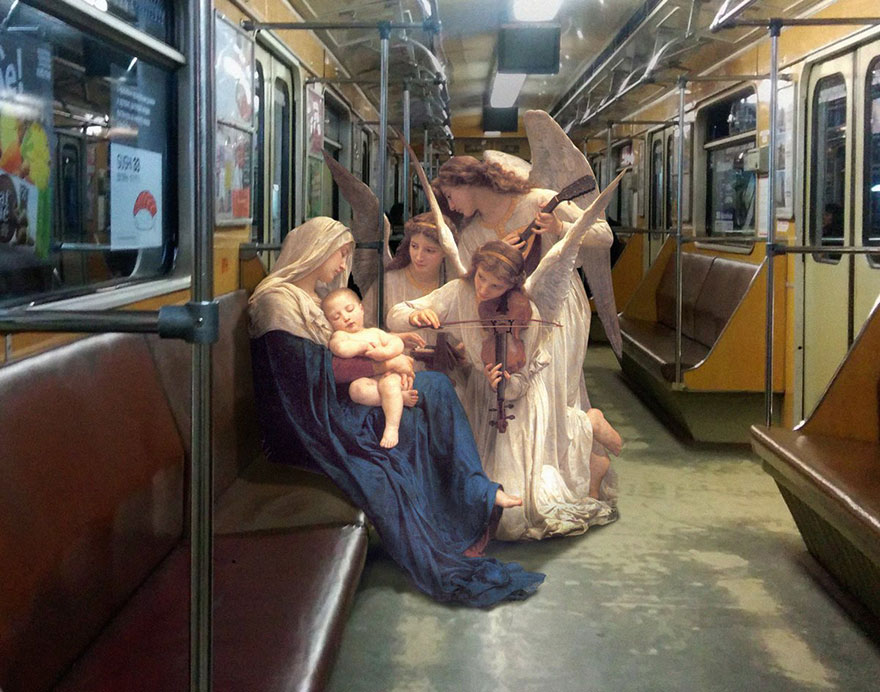
On this Christmas Eve, much different than years before, Mary is taking up much of my heart-space.
Normally I’d be busy with service preparation and sermon writing, this being my first Christmas out of a typical pulpit.
But now I’m prepping for a quiet Christmas, which still requires quite a bit of intention, but in a more meditative and introspective way.
How are you preparing, Beloved?
I mean, if Mary miraculously carried the Christ child, it stands to reason (by that logic) that we all might be pregnant with the Divine. Or, already are…
How will the Divine be birthed in our lives this year?
Advent is the time when we ask this question again. It takes four weeks to answer…sometimes longer.
Mary’s song sung in Luke’s Gospel where she talks of “the mighty being cast down from their thrones” and the “humble of heart” being exalted gives us a clue, I think, to what it means to have the Divine birthed into our world.
How will you participate, Beloved, in lifting up the humble and humbling those at the top? How will you, as Mary will, cry out in the streets for the sons and daughters killed in violence, fueled too often by politics? How will you, as Mary will find herself, be at the table of the unwanted more often than the table of prestige?
Because we love romance we’ve idealized Mary’s story of this miraculous birth in some lowly stable, but in fact she birthed a revolution and the church has forgotten that powerful story and put in its place a impotent story that coddles the powerful.
It’s just true, Beloved. I wish it weren’t, either. Religion has lost the lede.
As you prepare to birth Christ, birth the revolution, this year, throw on Tracy Chapman’s “Talkin’ Bout a Revolution” as you do. It is a modern retelling of Mary’s song, if I’ve ever heard one, and speaks loud and clear (at least to me) what it means to birth Christ in this world, now.
Have you ever tried to express yourself and just spouted off thing after thing, like you were trying out a bunch of words like a model tries on clothes?
“What I mean is…”
“No wait, I should have said…”
“That’s not it, what I’m trying to say is…”
Sometimes I think the O Antiphons for the church are like this human propensity to just say the first thing that comes to mind, only to try again, and again, and again until we get it right.
Because we call for a Lord, for a Ruler, for the Dawn, for a Key; we call for it, but none of it quite fits.
Until today.
Until today, when we say to the Divine, “What we really mean is, we just want you near.”
Or, as we cry out, “O Emmanuel!” which literally means, “God-hugged-close.”
The human longing for some unjudging love, for some Divine reassurance, for a reminder that this isn’t all just going to crap is ancient and ever-present and, Beloved, if there’s a year we need it, 2020 is it.
As philosopher and theologian Karl Rahner says,
“It is both terrible and comforting to dwell in the inconceivable nearness of God, and so to be loved by God that the first and last gift is infinity and inconceivability itself. But we have no choice. God is with us.” (from Meditations on Home and Love, 1977)
In what ways do you know the Divine…however you might define that…as being close? How is God far away? When you cry out, “Come, Emmanuel!” what do you imagine that will mean for your life?
What if it’s already true?
Spin what I think is probably the most incarnational song that ever became a pop hit, Osborne’s “What if God was One of Us” as you ponder the idea that God can be close again this year…is close again, this year.
When I’m working with people in my coaching work, a question I’ve often lifted up is, “What rules?”
I don’t usually ask it in that kind of way, but rather say something like, “Is your calendar ruling you, or are you setting your calendar?”
“Are you playing defense all the time, or are you on offense?”
In Advent the church today calls out to the Messiah, “O Ruler of the Nations, Come!”
If you ask most humans, I think they’d tell you that they don’t like to be ruled. And yet, we’re all under some sort of rule. We work hard to keep up with the Joneses. We work hard to pad that bank account. We let insults and failed relationships dominate the limited free space in our minds. We pine for things we want and are neglectful of the things we need.
The numbers on the scale. The numbers on the stock market. The names we’re called…and the ones we call others. We’re all ruled by something.
It’s funny that usually the ones who scream “Don’t Tread on Me!” through their bumper-stickers and yellow-flags are so ruled by their ideology that they can’t see the irony…
We’re all ruled by something, Beloved.
What are you ruled by?
In our Advent waiting, watching, and wondering, as we cozy up our homes for an unexpected guest, it’s also an opportune time to uninvite some guests from the party. Like, perhaps it’s a good day, as we’re so near Christmas, to uninvite that thing that has been steering your rudder in this season.
Or, perhaps, every season.
Because, for as much as we don’t like rulers and yet we’re all ruled by something, we do need a governing force in our being, Beloved. We do. We need a moral compass. We need banks to the river of life, and this is, I think, what the church cries out for today when it’s at its best: some guidance.
Because all those other things that rule our lives make us feel crazy most of the time.
And we’re not crazy. We’re just, well, poorly governed.
Today we cry out for a new leadership in our being. How would you rather be ruled, Beloved?
Dream a bit about it today. It’s possible. At least, in the season of Advent, we hope it is.
And while you’re dreaming, throw on Counting Crow’s “Long December” and wonder how, “next year will be better than the last…”
Today is the shortest day of the year for most of us. The Winter Solstice.
It seems fitting, then, that today the church cries out, “O Dawn!” or “O Bright and Morning Star!” as if entreating the Divine to break through the shadows for just a little longer.
The ancient rituals around the Solstice predate Christianity, of course. My ancient ancestors would take this day as a festival day, cutting down a large tree to burn mightily. They’d sing and dance around the fire, drinking and playing games, and they’d do it not just to have fun. They’d do it because they believed that, in their revelry, they’d coax the sun back into the sky, their long-burning fire helping to fuel it.
After all, if you heard a party going on, wouldn’t you want to join?
And this coaxing dance soon turned into a celebration dance as the sun did return, keeping its promise for another year.
This O Antiphon the church cries out has the same kind of feel, Beloved. In fact, the church knew this, which is why it placed its Christmas celebration at this same time. The congruence was not on accident, and fit so well.
I remember at Valparaiso University singing, “The dawn from on high will break upon us…” in morning prayer, and those words became written on my heart in a way that won’t seem to rub off.
What is the wisdom here?
We no longer believe the sun to be a god that needs coaxing. And, I dare so many may believe the Son to be God, or at least profess it, but don’t behave as if they actually do…
The deeper wisdom for this day is, I think, the ancient truth that those pagans and those early Christians knew: the dawn always comes, Beloved.
The night never lasts. The shadows never last.
I was listening to Krista Tippett’s podcast “On Being” the other day where she interviewed philosopher and writer Jennifer Michael Hecht. Jennifer, who is culturally Jewish and doesn’t practice a faith, writes passionately about how suicide has affected her life. From a non-believing viewpoint, but all the while incorporating wisdom from many religions, she argues that we can fight against suicidal urges by reminding ourselves of this very truth: how you feel today is not how you’ll always feel.
Or, in other words, the dawn always comes.
Even on the Winter Solstice. Even in the Winter Solstice of your life.
Some see it as a Divine promise. Others just know it from experience. But, regardless of how you come at it, Beloved, it’s just true…the dawn always comes.
Oh, and spin Five for Fighting’s “What Kind of World Do You Want?” while you’re reminding yourself that the dawn always comes. Because, well, if the dawn always comes we always have a chance to participate in building a better world.
That deep well that will grant my hopes and dreams.
We’re in love with those magical implements that will fix everything we perceive to be broken, aren’t we? What are the magical words to say, what is the shortcut, the silver bullet, the key that will unlock our hopes and dreams?
The true secret, Beloved, is there is no secret…
At least, that’s what I’ve come to believe.
The secret to success that the author of The Secret won’t tell you is that the only thing The Secret made wealthy was the author. The 4-Hour Work Week is an illusion made up to sell books. The Miracle Morning helped the author wake up easier because they made a pretty penny off of selling us the idea there was a “miracle morning.”
Oh, sure, like most pieces of writing, I’m sure there are helpful bits in all of these works.
Well, except for the Prayer of Jabez which was totally a scam…
But here’s the thing: the search for the shortcut, the secret solution, the silver bullet is a fool’s errand for your life, for my life, for anything.
The O Antiphon for this day, December 20th, is O Key of David. This ancient name for the Messiah is intended to evoke the idea that the chosen one will unlock the blessings of God for the people.
But the irony is, of course, the the Key of David was not the key most wanted.
The suffering servant the world found in Jesus the Christ didn’t seem to be blessed. In fact, he’d be full of unwelcome ideas like, “You must lose your life to gain it,” and “Those who want to be first must become last,” and all sorts of tidbits that would absolutely never sell a single book.
And yet, Beloved, this is Divine wisdom: you will find what you need in the opposite: power is shown through vulnerable love, holiness is shown through eating with outcasts, and the key to unlocking the “good life” comes with giving your life away.
This is subversive wisdom.
The Key of David did unlock some deep truths about the Divine, though humans haven’t typically wanted what’s behind that door because it looks so unlike what the rest of the world peddles as “truth,” “success,” or “the good life.”
And yet, in Advent, in these days, we’re absolutely waiting for the Almighty to show up not with a war cry, but with the wail of a baby…so why are we surprised that the Key of David would unlock a door of subversive wisdom?
As you ponder the subversive wisdom of the Divine in this time of waiting, spin Leigh Nash’s “Wishing for This.” Re-imagine the secrets, keys, and shortcuts you wish for, Beloved, in light of the babe arriving in just a few days…







 Reluctant Xtian