December 5th: A Posse of Clever Maids

Put a candle in the window
‘Cause I feel I’ve got to move
I’m gone, gone…but I’ll be comin’ home soon
As long as I can see the light.

Today’s Advent playlist suggestion is one of my favorites from one of my favorite bands. Creedence Clearwater Revivals’ “Long As I Can See the Light” is an Advent tune if there ever was one.

If I were still a parish pastor, I’d probably cue this up to be sung, this Advent especially. The lyrics are evocative of that story of the wise maidens who keep their “lamps trimmed and burning” as the spiritual goes. Those maidens aren’t just waiting in a general way; they’re waiting with expectation.

Waiting with expectation means, I think, knowing that something is going to happen…even if you don’t know what it is. You’re prepped to receive whatever comes your way. It harkens back to yesterday’s post about a kind of hope that doesn’t cling to a specific outcome, and yet knows that good can be made of whatever outcome produces itself.

As I walk through my neighborhood on these darkening days I’m seeing so many houses with candles in every window. It’s an ancient practice, you know. It comes from those days when travelers would journey deep into the night, and a light in the window meant the house was safe to stop in for food or a bed.

The candle in the window was a signal of safe harbor, even if you didn’t know who might need it, when they might show up, or what was on the other side of the door.

I guess what I mean is that the candle in the window is a symbol of expectant waiting.

For Christians it’s a symbol of waiting for Christ to show up (though, if you trust the idea of the incarnation then Christ shows up in many and various ways again and again…we just miss it more often than not).

But even for those who don’t find themselves in a faith community, this kind of symbol of expectant waiting has some meaning, I think. After all, we’ve all been in the position of searching in the dark night of the soul, longing for some sort of harbor. The trick in such a circumstance is to keep going, of course. The metaphor of a night traveler is appropriate. If they stop, no candle will appear, so stepping one foot in front of the other until it does appear is necessary.

It’s necessary to keep going.

Advent is the time of the year where we practice this plodding gait. Where we practice both putting candles in our windows and keeping a look out for them, learning to see where the safe harbors are in the world, preparing our own beings to become safe harbors for those who need one.

Like maidens who know the bridal party can arrive at any moment, we become wise when we do this.

T. J. O’Gorman’s poem is appropriate for this day, and this song:

Face to face with our limits,
Blinking before the frightful
Stare of our frailty,
Promise rises
Like a posse of clever maids
Who do not fear the dark
Because their readiness
Lights the search.
Their oil
Becomes the measure of their love,
Their ability to wait–
An indication of their
Capacity to trust and take a chance.
Without the caution or predictability
Of knowing day or hour,
They fall back on that only
Of which they can be sure:
Love precedes them,
Before it
No door will ever close.


Oh, and give CCR’s “Long As I Can See the Light” a spot on your Advent playlist…

December 4th: A Little More on Hope and a Good Bit on Mystery

Yesterday’s ponderings may have left you a bit…curious. Particularly that part about “hope” and the way I dissected it.

When I first heard of that Buddhist notion to let go of the particularities we often ascribe to “hope,” I was pretty flustered, too. The Buddhist teacher I learned it from, Pema Chodron, had been helping me (through her writings, not in any personal way) get through a tough transition period in my life.

Her discourse on hope deflated me a bit, if I’m quite honest.

But that was until I realized that I have, indeed, been basing much of my notion of “hope” on very specific hopes, which I’ve come to see goes against the great promise in the idea of hope.

Hope, like the Gospel, cannot just be a good thing for me. It must be universal. And so many of my hopes and dreams were (are?) me-centered.

Advent, this season of hope, is not the season where we believe “anything is possible.” Reserve that notion for the Hallmark Channel, Beloved.

Advent is rather an invitation to sit and wait patiently at the footstep of the unknown to pray, tell stories, sing with “joy and wonder” as the hymn goes, light a candle, and become ever-growingly confident that what will emerge from that shadow will be a tool for good.

I am certainly not saying that you can’t hope, wish, and dream for particular goods for you and your family. I am saying, though, that Advent is not a season that invites you to do that particular thing. Rather, Advent is the season where we trust that the spinning cosmos are barreling toward beauty and not chaos, and we invite ourselves to imagine how that can happen, is happening, will happen, by God.

Today’s song to add to your Advent playlist is actually a hymn to the tune St. Helena, “Unexpected and Mysterious.” I’ve linked a choir singing it (a lovely, if a bit slow for my taste, performance). But the words, oh the words, they’re what invite your attention today, Beloved…especially that last verse:

We are called to ponder myst’ry
And await the coming Christ
to embody God’s compassion
for each fragile human life.
God is with us in our longing
to bring healing to the earth,
while we watch with joy and wonder
for the promised Savior’s birth.

As a final bit of beauty, check out the story behind the writing of this hymn.

December 3rd- No Going Back, Beloved, and No Mapping Out a Specific Future

The Advent song for your playlist today starts like this:

When my blood runs warm with the warm red wine
I miss the life that I left behind
But when I hear the sound of the blackbirds cry
I know I left in the nick of time

Peter Bradley Adams has a beautiful way with words, I’m finding. They do what I think good lyrics should do: they invite you into something more, if for just a moment.

Advent, like good lyrics, invites us into something more, a “time overlaid on time” if you will. It’s why congregations around the world offer an additional moment of worship, usually midweek, in these dusk-early days. This addition notes that this time is special, unique, something different.

The problem with most of our Advent-Christmas time, though, is that it usually invites most people backward, not forward. Holidays and holy-days have a way of cementing themselves in our nostalgia receptors, and so if we grew up with a wonderful Christmas (as I did!) we can sometimes dabble a little too much in what we theologians call “repristination.”

Repristination is a fancy word for “play it again” or “replay.”

In fact, lots of religion unfortunately peddles repristination as some sort of ideal to strive for, a rewind of progress to times where beliefs were simple and widely held and widely regulated by religious and civic authorities.

In the universe of our heads, though, repristination will take us back to the times of our childhood, or “that one Christmas” that felt so perfect, and every subsequent year has been some sort of valiant effort to replay that memory, now. It’s a fool’s errand.

Advent is not an invitation to the past, but an invitation to ponder the present and the future in light of the past. What does it mean to wait faithfully for a future that’s not yet realized? In my mind, I’m also wondering what present beauties we miss as we pine for the past…there are certainly some, yes?

Buddhists have this idea that “hope” is actually a bad thing. Now, before you write it off, let me explain a bit. In the Buddhist sense of “hope” what is meant is “an attachment to a particular outcome.” So, it doesn’t mean a generalized “hope” in a better tomorrow, but rather those very specific hopes that we harbor in our souls, usually born out of advantage or particular proclivities.

That attachment does, indeed, create pain…which is rough.

Our attachments to the past, and our possible attachments to very particular futures, all distract us from being rooted in the uniqueness of this “time overlaid by time.” Are you attached to either?

I know I am.

But, as Peter Bradley Adams notes, we left those pasts in “the nick of time.” By that, I mean, it’s gone, and that’s ok, and we can remember it fondly but certainly cannot replay it.

Change happens. Shift happens. Advent invites us to ponder what that shift might be…but don’t become too attached, Beloved. Dream a bit. Imagine the steps to make a wonderful world emerge from this one, but know that there is always a path, always a way, always plans B, C, and D.

That is hope.

I mean, Christians honor this time to ponder how God stole across the cosmos to be born in a no-name place to no-name people, which would certainly not be any of our plan A’s, right?

Good thing we’re not ultimately running this joint…if it’s being “run” at all.

Take a listen to Peter Bradley Adams’ “The Longer I Run.” In it you might just finding something new this Advent: a reflection of your own running, whether to the past or too far into the future, and an invitation to simply sit in the present for a bit.

December 2nd: Advent is Blue

In some traditions the color for Advent is purple. This is generally thought to be an older-version of the liturgical color wheel. When it was first formally instituted, Advent was a mirror to the liturgical season of Lent, and therefore that color purple (standing for “royalty” and “penitence”) made sense.

But things change. All things change. And as our conception of the season adjusted (more rightly so, I’d say) our practices changed, too. Whereas Lent is more of a “house cleaning,” Advent is a “house warming.” To reflect this theological and rhythmic shift, many shifted the color from purple to a deep blue, symbolizing expectation and preparation.

But I like this alternative coloring for another reason, too, and that is because, well, for some Advent is “blue.” It can be a tough time, especially in the wake of tragedy or heartache.

If it’s your first Christmas without a loved one, and in this pandemic that possibility is quite real, it’s a tough season. Hell, it’s tough even if it’s your tenth Christmas without that loved one.

If you struggle with fertility, the stories that weave their way through Advent can be a bit painful. Why does Elizabeth, in her old age, get pregnant while so many couples can’t? Why does Mary, who doesn’t even seem to want to be pregnant, miraculously conceive when so many people have trouble conceiving?

And can we talk about miscarriage? This wide-spread but secretive topic sits in so many hearts, compounding the trouble of the season.

It’s important at the outset here to be honest about the fact that, for many, Advent is blue.

And here’s the interesting truth: acknowledging that fact, whether you find yourself blue in this season or not, helps everyone. It’s amazing how, when we hug the cactus of grief, it doesn’t hurt as bad anymore.

For your Advent playlist, try on this blues song by one of my favorite bands, Over the Rhine, “All I Ever Get for Christmas is Blue.” It’s not a sad song per se, but it sings a deep truth in that old blues tradition that carries reality for so many.

Weatherman says it’s miserable
But the snow is so beautiful
All I ever get for Christmas is blue

It would take a miracle
To get me out to a shopping mall
All I really want for Christmas is you…”

December 1st: Fresh

The wisdom of the mystics Christian’s call Desert Mothers and Desert Fathers is continually relevant, I’m finding. These sages lived often extreme lives, but their solitude and piety produced acute wisdom.

There is a saying that I’m taking to heart today, early on in this Advent season. It reads, “Abba Poemen said about Abba Pior that every single day he made a fresh beginning.”

Beloved, would anyone write that about you and your life? That every day you “made a fresh beginning?”

I do not think it would be said about mine…at least, not yet.

Day to day I carry too much baggage with me: the things I left undone, or the things I did that I should not have done. Worries that chase me in my dreams. Concerns that dog my footsteps.

And yet, I love the idea of making every day a fresh beginning. I’d love to try it on, you know, just to see how it feels.

Perhaps I will.

Advent is a season of waiting; this is true. But sometimes something so good can’t wait. Sometimes Advent can be a season where we put off waiting and live into a new reality, just to see.

Just to see.

Try to make a fresh beginning each morning, Beloved, and wait for that “old you” with the cares and concerns to get the picture and stop showing up in the mirror at sunrise.

For your Advent playlist today, add “Wonderful World” to the rotation…but not the Armstrong version (though, it is amazing). Instead, try on this arrangement by Kina Grannis…you know, for something fresh.

November 30th: In the Shadow

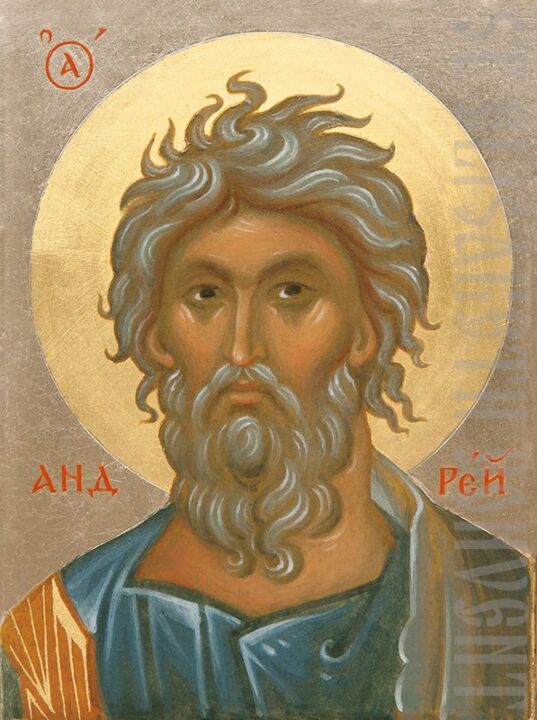
I feel bad for St. Andrew. He’s kind of like the B-side of the record.

In the lore of the church, not much is known about Andrew other than he was the brother of St. Peter…about whom much is known.

Imagine being known only in relation to your sibling to whom you’re always being compared. I imagine some of you don’t have to imagine too hard…this happens. Lots of people live in the long shadow of someone else.

But St. Andrew gets a bit of the historical last laugh. His feast day, November 30th, is the day by which the church sets the Advent calendar every year: the Sunday that falls closest to St. Andrew’s day is always the first Sunday of Advent.

Author and erstwhile theologian, Frank Schaeffer knows a bit about growing up in a long shadow. His fundamentalist pastor of a father, going by the same name, was a leading crusader in the early movement of the Religious Right. The younger Schaeffer has spent a lifetime coming to terms with that heritage, rejecting it, and finding his own voice.

Stumbling headlong into a kind of atheism (or, perhaps, “a/theism” as metaphysicist Peter Rollins would say), Schaeffer has been a prolific writer and voice in a kind of “in-between-belief” system that walks the fine line of faith and doubt. His book, _Why I Am An Atheist Who Believes in God_ is a wonderful reflection on the struggle to make sense of life in the shadow of religion.

“A/theism,” by the way, is a term coined by philosopher Peter Rollins to describe someone who believes in God but isn’t sure quite *what* to believe about God. They question what they’ve been taught about the Divine.

Advent is a season where we get to dip our toe into a bit of a/theism, a bit of “not-yet” when it comes to Divine promises being fulfilled and the whole notion of certainty.

Advent, with it’s focus on “hope,” is about not being certain, after all.

Advent is about clinging to bits and pieces of hope when there aren’t many to be found, repeating the promises of old again and again until you start to believe them, by God.

Or not.

I wonder if St. Andrew believed them, in all honesty. We know Peter doubted…but Andrew? He’s historically silent on the matter, except to say that he gets to usher us into this season of candle-lit waiting, wondering, and uncertainty.

Artist Joshua Radin’s hauntingly beautiful “Winter” kind of embodies the feeling of lostness and longing that St. Andrew’s day fills me with. Radin’s notion of a “name like a splinter” being lodged in his being is evocative of this wrestling with faith and straddling the line of belief and doubt.

Could God’s name be a splinter in us that is hard to get rid of? Is this why we’re continually drawn back to matters of the spirit and the heart?

Add the song to your Advent playlist, and ponder along with St. Andrew, with Schaeffer, with Radin, and with me.

November 29th: Day-dream

The ancient Celts understood all time as having meaning. The time of year helped you know how to behave, how to organize your activities, how to live and love and move in the world.

We’ve lost some of this, what with our inability to unplug and our unwillingness to turn off the lights when it gets dark. There is something special, human even, in living with the cycles of the sun, moon, and stars. The closest I ever got to this kind of rhythm was when I was a camp counselor and, due to the rustic nature of our setting, when the sun went down, we went down. When the sun rose, we would rise.

It was a different way of being in the world.

I find the church season of Advent to be an invitation back into that kind of orientation in spirit, if not in our body. The reading for today from the Gospel of Mark sets the scene:

“In those days, after that suffering, 
 the sun will be darkened,
  and the moon will not give its light,
25and the stars will be falling from heaven,
  and the powers in the heavens will be shaken.” (Mark 13:24)

Indeed the readings that the church provides to start off the season of Advent all begin in chaos, with sun and moon failing and flailing. It’s not surprising, though, when you think about it: for the church Advent is about “beginning” and “birth,” so it makes sense to start in the swirling chaos of the cosmos.

Advent starts in the shadows, Beloved, because most all of light starts in the shadows: the enclosed womb, the enclosed tomb, the seed deep under ground, the miring muck out of which life first crawled…it’s all in the shadows.

So, today, at the outset we have the opportunity to daydream in the shadows. We get to daydream about what kind of world can be birthed if we all take a step back (and, perhaps we have in this pandemic!) to take stock and think a bit.

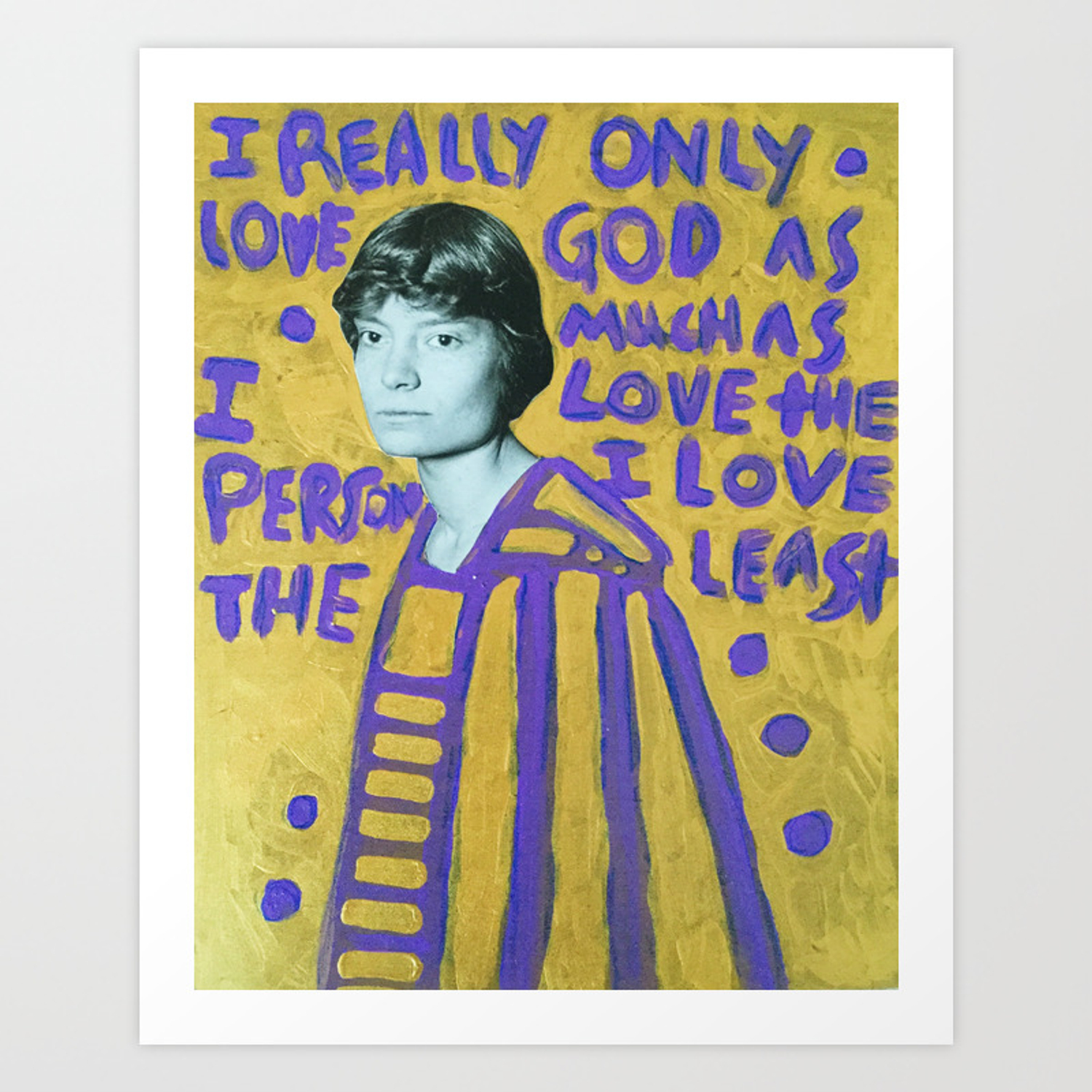
Coincidentally, the first Sunday of Advent this year is also the feast day of St. Dorothy Day, known to befriend the poor and the outcast. In her daydream, Dorothy saw a world where the distinction between poor and wealthy, “in” and “out,” mentally-ill and mentally-well, were erased.

In the swirling chaotic shadows of this pandemic Advent, could we imagine such a world? Could we live in the rhythm of such a world? Could we orient our lives around such permeable lines of boundless love? Could Dorothy Day’s dream become our reality?

A good addition to your Advent playlist might be this unusual choice from the 60’s, Spanky and Our Gang’s “Give a Damn.” The lyrics feel ever-green to me…

If you’d take the train with me
Uptown, thru the misery
Of ghetto streets in morning light
It’s always night
Take a window seat, put down your Times
You can read between the lines
Just meet the faces that you meet
Beyond the window’s pane

And it might begin to teach you
How to give a damn about your fellow man
And it might begin to teach you
How to give a damn about your fellow man

As the sun decides to set a bit early tonight, take a moment to daydream about what this world could be if you…if all of us…just gave a damn.

Imma!: A Review of _Embodied: Clergy Women and the Solidarity of a Mothering God_ by Lee Ann M. Pomrenke

Full disclosure: I know Pr. Lee Ann Pomrenke. We first met in college way back when we were young and full of dreams, and we’ve reconnected over the years through our shared vocation in the Lutheran Church and our shared love of writing. So, when I found out she was going to be publishing her first book, I was eager to not only read it but offer some thoughts on it.

_Embodied: Clergy Women and the Solidarity of a Mothering God_ (New York/Church Publishing Incorporated, 2020) is one of those works that weaves together the practical and the theoretical delving deeply into how our conception of the Divine is not only parental, but explicitly motherly. And she doesn’t have to do much convincing, by the way. Through anecdote and story, Pr. Pomrenke just lays out the territory of how we not only conceive of God, but also interact in the church, and the result will be startling to many readers: God, in practice, is most motherly.

The brief work begins with powerful reflections on her life as an adoptive parent where she touches all the untouchable issues the church seems to shy away from, especially infertility. As we head into the Advent season, this first chapter is supremely prescient. I’ve heard from more than one family that Advent, that “season of waiting” where we celebrate miraculous conceptions and births can be a struggle for families whose waiting has lasted way past their 40 days and 40 nights.

The author addresses both the joyful beauty of parenting, and the well of grief in longing for it but feeling it is unrequited by the Divine hand. She dispels the notion that God withholds fertility outright, bring us back into righteousness (right-relationship) with the Biblical witness on the matter. “I am convinced,” she writes, “that fertility is not actually the point in many of these stories, nor are they preaching some kind of fertility gospel of pleasing God to get pregnant.” Instead, Pr. Pomrenke describes God as friend and fellow-journeyer on the road of waiting and heartache, not instigator.

The theme of “re-birth” and “new-life” run rampant through our scriptures, so why do we shy away from the idea of God as mother and, as Pr. Pomrenke points out, the Holy Spirit as doula and mid-wife to the new creations all around us? The examples are there, we just don’t see them for what they are because we’ve wired our brains toward the masculine.

Jesus, too, is more mothering than not, as the author points out. His use of touch as a way to comfort and heal brought me back to the healing touch of my own mother, cradling and rocking, and to the images of a God cradling the earth in more icons than I can remember. In this way the female pastor is indeed the embodiment of the God they point to, as the lead the gathered community to care and heal one another as a mother tending to her babies. The vulnerability of the Christ, the honesty of the Christ (as Pr. Pomrenke points out, mothers tell the truth…and so should we, in the church), and the centrality of the Christ all point toward a motherly orientation for Jesus toward his disciples and the world.

Beyond noting the glaring Biblical examples of a mothering Divine throughout our faith-narrative, I especially appreciate that the author deftly inter-mingles that deep theology with our practical congregational polity. By that I mean that she always brings the highly theoretical down to the ground of experience (embodiment at its core), and notes how the local congregation relates to the themes of family (for good and ill), adoption, and being mothered. In doing so, Pr. Pomrenke has written a book that is both useful for clergy (as they will absolutely identify with her vocational examples) as well as people in the pew, who get more than their share of tidbits to reflect on as they think about how they interact with their pastor and fellow parishioners.

Of all the chapters, I found Chapter 7, “Emotional Labor,” especially resonant with me. Parenting in general, and mothering specifically, is emotionally laborious, as is pastoring and leading a faithful life. Within the church there is much anxiety about our shared future, a taxing reality that weighs on most everything within the local parish nowadays, like a family knowing there is an impending crisis in its midst. How do we mother one another through it and stay sane? How do we retain empathy with one another while also tell each other difficult truths? This chapter is both intensely personal and universal in scope, and, along with the first chapter “Waiting” stands out as my favorite parts of the book.

_Embodied_ is half theological primer and half memoir, blending the two together in a way that engages and moves the reader. It is in no way a treatise on using feminine pronouns for God (but I think we should, hence why I titled this piece Imma), nor is it an apologetics piece for female clergy or feminist theology. It does something much more powerful, I think: it just lays out the facts.

Clergy, even those who identify as male, are motherly. God is motherly. The church, when it’s at its best, is guided by the thundering velvet hand of a mother. And the fact that we have historically had issues with this is not an indication of outright denial (though there is that), but one of consciously or unconsciously overlooking the obvious.

Pr. Pomrenke reorients us here, and does so with skill and thoughtfulness.

Which begs the very real question: why are there so few female Senior Pastors in church leadership today? Why does it take longer for female clergy to be placed in congregations, and why do they get paid less than many of their male counterparts?

While the book doesn’t explicitly ask any of these questions, I bet you will after reading it. In fact, if there’s a minor critique I would make of the piece, it’s that it doesn’t ask these questions outright.

But perhaps that’s her point. Like a good parent, a good mother, Pr. Pomrenke entrusts the decision making to us, walking with us along the way.

So, who should read this book?

I would offer it to most anyone. Clergy will find a work that names many of the joys and struggles of the vocation, especially clergy who are parents themselves and struggle with the Sunday morning wrestling of our children in the pew. Parishioners will find thoughtful examples that expand our notions of God beyond the conventional, and will be given wonderful food for thought regarding how parishes organize themselves and operate. Book groups and study groups (as well as individual readers) are offered questions at the end of each chapter that spur further conversation and reflection.

I’ve not yet read a work that so deftly intermingles mothering, parenting, and theological reflection as this work does. I commend it to you with confidence and great joy, and think it’s an especially wonderful book to pick up as we head into the Advent season.

You Are a Family

painting by Sheli Paez: https://fineartamerica.com/featured/family-sheli-paez.html

“Well, if we decide to start a family, then we’ll talk about it…”

I hear this sometimes from couples preparing to get married.  I understand what they’re saying.  Our culture doesn’t really have a good grasp on how to adequately use words to describe life situations.

Usually when they say that, I gently stop them and say, “I want to be very clear with you about what I think is going on here.  The minute that you two say ‘I do,’ you’ve created a family.”

In fact, in just deciding to be together, despite the fact that the State doesn’t recognize it legally, I’d argue that by that decision alone, they’ve created a “family.”

You don’t have to have children to have a family.

You don’t have to have dogs or cats or rabbits to have a family (I am not a fan of “fur-baby”).

You two: you are a family.

When you decide where you go on vacation, you make a family decision.

When you decide how to spend your money, where to eat out, and how you’ll schedule your bedtime routine (yes…adults have bedtime routines), you’re talking about family decisions.

When we talk about “family planning,” we’re not talking about starting a family, we’re talking about adding to a family.

This notion, many times rooted in a long-forgotten-but-always-present past of needing kids to “work the farm” or “carry on the family name” needs to go the way of the dodo in these days.

It’s time.

It’s time to get rid of this stereotypical idea that family = “have kids.”

I saw Kevin Nealon at a comedy club in Denver a few years ago.  He was hilarious.  He spoke about being an “older father,” as his son is 6 and he’s, well, much much older than 20.

But he backtracked and talked about his divorce with his first wife.  When he was going through it people would say, “Oh man, that’s terrible.  You don’t have any kids, do you?  No?  Good.  That’d make it worse…”

To which he quipped, “That’s kind of like asking someone who got their legs blown off, ‘Were you wearing nice shoes?  Oh, good…that’d make it worse…'”

We somehow have cheapened “families” to mean “people with kids.”

You don’t need kids to be a family.

In fact, I’d say you can be a family of one, even.  Our family has had more than one member join by decision or circumstance.  “Uncles” and “aunts” and “grandparents” of all kinds.  And not in some sort of honorific way, but in a real, tangible way.

And listen, there is certainly no religious reason, at least not any Christian reason, to have kids.  Let’s just say that we’ve already fulfilled, as a species, the idea of “be fruitful and multiply.”  

In fact, we may have over done it a bit.  

Louder for the folks in the back: don’t let religion pressure you into having children.

There are legal reasons that the State doesn’t recognize just any-old-relationship as “family.”  That’s not what I’m talking about here…although, it appears from the headlines that some of that notion, even, may soon be back under attack.

There are many good reasons to decide not to have children.

There are many heartbreaking reasons some people can’t have children.

There are many good reasons to decide not to partner with someone, legally or otherwise.

And there are many reasons people aren’t partner at all (or anymore)!

All of the above does not negate the reality that “family” doesn’t mean “with kids.”

Families come in all sorts of constructions. They always have (despite what historical convention tells you), and they always will. And we need a society that not only catches up to this reality, but rhetoric that acknowledges it, too.

You are a family, Beloved.


Life on Mute

“I never want to Zoom again,” a colleague said to me the other day.

Zoom. Teams. Go To Meeting.

Pick any medium you like. The general consensus after six months of a pandemic is that online meetings are about as annoying these days as in person meetings were before the plague. Except, for a number of physiological and psychological reasons, virtual meetings somehow feel more taxing…as if we ever thought that could be possible.

And, as a parent, Zoom School is…well…a practice in education and patience across all sides of the screen.

Virtual meetings are here to stay, I think.

Like healthcare, once people are given something (like the opportunity to work from home), gathering them back into the office on the regular will be more difficult.

I suspect the same will be true for the religious practices of the world, too, for better and for worse.

I heard a pastor say the other day that they had a small regathering of the faithful, and that the people who showed (around 20 or so) were “simply giddy” to be back in person. And I’m sure they were!

But what about the folks who didn’t show?

My hunch is that many people will go to their congregations through St. Youtube of the Screens with more regularity.

I don’t say that with any sort of judgment or even sadness. I’m just saying it…it’s how things have been forced to move, and it’ll be hard to go back. New metrics and ways of measuring ministry will have to be formed to account for this kind of virtual participation, especially as it appears that in-person gatherings on a large scale will not be possible for some time. And even when it becomes possible, church is not very embodied when we can’t touch one another, touch the sacraments, and sing.

It’s just not.

One of the peculiar things that the pandemic has forced everyone to experience, in one way or another, is the pesky problem of the “mute button.”

Oh, the dreaded mute!

Nothing is more annoying than a person beginning a long speech or a response, only to realize they were on mute. The frustrated participants waiting for their words say with alternating humor and exhaustion, “You’re on mute…you’re on mute…”

The mute button is instructive for us, though, and I think we should take this opportunity to think about it a bit. Let’s not let this crisis go to waste!

What voices in our world regularly operate on mute?

BIPOC? LGBTQIA+? Native American? Women, especially women trying to climb a corporate ladder?

What about children? Those for whom English is a second language? Religious minorities? People who don’t practice any religion? The very elderly?

The difference is that these voices have been “muted by the host” throughout history because it has been thought that their commentary wasn’t germane to the conversation. Or, more to the point, whether it was germane or not, it wasn’t wanted.

In fact, many of these populations have also had their cameras disabled, made largely invisible in large conversations. Or we shove them into breakout-rooms of their own so that we can largely ignore their input.

And now there are fears that other sections of humanity, who have often been the hosts of these large-scale life meetings throughout the world are being put on mute: white men, the cis-gendered, and in the United States, Christians. These fears largely stem from the realization that, well, other people would like to host meetings once in a while and have been prevented from doing just that and even barred from doing just that and, like any good host, dominating voices sometimes do need to be put on mute so others can be heard!

Our political and cultural schisms at the moment are all about the mute button, Beloved.

The problem, of course, is that for all intents and purposes, all of history, all of life, has been one big Zoom meeting, even though we haven’t had language for it until just recently.

Virtual meetings are designed to mirror the way culture has designed our common life: some are muted, some are hosts. You get engaged in them and you soon realize how undemocratic they are…and, by extension, how undemocratic most of life is.

Oh, sure…we talk a good democratic game, but the functions embedded in virtual meetings are too familiar to not see the similarities.

Some are on camera, some are kept from being seen.

If you have a question, use the “chat function,” and we’ll see if we get to it…

Maybe this is why Zoom is so exhausting: it’s just our normal operating procedure without any pretense, mirrors, or charades.

But in this moment, we actually have an opportunity.

We have an opportunity to un-mute some of the voices history has long muted.

It’s happening on the streets, but now it can happen in our virtual meetings, too.

Now it can happen in our virtual church services, too.

Now the audience is captive, Beloved, and elevating those voices so that they have a chance to speak is one of the ways this crisis can steer us toward progress rather than stall us all.

Who is on mute in our world?

In your virtual gatherings, who is perpetually on mute and who forgets to put themselves on mute? How can we use this opportunity to shift the power dynamics in such a way that we come out of this plague having heard new things, seen new faces, and gained new understanding, even from the (dis)comfort of our own homes?

When we speak out about the muted voices of the world, some will get uncomfortable. Some will not like the suggestion that they mute themselves so others can be heard over the noise of history they’re adding, consciously or unconsciously, to the conversation.

But seize the opportunity nonetheless.

Because for too long some voices have been on mute in this world, and now is a time they can be heard, by God.