Background on Carnival and Ash Wednesday

After the church and the empire had joined hands, the rhythm of the church year was overlaid on the rhythm of the ancient celebrations of humans.

Ash Wednesday, the day of penitence, became a massive event; a “full Nineveh moment” in the face of the “holy” church’s Jonah proclamation: “Repent, lest ye be damned!”

Sackcloth. Ashes. Solemnity. That was the prescription. Interestingly enough, the diagnosis was proclaimed by the entity who also claimed to have the cure. Religion tends to do that…

But the people, used to more festive holidays, demanded some revelry before the fast. Intrinsic in our human bones, divorced of any religious pietistic profundity, we all know that a fast is seen best through the lens of a feast, and vice versa. A little bit of denial needs a little bit of indulgence to truly know what you’re missing, right?

And so Carnival was declared, a time to fatten our stomachs, our spirits, and our souls before the sobriety of Lent.

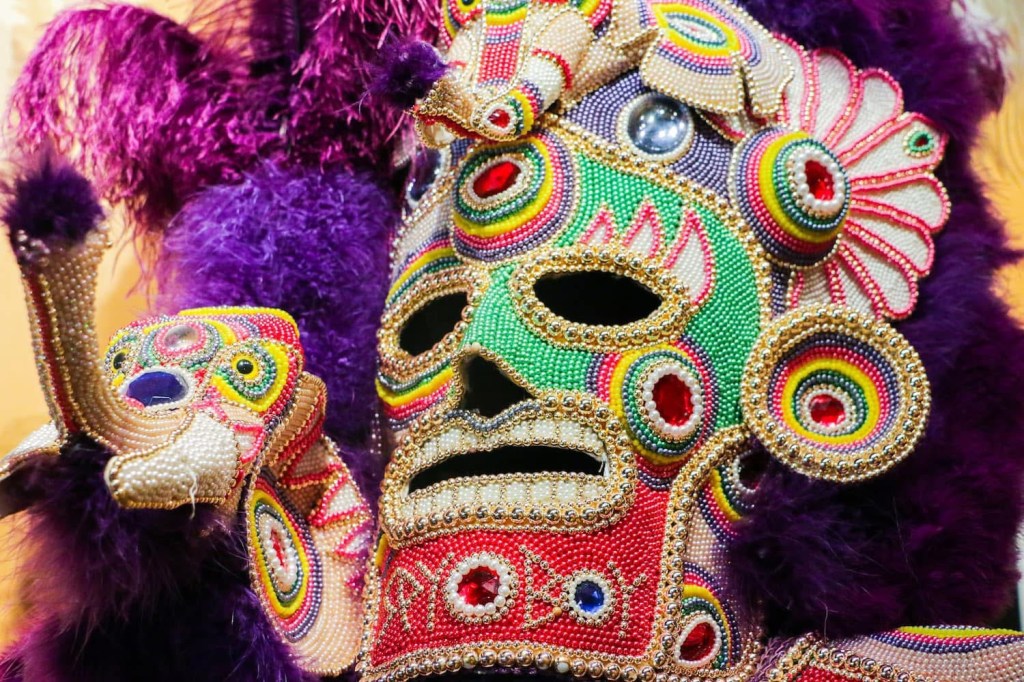
Masks were handed out so that, if you were in hiding for a crime, you could come out of your shelter and join in the fun. A hall pass of sorts. Acts of extreme gluttony are best done anonymously, right? On Carnival, everyone is criminal in some way, everyone is queen and king of their universe for just a bit.

Carnival was a day for reclining, gesticulation, and for pretending we don’t fear fat and sumptuousness, if only for a minute.

And then comes today.

Ash Wednesday.

Ash Wednesday is for remembering that time for bending a knee to mortality will come; for sure.

One day all masks fall.

Drum Major’s Instinct

Though today is Martin Luther King, Jr’s birthday, the church reserves his commemoration for April 4th, conforming with the practice they do with all martyrs by remembering him on the day of his death.

Nevertheless, it is certainly appropriate to honor him today.

To do that, I’ll share my favorite quote from King, one that doesn’t get a lot of circulation, though you may have heard it before. It’s from “The Drum Major’s Instinct.”

“If you want to be important–wonderful. If you want to be recognized–wonderful. If you want to be great–wonderful. But recognize that he who is greatest among you shall be your servant. That’s your new definition of greatness. And this morning, the thing that I like about it…by giving that definition of greatness, it means that everybody can be great.

Because everybody can serve.

You don’t have to have a college degree to serve. You don’t have to make your subject and your verb agree to serve. You don’t have to know about Plato and Aristotle to serve. You don’t have to know Einstein’s theory of relativity to serve, you don’t have to know the second theory of thermodynamics in physics to serve.

You only need a heart full of grace.

As soul generated by love.

And you can be that servant.”

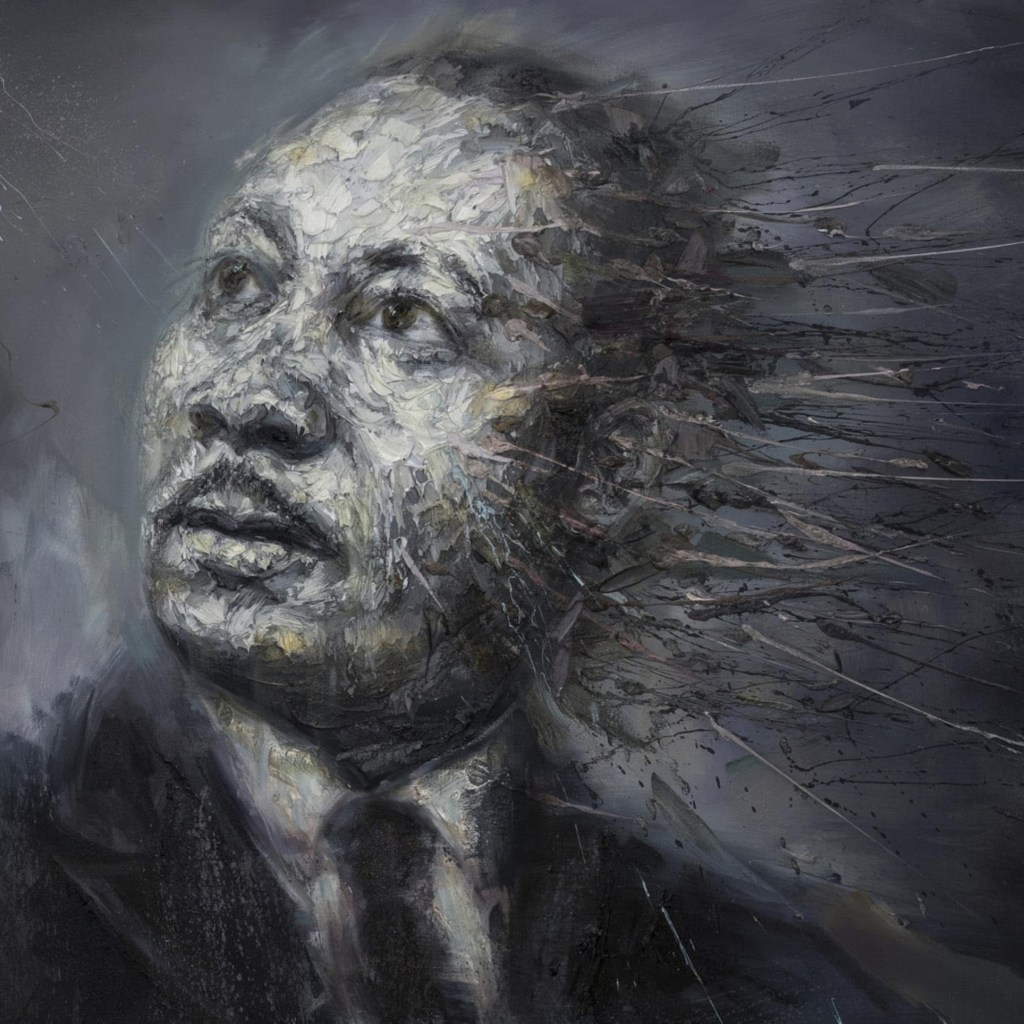
-painting by Mathieu Laca

Legends Speak Faith

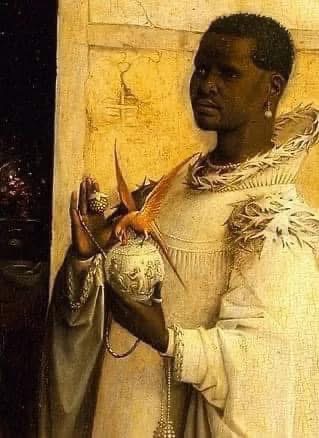
Today is a feast day that, while not honored throughout the church, is especially reverent in African communities throughout Argentina, Paraguay, and Uruguay: Saint Balthazar, King of Macedonia and one of the Magi who sought out the infant Christ.

Saint Matthew’s Gospel does not name the Magi, nor does the writer even number them. The names, and their numbering, are all part of lore. So, where did we get the names of the Magi?

I’m glad you asked!

The names of the Magi are derived from a 6th Century Greek manuscript that was translated into Latin and widely distributed. There we read that the Magi who visited the Christ after following astrological signs were named Caspar, Melchior, and Balthazar. Of the three, Balthazar developed a particularly powerful following, mostly because it was purported that he was the Magi who carried the myrrh, the most mysterious and tragic of the “gifts” given to the infant Jesus.

The Venerable St. Bede describes him as being a black man with a long beard which, while surely conjecture, struck a tone with many parts of the church that were under represented in depictions of the scriptures, especially as the whitewashing of the Bible had largely been completed by then.

In short: Saint Balthazar provided an opportunity for much of Christendom to see themselves in the story when they had largely been erased and replaced.

Today in many parts of South America, in non-Covid days, you’d find festivals and street parades honoring St. Balthazar and his elegantly morbid gift of myrrh. He is the patron saint of those who work with saws, thunder, those with epilepsy, and those who manufacture playing cards (I have no idea why), and of the three kings of lore, is the most popular.

Tradition has him being entombed at Cologne Cathedral in Germany, having been moved there from the original resting place of Constantinople (or is it Istanbul?). There the legend says his remains are kept with his other two companions at the Shrine of the Three Kings.

Now, all of this is legend and lore, from the top to the bottom. So why bother noting this feast day at all?

We must remember that while religion is Divinely inspired is is held in cracked clay jars of the human imagination. This feast day speaks to a wide swath of humanity and, in the Biblical narrative, plays an important part in Matthew’s Gospel. The gift of myrrh to the infant Jesus is a foreshadowing of his death, a little “flash forward” the Gospel writer provides for the ending of the story.

Indeed: the Jesus story is no story at all without the myrrh-y part.

So Saint Balthazar is a reminder for me, and should be for the whole church, of at least two things:

First: the whitewashing of the Bible (making all the characters European) is a disgrace and should absolutely be repudiated as a practice.

And secondly: the legends and lore of the faith still speak, and are still worth remembering and honoring as long as that remains true.

Icon written by Hieronymous Bosch

Grave Finder

On August 1st the church remembered a saint who gets scant, but memorable, mention in the Scriptures: Saint Joseph of Arimathea, Secret Disciple and Finder of Graves.

Saint Joseph is memorable in the Jesus stories largely for his dissent collar. As a member of the Sanhedrin (the council of the synagogue in Jerusalem), the writer of Luke notes that he “did not agree” to the council’s plan to bring Jesus to Pilate as a blasphemer. The writer of John calls him a “secret disciple,” and it is he who goes to Pilate after the crucifixion to ask for the body, and lays Jesus in a grave that was unused.

The reason Saint Joseph is so important is because, well, he gets his name mentioned. In the ancient world you wouldn’t write about somebody unless that somebody was a body that other people would recognize and know. It’s thought that perhaps Saint Joseph of Arimathea was an important part of that early church, and the writers of the Gospels thought it important to include him. It’s also worth noting that he shows up in Luke and John, two Gospels written far apart from one another, without any indication that John (the one written later) used Luke as a guide. This gives us an idea that stories about Joseph of Arimathea were circulating in that ancient church.

That’s a little trip down theological nerdom, but it’s kinda neat.

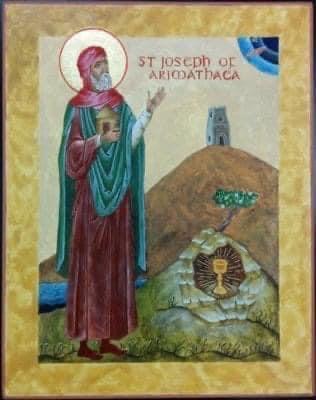
Legends about Saint Joseph of Arimathea started growing and by the fourth century his fame was widespread. Some of these lager-than-life stories claimed that Joseph was the uncle of Jesus, was a tin smith, and had brought Jesus to the tin mines of Cornwall when Jesus was a young boy. Others said that Saint Joseph was sent by Saint Philip (post-resurrection) to be a missionary in Britain. On that journey it was said that Saint Joseph took with him the Holy Grail! At Glastonbury Saint Joseph struck his staff into the earth and from it grew the Glastonbury Thorn (and Glastonbury is still considered one of the holiest “thin places” in Britain), though the whereabouts of the Holy Grail remain a mystery…

This all means, of course, that you can thank the legends of Saint Joseph for the third installment of the Indiana Jones series.

None of these stories have any historical merit except for the idea that we do think that Saint Joseph of Arimathea was a real human who played a real role in the Jesus event.

Saint Joseph is a reminder for me, and should be for all the church, that sometimes a holy dissent is necessary.

-historical notes gleaned from Pfatteicher’s New Book of Festivals & Commemorations

-opinions mine

-icon written by W. Micheal Shirk. Note both the thorn bush and the grail!

On Beltaine

Today the ancient Celts would celebrate the festival of Beltaine, welcoming May as a month where the increasingly hot sun (the “tene” part of the word above) would warm the greenery enough to produce harvest. The “bel” portion of the word is a mystery, as it could stand for an ancient Celtic sun-god, Belanos, or could just be a form of the ancient word for “brilliant”

At dusk, having let their own hearth fires die out (which they only let happen once a year), the whole clan would ascend a nearby hill to get as close to the setting sun as possible. They’d set up huge poles and dance around them with flowers in their hair. They’d drink, and feast, and sing. They’d create flower garlands to adorn their doors or trees near their houses.

They’d create huge fires which they believed would help warm the sun, and they’d jump over the fires as a way of emboldening themselves for summer work, and if you were planning to be married soon, you’d do it three times for good measure. The elderly would circle the flames reciting prayers, and mothers would carry newly born infants near the coals as a way to ensure they’d be protected in childhood.

Fire, for them, purified the air of disease, and they believed that a bit of the hair from the same dog could be the cure, as they hoped setting these fires now would protect the unborn harvest from lightening strikes or other natural fires in the hot days.

As the fires smoldered each family would take a coal home to start their new hearth fire, and the rest was scattered throughout the crops for good luck.

If you stayed up all night on May-day, those who observed the sun rise would swear it danced for joy three times upon the horizon before jumping up in summer glory.

On Trees

For the ancient Celts, April was the month of new life long before the Christians invaded their lands. They saw the blossoming of the ground and understood deep in their bones that resurrection was not only possible, but probable in this life (and others).

One of the things they took the time to do in these days was connect with trees. They imagined that the trees had their own kingdom, and their own way of communicating (which they do…Google the latest science on the matter!). Tolkien understood this, which is why the Ents played a lovely part in his fantasy world.

Here is the suggestion for deepening your relationship with trees (honestly, they would do this):

-Wander through different groves. Quiet your mind. Touch the trunk of a tree or two and pay attention to it.

-Take a leaf from a tree and rub it between your fingers.

-Sit against a trunk and imagine in gratitude that it gives you shade and fruit (whatever kind it gives) and life.

-Fall into a state of peace and just be with it for a while.

As trees awaken in these April days, the Celts believed humanity, the ground, and the animals would follow that energy and awaken, too.

I think they’re on to something.