Martyrs of Birmingham

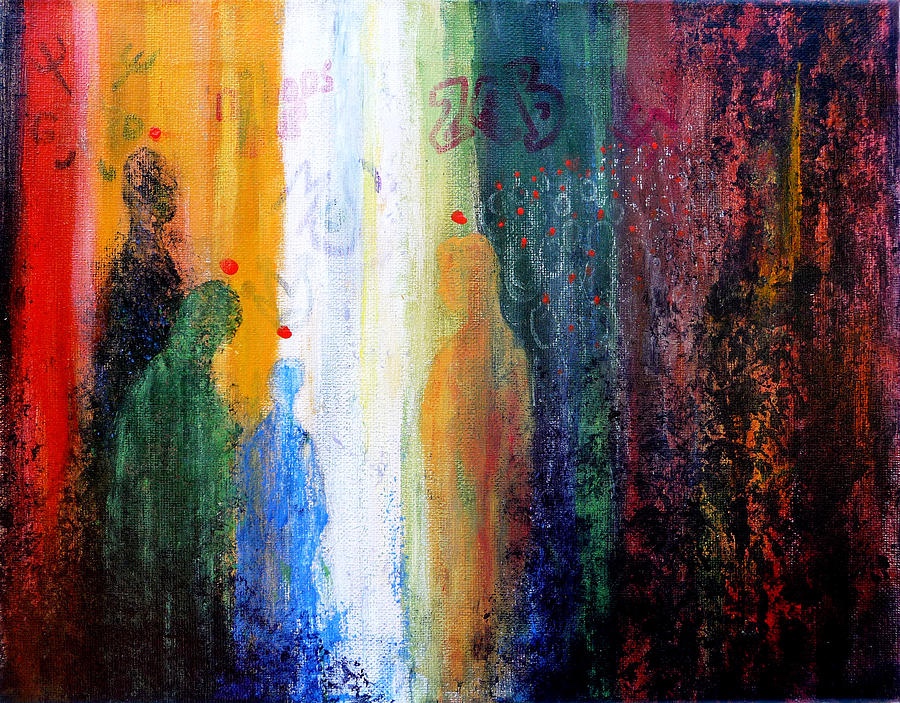
Today the church remembers with sadness and indignation a group of young saints martyred on the altar of racism and white supremacy: Saints Addie Mae Collins, Carole Robertson, Cynthia Wesley, and Denise McNair.

These young women, all under the age of fifteen, were killed when Robert Chambliss, Bobby Frank Cherry, Herman Cash, and Thomas Blanton stuck dynamite under the steps of Sixteenth Street Baptist Church in Birmingham, Alabama on this day in 1963. As Sunday School was beginning, the bomb went off and they were martyred while walking to learn about the Prince of Peace, himself a man of color.

In that blast, twenty others were injured.

The courts found Chambliss, Cherry, Cash, and Blanton not guilty of murder, but fined them $100 and gave them six months in jail because they illegally possessed dynamite, making a laughing stock of not only the legal system, but of every Alabama courthouse emblazoned with “In God We Trust.

“Ten years later, in 1973, the case was retried for this bombing, and they did eventually received a life sentence. Regardless, Saint Addie Mae, Saint Carole, Saint Cynthia, and Saint Denise would not get a second chance at life, no matter how many years pass.

The public funeral for these saints was attended by 8,000 mourners, but no public officials in Alabama thought fit to have their face seen there.

These young saints are a reminder for me, and should be for all humanity, that we are not so many years removed from this tragedy to take for granted that people are safe regardless of their race. Driving from Raleigh to Asheville this last weekend I had to pass by two Confederate battle flags the size of Buicks on route 40, lit up at night as a reminder for every driver on that stretch of land that bombs are liable to be found under every staircase when in the hands of racist, hateful people.

Indeed, sometimes it still feels like 1963.

-historical bits gleaned from Clairborne and Wilson-Hartgrove’s _Common Prayer: A Liturgy for Ordinary Radicals_

Holy Cross Day-September 14th

Today both the Eastern and Western Church gather together to honor one feast day known by many names but with one central focus: The Holy Cross of Christ, September 14th.

Sometimes called “The Exaltation of the Cross,” “The Triumph of the Cross,” or simply “Holy Cross Day,” this feast day honors a symbol not a saint…though, in fairness, all saints are symbols.

The particular perspective this feast day nods to is the one found most forcefully in the Gospel of John where the cross is seen both as human humiliation and the gate of Jesus’ glory. Early on the Church endeavored to reclaim the cross as a sign of God’s “alien work,” as our own Blessed Martin Luther called it, and today marks the reclamation on the calendar. Yet, as a symbol, the cross was rarely used in Christianity, as followers seemed to prefer the fish that you see on so many bumpers.

In the 4th Century, however, Constantine formalized the use of the cross as both a symbol of the faith and a symbol of victory…for better and for worse.

This feast day supposedly marks the day when emperor Constantine was building basilicas in Jerusalem, and upon excavating the site for one of them, “discovers” the cross of Christ. The cross was broken into pieces, and purported relics of it can be found from Iowa to Iona.

First celebrated in the 7th Century, this odd feast day continues to be popular, and even finds itself marking the names of several churches to this day. Just Google “Holy Cross” and you’ll find a slew of churches from across denominations, though Lutherans and Catholics seem particularly keen on the name, probably for very different reasons. Luther’s “theology of the cross” (which chaffs at much of what passes for Christian theology these days) remains central to the Lutheran lens on life, seeing the cross as both hinge and key to Divine work and salvation.

Many in the Protestant tradition prefer empty crosses as a sign of God’s victory over death. Many Orthodox and Roman adherents prefer a cross with a corpus, emphasizing the passion and sacrifice. Lutherans tend to split the difference, having images of either…we do love our “both/and,” don’t we?

Lore has it that Eve’s son Seth was barred entrance to the Garden of Eden, but that the angel guarding paradise gave Seth a seed from the tree of the Knowledge of Good and Evil. Seth goes and plants this seed where he buries his father, Adam, and it just so happens to be at Golgotha. The tree that grows from this seed is then used to hew out the cross on which Jesus died.

Yes…it’s a fanciful story, known as the Legend of the Rood. But even in this story we see the earnest hope for the cross embedded in the Christian narrative: that all things can be redeemed in time and used for good, by God.

A symbol of both suffering and self-giving love, of victory and violence, of heartbreak and hope, the cross continues to be at the center of the faith for many. Yet, there’s no need to seek out a relic to find a piece of it.

Dig around your past. Dig inside your heart. Excavate your inner temple and find those broken things in you which, somehow, continue to have and give you life, by God.

Find those times where you were shown grace upon grace and an undeserved second (and third and fourth) chance. Find those pieces of your soul that leap and resonate with the idea that everything, every thing, is in the redemption process somehow.

Do that searching, and I bet you’ll find a piece of that cross buried in there…

-historical parts from Pfatteicher’s _New Book of Festivals & Commemorations_

-icon written by the good folx at Monastery Icons

Father Mychal Judge, Saint of 9-11

Icon written by Brother Robert Lentz

This past year I’ve been in the habit, on social media, of honoring the saints that the church remembers on particular days. Now, when I say “saint,” I’m using the Lutheran understanding of the word: one who deserves emulation and remembrance for their deeds and example for humanity. In other words, not all of these people I remember are canonized by Rome or the Orthodox community.

That all being said, it’s been suggested that I post these saintly salutations here as well, so I’m beginning that practice this Fall.

Because I was on vacation this last weekend, I’m posting a retroactive saint remembrance, a saint deserving to be held: Saint Mychal Judge, Saint of 9/11 and Chaplain of Engine Co/1 and Ladder Co/24.

Saint Mychal was not the first victim of the terrorist attacks on 9/11, but he was the first identified victim: “Victim 0001.” He served as New York City Fire Department’s chaplain. A Franciscan friar and priest, Saint Mychal was known for going above and beyond for the women and men he cared for. He often made hospital visits. He was at most every funeral.

And he went to fires, keeping his radio nearby, which is how he heard about the World Trade Center attacks.

While others fled the scene, Saint Mychal rushed toward it in his priestly garb, following the steps of his fellow fire fighters. He immediately started administering last rites to those who were critically wounded, and when he saw his company rush into the North Tower he ran toward it, too, despite the evacuation order.

Outside that North Tower he helped people escape and, while standing there praying, was killed by flying debris as the South Tower fell.

Saint Mychal was more than just NYFD’s chaplain, though, he was also a gay priest (out to his friends) who openly counseled those suffering from AIDs in the 1980’s, performed funerals for AIDs victims when other shunned them, who admitted quite honestly his struggles with alcohol, and who showed up to New York City’s first gay-inclusive Saint Patrick’s Day Parade in his friar’s garb, taking interviews for the media despite the Archbishop’s warning against it.

Saint Mychal is a reminder for me, and should be for the whole church, that the true work is to walk with the people, especially when their lives are on the line, even as the world falls down around them.

-historical bits taken from Illes’ _Daily Magic_

-icon written by Br. Robert Lentz and can be purchased at Trinityicons.com See lessEdit