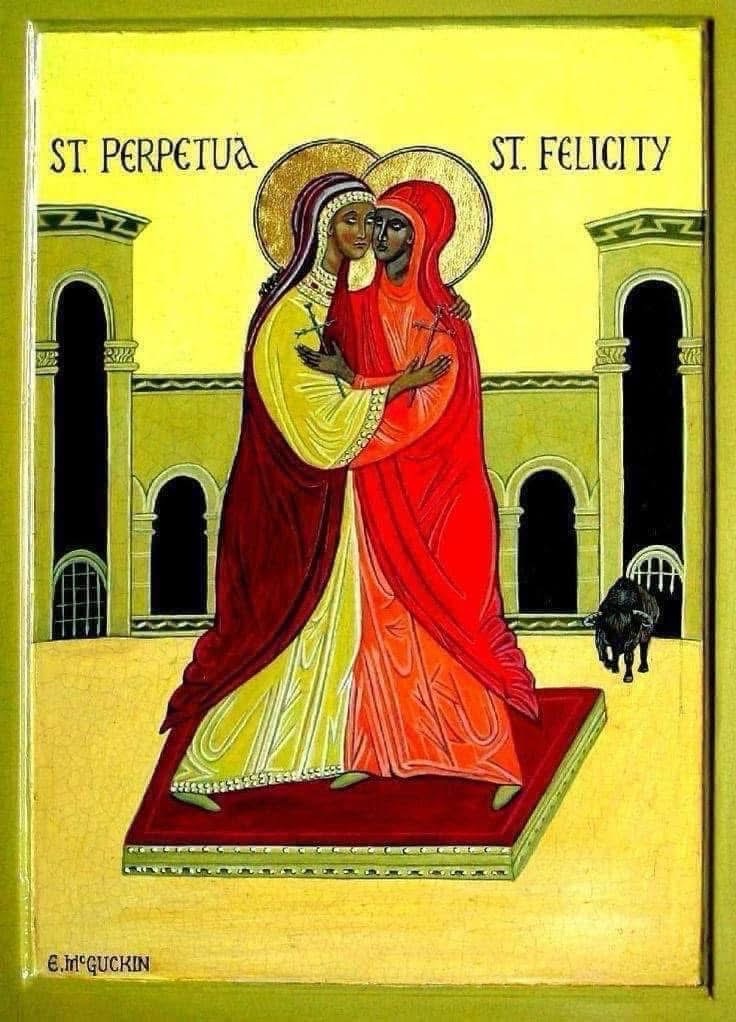
Today is one of my favorite Feast Days for one of my favorite saints: Saint Nicholas, Bishop, Patron Saint of Sailors, and Gift-giver.
It is ironic that little is known about the life of Saint Nicholas, this Bishop of a seaport town in what is now Turkey, because he’s one of the most beloved and recognizable saints in popular culture. We know that he was born in the 4th Century, and that he attended the Council of Nicaea where he is purported to have socked Arius (considered a heretic at the time) right in the face. Anyone who has served on a church council understands that it can get a bit testy sometimes…
But other than the above (and the whole “punched Arius” thing may not even be accurate), all else that is said about St. Nicholas is lore and legend.
It is said of him that, as an infant, he refused to nurse on Wednesdays and Fridays, typically fasting days for the pious.
It is said that he aided a poor family once by paying the dowry of three daughters, saving them from a life of prostitution. On three successive nights he threw bags of coins through an open window. This act is how he became known as the patron saint of gift-giving.
It is said that he saved three boys who had been kidnapped by a butcher and returned them to their parents.
It is said that he aided sailors in trouble off the coast of Myra by calming a storm, and showed great courage himself while out on the sea. This is why he is the patron saint of seafarers.
Today around the world Saint Nicholas will be impersonated by many utilizing a long, white beard, parading around in Bishop vestments. In some places small children dress up like the saint to beg for alms for the poor.
In America the rituals of St. Nicholas Day have almost all been moved to December 25th and melded with other Christian-Solstice practices. Still, in some homes (like mine), children leave their shoes out by the fireplace or in the foyer of the home, hoping that St. Nicholas will come by on his horse and leave chocolate coins, oranges, and small trinkets as gifts. The coins are an homage to the legend of the dowries.
The festivities and legends surrounding Saint Nicholas have melded with Norse and Celtic winter legends and lore in these days. Looking more like Odin now than a short, brown-skinned Bishop (which he most certainly was), common depictions of Santa Claus bear little resemblance to this ancient priest from Asia Minor. Still, the practice of gift-giving and charity is certainly worth continuing in whatever form it takes, and in that way St. Nicholas is kept alive age after age in one form or another.
Saint Nicholas is a reminder for me, and should be for the whole church, that charity and love are languages that are universal and, in the form of Saint Nick, take on hands, feet, and a face every year. There is much to be learned about human nature and human connection from the fact that his appeal is so wide and varied!
It almost makes one hopeful, yes?
-historical notes gleaned from Pfatteicher’s New Book of Festivals & Commemorations and too many Rick Steves documentaries on Christmas
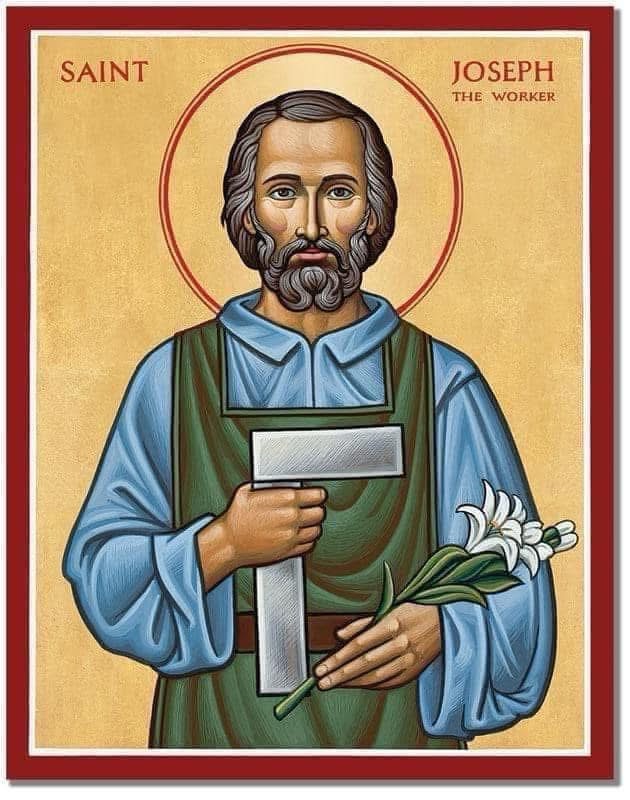
On December 5th the church honors an interesting Saint who sought to incorporate some pagan practices into the Christian faith and life (and, for that alone, he has my admiration): St. Clement of Alexandria, Priest and Scholar.
St. Clement of Alexandria (not to be confused with the Clement of Rome or any of the other many Clements of the ancient world) was a Greek philosopher born in the middle of the Second Century. He found himself making a home in Alexandria, the center of scholarship in the ancient world, and he headed up a school there that would eventually teach catechumenates about the faith.
St. Clement is noteworthy because he was a seeker of truth, and though a professed Christian he honored the truths and practices that other religious paths offered. He defended the faith in the midst of both his pagan friends and his Christian friends, trusting that melding certain practices was not only necessary, but good and human.
He believed that many of the ancient texts the church was using were wonderfully allegorical and applicable to life, and in this way he expanded the reach of the church in philosophical circles. Origen, the greatest biblical scholar of the early church, was his pupil.
His writings are some of the first systematics documents for the church.
St. Clement is a reminder for me, and should be for the church, that “purity” is a fiction we cannot afford in the world when it comes to practices, dogmas, and doctrines. It is appropriate that we honor St. Clement of Alexandria in the Advent-Christmas season because this time of year, in particular, is a beautiful bouquet of melded practices for humanity.
We need not run from this truth or try in vain to defend that it is not so. We must embrace it, revel in its particular beauties, and be at peace.
Today the church remembers the Martyrs of El Salvador.
Ita Ford, Maura Clarke, Jean Donovan, and Dorothy Kazel were Catholic Missionaries, Ursuline, and Maryknoll Sisters murdered in 1980 for their outspoken defense of the plight of the powerless and poor. Accompanying the people there, they were irritating the powers of the day with their theology of liberation and hope.
These four sisters were murdered on this day in the same year that Archbishop Romero was murdered, though he was killed in March.
Instead of recounting the details of their lives, I’ll just share a bit from a letter Sister Clarke wrote to her companion, Katie, just before she was murdered:
“There are so many deaths everywhere that it is incredible.
The ‘death squadron’ strikes in so many poor homes. A family of seven, including three small children, was machine-gunned to death in a nearby town just last week. It is a daily thing–bodies everywhere, many decomposing or attacked by animals because no one can touch them until they are seen by a coroner. It is an atmosphere of death.
I don’t know what tomorrow will bring…Write to me soon. Know that I love you and pray for you daily. Keep us in your heart and prayers, especially the poor forsaken people.”
The days surrounding Christmas are filled with Feast Days, some beautiful (like St. Nicholas), and some tragic like today. This is because the Divine entered into the world not as we would like it to be, but as it is: beautiful and tragic.
These martyrs today are a reminder to me, and should be for the church, that the first victims of any sort of violence are the poor and vulnerable.
If you need confirmation of that, just ask any medical professional who they treated most for COVID-19.
Those with means, good insurance, fewer health conditions (that are easily and often exacerbated by poverty!), and who can take off work to get treatment without fear of losing their job largely recovered.
Those without, did not.
It is a different kind of violence, a more negligent kind on the part of the powers of the world, but it is violence none-the-less.
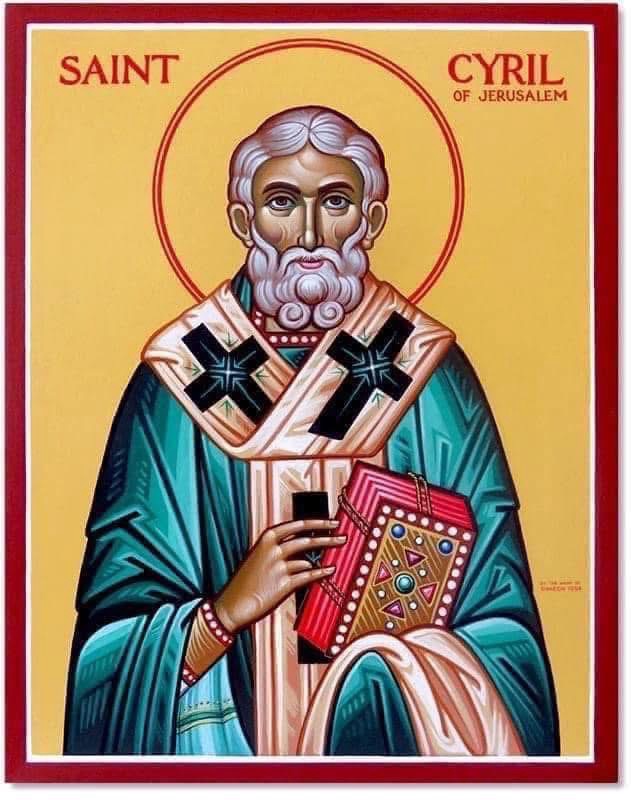
As we enter into December, the church remembers one I call the “Patron Saint of Mid-Life Crisis,” St. Nicholas Ferrar, 17th Century Deacon and Community Builder.
Nicholas was born in London in 1593 and educated at the prestigious Clare Hall in Cambridge. He would eventually become a Cambridge Fellow and, after traveling the European continent for a while, became a member of Parliament and a trustee in the Virginia Company. His political and financial stars shown brightly!
And then he decided it wasn’t the life he wanted to lead.
In 1625 he gave it all up and settled at a small house at Little Gidding in Huntingdonshire. He was soon ordained a Deacon and founded an Anglican community which was basically comprised of his immediate family and the families of his in-laws.
From 1626 to 1646 they restored a dilapidated church, held Masses for the community, established a school to teach the local children, and took on the task of caring for the health-care needs of the neighborhood.
They held weekly vespers and daily prayer, and he invited his community to practice intentional fasting, meditation, and spiritual story-telling and writing, composing a number of books illustrating the Christian life.
This little community was visited by English authorities and nobility and used as a place of prayer, blessing, and restoration.
St. Ferrar died in 1637 and the community was eventually destroyed by the Puritans who called it a “Protestant nunnery.” Most of the stories and books composed there were burned, and the chapel was once again put to ruin (though it was rebuilt in the 1800’s).
You might recognize “Little Gidding” as the title of the last of Eliot’s “Four Quartets,” one of the great religious poems of the Twentieth Century.
St. Ferrar is a reminder to me, and should be to everyone inside and outside the church, that it is absolutely Ok to stop doing things you are good at and seek a new path, no matter your stage in life.
The idea that everyone is called to do one thing, and one thing only, is a romantic fallacy. You can switch gears, by God.
-historical pieces from Pfatteicher’s New Book of Festivals & Commemorations
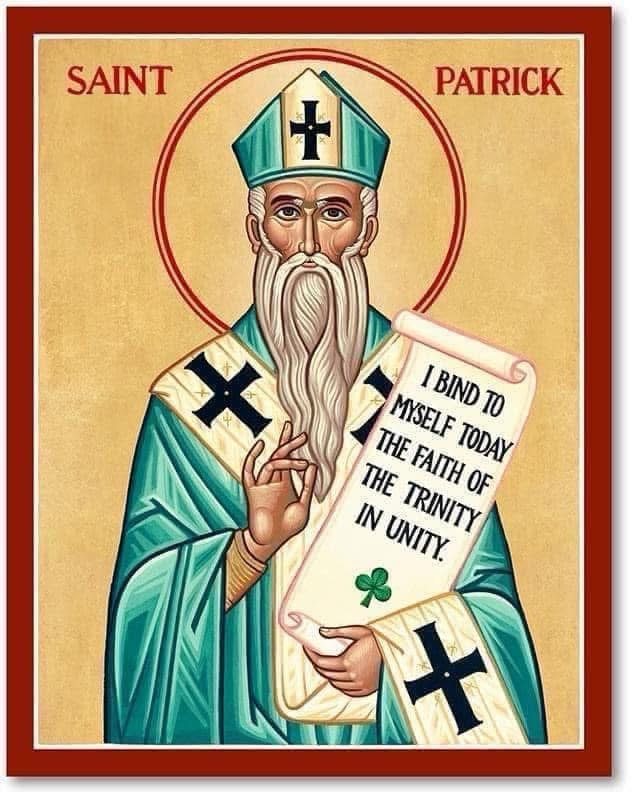
Today, November 30th, the church honors an often overshadowed apostle, Saint Andrew. He’s usually called “brother of Peter,” and rarely seen without that qualifier, making him, in essence, known to the world only in relation to his brother…which many people can probably identify with.
St. Andrew is the patron saint of sea-people, but also the informal saint of all who stand in the shadow of someone else.
He is the saint for the B-side of the record, the underdog sibling, the cobbler and the cooper who are no longer appreciated in their crafts.
Lore notes him dying in Greece, crucified because he refused to make sacrifice to the local gods and kept talking about Jesus.
And though he stood in the shadow of his brother his whole life, Andrew gets a place of prominence in the end: his feast day is the official marker for the start of Advent because the First Sunday of Advent every year is the Sunday that falls closest to St. Andrew’s day.
-icon written by Sister Nadine of the Sisters of St. Andrew in London, GB
Today I would encourage the church to formally remember one who moved the needle on equal rights in America: Saint Harvey Milk of San Francisco, Politician, Activist, and Martyr.
Saint Harvey was born in 1930 in the outer-ring suburbs of New York City into a Lithuanian Jewish home. A bit awkward and goofy as a child, he loved being the class clown, played football in high school, and fell in love with the opera. He went on to major in mathematics as an undergrad, and eventually served in the Navy in the Korean War. His departure from the military would not be a kind one, though, as he was forced to accept an “other than honoerable discharge” due to the fact that his superiors found out that he was a gay man.
Saint Harvey drifted a bit after returning to New York from the war. He took positions where his mathematical acumen was helpful (a teacher, an actuarial analyst, a researcher), and through the help of the 60’s counterculture found his way to the Castro district of San Francisco where he opened up a camera shop on Castro Street. In this evolutionary period Saint Harvey’s very conservative political and social views also started to shift, which would spur on his activism in future years.
What might be largely forgotten to many is that in the 60’s and 70’s homosexual acts were often-times a felony, and anyone charged with these acts would have to register as a sex offender. In San Francisco the political elites were trying their level best to pander to a conservative voter base, and encouraged law enforcement to target these offenses above all else. These targeted hate tactics, along with skyrocketing taxes and an inefficient political environment, encouraged Saint Harvey to enter into the political arena with showmanship and blunt talk.
The gay political machine in San Francisco wasn’t particularly fond of Harvey Milk. They thought that he didn’t play well with them and wanted to blaze his own trail…which, honestly, was a fair assessment.
Having found his true calling in life, Saint Harvey would go on to run for different positions in San Francisco politics, starting with city supervisor. Though he gained many allies, especially from organized labor and business owners in the Castro, his showmanship was not enough to get him elected at his first go-round. In 1975 he decided to run again, and in a sea-change election the mayor, sherriff, and district attorney all shifted to the left, and Milk was offered a seat on the Board of Appeals for his role in changing the dynamics in San Francisco politics.
In 1976 Saint Harvey decided to run for the California State Assembly. Often bombastic and occasionally manic, Saint Harvey positioned himself as the underdog in the race, and though he was close to getting elected he found out that mere outrage and rhetoric wasn’t enough to cross the finish-line a victor. Having gay candidates who were out and running as their true selves, though, was stirring not just San Fancisco, but also a nation who was watching. Candidates standing for gay rights started running in races across the states.
This movement of gay rights candidates no longer hiding in the shadows of the closet caused a backlash, though. Christian conservatives started a counter-movement led by popular singer Anita Bryant with the horrible and unmistakably prejudice title “Save Our Children,” insinuating that somehow children are harmed by the mere presence of openly gay persons in their midsts.
These sentiments, unfortunately, persist today.
This Christian conservative movement led the repeal of many newly passed equal rights amendments. Gay rights protests popped up around the country in response, but the laws continued to be overturned and violence against the gay community skyrocketed, especially in San Francisco. Trying to capitalize on the anti-gay movement, California State Senator John Briggs introduced a bill that would ban out gay and lesbian teachers from teaching in California public schools. He hoped he’d be able to run for governor on his anti-gay ideas, and even called San Francisco a “sexual garbage heap” because of homosexuality.
At this time San Francisco reorganized how it elected its supervisor elections, allowing neighborhoods to directly elect their supervising representatives. Harvey Milk, already well-known and having learned from his political mistakes of the past, was a leading candidate to represent the Castro. He wasn’t only interested in gay rights, though. Milk saw the need for less expensive childcare, promoted free transportation in the city, and wanted the police to have an oversight board.
Saint Harvey became the first openly gay non-incumbant to win an election for public office in the United States.
Still kind of a thorn in the side of the political establishment, and not one for being a wallflower, Milk took on big business and the political elites, irritating most everyone. Despite his election, though, anti-gay sentiment continued to fester in the halls of power, and Proposition 6, a proposed law that would make firing gay and lesbian teachers (and any supporters of gay rights) mandatory was gaining steam. In response to Proposition 6, Harvey Milk went on a speaking tour, debating John Briggs at every turn. Briggs claimed that homosexual teachers were trying to “recruit” children, whereas Milk responded that if children were copying their teachers there’d be a hellava lot more nuns running around.
Ronald Reagan came out against Proposition 6. Jerry Brown came out against it. President Carter came out against it. It failed by more than a million votes.
On this day in 1978 a replacement for the newly resigned supervisor, Dan White, was to be announced. White had been at odds with Milk on a number of issues, and made the point of voting against any of Harvey’s initiatives on the Board of Supervisors. White had resigned claiming the salary was inadequate, but then sought to be reinstated. Mayor Moscone eventually refused to reinstate Dan White, seeking more ethnic diversity on the Board of Supervisors, better reflecting White’s district.
White snuck in City Hall with a police-issued relvolver, shot the mayor multiple times, reloaded, found Supervisor Milk, and shot him over five times.
He was 48.
Dan White’s trial gained national attention. The jury who would serve was not representative of the city population, and anti-gay sentiment continued to fester as many decided that White had done a good political deed in this double murder.
White was acquitted (!) of first degree murder, convicted of voluntary manslaughter, and with good behavior would be released within five years despite confessing to the shootings. His defense? He was confused by the machinations of the political elites of the day and had gone on a junk food binge the night before, causing a lack of mental clarity.
Riots and marches ensued, and the political landscape remained fraught for some time.
One might balk at the idea of a gay Jewish man being remembered as a saint of the church, and I understand that sentiment. However there are times when leaders have emerged who, like the Christ, have shown themselves to be on the right side of human dignity in the face of so-called Christian opposition, and Harvey Milk is one such example.
Harvey Milk was more Christ-like than the Christians when it came to human dignity, and his legacy should cause all of us to think honestly about where we are today when it comes to the growing list of anti-gay legislation being proposed and passed across this country.
Saint Harvey Milk is a reminder for me, and should be for the whole church, that sometimes non-Christians are more Christian than the Christians…which should make us honestly think and reform, by God.
-historical bits from publicly accessed resources
-icon written by the saints at Joy of Missing Out (note that Trinity Strores Icons has a wonderful Milk icon, but it’s watermarked and out of respect for their work I didn’t use it. However, I would encourage you to purchase Br. Robert Lentz’s icon if you’re looking for a way to honor Saint Harvey of San Francisco)
Today the church honors the person who is largely considered the “creator of the English hymn”: St. Isaac Watts, Hymnwriter and Inspirer.
St. Isaac was the first-born of nine children whose father was a nonconformist minister who was twice jailed for “heretical ideas.” He was an excellent student, particularly astute at rhyming, and many pushed him toward the priesthood.
Isaac wasn’t interested in a clergy life, though, and after a few years in higher education, set his brain to writing. He was not happy with what he considered to be “poorly arranged psalms,” and attempted to do better for the church. It was during this time in his early twenties that the majority of what would be published in Hymns and Spiritual Songs was written.
At the age of twenty-four, Isaac began informally preaching and, though he had rejected the offer to enter the priesthood, found a home as an independent minister. He assumed the pulpit of an independent congregation in Mark Lane, Britain, and soon after he began to lead the congregation his health began to fail.
He was forced to live his last thirty-six years of life in the home of Sir Thomas Abney, preaching and teaching only occasionally.
Despite his illness, his fame, as well as theological, and philosophical writings flourished abroad. Having read parts of these books in my University years, I can attest to his brilliance. His work Logic and Speculations on the Human Nature of the Logos come to mind.
He fundamentally changed the course of hymnody as well. Horae Lyricae and Psalms of David, as well as the afore mentioned collection of hymns and songs, became (and continue to be!) staple pieces in the liturgy of the church.
He even made an appearance in Carroll’s Alice in Wonderland as his book of children’s songs was parodied in those pages.
But the reason you know St. Isaac the best is because you sing him every year when you shout loudly, “Joy to the world, the Lord is come!” He penned that now famous Advent/Christmas hymn and our Decembers have never been the same.
St. Isaac finally succumbed to his illness and suffering, and was buried on this date in 1748. He never married, and is still called the Melanchthon of his day (a high honor in Lutheran circles!) for his learning, gentleness, and devotion.
St. Isaac Watts is a reminder for me, and for the whole church, sometimes the most brilliant minds are found in what many would consider challenging bodies. Watts spent much of his life ill, but the fruits of his relentlessly engaged intellect remain quite healthy.
Today the church remembers a 20th Century Mexican priest, St. Miguel Agustin Pro, Martyr of the Faith.
St. Miguel was born in 1891 in Zacatecas, Mexico, and was known as a happy, cheerful, and privileged child. Despite his relatively high-born status, he developed a deep love and kinship for the working class families around him, and began to spend all of his time and energy working alongside the poor.
He eventually became a Jesuit novice at the age of twenty, and was exiled during the Mexican Revolution. He went to Belgium, where he was ordained, and eventually returned to Mexico in the wake of the war. He found churches closed, priests hiding, and being a Catholic now illegal. Fr. Miguel would regularly dress up in disguises to conduct secret and underground ministry, especially offering pastoral care, comfort, and the sacraments to the afflicted.
In 1927 St. Miguel was accused of being a part of a failed bombing attempt, though it is widely believed that the charges were false. He was handed over to the police and sentenced to death without so much as a trial.
As he was put in front of the firing squad he cried out, “Long live Christ the King!”
Though the government forbade a public funeral, people poured out of their homes to line the streets as his body passed by.
St. Miguel is a reminder to me, and should be for the whole church in the United States, that it was not so long ago that real religious persecution so close to home was a thing, so we should be very hesitant to claim it over baking cakes, serving pizza, and performing weddings and whatnot today.
-historical pieces from Pfatteicher’s _New Book of Festivals & Commemorations
Today the church honors an apostolic pillar whose writings almost (and should have!) made it into the Biblical canon: St. Clement, Theologian and Bishop of Rome.
Little is known about the life of St. Clement, who was probably the fourth Bishop of Rome. He lived and died right around the year 100, and may be the same Clement written about in the book of Philippians (4:3). He was certainly the writer, though, of the Epistle of Clement I (though probably not the Epistle of Clement II).
Ordained by St. Peter, Clement was said to be banished to Crimea during the reign of Trajan, forced to work in the mines. It was there, it is said, that he was tied to an anchor and thrown into the Black Sea (the anchor is his saintly symbol).
But though so little is known about Clement, we certainly know much about his thoughts and his voice. In the year 96 Clement authored a letter from the Church at Rome to the Church at Corinth. This letter is the earliest Christian document we have in existence, with the exception of some New Testament writings, and was written to encourage the Church at Corinth to avoid a schism and remain steadfast to one another. It’s a letter of pastoral advice.
This letter was so widely known, and so widely revered, early manuscripts of the New Testament include it in the canon.
St. Clement is a reminder for you, and should be for the whole church, that not all that is holy is contained in the canon, Beloved.
-historical bits from Pfatteicher’s New Book of Festivals & Commemorations

Today the church remembers a masterful storyteller who wove a tapestry of tales that continue to teach: Clive Staples Lewis, Writer and Dream Maker.
St. Lewis (you know him better as C.S. Lewis, no doubt) was born in Northern Ireland to a barrister father and mathematician mother. After years of boarding schools, he attended University College, Oxford and, after graduation, was appointed as a Tutor and Fellow there, and eventually as Professor of Medieval and Renaissance Literature a Cambridge.
At his heart, he was a writer. Scholarly works, fictional works, essays regarding the state of humanity, C.S. Lewis was born with one pen in his hand and another in his mouth.
As a youth he had rejected Christianity, probably as a rebellion around the death of his mother when he was ten years old. In 1929 he had a conversion experience that eventually led him back to the church in 1931. This journey from atheism to theism to the church was recounted in Surprised by Joy, published in 1955.
As it is with many converts, C.S. Lewis spilled a lot of ink defending the faith. The Problem of Pain, Mere Christianity, and The Screwtape Letters. In these works for art…which they are…he eloquently and imaginatively honors various human realities through the lens of faith.
Most of the world, though, knows him not for his essays, but for his works of fiction and science-fiction. The seven book Chronicles of Narnia and his lesser known Space Trilogy present for humanity a fanciful retelling of Christian faith and morals through a lion who dies yet lives, children who are awake and yet dreaming, honorable mice pirates, witches, and distant planet explorations that are right in your backyard.
It’s widely known that he and his fellow writer, JRR Tolkien, often met to discuss their works over a pint or three. He thought Tolkien was too verbose (he was), and Tolkien thought Lewis was too “on the nose” with his allegories (he was). And yet we’re all better for it all, right?
The works of Lewis that most affected me, though, weren’t any of the above, but two works separated by time yet linked in theme: The Four Loves and A Grief Observed.
In The Four Loves Lewis mines the realities of human love, seeking to make a connection between these loves and the deep feelings of the heart. English is such a limiting language. We only have one word for “love,” and yet many ways of feeling it. Lewis goes deep into analysis around this, offering some clarity to what we feel when we say “I love you.”
In A Grief Observed, though, Lewis is at his most vulnerable, most bare, most thoughtful (at least in my opinion). He wrote this reflection on grief after the death of his wife, Joy Davidman Gresham, after they had only been married four years. Here St. Lewis is less apologist for the faith and more barrister with faith and fairness of life put on slow, subtle trial. Gone is the idealism of the new convert, and in its place we find an honest conversation between C.S. Lewis and a faith that he considered an old friend that kind of let him down (though the work does end on a hopeful note).
It is real. It is honest. And, in my opinion, is required reading.
St. Lewis died on this day in 1963 at his home in Oxford.
One of my favorite notions of his, which I believe to be totally true, is found in The Screwtape Letters where the young demon being tutored by penpal is told that “God only coaxes, and cannot coerce.”
God only coaxes, and cannot coerce.
St. C.S. Lewis is a reminder for me, and should be for the whole church, that story has always been a way that we learn about the Divine.
And always will be.
-historical bits from Pfatteicher’s New Book of Festivals & Commemorations