Today the church holds a somber fast traditionally known as Ash Wednesday which dates back to the 11th Century.
In a number of places in the Hebrew scriptures ashes were associated with penance and remorse. The books of Jonah, Amos, and Daniel all note the practice of heaping ashes upon your head as a outward display of how guilt and penitence feel inside.
As the church year begins to ponder the death of the Christ in anticipation for resurrection, a more introspective, prayerful, and yes, honest tone is kept. Ash Wednesday is the start of that long road to Calvary.
While some might consider the practice to be sad or even scary (after all, who likes considering their mortality?!), the wise mystics of all faiths remind us that we must ever keep death before our eyes if we are to truly live.
You cannot outrun mortality, Beloved.
You cannot out-diet, out-exercise, out-supplement, out-buy, or out-smart the quiet, pervasive truth that all creation is indeed, dust at our core (beautiful stardust, to be exact), and we will all one day return to that dust.
There is no out.
And yet, as is true with all paradox, there is a certain amount of freedom that comes with embracing this hard truth. Being Wonder Woman and Superman for too long weighs on us all, and we’re really not meant to fly anyway.
We’re meant to walk, which means we stumble like all walking beings do from time to time. The reality of our imperfection is, too, a gift of grace.
After the church and the empire had joined hands, the rhythm of the church year was overlaid on the rhythm of the ancient celebrations of humans.
Ash Wednesday, the day of penitence, became a massive event; a “full Nineveh moment” in the face of the “holy” church’s Jonah proclamation: “Repent, lest ye be damned!”
Sackcloth. Ashes. Solemnity. That was the prescription. Interestingly enough, the diagnosis was proclaimed by the entity who also claimed to have the cure. Religion tends to do that…
But the people, used to more festive holidays, demanded some revelry before the fast. Intrinsic in our human bones, divorced of any religious pietistic profundity, we all know that a fast is seen best through the lens of a feast, and vice versa. A little bit of denial needs a little bit of indulgence to truly know what you’re missing, right?
And so Carnival was declared, a time to fatten our stomachs, our spirits, and our souls before the sobriety of Lent.
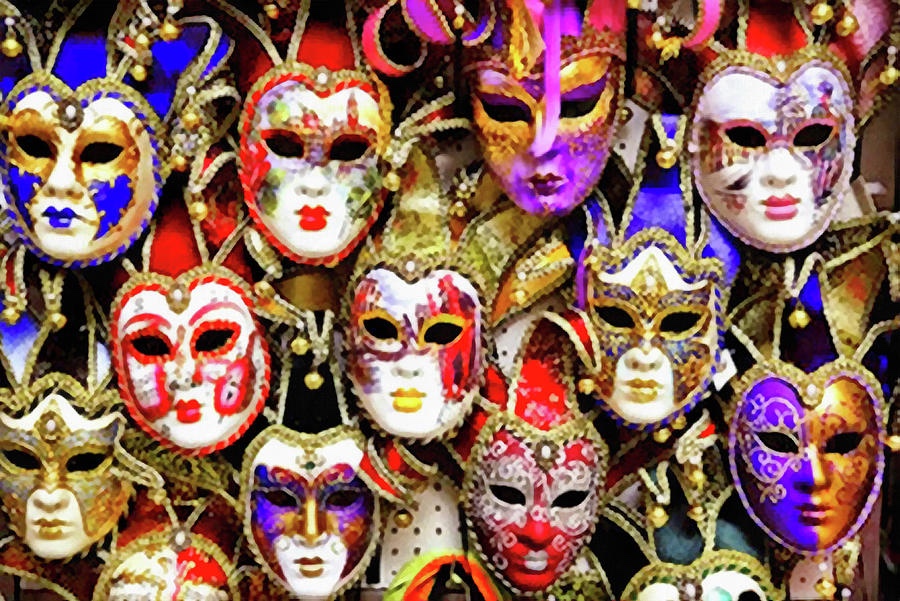
Masks were handed out so that, if you were in hiding for a crime, you could come out of your shelter and join in the fun. A hall pass of sorts. Acts of extreme gluttony are best done anonymously, right? On Carnival, everyone is criminal in some way, everyone is queen and king of their universe for just a bit.
The time for bending a knee will come; for sure. One day all masks fall.
But today is a day for reclining, gesticulation, and for pretending we don’t fear fat and sumptuousness, if only for a bit!
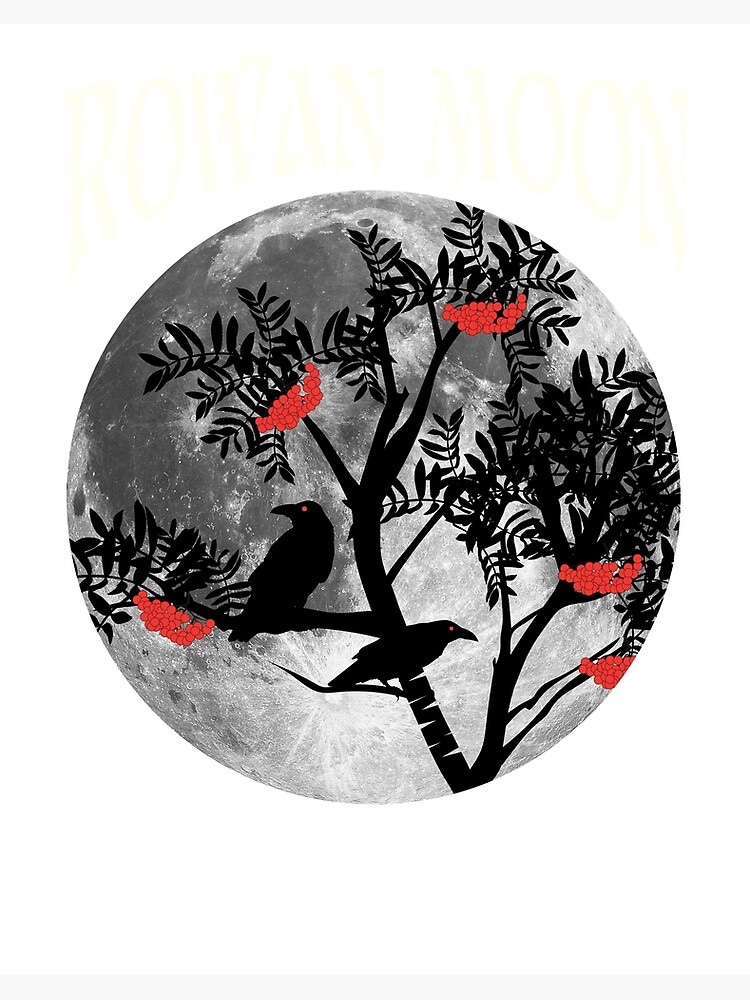
In Celtic spirituality, February is associated with the rowan tree. Its red berries were thought to guard against all sorts of bad things.
They’d put rowan branches on their cattle sheds and dairy barns to keep the meat and milk fresh and free of disease, and across Celtic lands crosses of rowan twigs were tied with red thread and carried in pockets or sewn into the linings of coats for traveling mercies.
Since the saint of the month, Saint Brigid, was associated with flame and fire, the blazing red berries were thought to be little glimpses of her favor.
I found a modern Celtic prayer to say under the Rowan Moon (February’s moon). And since it’s the last day one can say it, I thought I’d throw it out there.
What I love about this prayer is that, while images of Christ/love and the sun are really common, we don’t get many images of Christ/love being seen in the moon. But in the month where the moon still outshines the sun, it makes sense to have a prayer that highlights this truth, right?
Bright glory, bright moon, the moon that shines on Brigid, lamp of the poor, love, light, illumined by God. Bright moon of glory, teach me good purpose toward all creation. Bright moon of grace, teach me good prayer in accord with Christ’s heart.
Fiery moon of great light, be in my heart be in my deeds be in my wishes. Teach me your grace. Bright moon over Brigid, your light my hope, your light on my purpose here, in accord with God’s satisfaction.
Bright fire, bright moon, point my heart to God’s repose. Point me to my rest, with the Son of Tranquility.
When it comes to the Transfiguration, Beloved, don’t be distracted by the dazzling clothes.
God who holds the law (Moses) in a hand that will be scarred will rule with justice tempered by mercy, not the other way around.
God who holds prophecy (Elijah) in a hand to be scarred will proclaim truth from behind the picket line, within the ranks of the needy and poor, from the place of poverty, not power.
Don’t be distracted by the dazzling clothes…that’s not where the miracle is.
The miracle is in the fact that God holds mercy over retribution and stands with the poor, not the powerful.
In America this may be Groundhog’s Day, but in Celtic spirituality these days are known as Imbolc, or “in the belly,” because you’re at the halfway point between the equinox and the solstice, and you’re emerging into spring.
Christians celebrate Candlemas today, where new candles are blessed, as the ones lit at the Solstice are now spent. And in services many will hear about the Presentation of Christ, where the ancient prophets Simeon and Anna lift him up and bless him as the light of the world.
The symmetry is stunning and intentional.
These hinge days between seasons are worth paying attention to, as our mothers and fathers did.
So bless your new candles, because you’ve spent the old ones in these winter days, and start opening the shades.
It’s time to wake from our hibernation, blink, and live again.
Yesterday the church celebrated one of our moveable feast days: The Baptism of Our Lord.
This is one of the few events in the life of Jesus that every Gospel mentions, and in each of the Gospels it is noted as kind of the beginning of his dedicated work in the world.
Most every major religion has some sort of bathing/purity rite, and for Christians baptism is meant to mark a rebirth of sorts. In your first birth you came into a world that wants you to seek out fame and fortune. The birth from the font, however, dedicates you to a different life of justice, love, and service.
Surely, it doesn’t always take for all people, but the amniotic fluid of the baptismal font, the water, is intended to renew the life of the person and give them a new lens through which to see their work in the world.
In addition to all of the above, baptism is meant to mark the Divine’s deep love for the individual…and that “takes” for everyone, regardless of how well they live into the vows.
Baptism is an interesting rite, too, because it is both a one-time event (for many Christians) and also a life-long process. Every bath is a renewal of life when seen in this way, a chance to be birthed differently and start fresh. There is a penitential element to it, of course, as every bath is intended to make someone clean. But there is also a primal element to it, one that connects all humanity, Christian or not. After all, we don’t baptize using Pepsi, gin, or coffee.
We use water, the stuff of life (though, coffee is also the “stuff of life” in my book, but I digress…).
Genesis, the first book of the scriptures begins with the Divine brooding over the swirling chaotic waters, and the Book of Revelation, the last book, ends at those same waters, but now they’re known as The River of Life. Scripture is bookended by water.
Similarly, in many traditions, a child is brought to the font for rebirth and, at every funeral I’ve ever done in a church, we start saying good bye to the deceased at the font, recalling where it all began. In this way life, too, is book ended by water.
The Baptism of Our Lord is a feast day that reminds me, and should remind the whole church, of a few things:
First: water is life. And because it is life, clean water should be a right for every human, from Flint, Michigan to Finland to far flung Namibia. We must work hard to make it so.
Secondly: rebirth is always possible in so many ways. Every drop of water should remind us that a new way of being is possible, by God.
Finally: that change in the church will require Christians to take a hard look at the baptismal vows and rethink how we apply and live into them. Baptism should never happen “to make grandma happy.” Baptism is a public statement about a person’s intent to live and be and move in the world differently than the world calls them to live, be, and move.
Let those with ears to hear, hear.
-icon written by Ivanka Demchuk (Ukrainian, 1990–)
On December 12th many Christians honor Our Lady Guadalupe.
I am not Roman Catholic, nor Latinx, but I do not and cannot underestimate the powerful connection to the Divine that Our Lady of Guadalupe provides for Christians who check both of those boxes. Arturo Perez says it best:
“Guadalupe’s significance is both word and symbol. She provides the answers to the prayers of the faithful people: ‘God is with you!’ Her very appearance, as one of the poor, aligns her with them. Guadalupe’s proclamation can be seen as God’s option for the poor.”
These two depictions, by artist Yolanda Lopez, flow not only from her heritage, but also from her work as a Mujerista Theologian. I find them both engaging and inspiring and, though they’re not traditional icons for this important Feast Day, they moved me.
Today the church commemorates All Soul’s Day, or “The Day of the Faithfully Departed.”
This festival day is a product of the evolution of the church and its understanding of the departed and how they play into the eschatological and cosmological understanding of all things.
If saints were those who led extraordinary lives, what about the rest of us?
All Souls Day is an answer to that question. Indeed, many people who aren’t technically “saints” in the narrow definition of the term have led wonderfully beautiful and impactful lives. All Souls attempts to honor that fact. It became common practice, for instance, to lift up particular benefactors of parishes on this day, giving a nod to those who made the physical (and spiritual) structures of the faith possible.
In a more pedestrian sense, All Souls Day is, at least for me, a day where we can all embrace the reality that, saint or not, people deserve to be remembered.
In my first parish we had these magnificent stained glass windows put in decades earlier. In them you could see glimpses of not only the artistry of the day, but you could also feel a sort of timelessness that was pervasive, connecting those who had first stared into and through those windows with me and my own children who looked at them now.
Good art does that: it creates connective tissue between the past and the ever-expanding future.
But All Souls Day is a reminder that good theology does that, too. We stand upon the beliefs of the past, hauling some of them with us, and leaving some on the path behind us as signs and markers of thoughts discarded and avenues that were dead-ends.
All Souls Day lifts up the very practical, very pious, and very pedestrian people on whose shoulders we stand. In this way it is even more meaningful than the pomp and circumstance of All Saints Day.
If All Saints Day is the fine-dining establishment in your city, All Souls Day is the little cafe you frequent where you know the owner, have a favorite booth, and don’t need to glance at the menu because you know it by heart.
In other words, All Souls Day is really where most of us will find ourselves: in the ordinary annals of a life that tried its best, did some great things, fell short quite a bit, but is remembered by a small, but faithful, group of loved ones who know our names.
Churches around the world are honoring Reformation Sunday this Sabbath, a rare treat in that the Sunday and the actual Festival Day align.
It’s important to note that each liturgical denomination has a day that honors a formative experience in the life of their particular vein of Christianity. The Eastern Orthodox church celebrates “The Triumph of Orthodoxy” to usher in Lent. The Roman Catholic Church has the Feast of the Chair of St. Peter (February 22nd), emphasizing the founding of the church on Peter’s shoulders. The Anglican Church honors the day the Book of Common Prayer was published, uniting the communion into one.
For Lutherans, it is Reformation Day, when we sing “A Mighty Fortress” and “Lord Keep Us Steadfast in Your Word” and dress in red, the color of both the martyrs and the fire of the Holy Spirit.
At its worst the Reformation is celebrated as a triumph. At its best it is a feast day that is simply a continuation of the perpetual change and shift that must happen in a church that is wedded to a God who is known and revealed inside of time.
Historically it does mark a time in history when a break, for better and for worse, happened in the church. This break deserves an autopsy every year in an effort to remember, reaffirm, and repair as much as a possible the schisms that arose from it.
The date of the Reformation, the 31st of October, comes from the lore that Luther nailed his 95 Theses on the Castle Church door in Wittenberg, intending for it to be widely read by everyone who attended the All Saints Sunday mass the following day. We’re not sure this is historically accurate, but because it is so much a part of the narrative around the events of autumn in 1517, we give a nod to its church-changing truth, if not its actual veracity.
A better date to honor the Reformation might actually be June 25th, the date that the Augsburg Confession was presented. Like the Anglican Church with the Book of Common Prayer, the Confession is the binding document of all the reformation churches.
Regardless, tradition compels us to keep the date, to wear red, to remember, and to continue to reform.
-historical bits from Pfatteicher’s New Book of Festivals & Commemorations
Blow the trumpet in the holy city bless a holy fast! Get everyone together bless them all the elderly the young children even babies who still breastfeed! In the middle of their weddings get brides and grooms to stop everything. -Joel 2:15-16-
This reading will be read at most every Ash Wednesday service today, virtual or in-person…however we’re getting our ashes in this pandemic (which feels like a heap of ashes already).
The prophet Joel intends to call people back into right relationship with God. In order to do that people would sometimes be invited to fast. Judaism, Christianity, Islam, Buddhism…fasting is pervasive in all the major religions. A bit of self-denial heightens our indulgences, right?
Sometimes people fast for poor reasons, though. I know of someone who does regular fasts because they are certain that they can “hear God more clearly” when they fast. I’m not sure that’s a good reason, honestly, because I’m not sure that’s how it all works. Certainly there is a need to get rid of distractions in order to discern the Divine in the world, but not eating that candy bar (or anything?!) for forty days seems like an ineffective way to do it.
God doesn’t need your sacrifice…at least, not that kind. If you eat too much candy, sure, fast from it. But if you think it’s getting you brownie points with the Holy Presence I think you’re kidding yourself.
Sometimes people take on fasts to just “do it,” like not eating meat on Friday or not eating meat at all for Lent. That’s fine, I think, if you consume too much meat (and most Americans do, honestly). But if you’re doing it just to see if you can…I’m not sure that’s a good fast, Beloved.
The prophet Joel blesses a fast in order to bring the people back into right relationship, otherwise known in the scriptures as “righteousness.” Fasts are not used to deny people good things as much as to help them see how their relationships with things (or people, or food, or, well, anything) is off kilter.
I’ll say that again for folks in the back.
Fasts are not about denial for denial’s sake. They are about taking a hard look at how your relationship with certain things is off kilter.
And, yes, in the process you’ll continually be invited to analyze how the relationship with the Divine is off kilter, too.
Now, if this hasn’t been your practice in recent years, no need to feel bad about it. There are all sorts of ways the messaging on Lent and fasts has gone awry…humans are wont to do that (hence why we have the season of Lent at all! We’re kinda messed up in all the right and wrong ways). And fasting is not the only thing to do in Lent. Many people choose to add a practice, work on habit change, or do some spring cleaning both physically and spiritually.
Those are all great.
But I’ve decided to fast. To look at some relationship stuff.
I’m going to embark on a Lenten journey of my own, with some updates/devotionals to add to the mix. Most fasts will begin on a Sunday and last the full week (there are 6 of them), and you’re welcome to join in. I’ll be writing and reflecting each week about the particular fast and what I’m learning, and I’ll be noting my thoughts, ponderings, and realizations.
All of these fasts are intended to help me better analyze my own relationship with each subject, and be honest about how they’re off kilter. I’m not righteous in these areas, Beloved. I know this. I want to dig deeply into that.
Week 1: Fast from delaying bedtime. This pandemic has been terrible on my sleep. Many of the folks I coach have noted that, too. I’m going to go to bed when I’m tired at night, or at least by 10pm.
Week 2: Fast from iPhone. I carry it around with me. I scan the apps. I respond to texts in two seconds. It’s out of control.
Week 3: Fast from Media. This will be a bit tricky, but I’m going to say media in general, not just “social media.” Too much binge TV at night. Too many apps open on my phone. Too much stopping in the middle of work or writing to scroll social sites. I’ll still post on a social site this week, mostly to keep the blog updated, but I’m going to “post and ghost.” No reading the comments…
Week 4: Fast from Buying. The pandemic has made Amazon a little too convenient. But not just Amazon, I’m constantly looking for excuses to go out and grab a coffee-to-go or skip making dinner and just ordering in. Not this week. That urge needs to me analyzed and, I hope, curbed a bit. I’ll allow for grocery buying (because I’m the cook, so I do that shopping), but other than that, no purchases (and no gift-cards, either! Loopholes are for suckers).
Week 5: Fast from Processed Foods It’s not that it’s just not good for me, it’s not good to me, either. I know it’s not. This week will be interesting because it means no processed anything, even that Friday beer, those corn chips I allow in a moment of salt-crave. Nope.
Week 6: Fast from Meat We don’t eat meat with every meal, but I think we eat it too much. On the far side of this fast I intend to make some rules around meat consumption. And, here’s the thing we forget: when you eat an animal, you also eat what they ate! It’s a double-whammy of mindless chomping there.
So, here are the fasts. And you’re welcome to join if you’d like. In fact, I would like that very much, especially if you take a bit of time to reflect on your off-kilter relationship with the topics and send them on to me, either as a comment on a post or in an email. I want to be in a more righteous relationship with these things.
But, maybe your relationship with these things isn’t off kilter at all. Maybe you’re working with other issues that need addressing. Alcohol? Snack foods? Lack of activity? Spiritual practices?
Whatever it is, take a fast. But don’t do it to solely to deny yourself that thing; absence does make the heart grow fonder and, do you really want to go back to the old you when this is all over? The you who had an off-kilter relationship with these things?
Do it to analyze your relationship with it all and, on the far side of the fast, sanctify some changes, Beloved.
After all, repentance, metanoia, means turning around. Changing.
If you think you need that, if something is off kilter, run (a) fast toward change. See if you don’t find a new you rising come April 3rd.








 Reluctant Xtian