O Root of Jesse

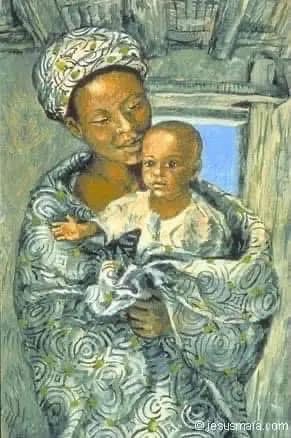
Today the church uses its parched tongue to cry out, “O Radix Jesse!” or “O Root of Jesse!”

The ask here is that the dead stump of a family line, scourged and ravaged by one conquering after another, eating away at the Family Tree, somehow live again.

This dead-end of a year may feel very stump-ish to you.

It’s also just true that while we may have eaten from the Tree of the Knowledge of Good and Evil, we have not learned its wisdom. That ancient tree is dead in our hands as we call what is evil, good, and what is good, evil.

Come quickly, Holy One.

O Lord

On December 18th in Advent the church raises its voice to cry out, “O Adonai!” or “O Lord!”

This is, perhaps, the most honest prayer there is, Beloved. In times of trial and joy, “Oh God” or “My Lord” slips from our lips.

In the ancient context of Advent, this cry is both an invocation and a statement of political priorities. The Empire of old (and now?) would have you believe that power is Lord, that grievance is Lord, that Caesar is Lord.

In fact, all the ancient steles and decrees said just that: Caesar is Lord.

But the church, at its best, says that the Divine is Lord.

It’s a political statement. We’ve forgotten that…but we can remember. There is time.

-art is by Michael Adonai, an Eritrean painter, entitled “Back to Homeland.” You can imagine crying out “O Lord” when longing to return to your mother…

O Wisdom!

Today Advent takes a more persistent, pleading posture as the church begins calling for salvation using the ancient names for the Holy One.

These names are known as the O Antiphons, and true to form they are sung by all creation in chorus.

We begin, crying, “O Sapientia!” or “O Wisdom!”

It’s worth noting that Wisdom, especially in the Hebrew scriptures, is personified as female, flowing out as a part of the Divine mind.

“O come, O Wisdom from on high,
and order all things far and nigh.
To us the path of knowledge show,
and teach us in her ways to go.

Rejoice, rejoice, Emmanuel,
Shall come to you, O Israel.”

Art: Divine Wisdom by Shiloe Sophia McCloud

These Waning Days

Tomorrow starts the “O Antiphons,” Beloved.

These are the days the ancients called the “ember days,” when hope and light were waning.

So, they started to cry out for something to save them.

And from that crying came different names for the Christ, the Messiah, the one to save in the times of waning hope.

It’s beautiful. It’s ever prescient.

It’s needed.

Blessed Advent in these waning days, Beloved.

Stay Soft

The poet Nayyirah Waheed has broken me many times. Her work has, over the course of a few years, served as a meditation many mornings.

Like, this one:

stay soft. it looks beautiful on you. (from her book, Salt.)

One of the things I love about the rhythm of the church year is that it keeps me soft. Nimble. Pliable.

When we get too stuck in our ways, too embedded in our walled-off routines, we become rigid. So much of religion has become rigid in the hands of hard people who have obeyed dogmas not like one takes opportunities, but like one might follow a written recipe that is so complex no chef has mastered it.

Rigidity is brittle. A rigid faith breaks in time.

Advent is, like I say above, an opportunity to practice plasticity in the faith. With so much mystery sewn into the fabric of these short-sunned days, we are encouraged to dream a bit, to wonder and let our hearts wander (perhaps that’s where the old carol got its title?) and become soft again.

To melt, if you will, like you do when you pick up a newborn.

I remember one time taking my newborn son to visit our oldest parishioner. My son, only a few months old, was strapped to my chest in our carrier. The old woman, in her 90’s, asked if she could touch him. I bent myself over as she reached out her hand, and I guided her fingers to his little head (as her eyesight was failing).

I marveled at how both the oldest person I knew, and the youngest, felt the same in my hands: tender skin, soft skin, pliable skin.

It was a moment; eternity reaching out to touch at both ends.

She died not long after that visit…

That encounter made my heart pliable. Soft. It was beautiful.

Like the aged Elizabeth holding her son, perhaps, a story told in these middle days.

What is keeping you soft in these middle days, Beloved?

Advent Starts in the Shadows

It’s an odd juxtaposition that happens when the secular and the sacred collide in these early Advent days. So many of us (at least, in America) are rushing to get that tree put up, the most ancient pre-Christian solstice symbol, and haul out the red and green decorations.

Meanwhile, the church is singing a bluer song and calling everything to hush for a bit, like you would when a baby is sleeping nearby.

Both responses to this time of year in this hemisphere are appropriate, of course. The ancient Celts would spend this time cozying up their indoor spaces, knowing they’ll be in the shadow of the fireplace for many hours in the coming months. They’d tie greenery to their door as an air freshener, and they’d make warm clothes, tell stories, and play indoor games. In this way, they’re not unlike all of us in our rush to decorate for the Christmas season.

But they’d do this other thing, too: they’d slow down. Their work would stop for a while, except for those necessary things needed to survive the winter. They’d rest longer, going to bed not long after night fell and waking late with the lazy solstice sun. They’d light candles in the morning and the evening, their new sun stolen from their fireplace outfitted with a huge log that, God willing, would last a good while.

They’d cozy and they’d slow.

The secular world is begging you to cozy at this moment. The sacred world is calling you to slow.

And, honestly, I’m not sure there’s such a thing as “secular” or “sacred.” Holiness pulsates through everything if our heartbeat is in rhythm with the Divine. So perhaps it shouldn’t be so much the “secular is calling you to cozy,” and the “sacred is calling you to slow,” but rather that the tensions pulling and pushing us in this world are felt forcefully in this moment, which is not a surprise.

We’re in a moment of change, evidenced by those last leaves falling to the ground.

Here’s a deep truth that all of these pushes and pulls point to: life begins in the shadows.

I don’t use “darkness” on purpose, by the way. As prophet and poet Nayyirah Waheed wrote in her collection Nejma,

“there is dark
and
there is anti light
these are not the same things”

Language has evolved to the point where we can be careful and choosy with our words (as imperfect as it might be).

Shadows, like that in the Valley of Death that the Psalmist sings of, is a more appropriate description, I think. We’re not talking about a color, we’re talking about an absence of illumination.

All life starts with an absence of illumination.

The Big Bang began with a deep vacuum bereft of light.

The womb which was our first home pulsated with life, but no light.

The seed trying to do what it is meant to do in this moment is buried under the weight of too much earth, and yet it lives.

Life begins in the shadows.

This is why the readings in the church here at the beginning of Advent aren’t of Mary or Joseph or a baby in a manger, but ones of foreboding and nighttime.

The church knows, as does the Earth, as has humanity from ancient days, that life begins in the shadows, so if we’re going to talk about redemption and salvation and resurrection and new life, we have to start here.

There is an 8th Century hymn that often kicks off Advent in many spaces, “Creator of the stars of night.” The Latin version of this text is most beautiful, “Conditor alme siderum…” the chorister sings in simple chant tone.

Sidus, where we get siderum can mean just “stars,” and certainly it does mean that. But in this usage it also means all the cosmic bodies: planets, meteors, stars, galaxies.

The church sings to the creator who filled up the vacuum of space and, like the Mark text, invites us to gaze up at the shadows of space in awe and wonder. In the night times of life we ponder such mysteries. Who hasn’t stayed awake in bed with their mind racing?

The shadows are meant for such pondering, for from such ponderings comes imagination and new life and all sorts of things never before seen, as frightening as those moments can be sometimes.

And, as it is, we’re again plunged into such a night time of life in this Advent season.

Change happens in the shadows. Newness starts in the shadows.

Life starts in the shadows.

So Advent must start in the shadows.

So, Beloved, cozy up and slow a bit. Ponder the mysteries with the ancients.

New life is starting.

On Palms

Today the church commemorates the Palm Sunday processional in many parishes across the globe. This moveable commemoration is the beginning of the end of the new beginning for Christians who observe the liturgical calendar.

Bishop Theodulph of Orleans penned the hymn my heart is singing on this Palm Sunday morning, “All Glory, Laud, and Honor.”

It truly is one of my favorites, made more sacred by the fact that we really only sing it once a year.

He is said to have written it from his prison tower, thrown there by King Louis the Debonair, son of Charlemagne.

The story goes that the Bishop wrote this hymn and, in the year 821 as the Emperor passed by on Palm Sunday heading to Mass at the cathedral, he sang it loudly over the passing procession from his stone entombment. The emperor, taken with the song, released the good Bishop.

Truly the rocks themselves will shout for justice.

-painting by Polly Castor

A Somber Fast

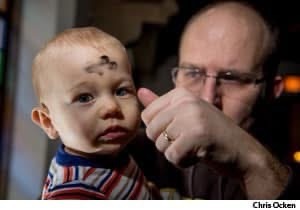
Today the church holds a somber fast traditionally known as Ash Wednesday which dates back to the 11th Century.

In a number of places in the Hebrew scriptures ashes were associated with penance and remorse. The books of Jonah, Amos, and Daniel all note the practice of heaping ashes upon your head as an outward display of how guilt and penitence feel inside.

As the church year begins to ponder the death of the Christ in anticipation for resurrection, a more introspective, prayerful, and yes, honest tone is kept. Ash Wednesday is the start of that long road to Calvary.

While some might consider the practice to be sad or even scary (after all, who likes considering their mortality?!), the wise mystics of all faiths remind us that we must ever keep death before our eyes if we are to truly live.

You cannot outrun mortality, Beloved.

You cannot out-diet, out-exercise, out-supplement, out-buy, or out-smart the quiet, pervasive truth that all creation is indeed, dust at our core (beautiful stardust, to be exact), and we will all one day return to that dust.

There is no out.

And yet, as is true with all paradox, there is a certain amount of freedom that comes with embracing this hard truth. Being Wonder Woman and Superman for too long weighs on us all, and we’re really not meant to fly anyway.

We’re meant to walk, which means we stumble like all walking beings do from time to time. The reality of our imperfection is, too, a gift of grace.

Plus, God loves things made out of dust.

Today we remember that.

A Prayer for Mardi Gras

A prayer for Mardi Gras:

“O Lord, refresh our sensibilities.
Give us this day our daily taste.
Restore to us soups that spoons will not sink in, and sauces which are never the same twice.
Raise up among us stews with more gravy than we have bread to blot it with, and casseroles that put starch and substance in our limp modernity.

Take away our fear of fat, and make us glad of the oil which ran upon Aaron’s beard.
Give us pasta with a hundred fillings, and rice in a thousand variations.

Above all, give us grace to live as true folk–to fast till we come to a refreshed sense of what we have and then to dine gratefully on all that comes to hand.

Drive far from us, O Most Bountiful, all creatures of air and darkness; cast out the demons that possess us; deliver us from the fear of calories and bondage of nutrition; and set us free once more in our own land, where we shall serve thee as thou hast blessed us–with the dew of heaven, the fatness of the earth, and plenty of corn and wine.”

-Fr. Robert Farrar Capon-

Sermon Post: Do You Know…?

I’m preaching at a nearby church this Sunday as a guest preacher. Here’s the sermon I’ll give if you’re interested…

An exceprt:

“Do you know…” is the phrase that sticks out to me today, that phrase that the disciples say to Jesus after he tells those gathered around him that what comes out of their mouths is sharper than most any sword.  “Do you know…” rings in my head and it may partly be because it’s so often repeated in my house. 

My son Finn, all of 10 years old, loves facts.  Random facts. Facts that take up mighty precious space in my brain the minute he says them to me, and get lodged in there, displacing other, more important things that I continually forget.

Facts like most people cannot lick their elbow.

Facts like alligators can’t stick out their tongues.

Facts like horses sleep while standing, though they can also sleep laying down, so never assume a horse is dead.

Facts like sloths can hold their breath longer than dolphins, and that ladybugs normally have seven spots, and that mosquitos are attracted to the color blue…

After this morning, should you take nothing from the sermon, most of you will remember that last one I bet.

“Do you know…” is a forceful way to start a sentence because it’s less of a question and more of a statement that says, well, I’m about to impart some knowledge on you whether you like it or not, knowledge that will likely take up space in your brain rent free.

And maybe that’s the other reason why this small, short line sticks out to me in this very generous reading from Matthew’s Gospel, maybe it’s because people have sometimes said this to me much the same way that the disciples are saying it to Jesus.

“Do you know you made people angry today with what you said?” I heard that one after a good number of sermons, Beloved.  Might even hear it today. Who knows.

“Do you know so-and-so is saying such-and-such about you?”

“Do you know how disappointed I am in you?”

My gut response to these kinds of “Do you know…” statements is something like, “And do you know that I don’t care?!”

But I do care.

I do care, and I know I care because these kind of “Do you know…” statements, much like those useless facts, also takes up precious space in my crowded brain and I hear them more loudly than I do other statements like, “Do you know how nice you are? Do you know how loved you are? Do you know you’re a precious child of God above all the other things people call you?”