In the Roman calendar, February was a late addition.
Put at the original end of the calendar year (in the first ordering), February is not named for a Roman god or goddess, but rather for the work of one of those who already had a month named after them.
June had been named for the goddess Juno, so when February was tacked on to the end of the calendar year, they decided to honor the deity again by naming it “Juno Februata” which means “Juno Who Burns with Feverish Love.”
It got massaged into “February.”
Sticking this month at the end of the calendar was an attempt to make a fresh start for those who followed it, with love burning all the mishaps and foibles of the previous year, entering Spring as a baby. Today we’ve lost a bit of this, though happenstance does place Valentine’s feast day in the middle of this odd hinge month.
February now acts as a swinging door between Winter and Spring, and perhaps the love of the month is best seen in the frost that gives way slowly, in increments, to the budding green stems full of new life potential.
It’s on the surface a quaint little holiday that elevates the lowly rodent. But it’s not about the rodent. It’s really not.
Imagine that you’re an ancient person in the belly of winter, wondering when spring might emerge. In your pondering you’re looking at your stockpile of hay for your livestock and salted meats and preserved veggies for your families. You’re wondering how much you should expend, and how much you should reserve in these uncertain days.
The groundhog, or any little animal, looking at their shadow may be an indicator for how you can survive and how much you can expend. Indeed, to take it a step deeper, your shadow, Beloved, that side of yourself that Jung encouraged us all to explore, lets you know how you can take the next steps in this world.
The ancient Celts named these days as Imbolc, “in the belly,” not only because they knew that winter was coming to an end but also because they knew that a time of introspection between the Yule days of celebration and these days of decision/indecision are necessary for living a full life.
It’s funny, almost ironic, that the day on which the groundhog emerges is so indicative on how the future is predictive in our mind’s eye. If it’s sunny and they see their shadow, winter continues. If it’s overcast and cloudy, winter will cease soon.
Think now of yourself: when things are “bright and sunny,” do you not wonder when the next shoe will drop and things will be bad again? And when you’re in trying times, do you not tell yourself “these days can’t last!”? It’s so…human. All of it.
These days are not just about a groundhog. They are about you, Beloved.
Deep down we all know these next few weeks aren’t decided by a rodent. But I wonder: how will you decide what to do next? How will you know what these days will bring?
How about this: no matter the weather, no matter the outward signs, our inward being can be geared toward love, acceptance, and a resilience that says, whatever may come, we’ve embraced our shadow and have decided to live.
In America this may be Groundhog’s Day, but in Celtic spirituality these days are known as Imbolc, or “in the belly,” because you’re at the halfway point between the equinox and the solstice, and you’re emerging into spring.
Christians celebrate Candlemas today, where new candles are blessed, as the ones lit at the Solstice are now spent. And in services many will hear about the Presentation of Christ, where the ancient prophets Simeon and Anna lift him up and bless him as the light of the world.
The symmetry is stunning and intentional.
These hinge days between seasons are worth paying attention to, as our mothers and fathers did.
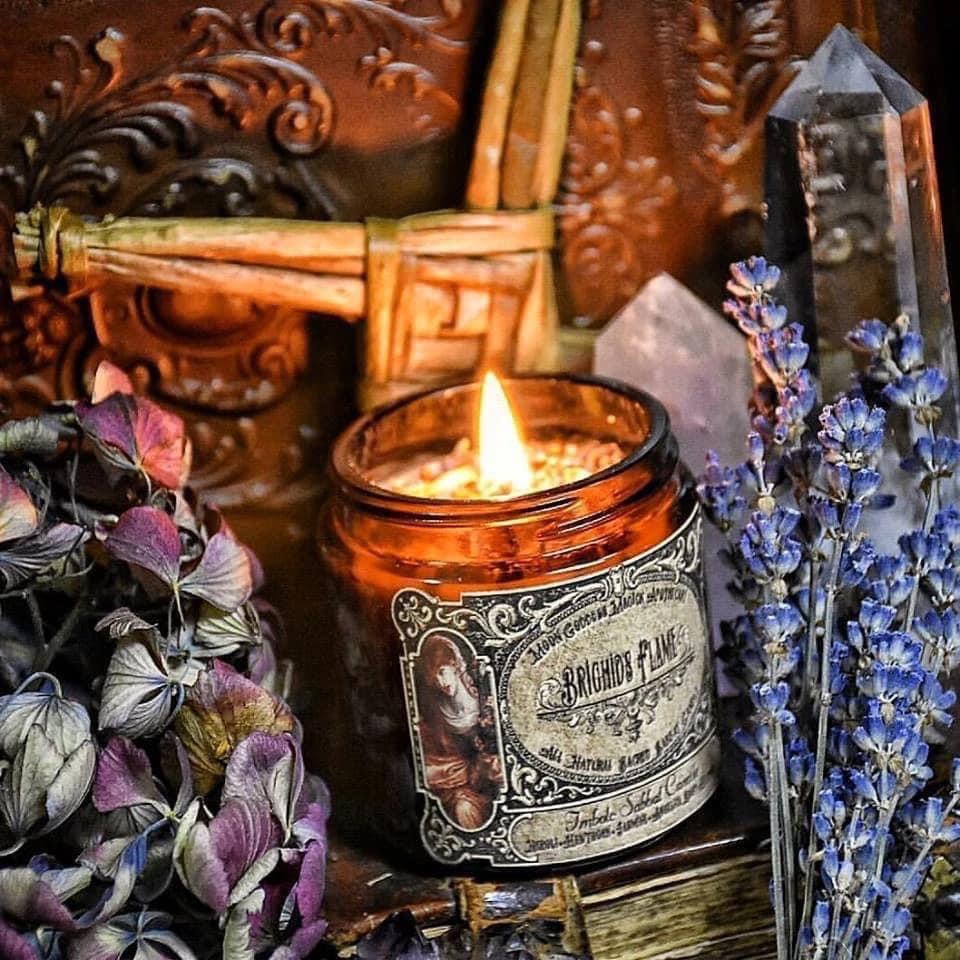
So bless your new candles, because you’ve spent the old ones in these winter days, and start opening the shades.
It’s time to wake from our hibernation, blink, and live again.
“What’s going to happen?” she wondered. “There has to be a bigger purpose…”
“Why?” he asked honesty.
“Because I need it all to mean something,” she replied, tears welling up in her eyes.
“We all want things to mean something in some bigger plan,” he said, “but what if they don’t? What if the map is being drawn one second at a time? Does that mean it’s all…well..meaningless?” he countered.
“Well, no…” she said. “I would just like some assurances.”
“I’m not sure life gives you those,” he said. “What if the larger point is for us to embrace that things have meaning not because there’s some ‘larger plan,’ but because our small, little plans are beautiful enough? And the mistakes? They don’t need to fit in some larger scheme to be redeemed. They’re redeemed because we learn from them, heal them as best we can, and move forward just a little bit on this ever-evolving, ever-scrolling map we make.”
“Significance,” he went on, “is not assigned from above. It’s assigned from within. Things mean something because they’re important to us, to you, to him. Or her. It’s subjective, by God. And that’s OK. It doesn’t make it less. It probably makes it more.”
“More?” She closed her eyes trying to wrap her head around it all.
“So, my quest for certainty is a fool’s errand?” she wondered.
“No,” he said, “because you’re not a fool. It’s the most human thing in the world, I think. But what if we just got used to embracing the idea that there is no certainty?”
“The Christian Celts, for the greater part of two millennia, were neither puritanical nor dualistic. They were close to the Earth’s cycles of fertility. They saw the Earth as good, sexuality as good, life as good–all being generous blessings.
The Celts have always been ‘night people’ as well–the night being a holy time for storytellers, song, and mirth. Celtic poets went into the holy dark to seek its blessings and hone their craft.”
-William John Fitzgerald-
This is all probably why I’m theologically non-dualistic and love stories. This is my heritage.
This Sunday many churches will conflate two festivals, and with good reason.
Those without Epiphany services will integrate a migration of the Magi at the beginning, but focus on the Baptism of Christ for the meat of the service.
By the by: If you’ve never done this hybridization, let me know. I’m happy to pass along a worship guide.
But to aid you in your inspiration and sermon writing, even at this late hour, check out what Tamika and Jason have to say on the readings (link below).
And, if you just want a bit of inspiration, remember that the ancient Celts held that water was not only necessary for life, but the lifeblood of all things. Water feeds and destroys, breeds and bears forth in this world.
If the Christ was to do some saving, he needed to be drenched in the source of life we have on earth.
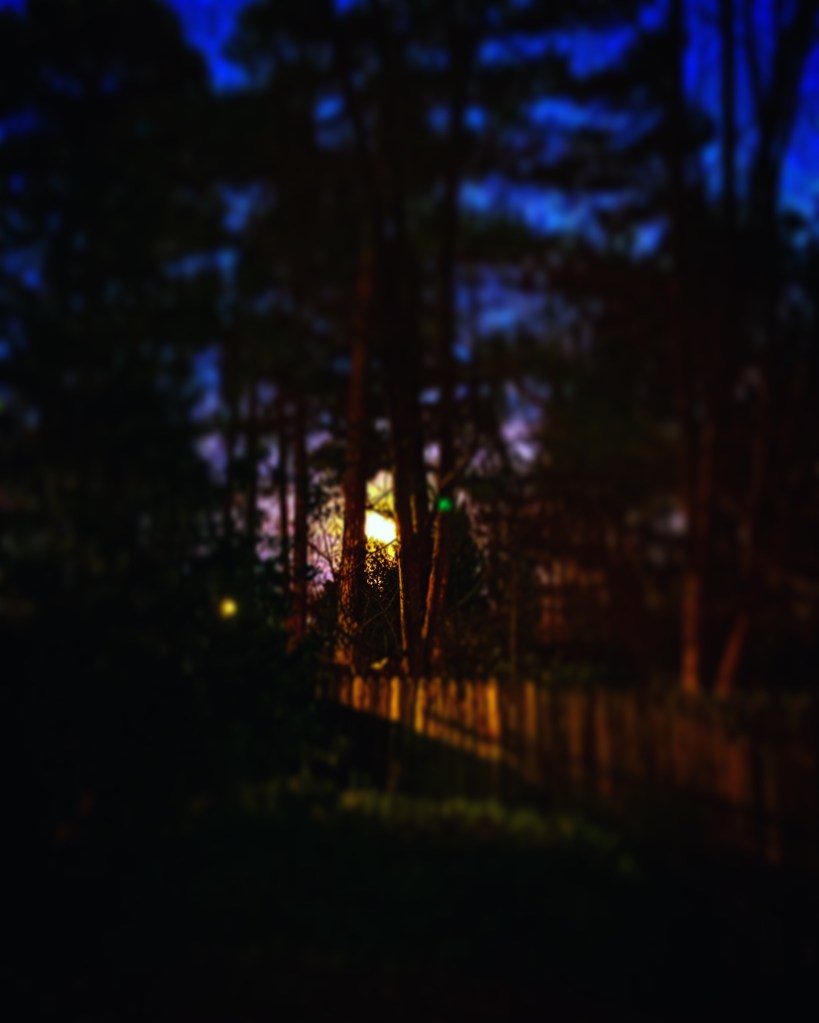
The ancient Celts called the first full moon of January the “Wolf Moon.” It was traditional to give a good howl at it, thanking it for its beauty as it kept the night watch.
The Celtic calendar was built on a wheel, an ancient wisdom of spirals and turning on which they trusted all life to be built upon. It was a dance that humanity participated in along with everything else cosmic to microscopic.
There were two halves, the “Sam” (summer) and the “Gam” (winter), and those were divided again with Samhain in October (the start of winter) and Beltaine in May (the start of summer), and further divided by Imbolc in February and Lughnasadh in August. In between all of those were the celestial markers of equinoxes and solstices, further providing some guidance as to what rhythm the Celts would be adopting at a particular time of year.
This is the eightfold pattern of their year, spinning round and round.
And each day itself was said to mirror this pattern with dusk (wintering) and dawn (summering) and noon and midnight. In other words: each day held a year.
A similar wisdom is seen in the ancient creation stories (Genesis follows this pattern), and also the eschatalogical understanding that each day holds the liturgical year (waiting, celebration, mourning, growing, etc.).
All of this is ancient, cycling wisdom at play, if we’re willing to pay attention.
In a modern Celtic understanding, January affords us the opportunity to focus in on thresholds (liminal spaces from the Latin “limen” which literally means “threshold”). Though it was not the ancient New Year for the Celts (which was probably Samhain), the mentality of the people was one of adaptation and so we find it has shifted to enfold the Gregorian calendar into its thoughtful rhythm.
January is our modern threshold month. It is the doorway, the threshold, to a new year. For the ancient Celts thresholds were holy places in the home, the barrier between the world and the family, a portal through which humans, as well, as other spirits traversed. It was neither here nor there. The dirt of thresholds was seen as holy ground, good for repairing relationships and cleansing the soul (haven’t you ever said, “it is good to be home!”?).
When entering an ancient Celtic home you’d say a quick blessing just inside the doorway called “The Welcome of the Door.” This is mirrored in many religions, but specifically for Western Christians we see this practice adopted on January 6th as doorways are blessed in honor of the Epiphany and the Magi crossing the threshold of the home of Mary and Joseph to see the Christ child.
January, as our modern threshold, provides us a similar opportunity for blessing and newness, is what I’m saying. The wheel is spinning, but there are important markers throughout, and now we are at the threshold of 2023 and a “Welcome of the Door” is in order.
“Sometimes writing sits in you like a wild animal. Maybe you see its eyes. Maybe you don’t see it at all, but the hair on the back of your neck knows it is there where the deepest shadows lie. Often the shadows lie about what’s hiding in them.
The panther that has stalked you since you were a child is old now. No longer wild, and tired of guarding the treasure you yourself left behind– blind and deaf, she will give it all to you if you just let her go.
But how are you to know whether the fox on the hill in the cemetery carries your mother’s name or is the same fox you saw crossing your back yard in the snow
unless you put your pen to paper and use it to release the animal that hides in the shadow of your hand.”






 Reluctant Xtian