
The New Fire

The 21st is the solstice, and my hope us that we’ll be able to make a new fire (depending on travel) on the new Yule log.

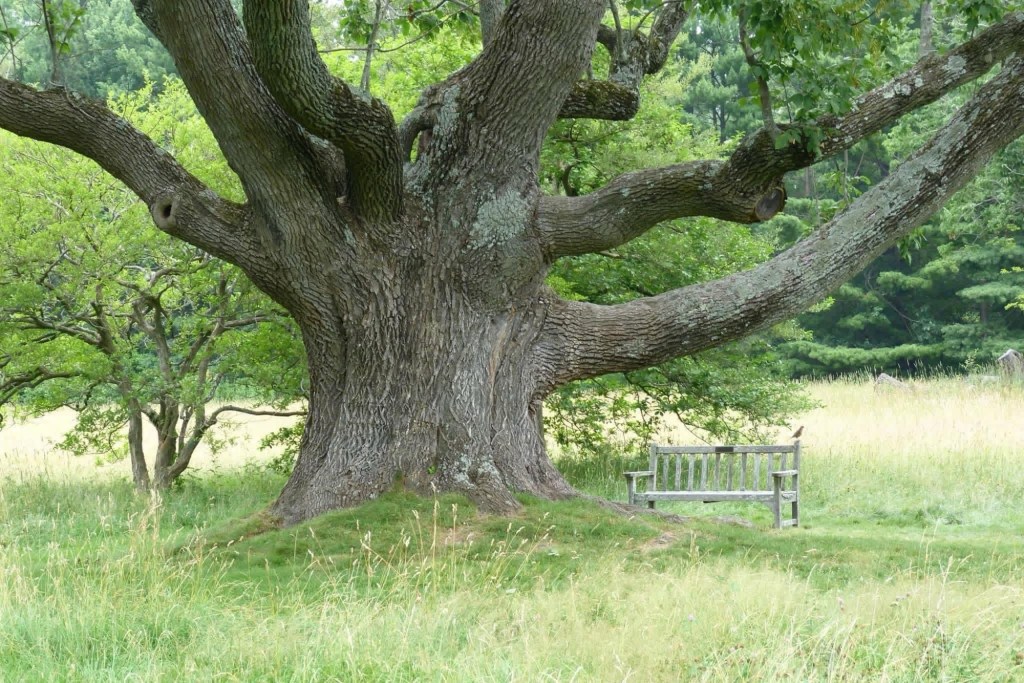
The Yule log is the ancient tradition of hauling a huge log, usually oak (though birch was thought to bring insight and wisdom), into the hearth on Christmas Eve. Sometimes the log was so large (it had to last through the whole twelve days!) that children would sit astride it as it was carried from the forest through town, cheering the whole way. Into this log would be carved prayers, symbols, and depictions of “Mother Winter,” bringing peace and good fortune for the next year. They’d light this fire as a way to embolden the fire in the sky, the sun, and remind themselves that night does not last forever.

A lesson we’d do well to remember in this time of year when seasonal affective disorder is so prevalent.

Another similar tradition which you know of, but may not know why it happens, is the lighting of a Christmas candle in these days. This candle stands in place of the yule log…kind of a mini yule.

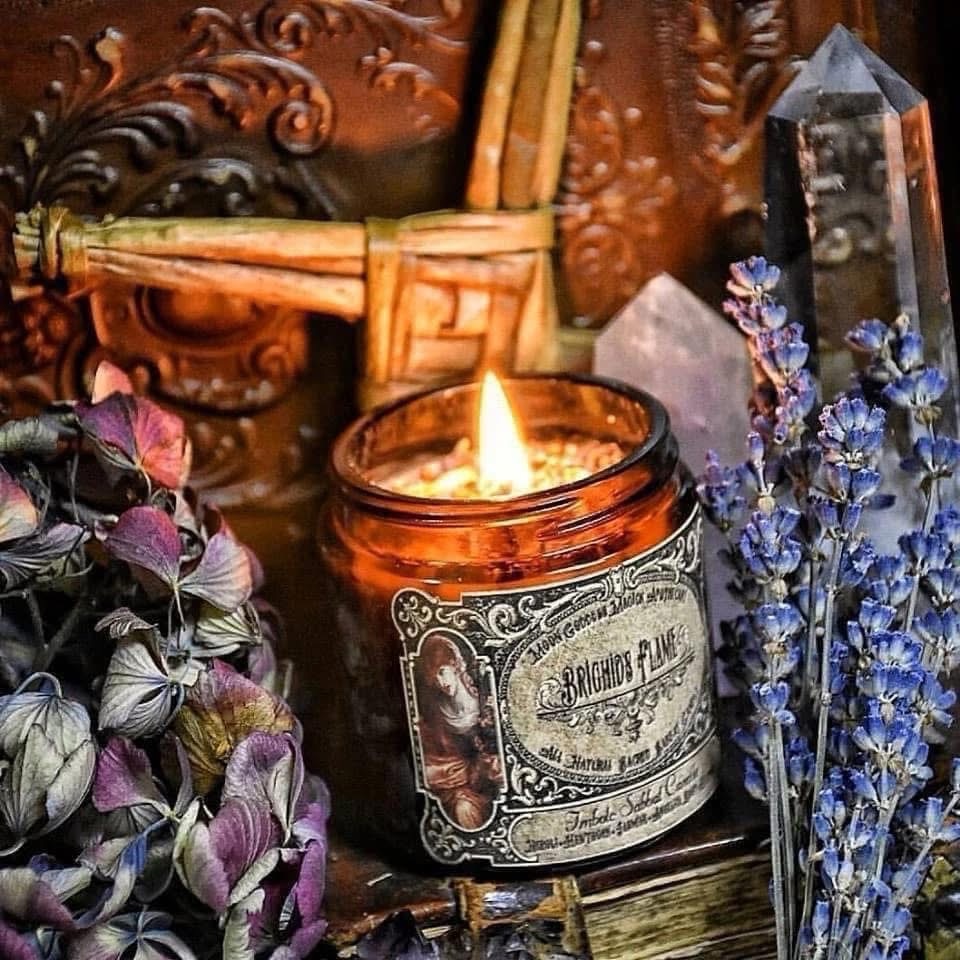
Our ancestors (as late as the 1940’s for those of us with Celtic blood) would have a special Christmas candle, usually red (to symbolize the ancient idiom “the red blood reigns in the winter’s cold”), and light it on Christmas Eve. It was usually placed in a hollowed out turnip, a shallow wooden bowl, or in later years a very select and decorated fancy holder, and would find a place on the front room window sill.

They’d place this candle in the window to do a few things.

First, it would remind them that there were those in the world without a supper or bed, and that they were to provide that for them. The candle would show a weary traveler where to find rest.

It was also lit to show Mary, Joseph, and the Christ child that a home could be found in their inn of a home. The wandering Holy Family still wanders today, wondering where to lodge.

Finally, especially in the countryside where it was difficult to spy a dwelling in the shadows of the night, these Christmas candles in the windows would show you where your neighbors were…and remind you that you’re not alone, by God. Help is just a flicker away should you need it. A true Christmas miracle-made-real.

So these Christmas lights adorning all the suburban homes in these days, and those stately Colonial-style homes with their window candles, aren’t just to be pretty and compete with the neighbors for accolades. If we remember history, these decorations bring more than “oohs” and “aaahs.”

They’re meant to bring hope, be a reminder to care for the “least of these,” and offer a welcome hand to the neighbor.

If you’re so inclined, put a new log in that hearth or fire-pit this year, and maybe write a prayer or two on it for the upcoming season of life.

And maybe stick a candle in that front window with intention this year, reminding everyone (including yourself!) that you’re called to help others in these wintery days.

The Yule Lads!

In learning about my Celtic heritage, I stumbled upon a fun tradition of something called “The Yule Lads,” 13 trolls that come from December 12-24 to play pranks. Especially popular in Icelandic lore, these trolls are fun tricksters who, when little children leave their shoes on the window sill, leave candies for good children and rotten potatoes for naughty kids.

December 12th: Sheep Cote Clod visits to harass sheep (but his peg leg prevents him from catching many, and he mostly makes noise).

December 13th: Gully Gawk comes from the mountains to hide in gullies, sneaking into barns to steal milk.

December 14th: Stubby comes to scrape out all the food left in your pans.

December 15th: Spoon Licker licks your spoons.

December 16th: Pot-Scraper scrapes out your pots.

December 17th: Bowl-Licker licks out your dirty bowls.

December 18th: Door Slammer comes late at night to slam your doors while you’re sleeping.

December 19th: Skyr Gobbler arrives. Skyr is a special kind of Icelandic yogurt, but he’ll eat any yogurt…he’s not picky.

December 20th: Sausage Snatcher comes to, well, self-explanatory.

December 21st: Window Peeper comes. A terrible name, this is the kindest of the trolls who is just looking for little snacks to steal by peering through your windows.

December 22nd: Doorway Sniffer comes. He has a strange name, but he’s just sniffing out your cakes and muffins to eat with his strong nose.

December 23rd: Meat Hook comes to eat the Christmas roasts you’re prepping for your holiday feast!

December 24th: Candle Stealer. This harkens back to a day when candles were made from fat and were edible. He waits to take children’s candles to eat!

Fun stuff.

Rotten potatoes for all!

On Caroling

In the 8th Century it came to pass that the traditional twelve day festivals of the Celts was declared a sacred season by the Church. Emphasis was placed on December 25, January 1, and January 6. December 25 was called “Nollag Mor” by the Celts, “Big Christmas.” January 6 was known as “Nollag Beag,” or “Little Christmas.”

Public work and public business was suspended unless you were a butcher, baker, or someone whose livelihood added to the festivities. Our idea of “Christmas break” stems from this ancient pause in public life.

In these days you’d ponder love, both human and Divine, and would openly practice extravagant acts of charity: gifts to workers you employed, loved ones near and far, and extra meat and bread to those who struggled throughout the year. In this way you emulated both the Sun who gives without asking, and, as religion gained influence, the Son who was said to do the same.

Because there was no work, people had time to dance and sing. So little caroling bands popped up around town dressed in fun costumes, spreading frivolity and sometimes asking for food or trinkets. We continue this tradition in Christmas caroling.

Everything has an origin, a reason, in this season.

Elder Moon

In December the ancient Celts found themselves under the Elder Moon.

Known as Ruish (roo-esh) in Gaelic, the elder tree was known to protect against negative forces, including pests like fruit flies and mosquitos, and so elder was often hung from doorways or in kitchen windows throughout the year. It was also sought out as medicine for so many, and is said to have natural antiviral properties. The elder tree was one you sought when you needed help.

The elder tree is bruised easily, but also regrows quickly, which is why the ancients named this moon at this time of year for this tree. Everything feels fragile right now. But, as the Irish phrase goes, “Every beginning is weak” (bionn gach tosach lag). Fragility allows for birth.

December is about beginnings sprouting from endings. As we head closer and closer to the solstice, the days shorten almost to the point of non-existence (or, at least it feels like that). But the ancients believed that the sun that faded-but-never-abandoned them made a new covenant annually with the earth in these days.

When Christianity began to have an influence and decided to place the celebration of Jesus’ birth in this month at the time of the Yule celebrations, it made so much sense to the Celts that they didn’t bat an eye: a new covenant with the Son/sun was appropriate in these shadow days.

The ancient Celts felt that December was a time for wombing, anyway. The fields were fallow, the family tended to be physically lax but mentally focused. In December they did their “inner-work,” pondering how the shadows of their own being (as Jung would say) helped them live into their full selves.

We’d do well to follow that lead.

And we may find that, at the end of December, we, like the elder tree, find ourselves being birthed differently into a new year after doing the inner work under the Elder Moon.

Sun Reborn

For the ancient Celts, December was a month where they celebrated light being born from winter’s long shadows.

They believed that, on the solstice, the sun would jump up and retreat back down for just a moment, seemingly staying in roughly the same place, signaling that it would once again keep it’s promise to bless the people with its presence the next year.

Every year they believed the sun was born again.

They’d honor this birth with days and days of celebration, usually around twelve, and they would perform ritual acts of welcome including dancing, drama, music, games of feat, and above all, lighting fires that they thought would help the newly-born, fledgling sun gain strength. The “yule log” was both for heat and for fueling the sun back into its summer glory.

Also, interesting tidbit: “yule” is probably where we get the word “jolly” from in English.

Even after Christianity had overlaid its own festival onto the celebrations of Ireland and Scotland, the pagan roots shone (and shine!) through. The Scandinavian settlements of the area had dyed the yule practices in the proverbial wool of the people.

Advent Starts in the Shadows

It’s an odd juxtaposition that happens when the secular and the sacred collide in these early Advent days. So many of us (at least, in America) are rushing to get that tree put up, the most ancient pre-Christian solstice symbol, and haul out the red and green decorations.

Meanwhile, the church is singing a bluer song and calling everything to hush for a bit, like you would when a baby is sleeping nearby.

Both responses to this time of year in this hemisphere are appropriate, of course. The ancient Celts would spend this time cozying up their indoor spaces, knowing they’ll be in the shadow of the fireplace for many hours in the coming months. They’d tie greenery to their door as an air freshener, and they’d make warm clothes, tell stories, and play indoor games. In this way, they’re not unlike all of us in our rush to decorate for the Christmas season.

But they’d do this other thing, too: they’d slow down. Their work would stop for a while, except for those necessary things needed to survive the winter. They’d rest longer, going to bed not long after night fell and waking late with the lazy solstice sun. They’d light candles in the morning and the evening, their new sun stolen from their fireplace outfitted with a huge log that, God willing, would last a good while.

They’d cozy and they’d slow.

The secular world is begging you to cozy at this moment. The sacred world is calling you to slow.

And, honestly, I’m not sure there’s such a thing as “secular” or “sacred.” Holiness pulsates through everything if our heartbeat is in rhythm with the Divine. So perhaps it shouldn’t be so much the “secular is calling you to cozy,” and the “sacred is calling you to slow,” but rather that the tensions pulling and pushing us in this world are felt forcefully in this moment, which is not a surprise.

We’re in a moment of change, evidenced by those last leaves falling to the ground.

Here’s a deep truth that all of these pushes and pulls point to: life begins in the shadows.

I don’t use “darkness” on purpose, by the way. As prophet and poet Nayyirah Waheed wrote in her collection Nejma,

“there is dark
and
there is anti light
these are not the same things”

Language has evolved to the point where we can be careful and choosy with our words (as imperfect as it might be).

Shadows, like that in the Valley of Death that the Psalmist sings of, is a more appropriate description, I think. We’re not talking about a color, we’re talking about an absence of illumination.

All life starts with an absence of illumination.

The Big Bang began with a deep vacuum bereft of light.

The womb which was our first home pulsated with life, but no light.

The seed trying to do what it is meant to do in this moment is buried under the weight of too much earth, and yet it lives.

Life begins in the shadows.

This is why the readings in the church here at the beginning of Advent aren’t of Mary or Joseph or a baby in a manger, but ones of foreboding and nighttime.

The church knows, as does the Earth, as has humanity from ancient days, that life begins in the shadows, so if we’re going to talk about redemption and salvation and resurrection and new life, we have to start here.

There is an 8th Century hymn that often kicks off Advent in many spaces, “Creator of the stars of night.” The Latin version of this text is most beautiful, “Conditor alme siderum…” the chorister sings in simple chant tone.

Sidus, where we get siderum can mean just “stars,” and certainly it does mean that. But in this usage it also means all the cosmic bodies: planets, meteors, stars, galaxies.

The church sings to the creator who filled up the vacuum of space and, like the Mark text, invites us to gaze up at the shadows of space in awe and wonder. In the night times of life we ponder such mysteries. Who hasn’t stayed awake in bed with their mind racing?

The shadows are meant for such pondering, for from such ponderings comes imagination and new life and all sorts of things never before seen, as frightening as those moments can be sometimes.

And, as it is, we’re again plunged into such a night time of life in this Advent season.

Change happens in the shadows. Newness starts in the shadows.

Life starts in the shadows.

So Advent must start in the shadows.

So, Beloved, cozy up and slow a bit. Ponder the mysteries with the ancients.

New life is starting.

On More

“A world without weapons, without McMansions in sprawling suburbs, without mountains of unnecessary packaging, without giant mechanized monofarms, without energy-hogging big-box stores, without electronic billboards, without endless piles of throw-away junk, without the overconsumption of consumer goods no one really needs is not an impoverished world.

I disagree with those environmentalists who say we are going to have to make do with less. In fact, we are going to make do with more: more beauty, more community, more fulfillment, more art, more music, and material objects that are fewer in number but superior in utility and aesthetics. . . “

-Charles Einstein-

Reed Moon

Tonight as we enter the midway of the month, I’m remembering that in November the ancient Celts found themselves under the Reed Moon.

Each month has a moon, usually named after a tree, corresponding to the attribute that the month brought to the wheel of the year. Now, while reeds are not technically “trees,” November was illumined by the reed moon because reeds, when wound together, created tough blankets that would be used for both floor and roof, for both basket and rope.

They are tough as trees when braided.

Reeds were emblematic of how November was a weaving of worlds, ushered in by Samhain and All Saints, the ancestors and the babies creating a tapestry of existence that was most clearly felt as the shadows lengthened and the hearth blazed. For the ancient Celts life existed far into the past and far into the future, and the cycle of life was always rolling. Reeds reminded them of this: woven together to be one whole, and when wind blew over the open reed they believed they could hear the howling voices of the ancestors calling to them from the other side of the veil.

These, of course, became wind chimes and porch pipes.

The Reed Moon inspires us, with its long night-shine life, to remember those who have gone before, the ache in our bones a reminder of their unseen, but ever-felt, presence.

Lost One Soul

Lost One Soul

I lost my soul in a fit of temper
I threw it at somebody’s head
and slammed out
without a second thought

Then I dumped it in a wastebin
along with a love I said I was finished with

I sandpapered my spirit
with a million
bitter barbs
and sent it into orbit
and substituted
guilt instead

My soul went cold
with memories of old friends and kin
who never expected
to be neglected,
and resolutions
I’d eluded

Then one day
I went to feed it
and it was gone

and now I hear it howling

in the wind outside
in the nights
in the hills
and I get the chills inside
and hide
in something that’s not important

and it’s four in the morning
before I can get warm enough
to weep enough
to fall asleep

-Sandy McIntosh-

The Ivy Moon

The ancient Celts found October to rest under the Ivy Moon. Now half past the month, the harvest is pretty much done and everything is starting to wear its nakedness.

But they called this Autumn moon Ivy Moon because ivy has a difficult time dying, and can live on even after the host plant has died. Ivy, for them, was a reminder that everything goes on in some form or fashion: life, death, rebirth.

It’s the way of things.

Ivy is strong, evergreen, resilient. Though the Earth is wearing their nakedness in these days, Ivy reminds us that the wheel is turning, not dying. It is spinning, not stopping.

Life renews itself.