
Unknown's avatar

About Timothy Brown

A pastor. A writer. A dreamer. Occasionally a beer brewer.

Lambs of God

Today the church remembers an ancient Saint of the early church: Saint Agnes, Martyr and Life-Giver.

Not much is known about St. Agnes. She died during the Diocletian persecution in the year 304 AD, and she is listed in that very first catalogue of saints that was drawn up by the early church around the year 354 AD. We know she was well-known and well-remembered in that ancient church because Constantine’s daughter (or maybe his granddaughter) built a church in her honor.

Here’s the thing about St. Agnes: although we don’t know much about her life, we do know something about her death. When Diocletian was terrorizing the fledgling Christian church, St. Agnes offered herself up to the authorities to be captured and killed. The thought was that, once enough Christians were killed to be shown as “an example,” the persecution would stop.

After all, Diocletian was not killing Christians out of spite or real fear, but rather as a political tool. With this motivation, he largely follows all politicians in power who use religion as a sword or a shield rather than as a food trough for conviction. Perhaps St. Agnes thought that, in volunteering her body, she might bring a quicker end to the rampage and save some lives.

Her offer also stands in stark contrast to the number of Roman Christians who were renouncing the faith in order to save their lives (and could you blame them?). Perhaps her willingness was an effort to keep them from having to do such renunciations as well.

Because St. Agnes is so close in name to “agnus” or “lamb,” today two lambs will be presented at the altar of St. Agnese fuori le Mura. They will be blessed by the priest, shorn, and then cared for by the nuns of Santa Ceclia in Trastavere. The wool from these lambs will be used for the white cloth of pallium that the Holy Father gives to archbishops of the church as a sign of affection.

St. Agnes is a reminder for me, and should be for the whole church, that when religion is used for political points no one wins.

-historical bits gratefully gleaned from Pfatteicher’s New Book of Festivals & Commemorations
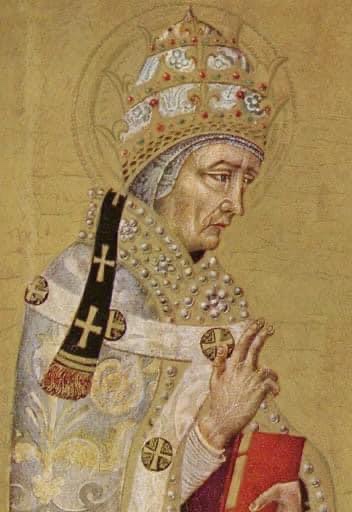
Lambs of God

Today the church remembers an ancient Saint of the early church: Saint Agnes, Martyr and Life-Giver.

Not much is known about St. Agnes. She died during the Diocletian persecution in the year 304 AD, and she is listed in that very first catalogue of saints that was drawn up by the early church around the year 354 AD. We know she was well-known and well-remembered in that ancient church because Constantine’s daughter (or maybe his granddaughter) built a church in her honor.

Here’s the thing about St. Agnes: although we don’t know much about her life, we do know something about her death. When Diocletian was terrorizing the fledgling Christian church, St. Agnes offered herself up to the authorities to be captured and killed. The thought was that, once enough Christians were killed to be shown as “an example,” the persecution would stop.

After all, Diocletian was not killing Christians out of spite or real fear, but rather as a political tool. With this motivation, he largely follows all politicians in power who use religion as a sword or a shield rather than as a food trough for conviction. Perhaps St. Agnes thought that, in volunteering her body, she might bring a quicker end to the rampage and save some lives.

Her offer also stands in stark contrast to the number of Roman Christians who were renouncing the faith in order to save their lives (and could you blame them?). Perhaps her willingness was an effort to keep them from having to do such renunciations as well.

Because St. Agnes is so close in name to “agnus” or “lamb,” today two lambs will be presented at the altar of St. Agnese fuori le Mura. They will be blessed by the priest, shorn, and then cared for by the nuns of Santa Ceclia in Trastavere. The wool from these lambs will be used for the white cloth of pallium that the Holy Father gives to archbishops of the church as a sign of affection.

St. Agnes is a reminder for me, and should be for the whole church, that when religion is used for political points no one wins.

-historical bits gratefully gleaned from Pfatteicher’s New Book of Festivals & Commemorations
On Unlikely Bishops

Today the church honors an unlikely Bishop, perhaps only second in unlikeliness to St. Peter himself: Saint Fabian, Bishop of Rome, Martyr, and Snow White Prodigy.

St. Fabian was not clergy. He didn’t even live in Rome, proper. But one day, early in the third Century, he wandered from his farm into the city just as the gathering clergy were meeting to elect a new bishop for the young, fledgling church.

Several names were being tossed about, mostly powerful people within the Christian movement who had gained popularity and notoriety. No consensus could be found, though, until the gathering was interrupted by a descending avian.

A dove flew into the crowd and, like a scene out of Snow White and the Seven Dwarfs, alighted upon the head of Fabian.

The gathered clergy saw this as a sign, and they immediately ordained him and elevated him to the role of Bishop by unanimous acclamation.

Fabian set about doing the work of Bishop from a farmer’s mindset. He divided the city into seven plots, or districts, and set deacons in charge of each area so they could respond to practical and charitable needs as they arose. He took to remembering the ancestors of the faith, the martyrs, venerating them in their catacombs. All of these practices would shape the church forever, even unto today.

For fourteen years Fabian led the church in Rome, eventually dying at the hands of Emperor Decius in the year 250 AD. In his death he was remembered by fellow Bishops as being “incomparable,” and on his grave to the day you can see inscribed in the Catacombs of St. Callixtus, “Fabian, Bishop, Martyr.”

St. Fabian is a reminder for me, and should be for the whole church, that sometimes the most qualified persons aren’t the richest, the most powerful, from the best schools, or who are the most well known.

Sometimes the most qualified persons are those who just appear, almost out of nowhere…kind of like, you know, Jesus. And Fabian.

-historical bits gleaned from Pfatteicher’s New Book of Festivals & Commemorations

Our House

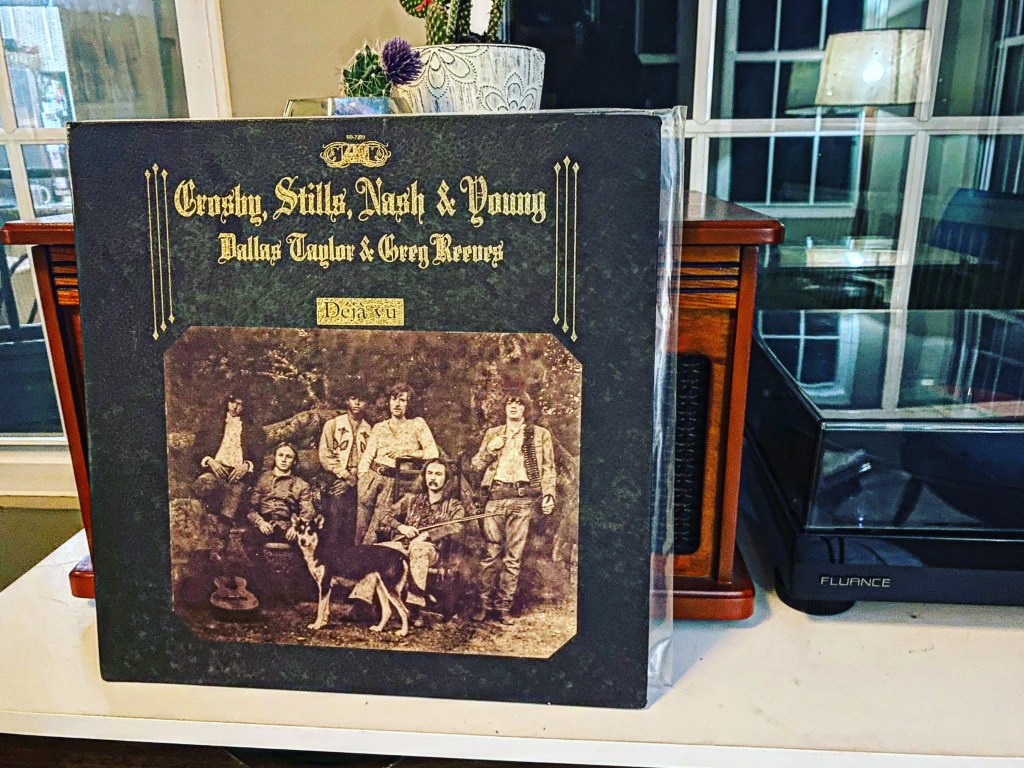
Crosby, Stills, Nash, and Young was one of the first bands I ever fell in love with.

I blame my Pops. And I thank him for it.

David Crosby was not a perfect human. He had issues, and his history with the band bore them out.

But I hope none of us are remembered for the worst things we’ve done.

He was a musical genius in so many ways. And he made me look to the stars, to see the Southern Cross. And he made me Teach My Children Well (I think). And he made me look at Our House.

And I’m grateful for it.

On Kindly Bishops

Today the church remembers an obscure 11th Century Bishop of the Anglo-Saxon Church who rocked a cool name: Saint Wulfstan, Bishop of Worcester and Abolitionist.

Bishop Wulfstan was a Benedictine monk who lived his whole live in Worcester, never venturing further than the last doorpost of the parish he served. He did this because, well, he was so busy. He is the first known Bishop to make it a point to visit all of the parishes in his area systematically and regularly. His goal was to instill a sense of friendship and learning amongst the churches and the people of the area, and he sought to make Worcester a place of learning for the north.

He also fought hard to stop the practice of selling the English as slaves in Ireland, believing that no person could own any other person legitimately.

His fame grew, though he never traveled outside of his little area.

As he traveled from parish to parish, he is said to have recited the Psalter from beginning to end, and if you rode with him he would make you sing the alternating verse. On these trips he also carried a large satchel full of coins which he readily gave out to anyone who asked of it.

He is remembered as a good and kindly Bishop, perhaps the best of his time.

St. Wulfstan is a reminder for me, and should be for the whole church, that you don’t need to be exceedingly well-traveled to be known and make a difference in your own back yard.

-historical bits from Pfatteicher’s New Book of Festivals & Commemorations

On Kindly Bishops

Today the church remembers an obscure 11th Century Bishop of the Anglo-Saxon Church who rocked a cool name: Saint Wulfstan, Bishop of Worcester and Abolitionist.

Bishop Wulfstan was a Benedictine monk who lived his whole live in Worcester, never venturing further than the last doorpost of the parish he served. He did this because, well, he was so busy. He is the first known Bishop to make it a point to visit all of the parishes in his area systematically and regularly. His goal was to instill a sense of friendship and learning amongst the churches and the people of the area, and he sought to make Worcester a place of learning for the north.

He also fought hard to stop the practice of selling the English as slaves in Ireland, believing that no person could own any other person legitimately.

His fame grew, though he never traveled outside of his little area.

As he traveled from parish to parish, he is said to have recited the Psalter from beginning to end, and if you rode with him he would make you sing the alternating verse. On these trips he also carried a large satchel full of coins which he readily gave out to anyone who asked of it.

He is remembered as a good and kindly Bishop, perhaps the best of his time.

St. Wulfstan is a reminder for me, and should be for the whole church, that you don’t need to be exceedingly well-traveled to be known and make a difference in your own back yard.

-historical bits from Pfatteicher’s New Book of Festivals & Commemorations
Night People

“The Christian Celts, for the greater part of two millennia, were neither puritanical nor dualistic. They were close to the Earth’s cycles of fertility. They saw the Earth as good, sexuality as good, life as good–all being generous blessings.

The Celts have always been ‘night people’ as well–the night being a holy time for storytellers, song, and mirth. Celtic poets went into the holy dark to seek its blessings and hone their craft.”

-William John Fitzgerald-

This is all probably why I’m theologically non-dualistic and love stories. This is my heritage.

What We Confess

Today the church notes an important feast day that’s not focused on a person, but on a person’s words: The Confession of Saint Peter.

So, this strange feast is the only feast dedicated to words, which feels very appropriate in these days where we’re all seeing, a little too close to home, the power of words.

Words can move us, for good or for ill.

Words can shape worlds, and tear them down.

Today the church remembers Peter’s famous confession, “You are the Christ.” This confession comes near the Week of Christian Unity for the church, but I have to be very honest with you when I say that the church feels more fractured today than it has in many decades.

Seeing Christian flags used to storm the capitol building two years ago was too much for me.

I’m pondering, on this feast day, what words I follow in the world. What words shape me? What words do I use to shape?

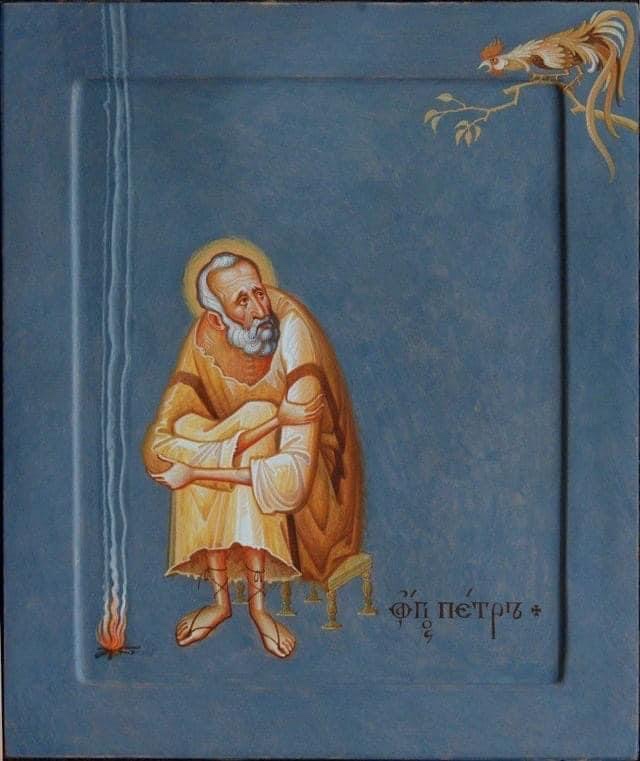
I chose this icon by Russian icon writer Oleg Shurkus for the day because I feel it’s most appropriate for where we are. This is obviously not of St. Peter’s confession, but in the aftermath of his denial and betrayal.

We don’t always live up to our ideals. We sometimes betray our own words. This feels like where we’re at.

Still, there is always a possibility for resurrection, right?

Perhaps on this day when the feasts of the church comes on the heels of our civic MLK feast, these words will suffice for the day:

“The time is always right to do what is right.” -Martin Luther King, Jr.

Loneliness Can Be a Killer

Today the church remembers a saint pivotal to the Christian movement who doesn’t get a lot of press, but continues to get a lot of emulation: Saint Antony, Abbot in Egypt, Earnest Seeker and Embracer of Extremes.

We should cut to the chase: Saint Antony of Egypt is the founder of Christian monasticism.

Born in Egypt in 251 A.D. at the outset of this new way of living in the world, Antony heard the Gospel edict, “Go and sell all you have and give it to the poor” (Matt. 19:21) when he was just a young man and, for better or worse, took it very seriously.

He sold everything…and he had a lot. His family was extremely wealthy, and he inherited quite the ancient fortune.

Nevertheless, Saint Antony didn’t see much wiggle room in the Gospel call, and so he sold it all and went to live the solitary life in Upper Egypt as an anchorite, ascetic, and prayerful penitent, dedicating his life to following the Divine.

To put bread on his table he wove baskets and sold them at the local market, and he lived in total solitude for twenty years.

The thing is: he saw how living alone could be dangerous for some. It only took him twenty years to figure it out, but in this spiritual experiment he found that loneliness was a sordid companion and had dangers of its own. To combat that the dangers of solitude, Saint Antony gathered the other lonely anchorites and ascetics who were emulating his lonely life and knit them together into a community that could hold one another accountable while also providing some friendship. He drew up some organized rules for their life together, and created a pattern of life that included work, prayer, and worship. In this community fraternal love and a reasonable sense of order created the scaffolding not only for helping those seeking to dedicated their life to following the Divine more sustainable, but inadvertently created a model of being that has grown into a network of souls dedicated to living a life of devotion lasting thousands of years.

For Saint Antony, though, solitude was not so bad. After organizing this initial monastic order, he once again retreated into the womb of his own being, spending the remainder of his life alone in a cave on Mount Kolzim in the Eastern Desert near the Red Sea. People would seek out his lonely cave, asking advice and desiring to glean the pearls of wisdom that fell from his spiritually well-seasoned tongue. He occasionally would also venture out to visit his followers in their little pockets of apocalyptic people and hermitages. He even made the trek to Alexandria in his old age to argue against the heresy of Arianism, though he was more measured in his words.

Funny thing about Saint Antony: he was never ordained and never took any holy orders. He was a lay person his whole life, and had lived over a century when he took his last breath. The Monastery of St. Antony still exists today and remains a pilgrim point for many in the monastic world, and he is commonly now known as Saint Antony the Great.

Saint Antony of Egypt is a reminder for me, and should be for the whole church, that sometimes loneliness for clergy can be a killer, and we need to have some formal structures in place to combat this. I’ve seen this in my own life…and continue to see it all around me.

Let those with ears to hear, hear.

-historical bits gleaned from Pfatteicher’s New Book of Festivals & Commemorations

-icon written by Fr. Theodore Koufos over at Legacy Icons

The Quakers

Today an obscure saint is remembered by the Church, one of the founders of the Religious Society of Friends: George Fox.

Fox, born in England, left his home at eighteen to follow a religious quest, and reportedly had many visions and spiritual awakenings along the way.

He arrived, in time, to the idea that God speaks to the inner-soul, not through the forms and norms of the established church, which put him at odds with his Puritan surroundings. This inward insight became the plumb-line for guidance and faith, above clergy, doctrine, and even scripture itself.

Because of these stated beliefs, as well as his peculiar habits (he wore leather suits and never took his hat off), he was beaten, stoned, and jailed numerous times. Nonetheless, followers continued to flock to his message, including William Penn and Robert Barclay.

His followers became known as “Quakers,” an unpleasant term used to describe these people who refused to make pledges, pay tithes, or make oaths to authority.

Because of Fox and his message, the state passed the Toleration Act of 1689 which formally outlawed religious discrimination (though it continued informally), and left an impression on courts forcing them to struggle with what it means to be “equal before the law.”

-Summary from Pfatteicher’s “New Book of Festivals & Commemorations”-