A 4th Century Saint is honored by the church on January 13th: St. Hilary, Bishop of Poitiers and Hymnwriter.
Hilary (think “happy” or “hilarious,” because his name is derived from the Latin for fun/cheerful) was born in Gaul to powerful pagan parents. He was not baptized until relatively later in life, at age 30, and in the year 350 he was made bishop of Poitiers by popular demand, though he was already married and had never been ordained!
Throughout history, good order has often been circumvented by the desires of the masses, for good and for ill.
St. Hilary bucked Emperor Constantinus in not going along with the Emperor’s demand that Western Bishops adhere to a compromised Nicene faith, and for this he was banished to Phrygia in Asia Minor.
There he continued his work as a theologian, writing On the Trinity while in exile, a foundational document for the early church.
In 360 he was allowed to return to his post at Poitiers to great acclaim, and he became the most respected Latin theologian of the time, and is lauded as one who brought Eastern wisdom into the Western church largely due to his time in exile and learning from those in Asia Minor.
He is also remembered as having written the first Latin hymns. Having been influenced by Greek hymns during his exile, he brought many back and created Latin versions of them while also writing new hymns altogether for the Western church. He was disappointed with the ability of the people in Gaul to carry a tune, however, and complained that they were “unteachable in sacred song.” I guess you can’t always have a win.
Hilary is remembered as being one intensely focused on Orthodoxy, but also as one who, due to his life experience, broadened and expanded the practices of the church.
Oh, and fun fact: I passed by the parish of St. Hilary weekly when I lived on the north side of Chicago.
St. Hilary is a reminder for me, and should be for the whole church, that sometimes spending some time in exile, on the outs, at the margins, can be a blessed time of learning where the gems of the wilderness can be mined and brought back into the center of life.
-historical pieces gleaned from Pfatteicher’s New Book of Festivals & Commemorations
Today the church observes Aelred, Abbot of Rievaulx and Good Friend.
Born in the 12th Century, Aelred was the son and grandson of Saxon priests. He was sent to work in the home of King David of Scotland at a young age, and when he entered adulthood experienced some deep inner struggle of an unknown nature.
All we know is that he was conflicted.
To help discern his angst, he entered a Cistercian Order at Rievaulx and soon gained a reputation as kind, wise, and a good friend to all.
His greatest mark left on the world was his capacity for profound sympathy, and he went on to write Spiritual Friendship, a reflection on the goodness of having and being a true friend in life.
The good Abbot was known to create deep, meaningful friendships, and hold these up as the pinnacle of godly relationship.
“A friend praying to Christ on behalf of his friend, and for his friend’s sake desiring to be heard by Christ, directs his attention with love and longing to Christ; then it sometimes happens that quickly and imperceptibly, the one love passes over into the other, and coming as it were, into close contact with the sweetness of Christ himself, the friend begins to taste his sweetness and to experience his charm.”-Spiritual Friendship
St. Aelred is a reminder to me, and should be for everyone, that sometimes the best thing you can be in this world is a good friend.
After all, if the only thing anyone remembered us for is our deep capacity for sympathy and friendship, it wouldn’t be the worst thing in the world…
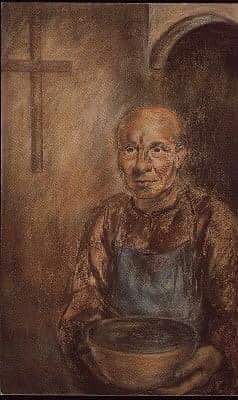
Today the church remembers a simple, humble saint who dedicated his existence to prayer and presence: Brother Lawrence, Mystic and Monk.
Brother Lawrence was born in the early 17th Century in Lorraine, France. We do not know much about his childhood, other than to say that he received very little schooling. He served a stint in the army, but one day had a mystical vision that gave him a new direction.
While gazing at a stark tree in the middle of a French winter, Brother Lawrence received an overwhelming feeling of grace and a deep sense that God was present. He saw in that moment that he, like that tree, was waiting for God’s blooming in his life…which could happen at any moment.
Brother Lawrence took this experience and went off to Paris, joining the Carmelite monastery there as a lay brother.
He was given the base tasks of caring for the monastery, but in his repetitive work he found an avenue to integrate spirituality into every mop swing, every dish scrub, and every menial task given him. He began what he called the “practice of the presence of God.”
He devoted each small task to the Divine, turning every moment into an opportunity for prayer.
Brother Lawrence is a reminder for me, and can be for the whole church, that the small, simple things when done faithfully are a gift to the Divine and to the world.
In fact, I’d go further to say that small, simple communities of faith, parishes, churches, embody Brother Lawrence best when they do their small bit with great attention and devotion.
-historical bits gleaned from Claiborne and Wilson-Hartgrove’s A Liturgy for Ordinary Radicals
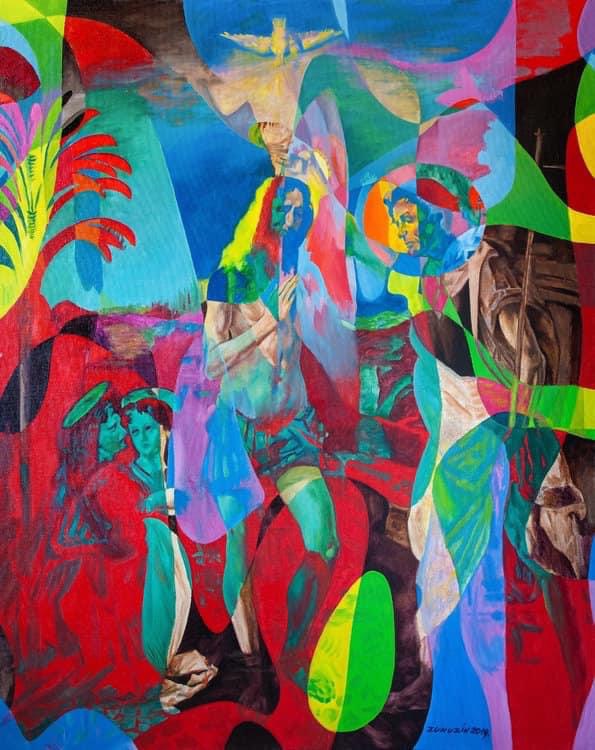
Today the church celebrates one of its moveable feasts today: The Baptism of Our Lord.
Falling on the first Sunday after The Epiphany, The Baptism of Our Lord honors the first recorded calling into ministry that the Gospel accounts have for Jesus. I say “first recorded” because, well, who knows what was going on in that head and heart that led him to the waters of the Jordan that day. He may have felt called all along.
Water rituals are pervasive across religions. Judaism, Islam, Hinduism…all of them involve some sort of washing.
Christianity’s baptismal practice is a riff off of the Jewish cleansing baths. John (who, though Luke claims was Jesus’ cousin, was probably a rival street preacher and wandering prophet, of which there were many in those ancient days) changes the washing practice a bit, invoking repentance as an integral part of it all. The fact that Jesus takes John’s invitation has confounded Christians for thousands of years.
Why does someone who is thought to be sinless need to be baptized?
Rather than give an answer to that question (there are lots of thought trails you could follow there), perhaps it is enough to just say that Jesus, who is made of mostly water and trace elements (like all humanity) needs to wash like the rest of us.
The scene, though, is striking: the source of all creation bathed in the stuff of all creation.
On this Feast the church honors water, forgiveness, a golden thread through all faiths, and the humble bath as being holy.
It’s enough to make you think that, perhaps, all water is holy…
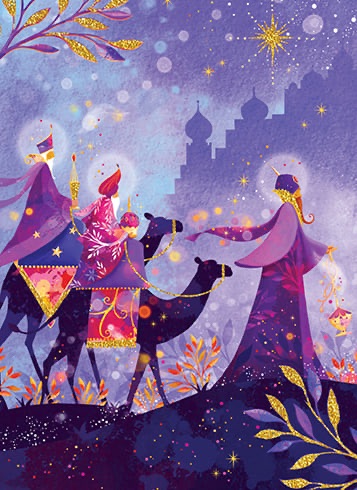
Today the Church celebrates the Feast of the Epiphany.
This is much more than just a story of Magi visiting the Christ child.
This day is all about awe and wonder. It is about recognizing the cosmic impact that the Divine incarnation has, as even the heavenly bodies testify to the greatness of God through the stars.
It is about the global impact that the embodiment of the Word of God would have, as people from the far corners of the Earth are embraced by God’s holy in-breaking, compelled to seek it out.
It is about Christ’s nature: precious as gold, fragrant as frankincense, and self-giving as the myrrh used to wrap the dead in that final act of love.
The journey of the Magi will be echoed by the journey of those women who walk with spices to the empty tomb on Easter morning.
The symmetry is striking. The whole arc fills you with awe.
In these days between Epiphany and Transfiguration the church will continually ask, “Who is this Jesus?” And with story after story we’ll hear a variety of answers to that question.
But today we just get this one answer: the embodied Word is worth searching for, worth giving things up for, and worth defying the powers of this world for.
The Magi, like Jesus himself, will practice civil disobedience in an effort to keep their conscience intact, by God.
The Celtic calendar was built on a wheel, an ancient wisdom of spirals and turning on which they trusted all life to be built upon. It was a dance that humanity participated in along with everything else cosmic to microscopic.
There were two halves, the “Sam” (summer) and the “Gam” (winter), and those were divided again with Samhain in October (the start of winter) and Beltaine in May (the start of summer), and further divided by Imbolc in February and Lughnasadh in August. In between all of those were the celestial markers of equinoxes and solstices, further providing some guidance as to what rhythm the Celts would be adopting at a particular time of year.
This is the eightfold pattern of their year, spinning round and round.
And each day itself was said to mirror this pattern with dusk (wintering) and dawn (summering) and noon and midnight. In other words: each day held a year.
A similar wisdom is seen in the ancient creation stories (Genesis follows this pattern), and also the eschatalogical understanding that each day holds the liturgical year (waiting, celebration, mourning, growing, etc.).
All of this is ancient, cycling wisdom at play, if we’re willing to pay attention.
In a modern Celtic understanding, January affords us the opportunity to focus in on thresholds (liminal spaces from the Latin “limen” which literally means “threshold”). Though it was not the ancient New Year for the Celts (which was probably Samhain), the mentality of the people was one of adaptation and so we find it has shifted to enfold the Gregorian calendar into its thoughtful rhythm.
January is our modern threshold month. It is the doorway, the threshold, to a new year. For the ancient Celts thresholds were holy places in the home, the barrier between the world and the family, a portal through which humans, as well, as other spirits traversed. It was neither here nor there. The dirt of thresholds was seen as holy ground, good for repairing relationships and cleansing the soul (haven’t you ever said, “it is good to be home!”?).
When entering an ancient Celtic home you’d say a quick blessing just inside the doorway called “The Welcome of the Door.” This is mirrored in many religions, but specifically for Western Christians we see this practice adopted on January 6th as doorways are blessed in honor of the Epiphany and the Magi crossing the threshold of the home of Mary and Joseph to see the Christ child.
January, as our modern threshold, provides us a similar opportunity for blessing and newness, is what I’m saying. The wheel is spinning, but there are important markers throughout, and now we are at the threshold of 2024 and a “Welcome of the Door” is in order.
Today the church remembers a chatty 4th Century saint who, despite his best efforts, was terrible at living alone: St. Basil the Great, Bishop and Patron Saint of Extroverts.
St. Basil was born into a wealthy Greek family around the year 330AD. He was raised by his grandmother and pious parents, was well educated, and was influenced in early adulthood by a charismatic Bishop of the church, Eustathius of Sebaste. This influence compelled him to be baptized and spurred a spiritual awaking.
Feeling a call to the ministry, he left his practice of law and education to go where the monastics roam. Traveling to Palestine, Egypt, and Syria, studying the ascetics and the monastic life, he mindfully distributed his wealth to the poor and tried his hand at living the life of a hermit.
He was terrible at it.
He missed talking to people, and found his brain to be a poor conversationalist.
So, he decided to gather around himself a group of like-minded people, thereby effectively creating the first intentional monastic community of the church. His writings and reflections of this time became formative for Eastern Monasticism, and he’s generally thought of as the founder of the first monastic settlement.
As his stature and practice grew, and as his writings were circulated, St. Basil became a respected theologian and practitioner of the faith. He attended the Council of Nicaea and was a strong voice for Orthodoxy.
In 362AD St. Basil was ordained a Deacon in the church, and then a presbyter as his influence grew. He joined with St. Gregory in full-throated repudiation of Arianism (an ancient heresy), and eventually became the administrator of the Diocese of Caesarea.
In 370AD he succeeded Eusebius as Bishop of Caesarea. Though he had some bad blood with a few neighboring priests and bishops (if you think we have theological squabbles today, read some of the stuff coming out of the 4th Century church!), St. Basil was also known to see the best in people, even his opponents. He was also exceedingly generous with his money (he barely kept any) and his time, known for being on the front lines of the local soup kitchen in times of famine.
St. Basil’s writings, especially those regarding care for the poor and the sick, continue to confront Christians today. He did not mince words.
My favorite Basil line has him writing in a pastoral missal, “The shoes left unworn and rotting in your closet are meant for those without shoes, as is the food in your pantry and the unused coat.” And he was known for living this out, not just preaching about it.
The date of his death is unknown, probably sometime in the late 4th Century of liver disease and poor health probably brought on by leading an extremely ascetic lifestyle, but his memory lives on.
St. Basil the Great (as he is now known) is a reminder for me, and should be for the whole church, that proximity is primary. You must be around the people you serve to know them, and you must engage with others, even if you disagree with them.
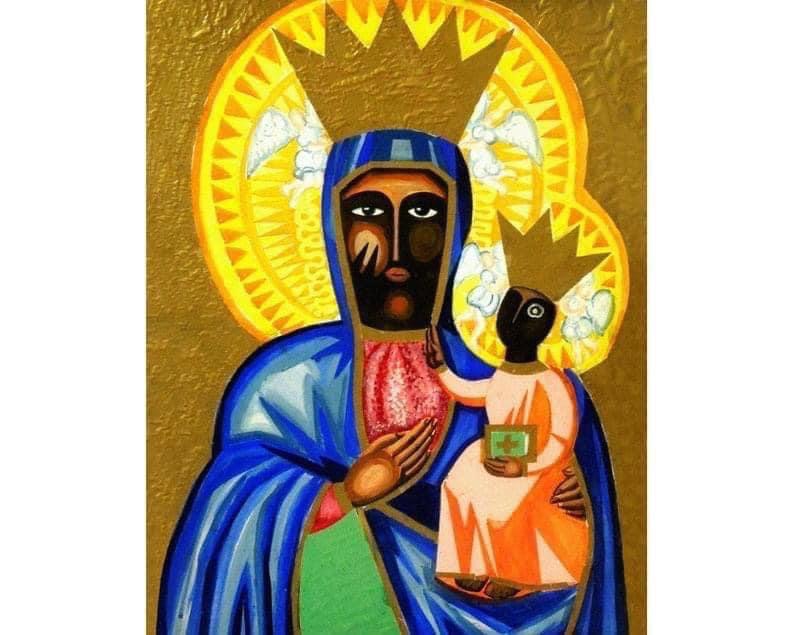
Today, as most of the world celebrates New Year’s Day, the church officially honors an odd festival (which was created in opposition to the New Year’s Day revelries): The Holy Name of Jesus.
To understand why we have this feast day at all you have to go back, way back, to when there were differing calendars, and therefore differing ideas of when a new year actually begins.
For much of secular recorded history, the new year began on March 1st (or at least in March) with the ushering in of meteorological Spring (note: this is not astronomical Spring, but rather just the date when Spring starts to show off in many places). The names of the later months of our current calendar, September, October, November, and December still harken back to this reality, as September is the seventh month (Sept), and October the eighth (Oct), etc. if you start the year in March.
If you care nothing else about this festival or this day, the above is a feather in your cap for 2024. Bet you learned something new.
There was, at the same time, a persistent thought that January 1st marked the beginning of the year, as it honored the god Janus who looked forward and backward and immediately followed the Winter Solstice.
When Julius Caesar reorganized the calendar for Rome, he made it the beginning of the year, and it made sense because the Roman Senate convened in January. The first day of that month became the official “Saturnalia” celebration day, though the weeks prior and weeks after were included in the festivities.
This date as the start of the new year began to spread throughout the centuries, and eventually landed in England and the American colonies who were late adopters to the idea (it took them until 1752).
But, as the Church was birthed in Rome and the Saturnalia festivities were in full swing with drunken parties and dancing and theater tournaments, influential clergy (like Augustine), though they would have rather have had no part in marking the day at all, decided that worship and fasting would be good practices to keep the Christians from the pagan celebrations.
This practice, btw, is still held in some parishes on New Year’s Eve until the wee hours of New Year’s Day, and is called “Night Watch.”
So the church, feeling it needed to keep Christians from getting too boozy and too happy around the pagan feast, went with a more Biblical understanding of the day. Using Christmas Day as a marker (which, again, was reluctantly placed on the calendar…Christmas wasn’t a thing for Christians in that early church) they saw that eight days later would be the circumcision and name-day of Jesus, and they decided, “Yup! That’s what we’ll call it.”
And so, this feast day was born as a reaction to the outside world and a coopting of other feasts at the time. In this way the church showed great ingenuity, in my opinion. After all, people don’t like it when you take things away from them, for whatever reason, so they’d much rather you add or shift things for them.
The above is interesting, but for those of us who are more interested in seeing these holy/holidays differently rather than understanding them as purely a reaction to the outside world (which makes me not want to honor them at all, to be honest!), I present to you this idea:
The Feast of the Holy Name of Jesus presents for the church, and for all of us, an opportunity to honor the importance of names for humans.
I remember one time as a young, smart-mouthed kid, that at a Cuban restaurant in Hialeah, Florida, I forgot to note something that I wanted to order and said, “Get Jose back here! I forgot something.”
My grandfather looked at me with a mixture of anger and disappointment and said, “Tim, that is not his name. He is proud of his name. You cannot change it without his permission, and you need to respect it.”
I was obviously (and rightfully!) put in my place. Indeed it was not his name, and I was making a terrible, racist joke that attempted to take that away from him.
Names are important.
This is why it is, in fact, racist to not learn how to pronounce the names of people of color (this tactic has long been used as a way to degrade people). This was recently seen in a prominent Georgia Senate election rally a few years ago.
It is racist to deny people job interviews because they have names that are not “traditional” or are specifically ethnic.
Names are given in love, usually in honor, and mean something.
This is also why when our trans brothers and sisters offer to the world a name that best fits them, we need to honor it.
This day is a reminder for me, and can be for the church, that names matter, by God.
-historical bits from Pfatteicher’s New Book of Festivals & Commemorations
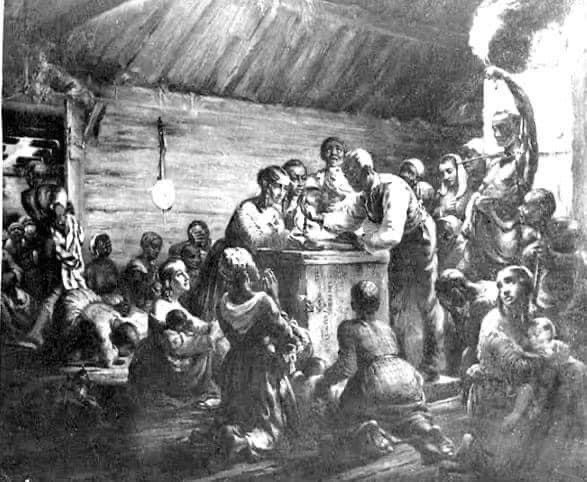
Tonight the church honors not a saint, but an event: Watch Night, remembering the Emancipation Proclaimation of 1863.
Traditions surrounding a “night of watching” on New Year’s Eve can be found in Moravian and Methodist American history through the 1800’s. The practice may have begun almost a century earlier in Bohemian regions of Europe, however, as families marked endings and beginnings.
In America these vigils were taken as an opportunity to reflect on the past year and make resolutions for the coming one. Often held in churches and surrounded by prayer and music, these gatherings usually started in the evening and lasted past midnight.
In 1863, however, the tradition took on new life and a new focus in America as slaves in formerly Confederate States gathered in churches, homes, and rooms in the waning hours of 1862 awaiting President Lincoln’s signature on the Emancipation Proclaimation to take effect.
Watch Night continues to be an annual gathering, especially in communities of color, as a way to both remember what has happened and gather strength for continuing to work for the freedoms still to come. Recent years have been stark reminders that the Emancipation Proclaimation was not, and has never been, enough in the struggle for all in this country to live in peace and enjoy prosperity. Indeed, that first proclamation didn’t “free all slaves” in the United States…that would take acts of individual legislation in many border states and territories over time.
We need to remember that racism and prejudice still influence our civic and religious lives, Beloved.
Watch Night is an invitation for us all to reflect and resolve to partner together to do more.






 Reluctant Xtian