Unknown's avatar

About Timothy Brown

A pastor. A writer. A dreamer. Occasionally a beer brewer.

On Hussians

Today the church honors a proto-Reformer who, had the printing press been available during his life, may have caused all of us to be called “Hussians” rather than Lutherans: Jan Hus, Martyr, Gadfly of the Church, and prelude to Luther’s Reformation.

Jan Hus was born “Jan of Husinec” sometime around 1373 to peasant parents in Bohemia. He was fortunate to attend the newly established Charles University in Prague, where students shortened his name to “Jan Hus”…which was funny because “hus” literally means “goose.”

St. Jan, that wild goose, would go on to receive his Masters Degree and eventually teach Theology at Charles University while also being named the preacher of the Chapel of the Holy Innocents of Bethlehem. In that church he preached in Czech, a drastic departure from the Latin used in the rest of Christendom. But in these days the church was in conflict (three Popes claimed the Chair of St. Peter), and reformation was in the air!

St. Jan had been greatly influenced by that other rascal, John Wycliffe, who had truly formalized much of the radical thinking that Luther would glom onto in the Reformation. Though Jan and John differed in many areas, St. Jan began to be more Wycliffian in his preaching and writing, including condemnations of the abuses of the church (and her lazy priests) in his regular sermons.

This, as you can imagine, was a problem for the Archbishop.

St. Jan did crazy things like, oh, suggest that the bread AND the wine could be provided to the laity in the Mass. He openly questioned the historic episcopate, and started to advocate for only two sacraments (baptism and communion) to be officially recognized.

Sound familiar?

Pope Alexander V condemned Wycliffe’s writings in 1409 and, in short order, excommunicated St. Jan in 1412. Interestingly enough St. Jan was not excommunicated for his own writings, but rather because he refused to travel to Rome to give an account of them. Basically, he didn’t show up to court…

St. Jan Hus refused to be quiet, though, and even as a heretic of the church preached against the avarice the local priests showed. He was summoned to the Council of Constance in Switzerland in 1414 and, though he had been promised safe travel back to Bohemia after his trial, was immediately arrested, held in the dungeon there, brought up on false charges, and burned at the stake.

It is said that he was praying the Kyrie eleison as he died.

St. Jan Hus is a reminder for me, and should be for the whole church, that sometimes not saying something is not an option, even if it costs you your job, your status, and yes, your life.

-historical bits gleaned from Pfatteicher’s New Book of Festivals & Commemorations

Carpenter and Community Organizer

Today the church (should, in my opinion) remember one who has long been venerated as a contemporary folk saint, and is now remembered more broadly throughout communities both religious and secular: Saint Denmark Vesey, Carpenter, Community Organizer, and a Founder of Mother Emanuel Church.

Saint Denmark was born into slavery on the island of St. Thomas under Captain Joseph Vesey. Following Captain Vesey throughout the islands, Saint Denmark eventually landed in Charleston, SC and, having won a lottery option, was able to buy his freedom. Unfortunately he was unable to buy the freedom of his first wife, Beck, and their children out of slavery, despite being a very good businessman.

Saint Denmark made his living as a carpenter and was quite skilled. He also grew influential in the Black community both in Charleston and on the surrounding plantations. It should be remembered that by the early 1700’s the population of South Carolina was majority enslaved. Black power was kept in check by intimidation and violence.

Saint Denmark knew this. He saw this. He saw the potential for an uprising, and knew he couldn’t sit still and continue to let his enslaved siblings toil for riches they’ll never see and dignity they’d never be able to earn.

Saint Denmark became very involved in the Black Church in South Carolina, even founding a free African Methodist Episcopal church in the city now known colloquially as Mother Emanuel. Both within the church and through his business he gathered support for an uprising against the powerbrokers and plantation owners that was so massive both with influence and scope, it shook the status quo to its core.

In 1821 plans were made for a mass revolt. Using his skills as a lay preacher, Saint Denmark went over plans for the community action in the classrooms of churches throughout the city, primarily at Mother Emanuel and Second Presbyterian. In the churches the plans for freedom were made, Beloved. Saint Denmark invoked the story of the Exodus in his meetings, weaving the story of the enslaved person in Charleston with that of the enslaved person in Egypt.

Plans were put in motion and, being influenced by the French, Bastille Day (July 14, 1822) was chosen as the date. They would all converge on the Meeting Street Arsenal and, once they took control of the weaponry, would commandeer ships and set sail for Haiti freeing slaves along the way.

Because this planned revolt had gained so much support and attention, word slipped out regarding the details. Even after Saint Denmark moved up the date of the insurrection, the wheels of power were already getting set to crush the leaders, and crush them quickly.

Mayor James Hamilton of Charleston quickly formed a militia and rounded up the key conspirators. After his arrest and quick death sentence, Saint Denmark told his pastor, “I will die for a glorious cause.”

Saint Denmark Vesey died on this date, July 2nd, 1822, by hanging in Charleston, South Carolina.

In 1990 African-American residents of Charleston proposed erecting a monument to Saint Denmark, memorializing how he tried to overturn slavery in this city. Many white patrons balked at the idea, noting that they did not want to commemorate one who they considered “a terrorist.” I mean, let’s totally IGNORE the Confederate statues that dot the city landscape (confirmed terrorists), but, whatever.

Racism is alive and well, Beloved.

Saint Denmark Vesey is a reminder for me, and should be for the whole church, that liberation has always been talked about in the Sunday School rooms of our churches…

We just don’t like to talk about it and conveniently have amnesia when doing so makes us uncomfortable and we’re the ones who have to change in order for liberation to happen.

Let those with ears to hear, hear.

-historical bits gleaned from publicly accessible information and Illes’ work Daily Magic.

-statue of Vesey below was finally erected in 2014 in Hampton Park, Charleston, South Carolina. Ed Dwight was the American sculptor.

Gained in Translation

Today the church remembers a translator of hymns (and, particularly, one of my favorite hymns), Catherine Winkworth, 19th Century poet and hymn writer.

Born in London in the 1820’s, Catherine would grow up with a deep appreciation for music. Her first work would be published when she was in her 30’s, a translation edition of German hymns, Lyra Germanica. It was immensely popular, churning out five editions in just a few years. She was seen as someone with the rare ability to keep the spirit of the German lyrical genius even when translated into English.

Her skill in translating German into English while retaining the essence, not just the literal word of the text, would lead her to become one of the premier translators of her time.

She was also a staunch advocate for women’s rights in the 19th Century, eventually becoming the secretary of the Clifton Association for Higher Education in Clifton, England, and a member of Cheltenham Ladies’ College.

Catherine and her sister, Susanna, were delegates to the German Conference of Women’s Work, presided over by Princess Anne.

At the age of 51 Catherine died suddenly of heart disease on July 1st, and a monument to her was erected in Bristol Cathedral.

It’s interesting to note, especially for those of us from Reformation backgrounds, that while men are known to be the “great translators” of ancient Greek and Latin hymns, the authoritative translators of post-Reformation German hymns were almost all women, including Catherine Winkworth.

My favorite hymn of her translation, and one we sang often around Thanksgiving here in the States, is ELW 839, “Now Thank We All Our God.” The second verse reads:

“Oh, may this bounteous God
through all our life be near us,
with ever joyful hearts
and blessed peace to cheer us,
and keep us all in grace,
and guide us when perplexed
and free us from all harm
in this world and the next”

Winkworth is a reminder to me, and should be a reminder to the church, that when it comes to theology, to scripture, to “God-talk,” the literal will never do. We must capture the essence, lest we lose ourselves in the particulars. God is found between the words, between the notes, between the letters even…not in them.

-historical bits gleaned from Pfatteicher’s New Book of Festivals & Commemorations

Brilliant But Brash

Today the church remembers, with mixed-emotions, Cyril of Alexandria, 5th Century Bishop and teacher.

Cyril (a name that should make a comeback) was not exactly a stand-up individual, but had a keen theological mind. He was a ruthless ideologue who sometimes incited his followers to violence. Whether or not this was by intention or accident, history is unclear.

He was quick to raise hell against church leaders he found heretical, focusing most of his ire against Nestorius, who was taught in the theological school of Antioch. Nestorius argued that Jesus was of two persons, one human and one divine. Cyril championed the opposite, that Jesus was of one person, both human and divine. He presided over the Council of Ephesus in 431 where this was discussed and where Nestorius was condemned as a heretic.

In the years following the council, Cyril mellowed, though, through wise counsel from Isidore of Pelusium.

He grew up, aged though he was.

He left a great number of writings, and is cited in several places throughout the Lutheran Confessions.

Cyril is a reminder for me, and the whole church, that brilliant people are not always kind, and kind people are not always brilliant, and that we can honor the good in someone without honoring the whole of a person’s life and conduct.

For as much as we talk about “sinner and saint,” we’re sure quick to denounce and deride people who, though they contribute mightily to the common good, were greatly flawed themselves.

Cyril was brilliant but brash. He was even violent to the point of despicability. Yet we can take his brilliance and still denounce his character.

May none of us be remembered for our worst traits.

-historical notes gleaned from Pfatteicher’s “New Book of Festivals & Commemorations”

Bert to Luther’s Ernie

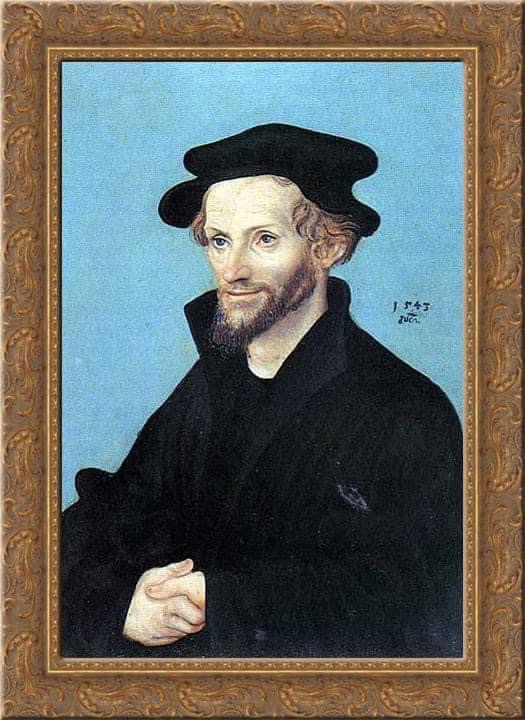
Today the church remembers the Siskel to Luther’s Ebert, the Burt to Luther’s Ernie, the Ginger to Luther’s Fred: Saint Philipp Melanchthon, Reformer, Renewer, and Editor.

Saint Philipp’s true last name is Schwarzerd, and he was born on February 16th at the end of the 15th Century. In Greek, though, his last name is Melanchthon, meaning, “dark earth,” probably a nod to his family’s farming heritage.

Saint Philipp was a great student and a natural talent. By the age of twelve he had already mastered Latin, and by thirteen had Greek under his belt as well. He attended both Heidelberg University and Tubingen where he was awarded a Masters Degree for his studies. He was brilliant, he was a humanist, and eventually he became the first professor of Greek at Wittenberg where he would encounter a grumpy, fiery Martin Luther in the Theology Department.

Luther encouraged Melanchthon to study theology as well as Aristotle, and he eventually started teaching that as well at Wittenberg, proving quite popular with the students. With this outstanding professor roaming its halls, Wittenberg became a leading university in Medieval Europe.

In the fall of 1520 Saint Philipp entered unwittingly into the arena of politics when he married the daughter of Wittenberg’s mayor. Their marriage was both a blessing and included a good bit of tragedy as two of their children died quite young. In this both Saint Philipp and our own Blessed Martin shared a similar heartache. All the same, Saint Philipp and his wife, Katherine, were known to be generous and hospitable to everyone they encountered.

In 1521 Saint Philipp published his Loci Communes, the first compilation of Lutheran doctrine ever assembled. But Saint Philipp was not only interested in theology. With Luther’s help, Saint Philipp would go on to tackle social issues in Germany, reorganizing schools and championing public education. It was Saint Philipp who would take the lead in the development of elementary and secondary education, making the study of the classics as the bedrock of public schooling.

Saint Philipp was often called upon to make appearances at debates and meetings where he would draft reports, refutations, and articles of reconciliation. He was a master writer and had a way of tempering Luther’s often bombastic treatises.

Saint Philipp never entered the priesthood, but rather played the important role of invested layperson. He died in Wittenberg just three years after his beloved Katherine in 1560. He is remembered on this day because today is the anniversary of the Presentation of the Augsburg Confession, the founding document of the Reformation. Melanchthon’s influence and pen is all over that document, and he presented it to Emperor Charles V at 3pm at his diet to settle religious controversies because Luther had already been excommunicated.

Saint Philipp is a reminder for me, and should be for the whole church, that every endeavor is a team effort. Luther would not have gotten far without Saint Philipp, who quietly, brilliantly, created the road on which the Reformation trod.

-historical bits from Pfatteicher’s New Book of Festivals & Commemorations
The Forerunner

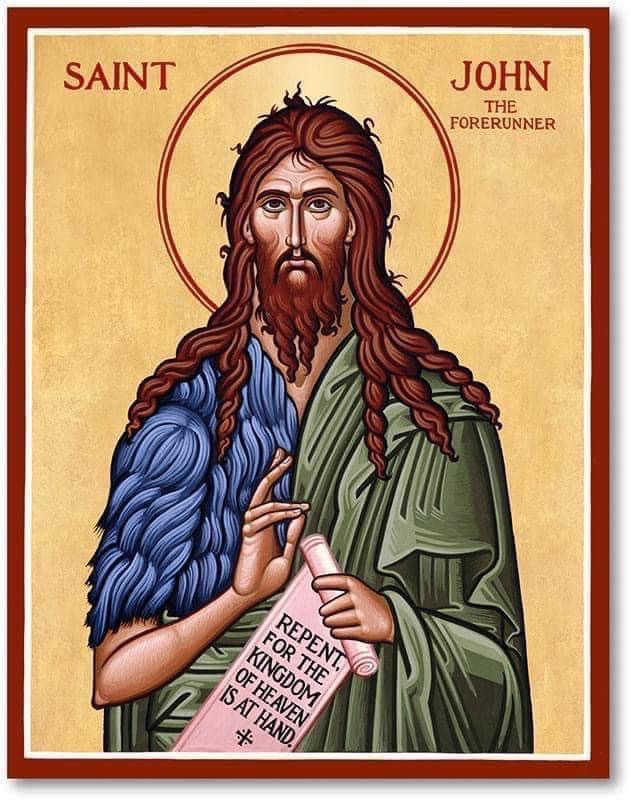
Today the church celebrates the Nativity of John the Forerunner, you probably know him as “John the Baptizer,” popularly called the Cousin of Jesus.

John is the miraculous child of the aged Zechariah and Elizabeth, and we first hear of John’s movement in the world when a very pregnant Mary visits a very pregnant Elizabeth, and the still-wombed John leaps for joy.

John was religiously an Essene, otherwise known as a Son of Zadok, an extremist streak of Judaism known for odd behavior and dress. The Essenes focused heavily on repentance, rejected an immoral life, and publicly critiqued the rulers of the day, the Herodians.

This last part will get him killed in the end.

There are still followers of John the Forerunner in Iraq, believing that he is the rightful and true Messiah. They are a severely oppressed minority.

John’s birth day is no accident and is certainly not factually bound. The ancient church put it squarely six months before Jesus’ natal day, near the other pole of nature’s sequence, the Summer Solstice. As Jesus’ birth was placed near the Winter’s Solstice where light will ever increase, John’s natal day was placed near the Summer Solstice, where light will ever decrease, but never be extinguished. This dating of John the Forerunner’s feast pairs nicely with his own words in the Gospel of John (3:30) where the baptizer says, “I must decrease so that he might increase.”

Interestingly, Saint John the Forerunner is the patron saint of Quebec, and is celebrated all across French Canada.

Saint John the Forerunner is a reminder for me, and for the whole church, I think, that the call of the faithful is the call of both personal and societal critique. So much of what passes for Christianity today is focused too heavily on personal reform. John reminds us that our own internal reform should always lead us to call for societal reform.

Even if we lose our life in the process.

Master of Disguise

Today the church remembers a 4th Century saint that has largely been lost to history, but whose name continues to be used on church signs, street markers (even here in Raleigh), and a number of notable British towns and landmarks: Saint Alban, Master of Disguise and Martyr.

St. Alban was a Roman soldier stationed in what was then the far reaches of the Empire: Verulamium, twenty miles north of London on the British Isles.

One night a priest came knocking at his door seeking shelter from bounty hunter soldiers who intended to kill him for the reward offered. St. Alban took him in, and when the marauding soldiers came to his house, St. Alban dressed as the priest and let the old Father escape.

The soldiers took St. Alban, tortured him, and martyred him in place of the priest, even though they knew they had the wrong person.

At the place of the martyrdom an abbey, St. Alban’s Abbey, now stands.

St. Alban is the earliest person we know tied to the Christian faith on the British Isles, and he’s largely considered the first Christian martyr of Britain (though we have no knowledge of his belief system).

Personally, I like to think that St. Alban was not a Christian, but rather just a good human who understood that when someone knocks at your door intending to harm someone in your house for their beliefs, their skin color, or their heritage, you have no choice but to tell them the truth: there is no one in that house that they can take.

St. Alban is a reminder for me, and should be for the whole church, that sometimes salvation isn’t found in people who believe like you do, but rather in wonderful humans of every creed and stripe who just know the face of the Divine when they see it.

Let those with ears to hear, hear.

Midsummer

On the Summer Solstice the ancient Celts would give thanks for our star.

They’d build fires on the tops of the hills, believing these fires would further fuel the sun. They’d bring their babies close to the fire as a blessing, and they’d dance and sing and daring couples would hold hands and leap over the flame for good luck.

Midsummer was a day of indulgence with shared feasts and partying and plays and dramatic re-enactments of all kinds. As the sun indulged the Earth on this day, so the people took the minute here as summer was half gone (summer on the Celtic wheel is May-July) to bask in the House of Light, as they called the summer fields and hills.

Tonight is a very appropriate night to light a bonfire, enjoy some food outside, and give thanks for our star without which none of us could live.

Change

Today is a day when the church laments.

It laments of white privilege which, by the way, I’ve had more than a handful of “good, God-fearing church members” tell me is fictional. What an ignorant pleasure it must be to ignore truth.

It laments of racism, in which it is (not has-been, is) complicit.

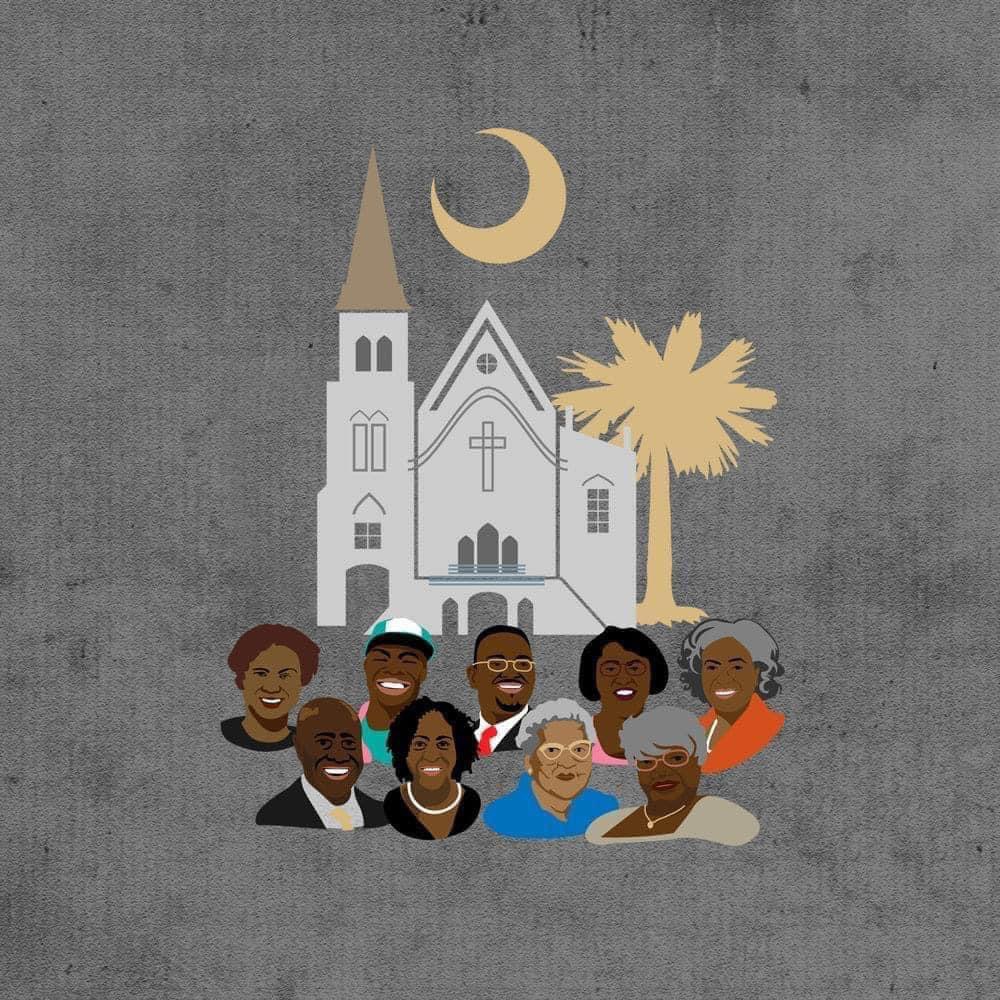
And it honors the Emmanuel 9, gunned down in Bible Study and prayer, after they welcomed the stranger, Dylann Roof, in their midst, a boy taught in a Lutheran church and raised on a supposed diet of grace and peace.

There are no fail-safes in this world, Beloved, not on guns nor gospel perversions.

Today I am reminded of the words of the Reverend William Sloane Coffin, my spiritual mentor and muse, when he said,

“Believers know that while our values are embodied in tradition, our hopes are always located in change.”

So as the Confederate monuments (real and metaphorical) continue to topple around us, as Mary predicted they would in Luke 1:52, we also today lift up our voices in confession for having erected too many racist monuments in our lives by the things we have done and left undone.

Indeed, in many cases the cross, our symbol, has become a racist monument, twisted into the swastika, burned in front of hanging bodies, a barrier between peoples.

But not just those literal monuments. Most especially we repent of all of the figurative ones we erect, too.

Today we cry and lament and work for that change which is the currency of our hope.

(art by Philippe Lazaro)

Saints of Pulse

Though not an official saint day, I would lobby hard for it to become one.

Today the church (should) honor the 49 pulses stopped too soon in the Pulse Nightclub shooting, an act that was both domestic terrorism and hate crime wrapped into one bloody night.

In the days following I remember giving blood, and upon entering the waiting room, finding a number of young adults in tears, waiting. A young woman walked up to the attendant, asking, “How old do you have to be to give? If I bring my mom in, can she sign for me? She’ll give too.”

So much blood. On the dance floor. On the hands of a country that refuses to adequately deal with the scourge of gun violence. In vials filled to help the 53 victims wounded in the act.

And especially now when it seems to be increasingly dangerous for LGBTQIA+ folks due to hateful legislation being passed around the country targeting their representation, their stories, their families, and their dignity, we need to hear the call of the Saints of Pulse and act. We must not remain silent.

Pride month is a month of celebration; yes. But even more so it is a protest against the powers and principalities that seek to harm the splendid diversity of humanity through intimidation, violence, and laws that target rather than protect.

The Saints of Pulse remind the church, and all of us, that until we tackle both the hate of the heart and the lack of regulations that allow people to wantonly act on that rage in mass murder, we’re not done.

We’re not done.