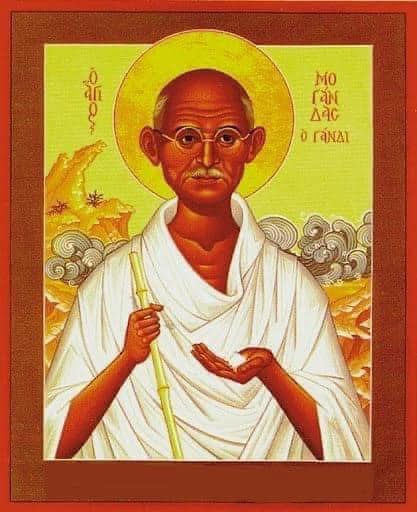
Today the church remembers a martyr who called God by a different name: Gandhi, Peace Activist and Spiritual Leader.
Though one could certainly write a tome on Gandhi’s life (and many have been written!), I do not have enough knowledge of his background to do it justice. What I do know is he threw off the shackles of privilege and, though not a perfect person by any means (he fell into the trappings of the systems around him at times), he adopted a way of life that advocated for the liberation of his people from colonial rule.
He became a political leader. He became a spiritual leader. And he became a world teacher, showing us all how peaceful, nonviolent resistance can move mountains.
On this day in 1948 he was assassinated on his way to prayer (as most religious revolutionaries are…it’s usually on their way to prayer). Though the assassin took the actor, the production continues even today, and many in the quest for justice name Gandhi as an inspiration in nonviolent civil disobedience.
Gandhi is a reminder for me, and should be for the whole church, that nonviolent disobedience, though costly, can change the world. And, don’t we regularly hear something about losing one’s life to gain it?
Gandhi knew something about that. Perhaps he was more Christian than many who wear crosses in that regard…
-icon written by Br. Lentz (purchase at trinitystores.com)
In January the ancient Celts (and us modern Celts, too) find themselves under the Birch Moon.
When a forested area burns, the birch is the first tree to be reborn in the ashes, and so this is the tree that hovers over the first month of a new year.
In January the Celts felt that it was important, particularly in the early part of the month, to resolve all arguments that lingered from the previous year, and forgive or pay or negotiate all debts still loitering in the ledgers of the hearts and notebooks of neighbors and kin.
January was to be welcomed without any old ties to the past. Like the birch tree, January would be a season of new growth out of the old ashes of yesteryear.
As January comes to a close, Beloved, what things in your heart need forgiving? What debts need settling?
Today the church begins to set its collective eyes toward Candlemas (February 2nd), which comes on the heels of St. Brigid’s Day (February 1st).
On the wheel of the Celtic year, spring begins in February. They call it “Imbolc” which means “in the belly,” a sign that we’re in the belly of the cold time and emerging into warmer climes. It’s not over, but it’s beginning to change.
To mark this change they looked toward nature and the animals, seeing if they’d emerge from their dens or remain dormant. In America we call this “Groundhog’s Day,” but it all began with the Celts.
It was also the season where they’d haul out their new candles, as the old ones were spent, and would bless them for new service. These new candles would last longer, possibly the rest of the year. The church coopted this practice and Christianized it into Candlemas.
But we’re not there yet.
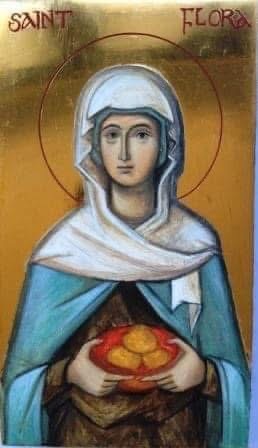
So, to prepare for St. Brigid’s Day/Candlemas, the ancient church honored St. Brigid’s cook at Kildare: St. Blath, Patron Saint of Cooks, Cafeteria Workers, and Volunteer Food Servers.
St. Blath, also known as St. Flora (because “Blath” in Gaelic means “Flower”) was St. Brigid’s convent cook. While we don’t know much about her, she was rumored to be a tireless worker, faithful in good times and in bad times, knowing that full bellies helped bolster spirits.
Which, I think we can agree, is a universal truth with all animals, especially humans.
St. Blath’s work takes on new and urgent meaning when we imagine that those early 6th Century sisters at Kildare, having taken a vow of poverty, would regularly give away their food to the poor. St. Blath was constantly prepping and serving, then, not only the sisters, but also those to whom they offered their meals.
It was said of St. Blath that her bread and bacon were the best in the land, a high honor if you know anything about Celtic culture.
Saint Blath died in the year 523AD, but her legacy of service lives on.
St. Blath is a reminder to me, and should be for the whole church, that it does no good to have faithful people if their other needs, especially their stomachs, aren’t attended.
“The pursuit of wisdom is more perfect than all human pursuits, more noble, more useful, more full of joy.”
Today the church remembers a seminal intellectual in the Christian movement: Saint Thomas Aquinas, Teacher and Bane of all Theo 101 Students.
St. Thomas Aquinas was a firm believer that a Christian must first and foremost be a student of knowledge. We have, unfortunately, forgotten this tenet in these later years of Christianity, often replacing literalisim with learning, but there is yet hope for us still, right?
As a young13th Century scholar, Saint Thomas lived in a world where Aristotle was gaining ground in the schola, and the big tug of war between Aristotle and Plato once again surfaced in the world. The reaction was polarizing: some thought Aristotelian philosophy trumped Christian teaching, while others shunned Aristotle as a heretic, digging more firmly into an anti-intellectual existence.
St. Thomas thought this was a false dichotomy. The academy and the steeple could not only co-exist, but could meaningfully mingle (and marry!) with intention.
St. Thomas was a Dominican, the “Order of Preachers.” Words were his medium, and he used them well (at least in writing). His family was not keen on him going into this itinerant, poor, preaching order, and they forced him to come back and live with them in Italy…which backfired.
Thomas eventually sloughed off the shackles of his family, and went to Cologne, where he studied under Albert the Great. He was shy by nature (he even got the name “Dumb Ox,” a play on his reluctance for public speaking, as he was far from intellectually impaired!), and though the politics of his day plagued both his order and their societal acceptance, he was eventually embraced in both the academy and by the jealous bishops, both who were envious of his intellect.
He initially taught theology in Paris and became close friends with St. Louis IX and St. Bonaventure, a triumvirate of the faith. Eventually, after Bonaventure’s death, St. Thomas returned to Italy and began writing in earnest. Hymns, theological treatises, and his wonderful tome took shape though, it is worth noting, every historian believes his handwriting to be severely lacking.
When Thomas returned to Paris in 1269 the ugly old head of controversy once again emerged, this time between Augustinian theology and Aristotelian philosophy. The church dug in its heels, which gave St. Thomas quite a headache. He decided to leave the turmoil of Paris and go to Naples, where he taught the remainder of his life.
After the St. Nicholas Day Mass in 1273, St. Thomas Aquinas never picked up his quill again. For some unknown reason, he believed that he would be unable to move the needle on such entrenched, polarized viewpoints, and he fell into ill health. He died in 1274.
In life he was known as “The Dumb Ox,” but in death we remember him as “The Angelic Doctor.”
St. Thomas sought to integrate lived existence with theological teaching, marrying experience with the life of the mind. He sought to embrace knowledge while retaining the mystery of existence, and is a reminder to me, and should be for the whole church, that knowledge is not evil, but willful ignorance is.
Let those with ears to hear, hear.
-massive historical props to Pfatteicher’s New Book of Festivals & Commemorations as well as to my Theology and Philosophy professors at Valparaiso University
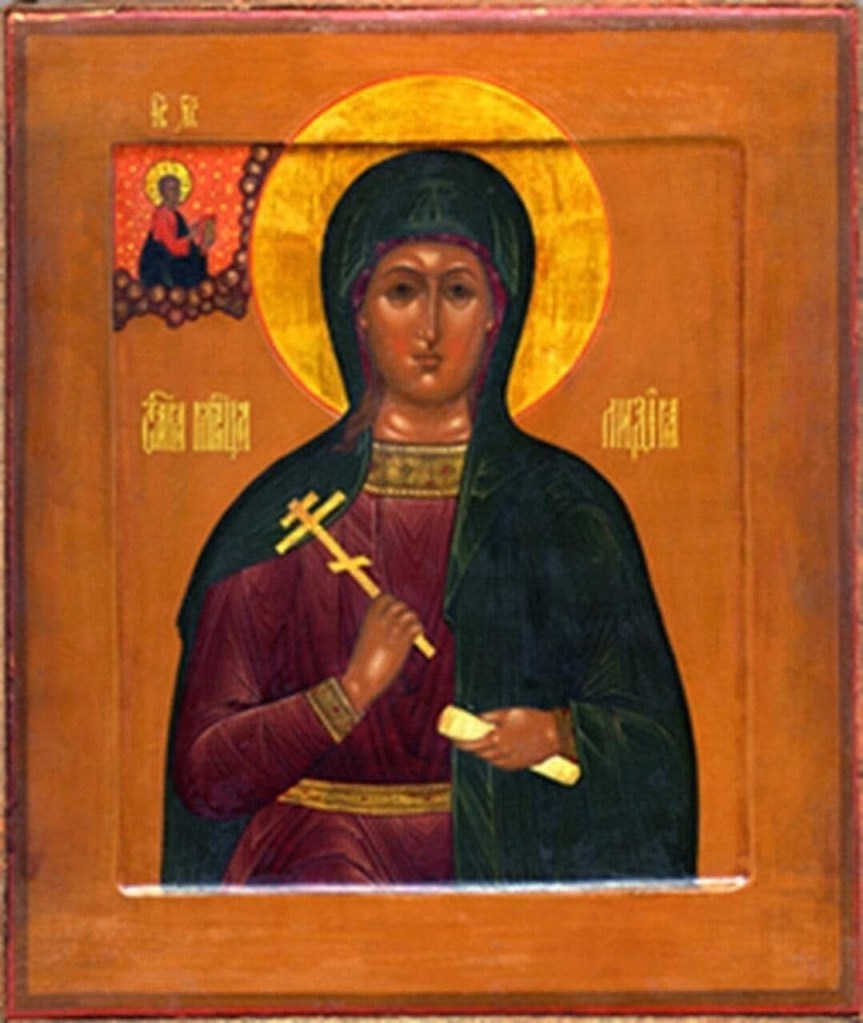
Today the church remembers the valiant and instrumental work of three early-church saints, a yin to the yang of yesterday’s offering: St. Lydia, St. Dorcas, and St. Phoebe, Deacons and Entrepreneurs.
St. Lydia was a European industrialist, a maker of purple-dyed goods which, in the ancient world, required quite a bit of capital. After her baptism she invited Paul and his fellow travelers to stay in her house, which was an instrumental blessing for them, as they didn’t have to earn their support while in her care. St. Paul was known to have a special affection for the church at Philippi, the community founded around Lydia’s hospitality.
St. Dorcas or Tabitha (her name means “gazelle” which is a far cry from the English use of that name, right?) was from Joppa who worked hard for the poor. Her devotion for helping the poor was known and respected by all, and when Peter brought her back to life it was at the urging of those who knew her good work. Dorcas has the distinction of having the feminine form of “disciple” applied solely to her in Acts of Apostles.
St. Phoebe (whose name means “radiance”) was a Deaconess at the church in Cenchreae near Corinth. She was Paul’s patron in many ways, and her example led to the regular order of Deaconesses founded in the 3rd and 4th Centuries. Paul commends her to the church in Rome, suggesting that she was an integral aid who went to assist and advise struggling communities.
St. Lydia, St. Dorcas, and St. Phoebe are the folks who make up the offering difference at the end of the fiscal year by virtue of their generosity and ability. They are the visitation ministers who assist the dying over Jordan, the carpenter who creates an art installation in the Narthex, and the folks who organize the food drive that feeds thousands. They are the ministers who, in their unassumingly powerful ways, make ministry happen day in, and day out in a parish.
They are a reminder for me, and should be for the whole church, that women have been integral, foundational to the movement, and are the pumping lifeblood of the church today despite the reluctance of many to fully accept that fact.
-historical pieces gleaned from Pfatteicher’s New Book of Festivals & Commemorations
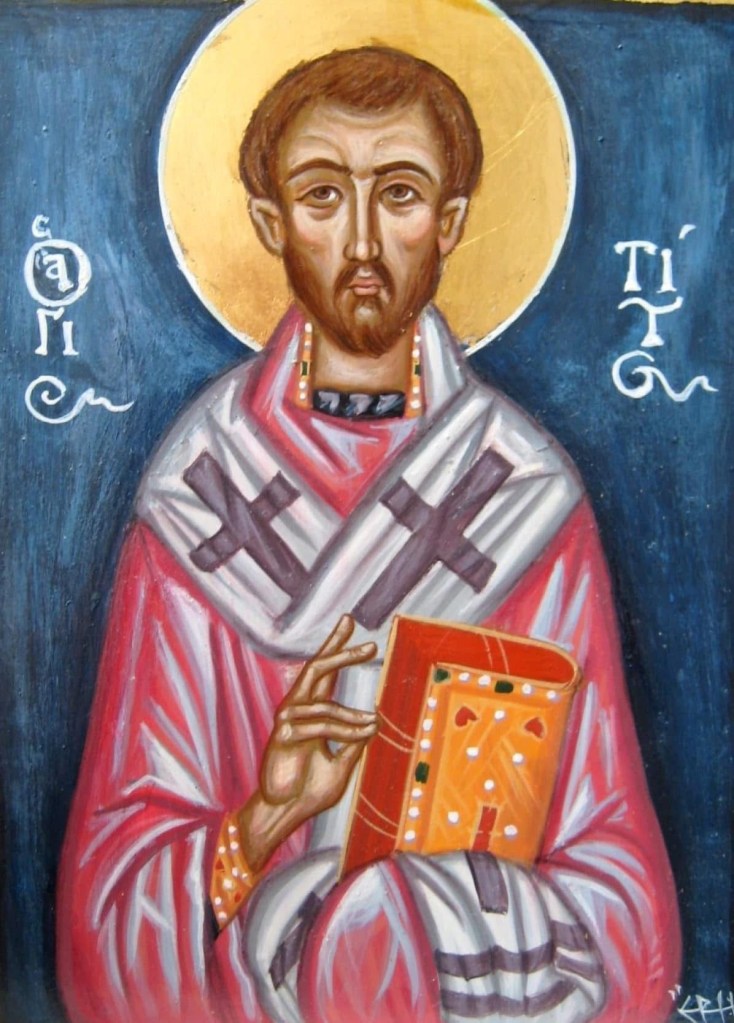
Today is the feast day of my name sake, St. Timothy, who shares it with his companions St. Titus and St. Silas, Compatriots of Paul and Behind the Scenes Apostles.
These three Saints are remembered the day after the Conversion of Paul is honored as a reminder for the church that community counts, not just one lone-wolf Rockstar. In a world of celebrity, Timothy, Titus, and Silas are less entourage and more worker bees of the church in its infancy. St. Paul notes he could not have done his work without them, and they, for their part, are kind of like the dedication page of his ministry.
What do we know about these saints? Very little. Timothy accompanied Paul on his second missionary journey (recounted in the letters to the church at Thessaloniki), and was apparently one of Paul’s first converts on his visit to Lystra. Timothy, by virtue of his name, was born to a Greek father, but his mother Eunice and grandmother Lois are remembered as early Christians and get a worthy shoutout by St. Paul in 2 Timothy.
Timothy had the distinction of being acceptable to both Jewish and Greek Christians, something that Paul used for missional advantage. These apostles were kind of like preludes for church visits: they prepared the church for Paul to arrive.
St. Timothy delivered the letter of 1 Corinthians to the church at Corinth.
St. Titus delivered Paul’s second letter to that church (though, honestly, the ordering is messed up in the scriptures, and there appears to have been another letter somewhere in there that is lost to history). Titus, too, was born to Gentile parents, perhaps in Antioch, and was apparently eventually charged with starting a church on Crete. Tradition says he went on to become the first Bishop there, of Gortyna, and died at the age of 93.
St. Silas (or Silvanus) was a leader of the church in Jerusalem. He replaces John Mark on Paul’s second missionary journey when John Mark and Barnabas set out on their own. Silas was one of the first Christian missionaries to venture into Europe. Some contend that Silas was the one who delivered the letter of 1 Peter, and maybe was even the actual author of that letter (or at least a redactor of it). Legend has it that he became the Bishop of Corinth and died in Macedonia.
These three saints are like the crew that sets up the Fellowship Hall. They are the kitchen team, prepping and serving the meal. They are the tech team, splicing the video and overlaying the audio. They are the ones who hear the small confessions of the faithful as they labor together mowing the church lawn or planting the church flowers.
They are a reminder for me, and should be for the whole church, that the community may be brought together by some Rockstar, but they are built and kept together by the prelude saints who make it all happen, weekly.
-historical bits gleaned from Pfatteicher’s New Book of Festivals & Commemorations
-icons by various writers in the Orthodox tradition
Tonight my Celtic ancestors will honor a more recent addition to the feast day lists: Burns Night.
Burns Night is a nod to poet Robert Burns (b. 1759), a Scottish dear, and tonight they’ll light fires, make traditional Scottish food, and recite the poems of the dearly departed.
Curiously, though Burns Night is meant to honor the birth of the great poet of Auld Lang Syne, it was first celebrated on January 29th in 1802…though they’d soon find he was born four days earlier!
Tonight they’ll eat haggis, a curious mix of organs and grains made into a kind of pudding and eaten with both great pride and great disgust (for those not accustomed to it), along with a recitation of his most wonderful poems.
Burns Night is a night to wave your tartans and give thanks for the poets who came before us.
So, should old acquaintance be forgot and never brought to mind, I’m grateful for the family shoulders I stand on, and the days of auld lang syne.
Today the church honors not a saint, but rather an event: The Conversion of Saint Paul.
This conversion story is thrice told (I just wanted to use the word “thrice”) in the Scriptures, and Paul also references it three times in his letters. This repetition actually makes it one of the most oft-repeated events in the stories of the early church.
Paul, a zealous persecutor of Christians in ancient Palestine, is struck by a blinding vision and, reportedly, the voice of God, which leads him to become a follower of Christ.
This event may be the most influential event for the early church because Paul’s active conversion work (and theology) spread like wildfire throughout the ancient world, especially amongst Gentile communities.
It’s worth noting that this Feast Day also marks the end of the “Week of Prayer for Christian Unity.” It is not an accident that the “Week of Prayer” starts with the Confession of St. Peter and ends with the Conversion of St. Paul, as the two of them did not get along at all. They had different ideas of what the faith should be and do, who should be included in the circle of believers, and yes, it appears they even had different working theologies (of which, I would argue, St. Paul’s ideas won out, for better or for worse).
The one thing they did agree on? To continue working on behalf of the poor.
The church longed for these two pillars of the faith to be reconciled so much that they put them on the same feast day, believing that if they couldn’t be friends in life, they would be companions in death.
The conversion of St. Paul is honestly a feast day I struggle with, mostly due to a long history of colonialism and forced conversions winding through the church’s past. Yet, there is something honest about the fact that Paul, on his own, had an experience with the Divine that made a shift in him, and that can be a force for good, by God.
Christian unity feels a bit like a dream most days. This feast day isn’t even celebrated in the Eastern Church. But, perhaps if we all had a conversion we all might just agree to do that one thing that Paul and Peter agreed on: work on behalf of the poor.
For that to be the case, a lot of the church will have to be converted in the process…
-historical pieces from Pfatteicher’s New Book of Festivals & Commemorations
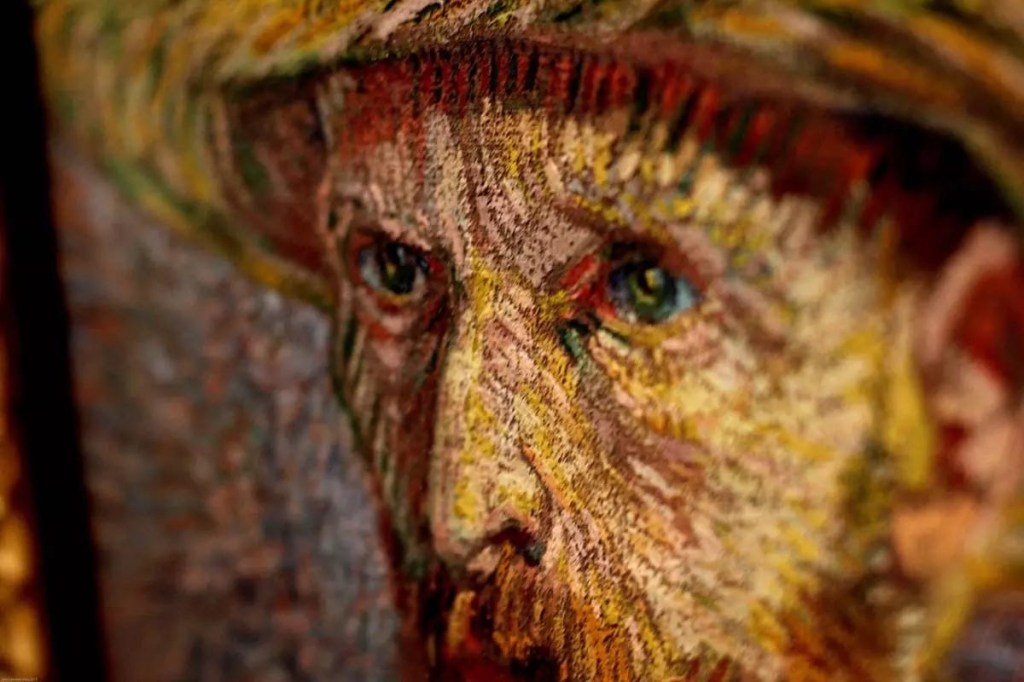
van Gogh, can you tell me how many martyrs does it take to open up a blood bank
van Gogh, can you tell me where does beauty go when it dies?
van Gogh, can you tell me why saints live on car exhaust and are lonely as crushed acorns
while enormous suppurating blisters of men sleep on beds made of dollars, their pillows the breasts of fantastic women
van Gogh, can you tell me you who made paint scream who drew the expressions of the wind
and portrayed leaves and stars writhing in agony as though they were human
tell me which of the satellites circling the earth is mine
how many pairs of shoes does it take to walk to infinity
do you believe the world will ever learn how to cry in unison
van Gogh, with your skin like scorched leather from too much time spent in the wheatfields on your knees, shooting dice with God over who gets to color sunset
didn’t you ever feel like an asshole
incapable of self-preservation always crossing at the end
van Gogh, can you tell me as the sun comes down around my ears in chunks today
as hummingbirds hover at my window cursing me in tiny voices
why roads drag you down them how you are finding light in Paradise and if you have your own easel of if God allows you to paint on the sky
Today the church remembers a 17th Century Saint who was as stubborn as he was prolific: St. Francis de Sales, Bishop of Geneva and Thwarter of Assassins.
Born in Chateau de Sales and educated in the grand cities of France, this St. Francis was ordained a priest (despite his father’s displeasure with the profession), and served for twenty-nine years amidst the uneasy marriage of the Catholics and Calvinists in the Chablais countryside.
He was known around the area for great love for all the people in the land, regardless of their faith. Unfortunately, many others did not regard him with such love, and he had to contend with a few assassination attempts by those who took issue with his Catholicity.
His effective love and preaching did turn many hearts on to the Roman Catholic expression of the church, much to the chagrin of the Calvinists who had worked hard to evangelize in the area.
In 1602 he was appointed Bishop of Geneva, and through this same outlook of love began to slowly change and restructure the diocese, known for being quite difficult and unruly. He gave away almost all of his private money, and lived a simple life. The King of France tried to persuade him to move to Paris, but he opted to skip the pomp of the huge city and remain where he was.
Children are said to have adored him. He took great pains to teach the laity of the church about the faith, something often overlooked by other clergy who preferred to focus on their own scholarly pursuits.
He wrote a number of books, including his twenty-six volume tome, The Love of God.
With Jane de Chantal he founded the Order of the Visitation in 1610 which worked to instruct young women in the faith.
He was stubborn in his love for all people, stubborn in his refusal to live the “high life,” stubborn in his ability to keep living despite the attacks on his life, and stubborn in his belief that God is best known through the eyes of the heart rather than the cold eyes of the head.
Unfortunately St. Frances de Sales died of a stroke at the age of fifty-five. After his death a local Calvinist minister remarked, “If we honored any man as a saint, I know no one since the days of the apostles more worthy than Bishop Frances.”
That kind of love, the love that shines bright enough to cut through animosity and political tension, is rare…and much needed in this world.
St. Frances de Sales is a reminder for me, and can be for the whole Church, that doctrine without love is little more than trite moralism and vacuous philosophical games on parade. Perhaps St. Paul and St. John (and St. George and St. Ringo) were correct: All you need is love.
St. Frances de Sales might have agreed.
-history helped along by Pfatteicher’s New Book of Festivals & Commemorations -Icon written by Theophilia










 Reluctant Xtian