Unknown's avatar

About Timothy Brown

A pastor. A writer. A dreamer. Occasionally a beer brewer.

Bias Toward the Margins

Today the church honors the Feast Day of St. Luke, the Evangelist.

We believe Luke was a Greek, and a Gentile, but we’re not really sure where he’s from or much about his life, other than he was a physician. He was a disciple of St. Paul and worked alongside him in missionary endeavors.

In Luke’s Gospel (which has a sequel in the Book of Acts) we learn that Luke was not an eyewitness to anything Jesus did or said. According to early lore Luke wrote his Gospel in Greece and preached in Bithynia, though we can’t verify any of that. Lore also has him reaching the ripe old age of eighty-four, a bachelor all those years.

Again, none of that is really more than speculation.

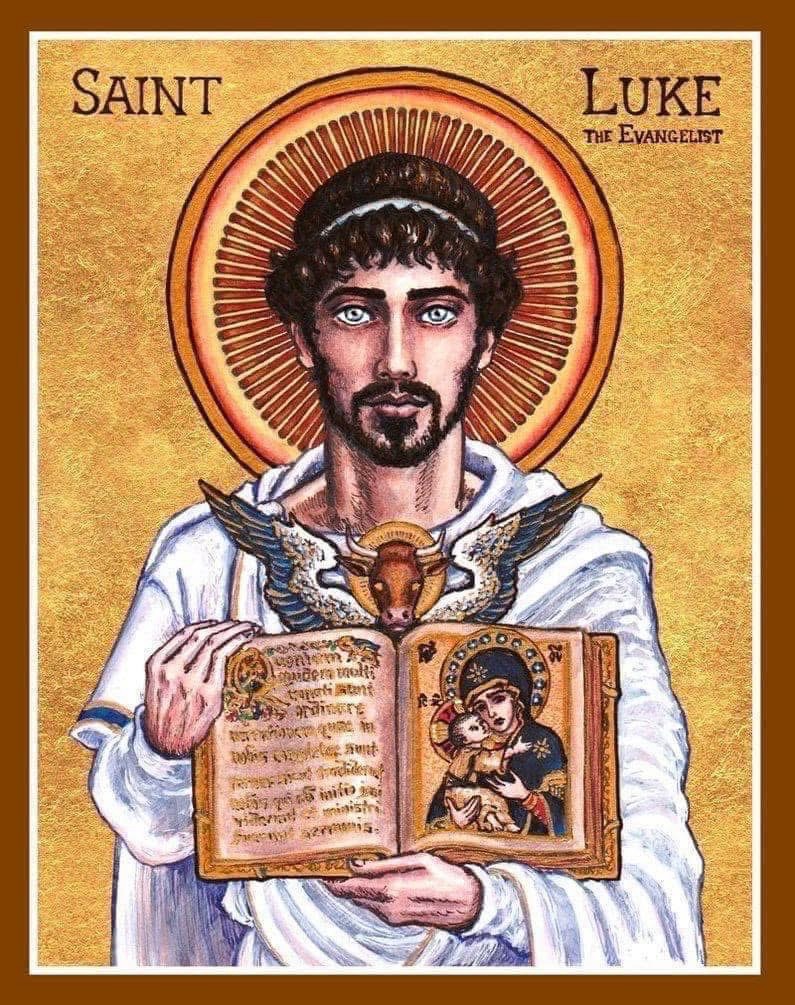
There is also an obviously dubious claim that he painted the first picture of Mary, Mother of Our Lord. For this reason many icons have him holding a painting of her.

The observance of this day as his feast day is quite old in the Eastern Church, and may be closely associated with the actual day of his death. On this day in many places people will make special donations to hospitals and nursing homes, an homage to this physician-evangelist, and there may have even been some “healing services” or anointing services happening in some churches (unless there is a prolonged pandemic…in which case I imagine this physician would rather churches refrain from meeting in person rather than risk infection).

Luke’s spiritual sign is the patient ox, because he plods along in his story, slowly, recounting in detail much about Jesus and the life of the early church.

Luke’s Gospel is marked by special attention to women, the sick, and the marginalized communities in general in the ancient world. For this reason it is the favorite Gospel of many. Luke, for instance, has Jesus giving his main sermon not on a mountain, but on a plain…a sign of equality (and, also, a reminder that the Gospels don’t all match up). Luke also notes that “Blessed are the poor” in his recounting of the Beatitudes includes an economic element. Matthew changed it to “poor in spirit,” but Luke has it as “those who are in poverty.”

Luke, and in his recounting, Jesus, cares deeply for the poor, the sick, and the marginalized.

He is a reminder for me, and for the whole church, that the church, too, has a duty first and foremost not to the powerful, but to those Jesus felt a duty toward: the poor, the sick, and the marginalized.

-icon written by Theophilia

The Ivy Moon

The ancient Celts found October to rest under the Ivy Moon. Now half past the month, the harvest is pretty much done and everything is starting to wear its nakedness.

But they called this Autumn moon Ivy Moon because ivy has a difficult time dying, and can live on even after the host plant has died. Ivy, for them, was a reminder that everything goes on in some form or fashion: life, death, rebirth.

It’s the way of things.

Ivy is strong, evergreen, resilient. Though the Earth is wearing their nakedness in these days, Ivy reminds us that the wheel is turning, not dying. It is spinning, not stopping.

Life renews itself.

Conversion

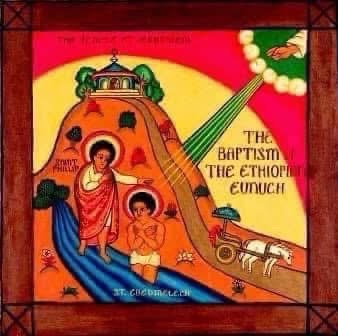
Today the church honors St. Philip the Evangelist, not to be confused with Philip the Apostle…or any of the other nine hundred Philips in the ancient world. Seriously, it’s like they were short on names…

Philip was one of the Greek speaking disciples chosen in Acts 6 to distribute food to the widows and the poor in Jerusalem. This was the first organized ministry we have recorded by the ancient church, and note that it wasn’t planning a Harvest Festival, Rally Day, or a Christmas Bazaar.

It was feeding people.

Philip would go on to preach the gospel in Samaria, where Simon the Magician was said to be converted by him. It’s worth explaining that “Magician” in the ancient world probably meant “Sorcerer,” which is pretty cool if you think about it.

St. Philip would be the one to break down barriers in the church when he encountered the Ethiopian eunuch on the road and helped him make sense of the scriptures. This important Ethiopian was a sexual minority, and I think it’s important on National Coming Out Day (here in the United States) to honor the fact that St. Philip in the First Century welcomed a sexual minority in the church through baptism.

If only the modern church would emulate St. Philip.

Well, actually, it’d be best if the modern church would emulate the Ethiopian, wrestle with the scriptures, and ask to be converted.

St. Philip was also known to have four daughters who were called prophets in the early church. They hosted St. Paul on his journeys, and it is thought that he ended his ministry life preaching and baptizing in Asia Minor.

St. Philip is a reminder for me, and should be for the whole church, that the organized faith has a long tradition of welcoming and affirming humans from all walks of life. St. Philip, when entertaining the possibility of withholding the sacrament of baptism from the Ethiopian, received pushback from the traveler, saying, “There is water here. What is preventing you?”

What prevents us from extending the accepting grace of God to people?

The question remains.

-historical bits from Pfatteicher’s New Book of Festivals & Commemorations

-I love this icon, but cannot find who wrote it. If you can find it, please let me know.

Jack

Everything has an origin story. Even a few of them mixed together.

For the ancient Celts, Samhain was full of fire rituals intended to both purify land and scare off any trickster faeries and protect the farm from curses.

If you went out into the night on Samhain you’d tie a carved turnip on a string, aglow with a piece of charcoal inside. These glowing faces, called Jack-o’-lanterns referred to an old Christian tale about a blacksmith named Old Jack (sometimes called Stingy Jack) who, because he was so evil, was barred from both heaven and hell.

Instead his purgation was to roam the back roads on Hallowe’en night with nothing but a turnip lamp to light his shadowy way.

When Samhain was brought to the so-called New World (spoiler alert: not “new” at all), pumpkins were much more common than turnips, and so Irish settlers used those for lanterns instead.

Defender of Humanity 

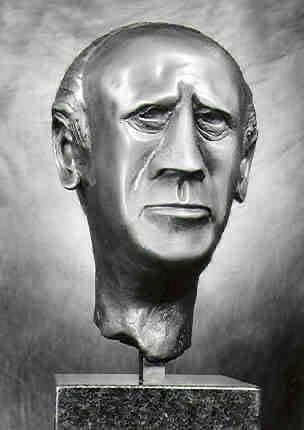
Today the church honors Oskar Schindler, Dissident and Defender of Humanity.

Schindler was born in Czechia in 1908. In 1939 he joined the Nazi party, where he benefited from the Nationalist movement by being given government contracts and favors for his loyalty.

When Nazi Germany invaded Poland, Schindler took over two manufacturing companies in Krakow and made enormous profit off of cheap labor: Jews from the ghetto.

But then Schindler saw something that shook him and stirred his moral compass: he saw Jews being deported to killing camps. Despite the significant monetary loss and danger, Oskar transferred his Jewish workers from his factory to safer locations. Under the guise of a loyalist and business man, Oskar Schindler moved a number of Jews to his native land of Czechoslovakia, and this became his life’s priority.

Using the factory as cover for his work, Schindler created an internal system for moving Jewish people young and old to safe locations outside of occupied lands. In fact, there is a story that a train of nearly 1,000 Jewish people was inadvertently sent to Auschwitz rather than Czechoslovakia, and Schindler offered the Nazis diamonds and gold in exchange for the souls on board.

Schindler would ultimately save 1200 Jewish lives from the death camps, and today over seven thousand descendants of those he saved are living throughout the world. He was not perfect by any means, and had many personal flaws, but when he saw the inhumanity around him he defied his party, his government, and risked his life to save the suffering.

Schindler is a reminder to me, and should be for the whole church (and world), that the law is not always moral.

In fact, sometimes what is moral calls our legal system to account for itself on the stage of the world.

We must wrestle with our conscience when lives are being bruised and broken in the streets, and we must always side with those being bruised.

Always.

Let those with ears to hear, hear.

-historical notes taken from Claiborne and Wilson-Hartgrove’s Common Prayer: A Liturgy for Ordinary Radicals

Fall

Books litter the bed,
leaves the lawn. It
lightly rains. Fall has
come: unpatterned, in
the shedding leaves.

The maples ripen. Apples
come home crisp in bags.
This pear tastes good.
It rains lightly on the
random leaf patterns.

The nimbus is spread
above our island. Rain
lightly patters on un-
shed leaves. The books
of fall litter the bed.

-James Schuyler

Loved and Died

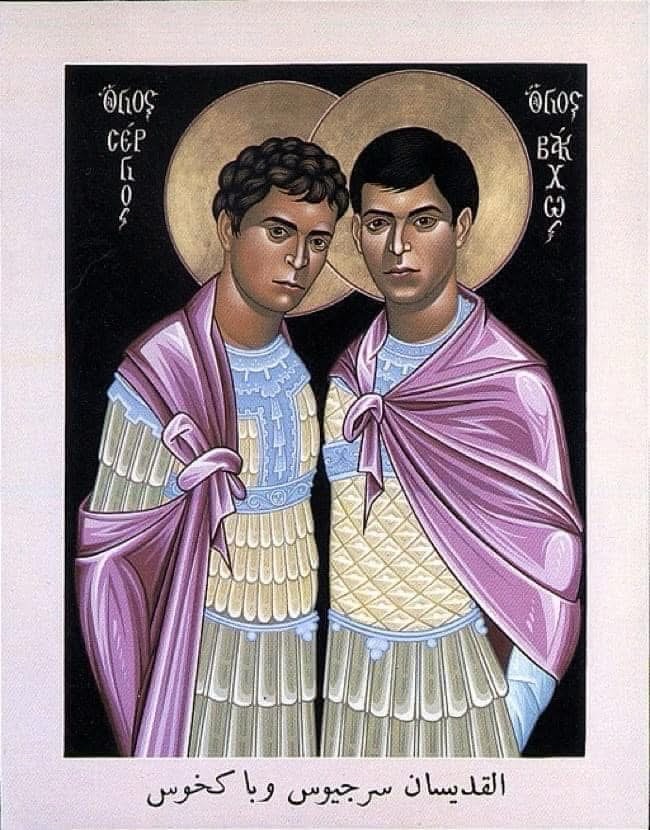
Today I would propose that the church honor two 4th Century saints who loved one another and died together: Saint Sergius and Saint Bacchus, Soldiers, Martyrs, and LGTBQ Icons.

Some calendars honor Saint Sergius and Saint Bacchus on October 7th, but because the Lutheran Church honors St. Muhlenburg on that day, I would offer that today, a day when no particular saint is lifted up, would be a great day to remember these two trailblazers.

Sts. Sergius and Bacchus were young nobles and high ranking legionnaires in the Roman army under Galerius. They were secretly Christian, and when this was exposed, they were arrested and told to make a sacrifice to Jupiter.

When Sts. Sergius and Bacchus refused, they were tortured.

It is reported that Sts. Sergius and Bacchus had pledged themselves to one another in love, and that in that same breath they pledged themselves to Christ, claiming that in their union they had also become one with Christ.

This oathtaking sounds very much like vows.

In early Rome this oath was considered an act of “brotherly love,” but that moniker over their devotion to one another falls flat when compared to the sincerity of their words.

Sts. Sergius and Bacchus died at the hands of their torturers. It is reported that Bacchus died first and appeared in a vision to Sergius, saying, “My crown of justice is for you, and yours for me.” It’s interesting to note that “crowning ceremonies” were one of the ways same-gendered couples were formally joined in union in ancient Rome.

They are a reminder for me, and should be for the whole church, that LGBTQ Christians are not only not recent, but have always been, from the very beginning of the movement.

Let those with ears to hear, hear.

-icon written by Br. Robert Lenz and was first displayed at the Chicago Pride Parade in 1994

-historical bits gathered from memory and a number of sites

On Weak Sauce

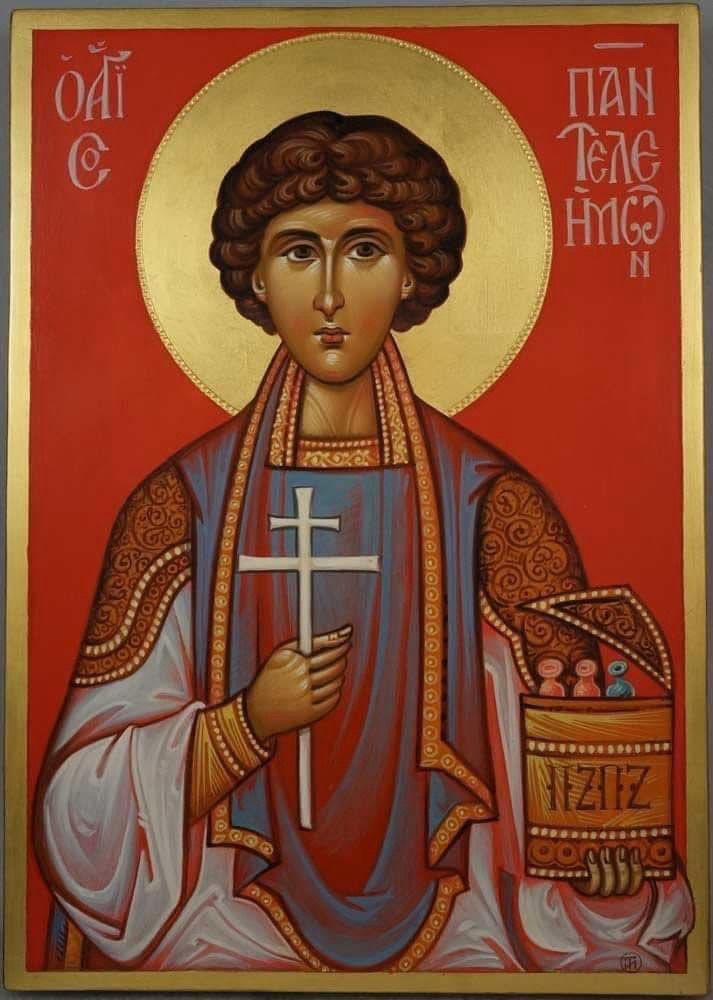
Today the church remembers one of the very early Christians of the faith: Saint Pantaleon, Physician, Martyr, and Emancipator.

Saint Pantaleon was supposedly born to a wealthy well-connected father, and was instructed in the faith by his mother Eubula. She died early in his life, however, and he went off to medical school letting his faith practices fall by the wayside.

A familiar story if there ever was one, right?! How many go off to university and seek out other distractions? Every parent is totally resonating with this story now…

So, Pantaleon is in medical school studying under the renowned early physician Euphrosinos. His acumen in the healing arts got him the enviable position as personal physician to Emperor Galerius.

It was Saint Hermolaus who came back alongside Saint Pantaleon and further taught him in the faith, telling him of the healing stories of Jesus which tantalized this physician’s imagination. He began to practice the faith again.

When his father died (who also became a Christian) the vast wealth of the family was given to St. Pantaleon who promptly freed all of the slaves, distributed the money to the poor, and became known as a wonderful humanitarian in the city.

All of this doing good, and his high position, caused his colleagues to become envious. When Emperor Diocletian came to power, Saint Pantaleon was exposed as a Christian and was beheaded (many a lore arose around his martyrdom, including the idea that the wild beasts were turned on him but only gave him cuddles because he was such a nice guy!).

He died in the year 305 AD.

Saint Pantaleon is a reminder for me, and should be for the whole church, that just saying “Jesus Christ is my Lord and Savior” without doing justice, loving mercy, and walking humbly is weak sauce indeed.

And much of popular Christianity is totally weak sauce.

-historical bits taken from common source materials
-opinions my own
-icon is traditional Greek Orthodox depiction

Meaning Making

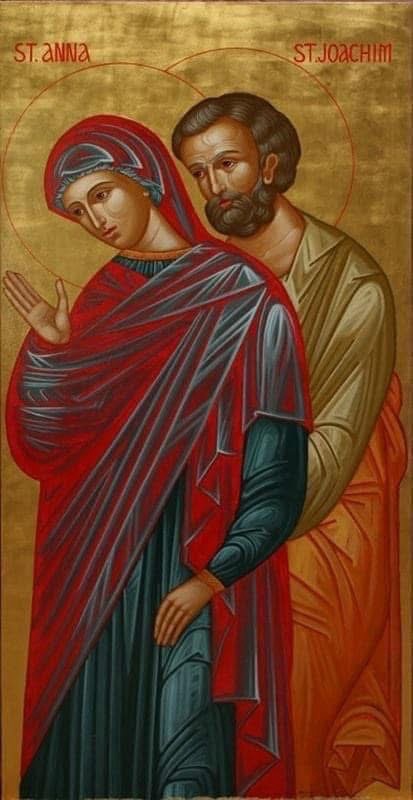
Today the church remembers two saints who we aren’t even sure existed, yet nevertheless hold an important (if figurative) place in the canon of Christianity: Saint Anne and Saint Joachim, Parents of Mary, the Mother of Our Lord.

Mirroring Abram and Sarai, Hannah, and Elizabeth and Zechariah, the lore on Anne and Joachim is that they reached an old age childless. Miraculously one day, Saint Anne was with child, and following in their faith ancestor’s footsteps, they raised the young girl (named Mary) in the temple to be taught by the priests.

Spoiler alert: this Mary would miraculously conceive Jesus and, well, you know the story.

We learn much of this from a second century apocryphal gospel of dubious authorship known as the Protoevangelium of James.

Nevertheless, the ancient world loved a good story, and this one fit the bill. The cult of Saint Anne grew and spread and really rooted itself in the mid 6th Century when Justinian I in Constantinople built the first church dedicated to her. When the details of these two saints became fleshed out and the immaculate conception of Mary (December 8th) was formalized, there was no looking back: Saint Anne would be assumed real, and would be really loved by many Christians.

In fact, our own Blessed Martin Luther loved Saint Anne so much, it was to her that he prayed when he felt his life was in trouble, promising her that, should he live, he’d become a monk.

In other words: the Reformation may never had happened had Saint Anne not been on Luther’s mind (though, perhaps he would have prayed to some other saint…who knows?).

Saint Joachim, like his son-in-law Joseph, takes the back seat in the lore. In fact, nothing else is really said about him other than he and Anne were together, he was old, and he had no children before Mary.

Saint Anne and Saint Joachim are important, though, because it just hammers home how much we love and adore lineage and tradition and long for meaning beyond meaning.

I mean, what are humans but meaning-making mortals?

-info gleaned from Pfatteicher’s New Book of Festivals & Commemorations

Son of Thunder

Today the church remembers one of the first called to follow Jesus: St. James the Great, Son of Thunder and Martyr.

Saint James the Great (he was called that because he was older than his brother John) was born in Galilee and worked as a fisherman. Jesus nicknamed James and his brother John, “Boanerges” or “Sons of Thunder,” probably as a nod to their quick tempers and flashpoint spirits.

Saint James was reportedly in the inner circle that Jesus had, the C-suite if you will (though I bet Mary Magdalene was also in there, just conveniently left off the record). He witnessed Jesus raising people from the dead, curing the sick, and being transfigured on the mountain.

He also fell asleep at the Garden of Gethsemane while Jesus was praying and fled when the soldiers came.

Saint James played an active part in the early church post-resurrection, and has the sad distinction of being the only Apostle to have his martyrdom recorded in the Biblical Canon (Acts 12:2) as he was beheaded by Herod Agrippa I in the year 43 (or maybe 44).

Though most all strains of Christianity honor Saint James the Great, no one can agree on a date. The Orthodox Churches give him a nod on April 30th, and the Coptic Churches venerate him on April 12th. The Western Church decided on July 25th probably because his relics were officially buried on this day in 816 AD at the Church of Saintiago de Compostella.

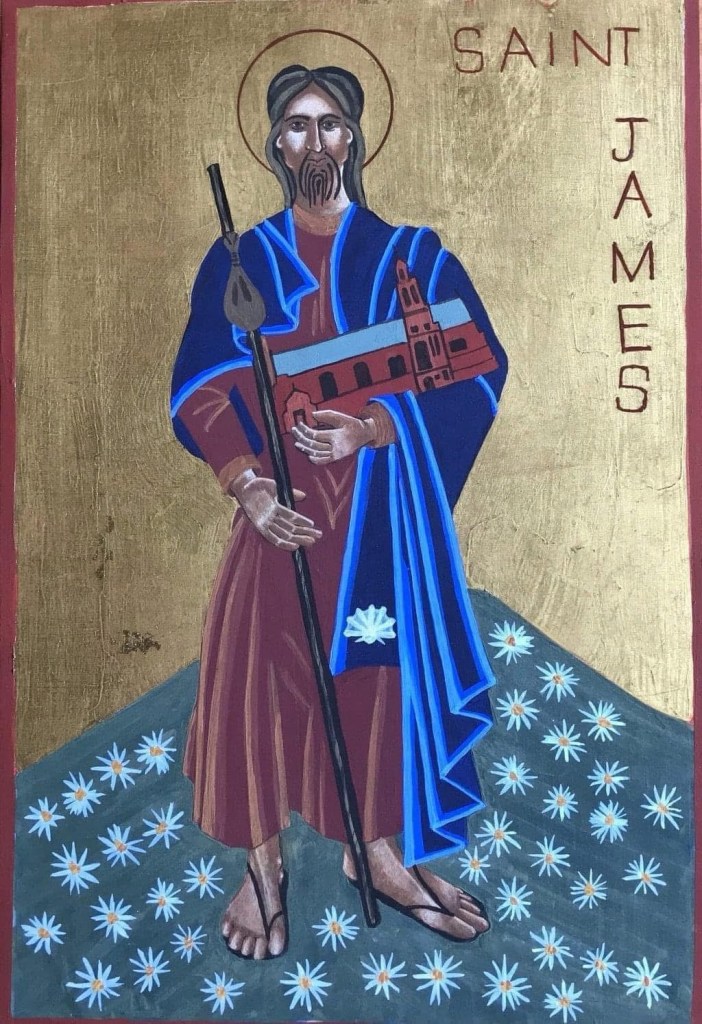
Saint James the Great is a patron saint of travelers, and you can walk his famous “pilgrim way,” the Camino de Santiago. A winding trail of pilgrim roads through Spain, Portugal, and France, the Camino ends at the relics of this beloved and revered Apostle, but best to warm up the hiking boots before you tackle it…it’s not easy.

Saint James the Great is often symbolized by a shell, a nod to his fishing background. Legend has it that eating an oyster on this day will keep you from being poor (though it’s not really oyster season, so be careful!).

Saint James the Great is a reminder for me, and should be for the whole church, that sometimes we get remembered for things that really don’t have much to do with us, and that’s ok. There is no good reason for Saint James the Great to be the patron saint of pilgrimages, and yet, here we are remembering him for it.

I mean, I guess in many ways it’s totally fine, right? He was a pilgrim in this weary world, like all of us, making his way.

-historical bits from Pfatteicher’s New Book of Festivals & Commemorations

-icon is “The Daisy Hill Saint James the Greater, ” written by Glenys Latham specifically for The Church of Saint James Daisy Hill in Bolton, United Kingdom