Unknown's avatar

About Timothy Brown

A pastor. A writer. A dreamer. Occasionally a beer brewer.

December 10th: All is One…Really

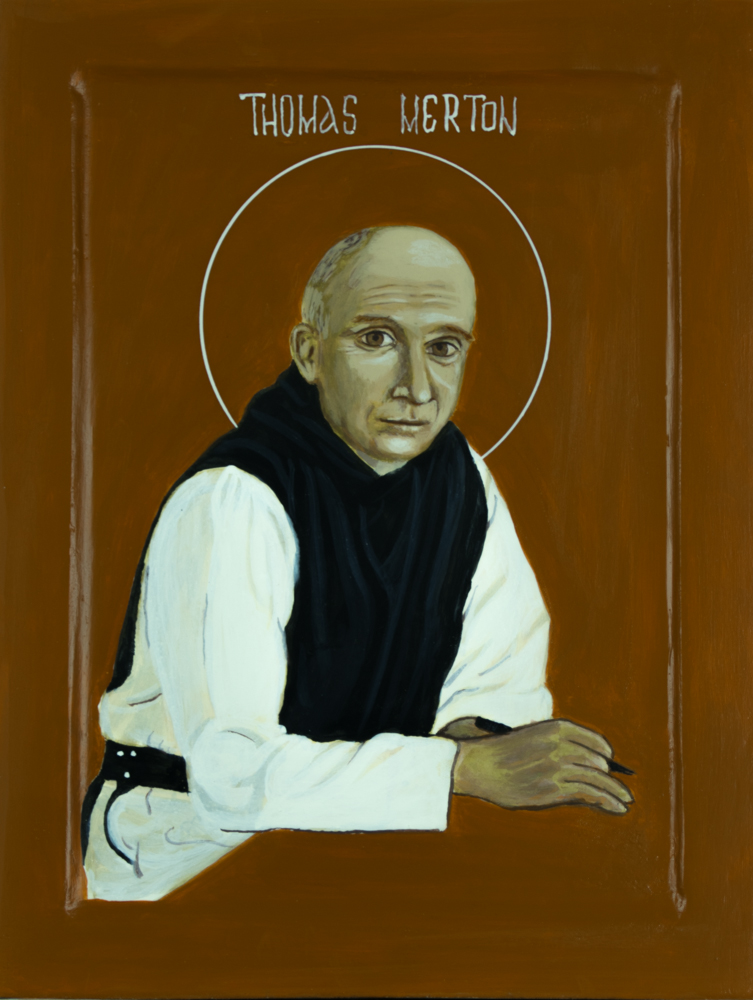
icon by Peter Blackwood

On December 10th the church remembers blessed Thomas Merton, and Kentucky monk who, when you read him, sounds much more philosophically Eastern than Western. He noted that his time spent amongst the ancient Buddha statues in Asia was perhaps his most formative religious experience. Indeed, his whole career as a writer, theologian, and scholar of comparative religion was directed at traversing boundaries both within Christianity and outside of the faith.

As a mystical theologian, one of what Fr. Richard Rohr would call the “perennial tradition,” he doesn’t fit nicely in any category. Rather, he seems to expand every category.

If Lent is a time for the pious, Advent is when the mystics have their day, Beloved.

Mystics are those theologians (and, I think I find myself in this category) that are found in every religious tradition but permeate the borders of them all with their notion that the oneness of everything is the deepest truth, and we’ve merely forgetten it.

The mystics in the Celtic tradition have this thought that the “original sin” (if you want to call it that) of humanity was not disobeying God, but rather forgetting their oneness with God and one another. In learning the difference between good and evil they started to draw boundaries in the world, false boundaries to organize people into the “in group” and the “out group.”

Humans were better than all the rest of creation, rather than a part of it.

Men were better than women.

The Divine was outside of the world, rather than in it.

I’m right, you’re wrong.

These boundaries cause harm and separation and conflict…and that’s where we go wrong.

This does not, of course, try to eliminate differences. By no means! Any path that tries to erase differences is a path of ignorance. “We all bleed red blood” is just an excuse some use to ignore the uncomfortable conflicts that happen when we live in close proximity to difference.

Mystics, rather, embrace difference as all part of the same beauty and don’t erase them, but rather erase the status-making game that humans attempt to play when encountering difference.

Merton, and the mystical tradition, meditate on the idea that “good and bad,” “right and wrong,” “in and out,” and all these other comfy compartments we use to organize our spiritual and secular lives are unhelpful in the end. In fact, the idea that there is a “spiritual life” and a “secular life” is a false dichotomy, we’d say!

Dualisms, our penchant for making things “this or that” is the primary sin of humanity.

All is one.

Merton has this lovely quote about Advent, saying, “The Advent mystery is the beginning of the end of all in us that is not yet Christ.” (_Seasons of Celebration_ by Merton)

For him, “Christ” was not the historical Jesus bound to a faith tradition, but rather the Cosmic Divine Presence the permeates all things (if you look at the Epistle of Ephesians you get glimpses of this expansive idea of the Christ). Advent, then, is that time when we wait for the transformation of everything, all things, into an embodiment of God’s presence. An embodiment that time cannot hold, but yet somehow does in fits and spurts.

We wait for everything to be resolved, in other words.

Sometimes we forget that the ongoing process of turning and changing everything back into our oneness is happening…but it is. Mystics like Merton trust this.

Another poem of Merton’s, a poem about Christmas, starts out like this:

“Into this world, this demented inn in which there is absolutely no room for him at all, Christ comes uninvited…” (Room in the Inn)

A world full of compartments and containers doesn’t leave any room for Christ, and so Christ comes uninvited to break down the barriers, Beloved, between (as Paul would say) “Jew and Greek, male and female, slave and free…” (Galatians 3:28).

Advent is the time of year when we remind ourselves of this, again, and wait, watch, and wonder at how it happens, slowly but surely, in these shadowed days.

For your Advent playlist, throw on one of the most mystical bands out there, Coldplay, and spin “Fix You.” It’s a song about perceived failures and how, from the inside out, you (and me) are being made whole again.

One again.

December 9th: What Happened to Faith?

Sometimes I wonder what happened to faith.

My own has morphed substantially, even in just the last ten years. This is undeniable, and I’ve stopped running from it. In fact, I’m feeling more congruous than ever at the moment when it comes to the mobius strip of my being: my insides matching my outsides.

But I also wonder about the Christian faith in particular. What the hell has happened?

Advent, with this beautiful story of Mary and Joseph being forced to travel to Bethlehem for political reasons found resonance with me when I traveled to Tucson back in 2008. There, as we walked through the desert in a passage often traversed by people immigrating without papers, we found a little pink backpack.

A little girl’s backpack.

We were setting out water jugs there in the desert so that, should a traveler happen upon it, they’d at least have some water in some of the most parched earth of North America.

We found something else out there, too: a water jug slashed all to pieces, the water long gone in the sands. Someone didn’t want a traveler to drink…

Now, I don’t know the particular faith background of whomever did that slashing, but just a few years ago when it was exposed that the government was keeping children in cages, forcibly separating them from their parents, I heard people of faith (people I know and love!) say, “Well, it’s their parent’s fault. They shouldn’t have brought them here…”

Pregnant Mary and Joseph had to travel to Bethlehem for political reasons, and (if you trust the Matthew account), had to flee to Egypt due to violence and unrest…

I mean, look, this is Maria and Jose having to bring their children with them, forced by politics and persecution, to towns and over unfamiliar borders, and Christians shrugged when they were put in cages.

Defended the cages, not the people.

Saw the “faithful” response as guilting the people, not condemning the cages.

Saw the “faithful” response as defending anti-immigration rhetoric and policies, and not looking at the people fleeing political strife and persecution.

This is the damn story we’re woven into, and we don’t recognize it because we’ve divorced ourselves from the narrative.

In this season of watching, wondering, and waiting, I’m wondering a lot about my faith, and about the faith.

Beloved, what do you think happened?

I ask this as one would ask a good question around a campfire, late at night when the best conversations happen. Advent is a season for asking nighttime questions. I think it’s a safe season to do so because in this kind of nighttime we are unafraid, what with candles lighting our way and hope in our heart.

I have hope for the faith, Beloved; don’t mistake my questions for abandoning anything.

But I can hold hope and concern at the same time…

Today’s song to add to your Advent playlist is Over the Rhine’s “New Redemption Song.” Give it a listen:

Lord, we need a new redemption song
Lord, we’ve tried, it just seems to come out wrong
Won’t You help us please, help us just to sing along
A new redemption song, a new redemption song

December 8th: Immaculate (re)Conceptions

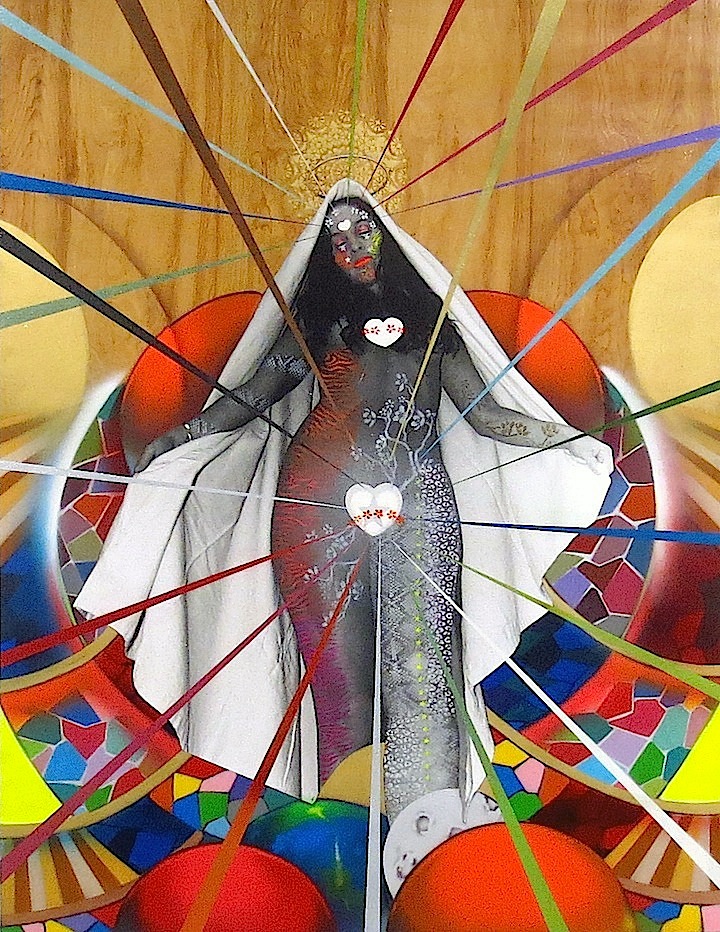
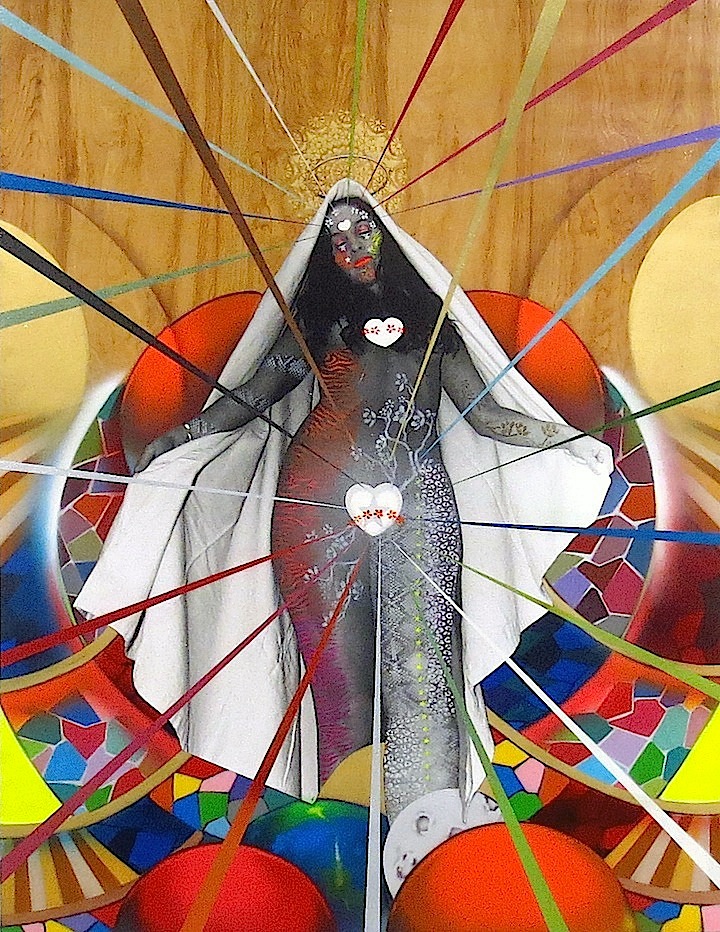
icon by Chor Boogie (https://streetartnyc.org/wp-content/uploads/2016/03/chor-boogie-immaculate-conception-art.jpg)

On December 8th many Roman Catholic, Anglican, and Orthodox Christians celebrate the Feast of the Immaculate Conception. Many mistake this feast for the day when Mary supposedly conceived the Christ in an immaculate way, but that’s not it at all.

The Immaculate Conception honored on December 8th by many Christians is not the conception by Mary, but of Mary. The lore goes that this is the day her mother, St. Anne, conceived Mary by immaculate means.

There is much to unpack here (theologically, biologically, sexually), and that unpacking doesn’t fit nicely in a devotional space.

But I wonder, if we can for just a bit, examine the deep root of all this talk about “the immaculate” for a moment.

Why does everything have to be perfect? Why do we desire that?

Why is religion obsessed with the spotless and blameless? I ask this question because I think that, when religion is at its best, it helps people make sense of the muck of life, in the muck of life. There’s nothing spotless about that at all!

I don’t need a spotless Jesus, and I certainly don’t need a spotless Mary.

What I need is a way to sort through the muck of the world. And the path doesn’t have to be perfect (what is perfect?); it doesn’t have to be immaculate in the least.

I just need it to be accessible.

And for someone (like me) who is not immaculate, all this immaculate talk doesn’t do that, Beloved. It doesn’t do that at all…

The bald and beautiful mystical teacher, Father Richard Rohr, says this about so-called perfection, “The great mystics tend to recognize that Whoever God Is, he or she does not need our protection or perfect understanding…All our words, dogmas, and rituals are like children playing in a sandbox before Infinite Mystery and Wonderment.”

This Advent I’m not waiting for the Divine to make things immaculate; I’ll happily settle for better.

But one of the things that I do like about the idea of the Immaculate Conception is this notion that from someone, and in this case a young woman, amazing things can happen, the journey to “better” can be kickstarted.

And that I’ll sign on to every damn time.

As we wait, watch, and wonder in this pandemic Advent, add New Republic’s “Better Days” to your playlist. We don’t need it to be immaculate, Beloved, just better.

Just better.

December 7th: The Ancient Alchemy of Waiting and Muzzling

Idle hands are the Devil’s playthings.

Or, so I’ve been told.

This bit of sophistry that parades around as “wisdom” doesn’t know Advent, the time of idleness and waiting. It doesn’t see the beauty in meditation and stillness. This bit of fake bumper-sticker sloganism smacks of consumerism and the idol of a meritocracy, not the holiness of idleness.

There is a bit of Celtic wisdom that we need for today, a wisdom that understands that for life to spring from the earth there must be certain things that happen: the sun must shine on it…which takes time; the water must nourish it…which takes time and a good bit of chance; and the soil, itself, must be healthy and rich…which happens over time, with a good bit of fallowness.

Irish theologian and poet Padraig O’Tuama notes in his book _In the Shelter_ that historically humans have had trouble giving powerful things a name because in naming anything you are asserting a kind of control over it. This is why, in the Hebrew Scriptures, the name for God is not a name at all, but a gap-toothed acronym.

He goes on to point out that Chaos, too, is called many things in the scriptures. Pellmell is a common one, literally translated as “yonder and far” or “hither and thither.”

Jesus, though, the one who is named in the scriptures, indicating that the Divine is assenting to be known in some form or fashion, offers a different sort of approach.

When Jesus met chaos, often symbolized in the scriptures by a storm, he didn’t name the storm, but rather invited it (sometimes rather forcefully!) to be quiet. Or, as O’Tuama translates the Greek, “to be muzzled.”

“The storm,” he goes on to say, “is like an angry dog or a demon, a force that cannot be put down, only contained. ‘Be muzzled’ is what Jesus says. It is muzzled so it cannot bite.” (p, 20)

This, Beloved, is what Advent is for our world, for our insanely active heads, for our continually torn hearts: an invitation (rather forcefully placed on us in the busiest time of the year!) to be muzzled.

The waiting of Advent is a kind of alchemy, a hidden swirling of subtlety that works on us.

Be muzzled to have a chance for the sun to shine on our souls a bit. Be muzzled to absorb the waters of wisdom in these days. Be muzzled to lay fallow for a while and be enriched by the silence.

Idol hands distract, Beloved. Idle hands absorb.

Add to your Advent playlist The Fray’s “Be Still” and follow the lyrics to the very end. They’ll hold you in their hand as you finally let go a bit.

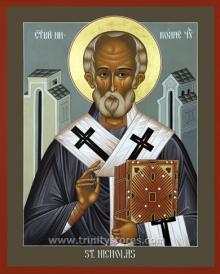
December 6th: Saint Nicholas and the Magic of Need

We celebrate St. Nicholas Day in our home.

On the night before December 6th, the boys will line up one pair of shoes near the fireplace, hoping St. Nicholas will stop by and put some goodies in it. And every year he does: an orange (a traditional Christmas delicacy), some candies, and chocolate coins.

The coins represent the ancient dowry that St. Nicholas, who would become a 4th Century Bishop in Myra (modern day Turkey), paid on behalf of three young maidens in his town whose father could not afford a dowry. The story goes that St. Nicholas, a rather short fellow with dark skin characteristic of his residence in the world, snuck by the house at night and threw the coins in the window. He repeated this pattern for two more nights, providing the needed monies to preserve the honor of the family.

How this short, brown Bishop was transformed into a larger-than-life white elf with rotund belly and red suit is no small mystery. This is what humans do with things: we mold them into the dominant image, usually for commercial gain.

I am not against the fat elf, mind you. We like Santa Claus in our home, and his enduring presence in our very human celebration stories speaks to his being more than mere legend. We attempt, I think, to make sense of generosity through this mythic story.

But we may try too hard.

Because the root of the story is so much better than the myth.

We don’t need flying reindeer or a chimney-crawling gift-giver to make sense of generosity. We just need a simple soul, in this case a slight guy in ancient Turkey, who saw a family in desperate need and decided that was absolutely unacceptable.

Generosity does not need magic to happen, but when it does happen, Beloved, we certainly find magic.

Every year when I was in the parish I would read a quote by a contemporary of St. Nicholas: St. Ambrose. The quote always came as a bit of a shock, especially because the scenario he paints happens daily here and now.

“The large rooms of which you are so proud are in fact your shame. They are big enough to hold crowds–and also big enough to shut out the voice of the poor…There is your sister or brother, naked, crying! And you stand confused over the choice of an attractive floor covering.”

Ambrose cuts to the quick, but I believe his words are magic. They are the kind of gospel magic that happens when our illusions are peeled away from our eyes and we see things in real time, at their root.

Advent starts with these calls from prophets and these apocalyptic readings in churches (“apocalypse,” by the way, is a fancy word for “unveiling”). And it does so to break the spells that are cast upon us by living in a world that is a bit too comfortable, a bit too commercial, a bit too Santa and not enough Saint.

Where is the need, Beloved?

Perhaps in this pandemic the dowry we can offer those on the verge of desperation is simply to watch a few more commercialized Hallmark movies every night.

I’m dead serious. Stay home. Give a gift to front-line workers.

The veritable coins through the windows of humanity this Advent is to hunker down and in, offering life to those struggling in these months.

And, of course, there are acts of generosity, and lovely presents to give out of love.

But there are presents we can give out of need, too. The magical present of non-presence. Of not showing up. It’s the most saintly thing we can do right now.

As you practice showing-up for the needy by staying in, know that you’re giving the best gift of all right now: love. Add St. George of the Harrison’s beautiful song “Give Me Love (Give Me Peace on Earth)” to your Advent playlist.

And then do your best to usher in peace by, right now, doing nothing, by God.

December 5th: A Posse of Clever Maids

Put a candle in the window
‘Cause I feel I’ve got to move
I’m gone, gone…but I’ll be comin’ home soon
As long as I can see the light.

Today’s Advent playlist suggestion is one of my favorites from one of my favorite bands. Creedence Clearwater Revivals’ “Long As I Can See the Light” is an Advent tune if there ever was one.

If I were still a parish pastor, I’d probably cue this up to be sung, this Advent especially. The lyrics are evocative of that story of the wise maidens who keep their “lamps trimmed and burning” as the spiritual goes. Those maidens aren’t just waiting in a general way; they’re waiting with expectation.

Waiting with expectation means, I think, knowing that something is going to happen…even if you don’t know what it is. You’re prepped to receive whatever comes your way. It harkens back to yesterday’s post about a kind of hope that doesn’t cling to a specific outcome, and yet knows that good can be made of whatever outcome produces itself.

As I walk through my neighborhood on these darkening days I’m seeing so many houses with candles in every window. It’s an ancient practice, you know. It comes from those days when travelers would journey deep into the night, and a light in the window meant the house was safe to stop in for food or a bed.

The candle in the window was a signal of safe harbor, even if you didn’t know who might need it, when they might show up, or what was on the other side of the door.

I guess what I mean is that the candle in the window is a symbol of expectant waiting.

For Christians it’s a symbol of waiting for Christ to show up (though, if you trust the idea of the incarnation then Christ shows up in many and various ways again and again…we just miss it more often than not).

But even for those who don’t find themselves in a faith community, this kind of symbol of expectant waiting has some meaning, I think. After all, we’ve all been in the position of searching in the dark night of the soul, longing for some sort of harbor. The trick in such a circumstance is to keep going, of course. The metaphor of a night traveler is appropriate. If they stop, no candle will appear, so stepping one foot in front of the other until it does appear is necessary.

It’s necessary to keep going.

Advent is the time of the year where we practice this plodding gait. Where we practice both putting candles in our windows and keeping a look out for them, learning to see where the safe harbors are in the world, preparing our own beings to become safe harbors for those who need one.

Like maidens who know the bridal party can arrive at any moment, we become wise when we do this.

T. J. O’Gorman’s poem is appropriate for this day, and this song:

Face to face with our limits,
Blinking before the frightful
Stare of our frailty,
Promise rises
Like a posse of clever maids
Who do not fear the dark
Because their readiness
Lights the search.
Their oil
Becomes the measure of their love,
Their ability to wait–
An indication of their
Capacity to trust and take a chance.
Without the caution or predictability
Of knowing day or hour,
They fall back on that only
Of which they can be sure:
Love precedes them,
Before it
No door will ever close.


Oh, and give CCR’s “Long As I Can See the Light” a spot on your Advent playlist…

December 4th: A Little More on Hope and a Good Bit on Mystery

Yesterday’s ponderings may have left you a bit…curious. Particularly that part about “hope” and the way I dissected it.

When I first heard of that Buddhist notion to let go of the particularities we often ascribe to “hope,” I was pretty flustered, too. The Buddhist teacher I learned it from, Pema Chodron, had been helping me (through her writings, not in any personal way) get through a tough transition period in my life.

Her discourse on hope deflated me a bit, if I’m quite honest.

But that was until I realized that I have, indeed, been basing much of my notion of “hope” on very specific hopes, which I’ve come to see goes against the great promise in the idea of hope.

Hope, like the Gospel, cannot just be a good thing for me. It must be universal. And so many of my hopes and dreams were (are?) me-centered.

Advent, this season of hope, is not the season where we believe “anything is possible.” Reserve that notion for the Hallmark Channel, Beloved.

Advent is rather an invitation to sit and wait patiently at the footstep of the unknown to pray, tell stories, sing with “joy and wonder” as the hymn goes, light a candle, and become ever-growingly confident that what will emerge from that shadow will be a tool for good.

I am certainly not saying that you can’t hope, wish, and dream for particular goods for you and your family. I am saying, though, that Advent is not a season that invites you to do that particular thing. Rather, Advent is the season where we trust that the spinning cosmos are barreling toward beauty and not chaos, and we invite ourselves to imagine how that can happen, is happening, will happen, by God.

Today’s song to add to your Advent playlist is actually a hymn to the tune St. Helena, “Unexpected and Mysterious.” I’ve linked a choir singing it (a lovely, if a bit slow for my taste, performance). But the words, oh the words, they’re what invite your attention today, Beloved…especially that last verse:

We are called to ponder myst’ry
And await the coming Christ
to embody God’s compassion
for each fragile human life.
God is with us in our longing
to bring healing to the earth,
while we watch with joy and wonder
for the promised Savior’s birth.

As a final bit of beauty, check out the story behind the writing of this hymn.

December 3rd- No Going Back, Beloved, and No Mapping Out a Specific Future

The Advent song for your playlist today starts like this:

When my blood runs warm with the warm red wine
I miss the life that I left behind
But when I hear the sound of the blackbirds cry
I know I left in the nick of time

Peter Bradley Adams has a beautiful way with words, I’m finding. They do what I think good lyrics should do: they invite you into something more, if for just a moment.

Advent, like good lyrics, invites us into something more, a “time overlaid on time” if you will. It’s why congregations around the world offer an additional moment of worship, usually midweek, in these dusk-early days. This addition notes that this time is special, unique, something different.

The problem with most of our Advent-Christmas time, though, is that it usually invites most people backward, not forward. Holidays and holy-days have a way of cementing themselves in our nostalgia receptors, and so if we grew up with a wonderful Christmas (as I did!) we can sometimes dabble a little too much in what we theologians call “repristination.”

Repristination is a fancy word for “play it again” or “replay.”

In fact, lots of religion unfortunately peddles repristination as some sort of ideal to strive for, a rewind of progress to times where beliefs were simple and widely held and widely regulated by religious and civic authorities.

In the universe of our heads, though, repristination will take us back to the times of our childhood, or “that one Christmas” that felt so perfect, and every subsequent year has been some sort of valiant effort to replay that memory, now. It’s a fool’s errand.

Advent is not an invitation to the past, but an invitation to ponder the present and the future in light of the past. What does it mean to wait faithfully for a future that’s not yet realized? In my mind, I’m also wondering what present beauties we miss as we pine for the past…there are certainly some, yes?

Buddhists have this idea that “hope” is actually a bad thing. Now, before you write it off, let me explain a bit. In the Buddhist sense of “hope” what is meant is “an attachment to a particular outcome.” So, it doesn’t mean a generalized “hope” in a better tomorrow, but rather those very specific hopes that we harbor in our souls, usually born out of advantage or particular proclivities.

That attachment does, indeed, create pain…which is rough.

Our attachments to the past, and our possible attachments to very particular futures, all distract us from being rooted in the uniqueness of this “time overlaid by time.” Are you attached to either?

I know I am.

But, as Peter Bradley Adams notes, we left those pasts in “the nick of time.” By that, I mean, it’s gone, and that’s ok, and we can remember it fondly but certainly cannot replay it.

Change happens. Shift happens. Advent invites us to ponder what that shift might be…but don’t become too attached, Beloved. Dream a bit. Imagine the steps to make a wonderful world emerge from this one, but know that there is always a path, always a way, always plans B, C, and D.

That is hope.

I mean, Christians honor this time to ponder how God stole across the cosmos to be born in a no-name place to no-name people, which would certainly not be any of our plan A’s, right?

Good thing we’re not ultimately running this joint…if it’s being “run” at all.

Take a listen to Peter Bradley Adams’ “The Longer I Run.” In it you might just finding something new this Advent: a reflection of your own running, whether to the past or too far into the future, and an invitation to simply sit in the present for a bit.

December 2nd: Advent is Blue

In some traditions the color for Advent is purple. This is generally thought to be an older-version of the liturgical color wheel. When it was first formally instituted, Advent was a mirror to the liturgical season of Lent, and therefore that color purple (standing for “royalty” and “penitence”) made sense.

But things change. All things change. And as our conception of the season adjusted (more rightly so, I’d say) our practices changed, too. Whereas Lent is more of a “house cleaning,” Advent is a “house warming.” To reflect this theological and rhythmic shift, many shifted the color from purple to a deep blue, symbolizing expectation and preparation.

But I like this alternative coloring for another reason, too, and that is because, well, for some Advent is “blue.” It can be a tough time, especially in the wake of tragedy or heartache.

If it’s your first Christmas without a loved one, and in this pandemic that possibility is quite real, it’s a tough season. Hell, it’s tough even if it’s your tenth Christmas without that loved one.

If you struggle with fertility, the stories that weave their way through Advent can be a bit painful. Why does Elizabeth, in her old age, get pregnant while so many couples can’t? Why does Mary, who doesn’t even seem to want to be pregnant, miraculously conceive when so many people have trouble conceiving?

And can we talk about miscarriage? This wide-spread but secretive topic sits in so many hearts, compounding the trouble of the season.

It’s important at the outset here to be honest about the fact that, for many, Advent is blue.

And here’s the interesting truth: acknowledging that fact, whether you find yourself blue in this season or not, helps everyone. It’s amazing how, when we hug the cactus of grief, it doesn’t hurt as bad anymore.

For your Advent playlist, try on this blues song by one of my favorite bands, Over the Rhine, “All I Ever Get for Christmas is Blue.” It’s not a sad song per se, but it sings a deep truth in that old blues tradition that carries reality for so many.

Weatherman says it’s miserable
But the snow is so beautiful
All I ever get for Christmas is blue

It would take a miracle
To get me out to a shopping mall
All I really want for Christmas is you…”

December 1st: Fresh

The wisdom of the mystics Christian’s call Desert Mothers and Desert Fathers is continually relevant, I’m finding. These sages lived often extreme lives, but their solitude and piety produced acute wisdom.

There is a saying that I’m taking to heart today, early on in this Advent season. It reads, “Abba Poemen said about Abba Pior that every single day he made a fresh beginning.”

Beloved, would anyone write that about you and your life? That every day you “made a fresh beginning?”

I do not think it would be said about mine…at least, not yet.

Day to day I carry too much baggage with me: the things I left undone, or the things I did that I should not have done. Worries that chase me in my dreams. Concerns that dog my footsteps.

And yet, I love the idea of making every day a fresh beginning. I’d love to try it on, you know, just to see how it feels.

Perhaps I will.

Advent is a season of waiting; this is true. But sometimes something so good can’t wait. Sometimes Advent can be a season where we put off waiting and live into a new reality, just to see.

Just to see.

Try to make a fresh beginning each morning, Beloved, and wait for that “old you” with the cares and concerns to get the picture and stop showing up in the mirror at sunrise.

For your Advent playlist today, add “Wonderful World” to the rotation…but not the Armstrong version (though, it is amazing). Instead, try on this arrangement by Kina Grannis…you know, for something fresh.