Somebody

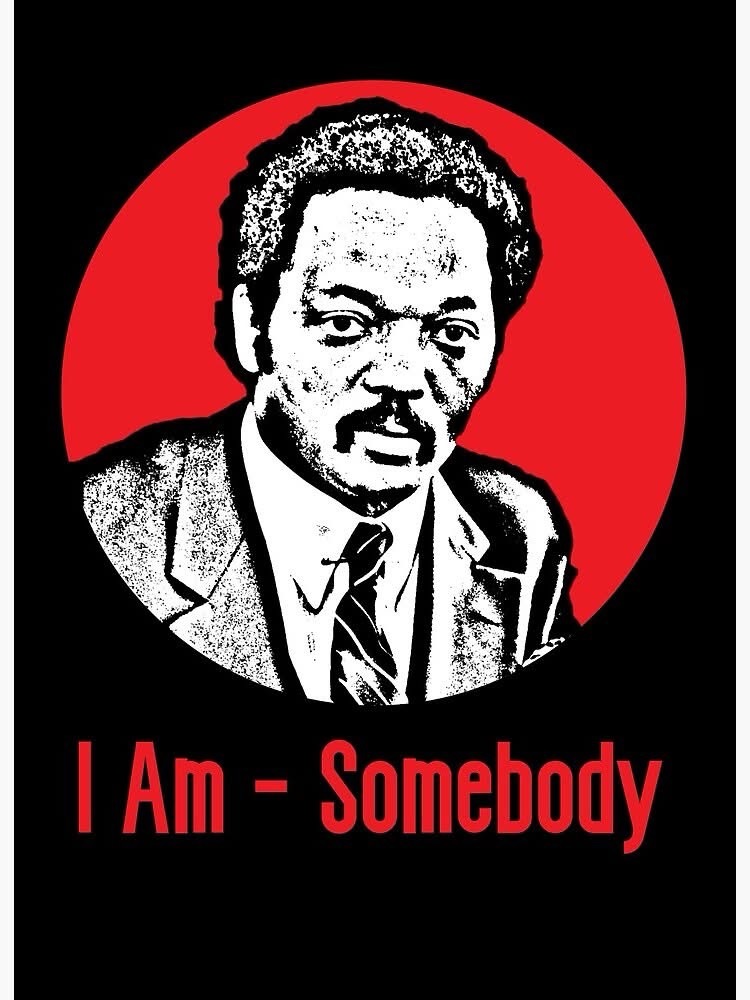
I met Jesse Jackson twice in my life, both by accident.

The first time was when I was wandering on the South Side of Chicago with some classmates, and we came upon the Rainbow Push Coalition headquarters. We had been told to do a neighborhood audit, to just watch and observe and see what was where. So just a few blocks from who would be President Obama’s house was Rainbow Push.

We walked in and were met by an attendant who told us a bit about the place, the work, the massive legacy of the coalition.

And then a car pulls up and out walks Reverend Jackson, chatting with his companion. He saw us, greeted us warmly, excused himself quickly because he had a meeting, but was kind and said he was grateful we stopped by.

We were pretty awestruck.

The second time was much more informal, and much more surprising.

Some fraternity brothers and I decided to hit up the Ukrainian Banya in Lincoln Park for some saunas, cold plunges, and Baltika beer.

As we were sitting and sweating in the large sauna, in walks Rev. Jackson just like a regular towel-clad patron.

He sat down next to me, turned to me, and said (to the group of us), “Good day gentlemen. How are we?”

“We’re good, Reverend. We’re good,” I replied. And he said, “That’s fine, that’s fine.” Smiled distincitvely. And we just chatted.

And then he did push ups right there as if he was 20 years old, and probably would have bested all of us in a push up competition even though we were just over 20 years old at the time.

Reverend Jesse Jackson leaves a legacy of justice work that is unmatched in his time. His presidential run in 1988 was one of the first that I remember. He stood with laborers and those dismissed by society. Those of us in justice work stand not just on his shoulders, but boosted by his masterful influence.

Rest in power.

-icon written by KJCasey
Ashes to Ashes

After the church and the empire had joined hands, the rhythm of the church year was overlaid on the rhythm of the ancient celebrations of humans.

Ash Wednesday, the day of penitence, became a massive event; a “full Nineveh moment” in the face of the “holy” church’s Jonah proclamation: “Repent, lest ye be damned!”

Sackcloth. Ashes. Solemnity. That was the prescription. Interestingly enough, the diagnosis was proclaimed by the entity who also claimed to have the cure. Religion tends to do that…

But the people, used to more festive holidays, demanded some revelry before the fast. Intrinsic in our human bones, divorced of any religious pietistic profundity, we all know that a fast is seen best through the lens of a feast, and vice versa. A little bit of denial needs a little bit of indulgence to truly know what you’re missing, right?

And so Carnival was declared, a time to fatten our stomachs, our spirits, and our souls before the sobriety of Lent.

Masks were handed out so that, if you were in hiding for a crime, you could come out of your shelter and join in the fun. A hall pass of sorts. Acts of extreme gluttony are best done anonymously, right? On Carnival, everyone is criminal in some way, everyone is queen and king of their universe for just a bit.

Carnival was a day for reclining, gesticulation, and for pretending we don’t fear fat and sumptuousness, if only for a minute.

And then comes today.

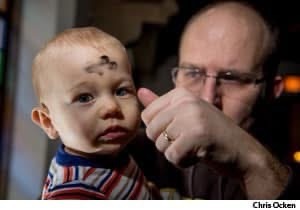
Ash Wednesday.

Ash Wednesday is for remembering that time for bending a knee to mortality will come; for sure.

One day all masks fall.

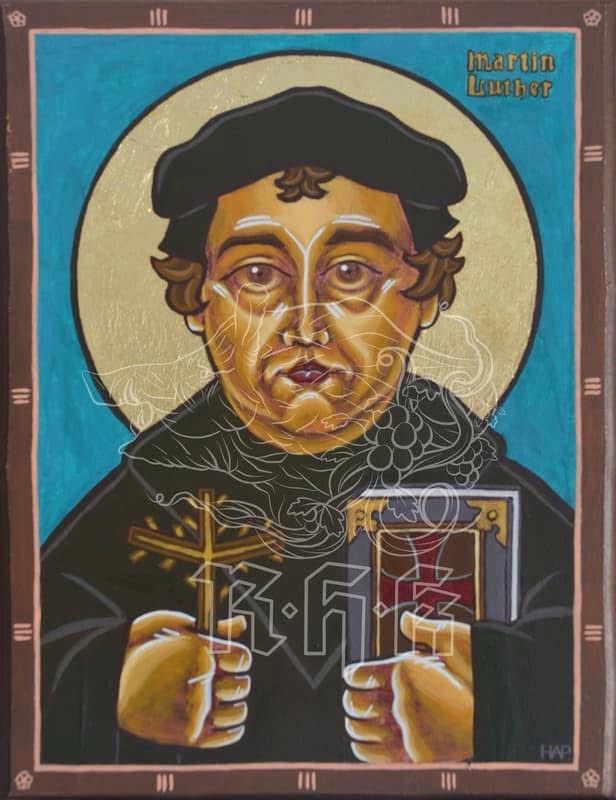
Blessed Martin

Today the church remembers the reformer and cranky theologian, Martin Luther. He’d wince at being called a saint, but welcomed the title of “baptized.”

Luther was as imperfect as he was ingenious. As the most prolific and public author of his day, his opinions on matters mundane (a homemade remedy for skin rashes) to mighty (Freedom of a Christian) are well-documented and well known by all students of history. He wrote beautiful theological treatises and stirring hymnody. He was a pioneer for women and children in his day.

Yet, he was a person of his era in many ways, and lamentably was unable to rightfully wrestle with his own prejudices, especially toward those of the Jewish faith.

His anti-Semitic writings have been totally and fully condemned by the Lutheran church.

With both his flaws and his fortitude he embodies one of his central theological discoveries: that we are all both sinner and saint, simultaneously. We are both perfectly imperfect, and perfectly loved by a God who has a tender spot for broken things.

One of his more poetic thoughts about the “now-and-not-yetness” of our human existence:

“This life therefore is not righteousness, but growth in righteousness,
not health, but healing,
not being but becoming,
not rest but exercise.
We are not yet what we shall be, but we are growing toward it,
the process is not yet finished,
but it is going on,
this is not the end, but it is the road.“

-icon written by Harrison A Prozenko