Tonight my Celtic ancestors will honor a more recent addition to the feast day lists: Burns Night.
Burns Night is a nod to poet Robert Burns (b. 1759), a Scottish dear, and tonight they’ll light fires, make traditional Scottish food, and recite the poems of the dearly departed.
Curiously, though Burns Night is meant to honor the birth of the great poet of Auld Lang Syne, it was first celebrated on January 29th in 1802…though they’d soon find he was born four days earlier!
Tonight they’ll eat haggis, a curious mix of organs and grains made into a kind of pudding and eaten with both great pride and great disgust (for those not accustomed to it), along with a recitation of his most wonderful poems.
Burns Night is a night to wave your tartans and give thanks for the poets who came before us.
So, should old acquaintance be forgot and never brought to mind, I’m grateful for the family shoulders I stand on, and the days of auld lang syne.
Today the church honors not a saint, but rather an event: The Conversion of Saint Paul.
This conversion story is thrice told (I just wanted to use the word “thrice”) in the Scriptures, and Paul also references it three times in his letters. This repetition actually makes it one of the most oft-repeated events in the stories of the early church.
Paul, a zealous persecutor of Christians in ancient Palestine, is struck by a blinding vision and, reportedly, the voice of God, which leads him to become a follower of Christ.
This event may be the most influential event for the early church because Paul’s active conversion work (and theology) spread like wildfire throughout the ancient world, especially amongst Gentile communities.
It’s worth noting that this Feast Day also marks the end of the “Week of Prayer for Christian Unity.” It is not an accident that the “Week of Prayer” starts with the Confession of St. Peter and ends with the Conversion of St. Paul, as the two of them did not get along at all. They had different ideas of what the faith should be and do, who should be included in the circle of believers, and yes, it appears they even had different working theologies (of which, I would argue, St. Paul’s ideas won out, for better or for worse).
The one thing they did agree on? To continue working on behalf of the poor.
The church longed for these two pillars of the faith to be reconciled so much that they put them on the same feast day, believing that if they couldn’t be friends in life, they would be companions in death.
The conversion of St. Paul is honestly a feast day I struggle with, mostly due to a long history of colonialism and forced conversions winding through the church’s past. Yet, there is something honest about the fact that Paul, on his own, had an experience with the Divine that made a shift in him, and that can be a force for good, by God.
Christian unity feels a bit like a dream most days. This feast day isn’t even celebrated in the Eastern Church. But, perhaps if we all had a conversion we all might just agree to do that one thing that Paul and Peter agreed on: work on behalf of the poor.
For that to be the case, a lot of the church will have to be converted in the process…
-historical pieces from Pfatteicher’s New Book of Festivals & Commemorations
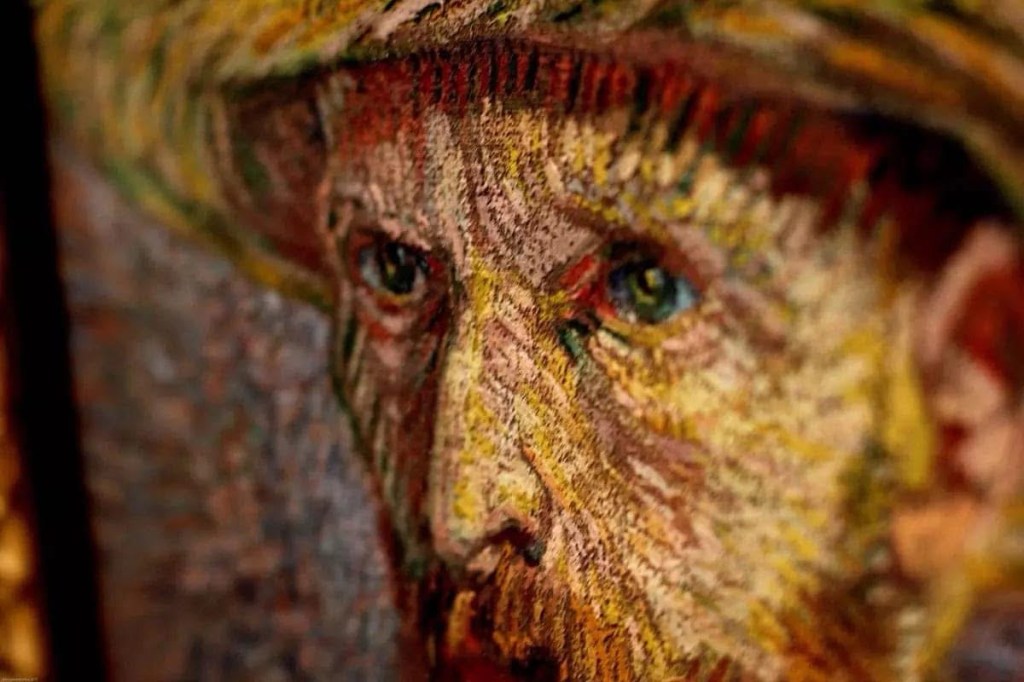
van Gogh, can you tell me how many martyrs does it take to open up a blood bank
van Gogh, can you tell me where does beauty go when it dies?
van Gogh, can you tell me why saints live on car exhaust and are lonely as crushed acorns
while enormous suppurating blisters of men sleep on beds made of dollars, their pillows the breasts of fantastic women
van Gogh, can you tell me you who made paint scream who drew the expressions of the wind
and portrayed leaves and stars writhing in agony as though they were human
tell me which of the satellites circling the earth is mine
how many pairs of shoes does it take to walk to infinity
do you believe the world will ever learn how to cry in unison
van Gogh, with your skin like scorched leather from too much time spent in the wheatfields on your knees, shooting dice with God over who gets to color sunset
didn’t you ever feel like an asshole
incapable of self-preservation always crossing at the end
van Gogh, can you tell me as the sun comes down around my ears in chunks today
as hummingbirds hover at my window cursing me in tiny voices
why roads drag you down them how you are finding light in Paradise and if you have your own easel of if God allows you to paint on the sky
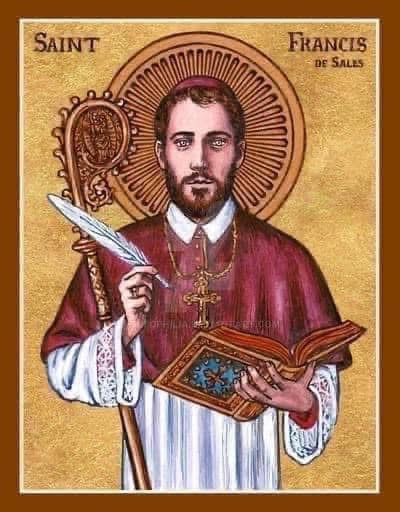
Today the church remembers a 17th Century Saint who was as stubborn as he was prolific: St. Francis de Sales, Bishop of Geneva and Thwarter of Assassins.
Born in Chateau de Sales and educated in the grand cities of France, this St. Francis was ordained a priest (despite his father’s displeasure with the profession), and served for twenty-nine years amidst the uneasy marriage of the Catholics and Calvinists in the Chablais countryside.
He was known around the area for great love for all the people in the land, regardless of their faith. Unfortunately, many others did not regard him with such love, and he had to contend with a few assassination attempts by those who took issue with his Catholicity.
His effective love and preaching did turn many hearts on to the Roman Catholic expression of the church, much to the chagrin of the Calvinists who had worked hard to evangelize in the area.
In 1602 he was appointed Bishop of Geneva, and through this same outlook of love began to slowly change and restructure the diocese, known for being quite difficult and unruly. He gave away almost all of his private money, and lived a simple life. The King of France tried to persuade him to move to Paris, but he opted to skip the pomp of the huge city and remain where he was.
Children are said to have adored him. He took great pains to teach the laity of the church about the faith, something often overlooked by other clergy who preferred to focus on their own scholarly pursuits.
He wrote a number of books, including his twenty-six volume tome, The Love of God.
With Jane de Chantal he founded the Order of the Visitation in 1610 which worked to instruct young women in the faith.
He was stubborn in his love for all people, stubborn in his refusal to live the “high life,” stubborn in his ability to keep living despite the attacks on his life, and stubborn in his belief that God is best known through the eyes of the heart rather than the cold eyes of the head.
Unfortunately St. Frances de Sales died of a stroke at the age of fifty-five. After his death a local Calvinist minister remarked, “If we honored any man as a saint, I know no one since the days of the apostles more worthy than Bishop Frances.”
That kind of love, the love that shines bright enough to cut through animosity and political tension, is rare…and much needed in this world.
St. Frances de Sales is a reminder for me, and can be for the whole Church, that doctrine without love is little more than trite moralism and vacuous philosophical games on parade. Perhaps St. Paul and St. John (and St. George and St. Ringo) were correct: All you need is love.
St. Frances de Sales might have agreed.
-history helped along by Pfatteicher’s New Book of Festivals & Commemorations -Icon written by Theophilia
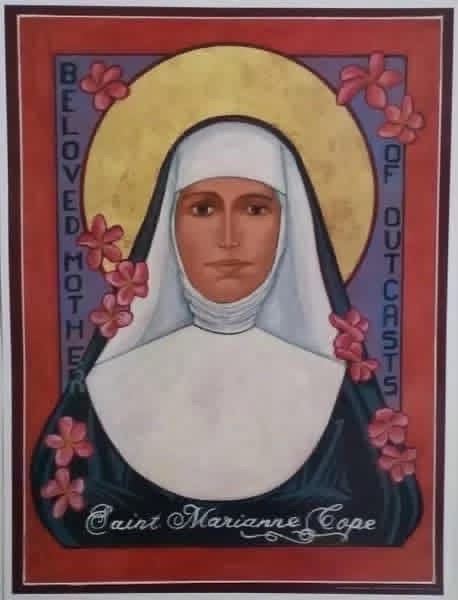
Today the church remembers the 19th Century Patron Saint of Hawaii: Saint Marianne Cope of Molokai, Mother of Outcasts and Healer.
While the church normally honors saints on the days of their death, Saint Marianne is the rare exception, being honored today, the day of her birth.
She entered the Franciscan order at a young age, and worked as a teacher and hospital administrator early in her life. In 1883 Sister Marianne answered the call of King Kalakaua, the Merrie Monarch of the good island kingdom, asking for desperate help to tend to lepers on the island.
Armed with a warm heart and experience organizing hospitals, she took charge of the mission, founding the first general hospital in Oahu. When the government changed policies, ended the forced exile of lepers, and closed the specialty hospitals, St. Marianne saw that those living with leprosy, and their children, were still being ostracized and demonized by those who didn’t understand the disease.
She stayed to personally care and accompany them .
Because of this care and concern, especially of those who are ostracized, she is seen as the modern matron Saint of not only those who live with leprosy, but also those who live with HIV/AIDS, and those who identify as outcasts.
In these days, many have evoked her name in association with this waning pandemic, especially because her oft repeated mantra to her nurses and doctors is echoing in our halls these days, “Wash your hands!”
St. Marianne Cope is a reminder for me, and should be for the whole church, that we are called to tend to those who are cast out by the world and, even after the powers say the work is done, continue on working with them until ”justice rolls down like a river to wash all oppression away!”
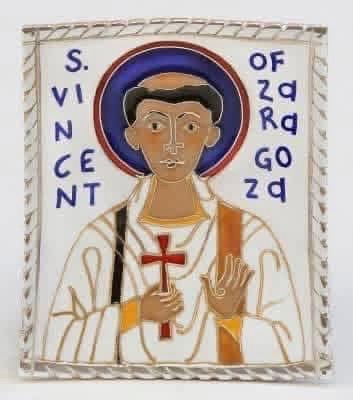
Another 4th Century Saint marks our days on the 22nd of January, and this one is especially dear to those with Spanish heritage: Saint Vincent of Saragossa, Deacon, Martyr, and Voice of the Divine.
St. Vincent is the most celebrated of Spanish martyrs, and he, like St. Agnes of yesterday’s note, died in the Diocletian persecution in 304 A.D.
St. Vincent, though not the Bishop of Saragossa, did the work of a good Deacon in regularly preaching for Bishop Valerius, who suffered from a speech-debilitating stammer. Both Vincent and Valerius were imprisoned for their faith, and while Valerius received the sentence of exile, Vincent received the sentence of torture and death.
Starvation, held in stocks, and tortured by fire, St. Vincent who so regularly preached on behalf of the Divine offered his final sermon to the world with his body, and the world listened. In the Middle Ages, a number of churches throughout England were built in his honor and named for him.
St. Vincent is a reminder for me, and can be for the whole church, that community is a team effort that will threaten powerful people who would rather dominate alone.
-historical helps by Pfatteicher’s New Book of Festivals & Commemorations
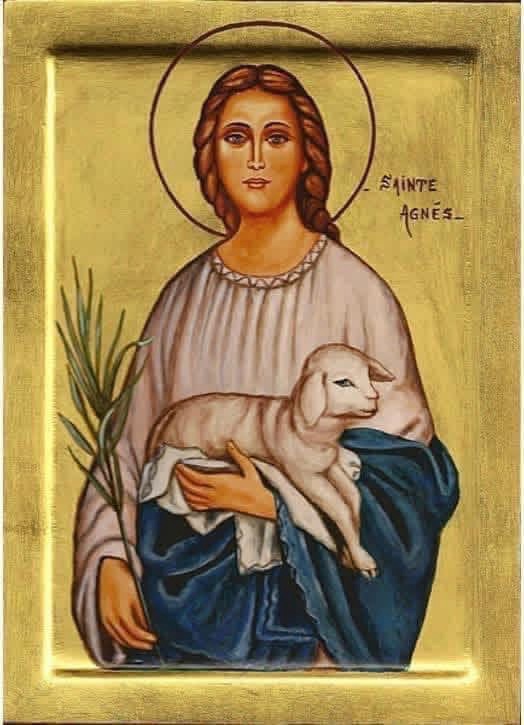
Today the church remembers an ancient Saint of the early church: Saint Agnes, Martyr and Life-Giver.
Not much is known about St. Agnes. She died during the Diocletian persecution in the year 304 AD, and she is listed in that very first catalogue of saints that was drawn up by the early church around the year 354 AD. We know she was well-known and well-remembered in that ancient church because Constantine’s daughter (or maybe his granddaughter) built a church in her honor.
Here’s the thing about St. Agnes: although we don’t know much about her life, we do know something about her death. When Diocletian was terrorizing the fledgling Christian church, St. Agnes offered herself up to the authorities to be captured and killed. The thought was that, once enough Christians were killed to be shown as “an example,” the persecution would stop.
After all, Diocletian was not killing Christians out of spite or real fear, but rather as a political tool. With this motivation, he largely follows all politicians in power who use religion as a sword or a shield rather than as a food trough for conviction. Perhaps St. Agnes thought that, in volunteering her body, she might bring a quicker end to the rampage and save some lives.
Her offer also stands in stark contrast to the number of Roman Christians who were renouncing the faith in order to save their lives (and could you blame them?). Perhaps her willingness was an effort to keep them from having to do such renunciations as well.
Because St. Agnes is so close in name to “agnus” or “lamb,” today two lambs will be presented at the altar of St. Agnese fuori le Mura. They will be blessed by the priest, shorn, and then cared for by the nuns of Santa Ceclia in Trastavere. The wool from these lambs will be used for the white cloth of pallium that the Holy Father gives to archbishops of the church as a sign of affection.
St. Agnes is a reminder for me, and should be for the whole church, that when religion is used for political points no one wins.
-historical bits gratefully gleaned from Pfatteicher’s New Book of Festivals & Commemorations
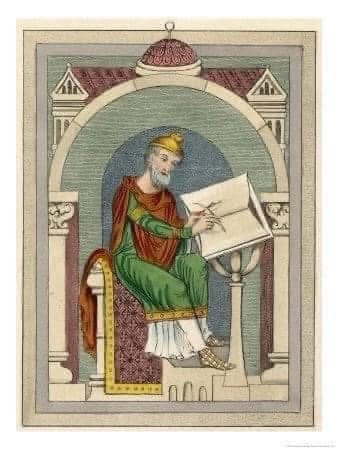
Today the church remembers an obscure 11th Century Bishop of the Anglo-Saxon Church who rocked a cool name: Saint Wulfstan, Bishop of Worcester and Abolitionist.
Bishop Wulfstan was a Benedictine monk who lived his whole live in Worcester, never venturing further than the last doorpost of the parish he served. He did this because, well, he was so busy. He is the first known Bishop to make it a point to visit all of the parishes in his area systematically and regularly. His goal was to instill a sense of friendship and learning amongst the churches and the people of the area, and he sought to make Worcester a place of learning for the north.
He also fought hard to stop the practice of selling the English as slaves in Ireland, believing that no person could own any other person legitimately.
His fame grew, though he never traveled outside of his little area.
As he traveled from parish to parish, he is said to have recited the Psalter from beginning to end, and if you rode with him he would make you sing the alternating verse. On these trips he also carried a large satchel full of coins which he readily gave out to anyone who asked of it.
He is remembered as a good and kindly Bishop, perhaps the best of his time.
St. Wulfstan is a reminder for me, and should be for the whole church, that you don’t need to be exceedingly well-traveled to be known and make a difference in your own back yard.
-historical bits from Pfatteicher’s New Book of Festivals & Commemorations
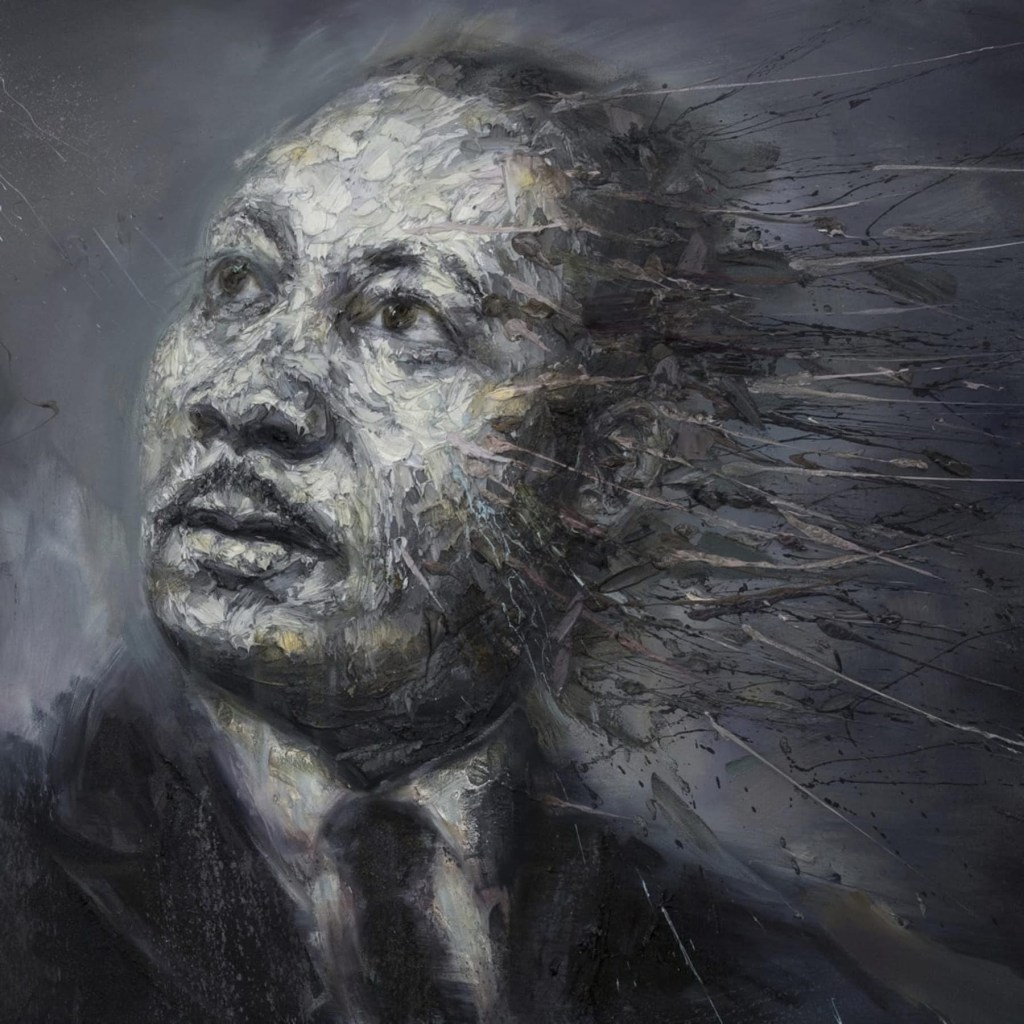
Though today is Martin Luther King, Jr’s birthday, the church reserves his commemoration for April 4th, conforming with the practice they do with all martyrs by remembering him on the day of his death.
Nevertheless, it is certainly appropriate to honor him today.
To do that, I’ll share my favorite quote from King, one that doesn’t get a lot of circulation, though you may have heard it before. It’s from “The Drum Major’s Instinct.”
“If you want to be important–wonderful. If you want to be recognized–wonderful. If you want to be great–wonderful. But recognize that he who is greatest among you shall be your servant. That’s your new definition of greatness. And this morning, the thing that I like about it…by giving that definition of greatness, it means that everybody can be great.
Because everybody can serve.
You don’t have to have a college degree to serve. You don’t have to make your subject and your verb agree to serve. You don’t have to know about Plato and Aristotle to serve. You don’t have to know Einstein’s theory of relativity to serve, you don’t have to know the second theory of thermodynamics in physics to serve.




 Reluctant Xtian