
Second Month of Spring

For the ancient Celts, March was the second month of Spring on the wheel of the year. For them the seasons blossomed like a flower, slowly coming into their own, with that middle month in the triad being the hinge point.

March was the season where the candles were no longer needed at night, and so they’d ceremoniously put them away as a family. Some would even replace the wax candle on the family table with a wooden candle, a reminder for them that they need not strain their eyes at night anymore and were welcome to re-adopt the rhythm of the sun and the moon as their clock.

In mid-March, near the Vernal Equinox, each family would gather in their field, and sometimes whole clans would gather in a shared plot, and facing the sun they’d drop the first seeds in the ground to start the harvest, beginning with grains and root vegetables. Then they’d grab some soil, mix it with some ash from their home hearths, and paint the backs of their beast with the dirt invoking Divine blessing on their work. It was a blessing of both gratitude for the gift of the animal, and a pleading prayer for a prosperous harvest.

March is still a time of preparation for humans. The snow is melting in many places, though we know that there will probably still be snows to come. Ground is being broken, though we know we can’t go into full-planting mode yet. Windows can stay open for brief periods of the day, though a full-on breeze would still be too chilly for many.

But things are changing, Beloved. The Celts understood how to lean into and embrace the change. They welcomed the natural changes of life.

We should, too.
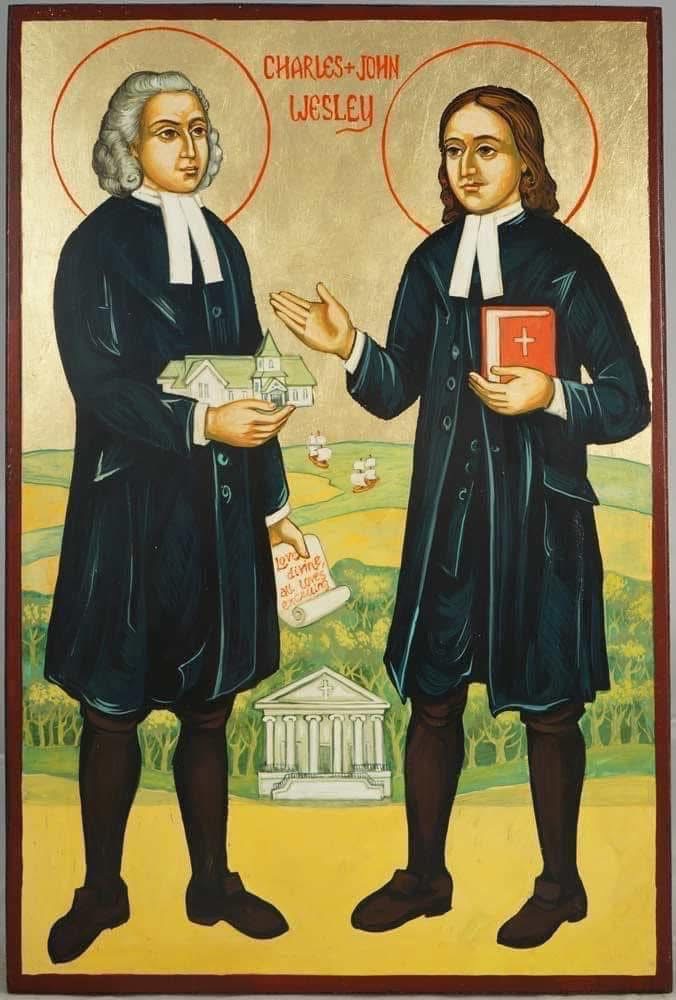
The Brothers W

Today, March 2nd, the church remembers brothers John and Charles Wesley, renewers of the church.

John was the 15th child of Susanna and Samuel Wesley, and Charles was the 18th, born in England. Both were ordained as Anglican priests in the early 18th Century, in the midst of a serious decline in the Church of England, both in influence and conversion.

John and Charles grew dissatisfied with the religious life they were instructed in, and Charles started the “Holy Society” at Oxford comprised of those intent on finding a deeper and more meaningful way of spiritual living. They focused on frequent communion, prayer, spiritual practices like fasting, and service to the poor and disenfranchised.

This methodological way of doing things led others to disparagingly call them “methodists.”

The name stuck.

Charles and John were sent to evangelize in Georgia in the 1730’s, primarily to the colonists and the Indigenous Peoples. Their insistence on denouncing both slavery and gin, however, didn’t sit well with the colonists.

Both joined the Moravian church in prayer (though not in an official capacity), having experienced an inner conversion. This sparked the 18th Century Evangelical revival, and the brothers eventually began their own order of Christianity, a “Methodist” way of being in the world.

Charles became an accomplished hymn writer; John an antagonistic writer and theologian, not unlike Martin Luther before him, pushing the church onward. Both were often met with hostility and derision for their thinking and work, which bucked the status quo of the church of the day.

They are a reminder to the church that what at first might seem unorthodox and detrimental may, at length, be just what the church needs for revitalization, renewal and, yes, reform.

-historical notes gleaned from Pfatteicher’s New Book of Festivals & Commemorations

Transfiguration

Today many churches remember the Festival of the Transfiguration in the lirturgy, a moveable liturgical feast (though the actual set Feast falls in August).

When it comes to the Transfiguration, Beloved, don’t be distracted by the dazzling clothes.

God who holds the law (Moses) in a hand that will be scarred will rule with justice tempered by mercy, not the other way around.

God who holds prophecy (Elijah) in a hand to be scarred will proclaim truth from behind the picket line, within the ranks of the needy and poor, from the place of poverty, not power.

Don’t be distracted by the dazzling clothes…that’s not where the miracle is.

The miracle is in the fact that God holds mercy over retribution and stands with the poor, not the powerful.

That’s dazzling.