
I’m preaching this Sunday again, and here’s the words that are coming out of my mouth:
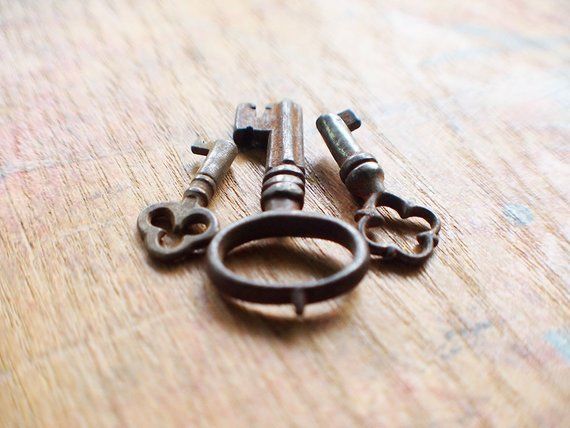
“But here’s the thing, Beloved: I wonder if sometimes we’ve lost the key that Christ handed to St. Peter that day, ya know?
In this grand moment, at the pinnacle of both commerce, power, and life-giving water, Jesus asks the disciples who they think he is.
And they give various answers: a prophet from the past, a prophet of the present…
But Peter says, “You’re the promised one of old.”
The promised one of old.
The promised one who would shed light on the shadows, who would bring comfort to the grieving, who would convince the wealthy that the coins in their pocket belonged to the poor, and remind the poor that they are somebody, by God.
The promised of old who forgives sins, has a short memory of wrongs, loves the unloveable, and who would die to have us think or believe otherwise. Even die on a cross.
The Messiah.
And I don’t know if Peter knew what he was saying or, perhaps like me in most of my moments, stumbled onto a truth he couldn’t quite grasp, but in that moment Jesus hands him the keys to the car and says, “Carry on my wayward son…” as the band Kansas would say.
And carry on he did. And he would be a wayward son, as it were. In one breath calling him the Messiah, and in another denying he knew him. In one breath receiving the Holy Spirit at Pentecost, and in another being wishy-washy over who could be called a Christian as the early church began.
Peter held the keys to the kingdom, but sometimes lost them.
Beloved: we hold the keys to the kingdom, but sometimes lose them.
We lose them when we fret so much about money that we lose sight of mission.
We lose them when we worry so much about who is not here than we do about who has shown up.
We lose them when we worry too much about who shouldn’t be let in to the graceful kingdom of God than we worry about who we excluding who is loved, by God.
By God.
We lose the keys to the kingdom all the time. And in this post pandemic world, as you’re waiting for your next pastor, I want to say to you: the keys of the kingdom of God are yours! Do not lose them!
It’s about mission, not budgets.
It’s about whose here, not who isn’t.
It’s about all-encompassing love, not gate-keeping.
The keys are here…and even if sometimes we lose them, you know, they can be found!
They can be found.
So what if you lose them?
Well, let me tell you.
Our nanny said, “I’ve lost the key.” And I said, “No worries, I can go and make a copy.”
And you know where the copy is made? Well, for our home key, it’s probably made at Ace Hardware or Lowes, you know?
But for us, for the faithful, for the Beloved community of which you’re a part of, the copy of the key of the kingdom is made here: at this table.
This table where everyone is invited forward, and no one leaves without something: some bread, some wine, the body and blood of Christ, or at least a blessing.”

 Reluctant Xtian