
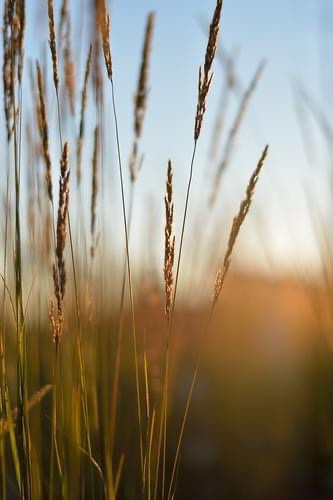
On Harvest and Hope

In early August my ancient Celtic ancestors would celebrate the third great festival of the year, Lughnasadh, or “the assembly of Lugh,” the Celtic sun god.

August 1st marks the beginning of Autumn for the Celts, and so this was essentially a festival to give thanks for the harvest that will be collected over the coming months.

Yes, it was giving thanks for something that hadn’t happened yet…sometimes you have to bank on hope, right?

This festival became Christianized in the Middle Ages, commonly called “Feast of First Fruits.”

In these days the ancient Celts would ween the new lambs so that the parents would mate again, giving more lambs in the Spring. They’d begin harvesting, especially the now ripe gooseberries and billberries.

They’d also make something called a Lammas Loaf (a derivation off of the festival name), a loaf of bread baked and shared off of the first wheat harvested from the fields. They’d often make the bread into different shapes, like wheat stalks, owls, or “John Barleycorn” shapes (sometimes known as The Wicker Man), a legendary figure that often stands for the harvest god/sun god.

Since Lughnasadh falls directly opposite of Imbolc on the Celtic wheel, and Imbolc (“in the womb”) was seen as primarily feminine, Lughnasadh was seen as a very masculine festival, with games and outdoor competitions, kind of like a precursor to our State Fairs here in the United States, with rides and feats of strength.

At its heart, Lughnasadh is a reminder that everything dies and is reborn. “Unless a grain of wheat dies,” the Christ says, “it remains a single grain…”

So we give thanks in the right season, banking on hope.

Holy Dissent

On August 1st the church remembered a saint who gets scant, but memorable, mention in the Scriptures: Saint Joseph of Arimathea, Secret Disciple and Finder of Graves.

Saint Joseph is memorable in the Jesus stories largely for his dissent collar. As a member of the Sanhedrin (the council of the synagogue in Jerusalem), the writer of Luke notes that he “did not agree” to the council’s plan to bring Jesus to Pilate as a blasphemer. The writer of John calls him a “secret disciple,” and it is he who goes to Pilate after the crucifixion to ask for the body, and lays Jesus in a grave that was unused.

The reason Saint Joseph is so important is because, well, he gets his name mentioned. In the ancient world you wouldn’t write about somebody unless that somebody was a body that other people would recognize and know. It’s thought that perhaps Saint Joseph of Arimathea was an important part of that early church, and the writers of the Gospels thought it important to include him. It’s also worth noting that he shows up in Luke and John, two Gospels written far apart from one another, without any indication that John (the one written later) used Luke as a guide. This gives us an idea that stories about Joseph of Arimathea were circulating in that ancient church.

That’s a little trip down theological nerdom, but it’s kinda neat.

Legends about Saint Joseph of Arimathea started growing and by the fourth century his fame was widespread. Some of these lager-than-life stories claimed that Joseph was the uncle of Jesus, was a tin smith, and had brought Jesus to the tin mines of Cornwall when Jesus was a young boy. Others said that Saint Joseph was sent by Saint Philip (post-resurrection) to be a missionary in Britain. On that journey it was said that Saint Joseph took with him the Holy Grail! At Glastonbury Saint Joseph struck his staff into the earth and from it grew the Glastonbury Thorn (and Glastonbury is still considered one of the holiest “thin places” in Britain), though the whereabouts of the Holy Grail remain a mystery…

This all means, of course, that you can thank the legends of Saint Joseph for the third installment of the Indiana Jones series.

None of these stories have any historical merit except for the idea that we do think that Saint Joseph of Arimathea was a real human who played a real role in the Jesus event.

Saint Joseph is a reminder for me, and should be for all the church, that sometimes a holy dissent is necessary.

-historical notes gleaned from Pfatteicher’s New Book of Festivals & Commemorations

-opinions mine

-icon written by W. Micheal Shirk. Note both the thorn bush and the grail!