As the sun turns in early this Solstice, I’m keeping vigil with my ancestors and am anxious to spy that Christmas star!
On this night they’d haul in a huge tree; often the whole town was needed to carry it with children riding on top like a sled. They’d cut it, or grab two if needed, and take to either the village gathering place, or split between homes as was necessary.
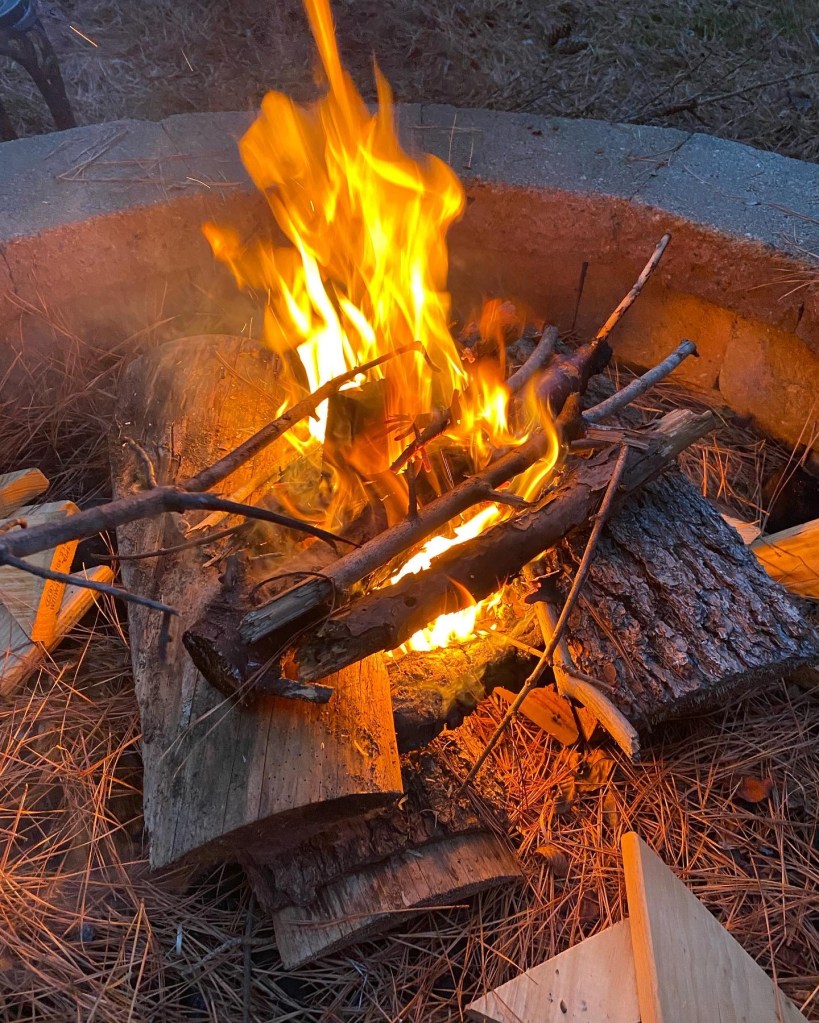
The ancient Yule Log would mimic the “unconquered sun” in the heart of the home. Winter was seen as a hulking cold beast who swallowed the fire of light, and the only way to overcome that belly was through stoking the fire more mightily.
In later years the log would be large enough to burn through Christmas Day and beyond, a melding of pre and post-Christian practices.
After the log had burned, the ashes were mixed with seed corn, thought to bring luck and good harvest. In most cases a very small portion of the log was kept and safely stored for the following Winter Solstice, a reminder that the sun could always be counted on to return and that the unbroken cycle of light and warmth was promised.
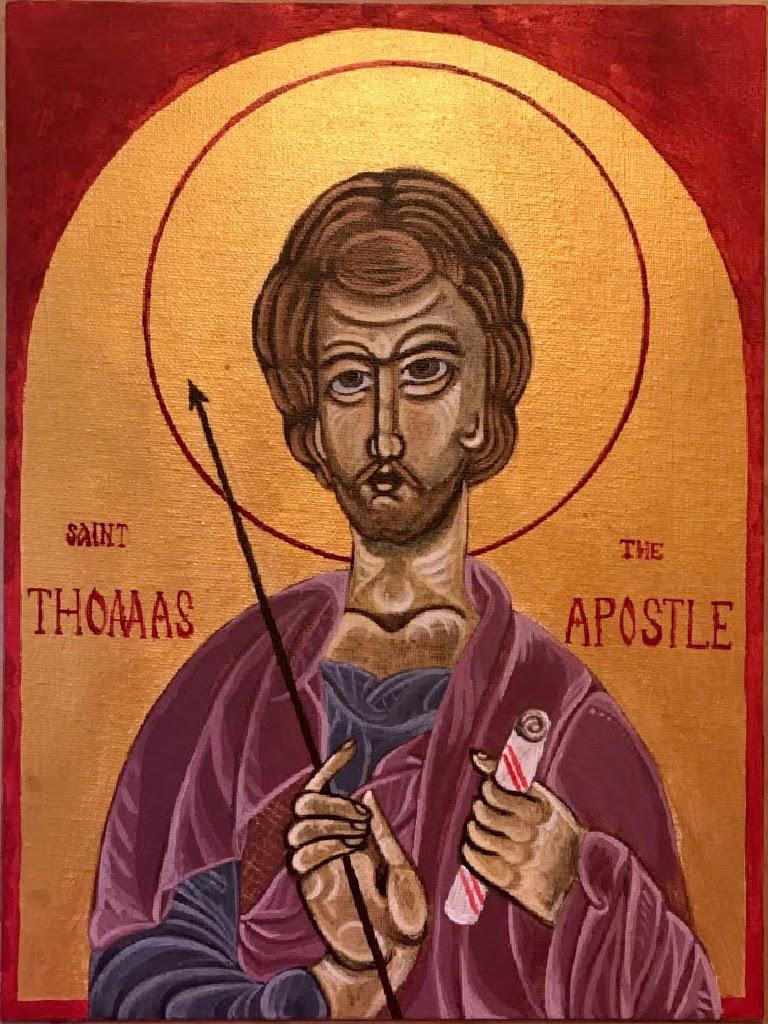
Today the church remembers a saint who you know quite well: Saint Thomas, Apostle and Patron Saint of Those Who Ask Questions.
No doubt most everyone remembers Saint Thomas for his, well, supposed doubting of the resurrection as reported in Saint John’s account of the story, but that’s an accident of historical memory more than a reality. Saint Thomas didn’t doubt so much as he asked questions and sought verification.
And more people of faith should ask more questions, IMHO.
His name means “Twin,” and there is a tradition where Thomas is the twin of Jesus (or at least his doppelganger), but that’s largely conjecture. What is more probable is that Thomas, with his inquiry and deep searching for truth in the Gospel of John, is meant to be the reader’s twin in the story.
Or, in other words, you (and I) are the twin of Thomas, seeking to touch the Divine wounds, wondering if it could all be true, honestly desiring to say, “My Lord and God” with conviction and love because our eyes have seen it in real life.
Lore has it that Thomas took to being a missionary in India, planting the Martoma church tradition there that lives in a robust witness of the faith. There is a 3rd Century piece of literature, the Acts of Thomas that says he lived as an apostle carpenter in India, performing miracles, healing the sick, and was eventually martyred near madras. Within the pages of that interesting work is a beautiful Syriac poem, the Hymn of the Soul, a much pondered allegory of humanity’s search for beauty and meaning.
Fitting for a work dedicated to this saint, no?
While most modern scholars think that Saint Thomas probably was a missionary somewhere between the Caspian Sea and the Persian Gulf, never actually reaching India, the presence of the Martoma church and tradition give testimony to his legend and impact all the same, and it is the case that when European missionaries arrived in India in the 16th Century they found a robust Christian faith and practice thousands of years old.
Saint Thomas is a reminder for me, and should be for the whole church, that asking questions and continually chasing deeper and truer truth has been part of the faith from the beginning.
Let those with ears to hear, hear.
-historical bits gleaned from Pfatteicher’s New Book of Festivals & Commemorations
-commentary mine
-icon written by Byzantine icon writer “Krillyboy”
“O Oriens!” the church cries on the morning of the Winter Solstice. “O Dawn!” is what it literally means, both a bit ironic and exasperated on this shortest day of the year.
You know, my son Finn was born with two “true knots” in his umbilical cord. In ancient days this sign would have probably been taken as an omen of either his greatness or his mischievousness (and it would have been right on both counts!).
But living in a scientific age we have no need for these signs, right?
Well, I’d suggest the opposite. After another year with so much death, and with depression so rampant, we need reminders of our greatness, Beloved.
It’s all a reminder that, with every dawn, with every dayspring, something amazing is possible.
The dawn, the bright and morning star, is an ever-rising sign that something amazing is possible.
So stick around, Beloved. In case you didn’t know it, it’s good you exist and, well, amazing things are always possible with every dawn…

 Reluctant Xtian