
Holiday/Holy Day

Today’s feast day is a great example of how cultures adapt ancient feasts and tweak them to make meaning.

Today the church remembers The Black Madonna of Regla, a feast honored in homes around the world, but which is especially important for our Cuban sisters and brothers (though similar feasts are held in Spain and the Philippines).

The Black Madonna of Regla is an extension of tomorrow’s feast day, the Nativity of Saint Mary, but honors a particular carving of the Madonna from North Africa out of dark wood. The carving was supposedly commissioned by Saint Augustine himself!

When Spain pillaged North Africa (modern day Algeria), they took the statue and placed it in Chipiona, Spain. When the Moors went on their own conquest in Spain, the statue was hidden in a well, and forgotten about for hundreds of years, only to reappear after a vision was given to the church describing its location.

When Spain came brandishing their swords to the Caribbean, they found an ancient feast at this time of year to the goddess of the sea and “mother to us all,” Yemaya. Venerated in Santeria, a blend of many ancient religions, Yemaya is the black goddess dressed in blue who birthed life through the sea, and thus birthed everything. This goddess draped in blue looked, to those Conquistadors, like the Virgin Mary depicted in this ancient African statue so popular in Spain. Thus the festival for Yemaya was adopted as the Feast of the Black Virgin of Regla, because the Christianized celebration was instituted in Regla, Havanna, Cuba.

As with most holidays/holy days coopted by the church, ancient practices of the old remain blended into the new. The Black Madonna, clad in blue with sequins (mirroring the sparkles of the sea) is paraded through the town. The people give thanks for this “Mother of All” and celebrate life. The water of the ocean, like amniotic fluid, is used to symbolize the divine birthing of all life.

For those of a more Christian bent, the Madonna is honored and the life celebrated on this day is the life made whole in the person of the Christ, “Firstborn of All Creation” (Colossians 1:15).

For those who follow Santeria and the more indigenous religions, the woman dressed in blue is Yemaya, who births all life (especially to those who live on an island).

For some, she is both…and that is perfectly fine by them. Clear-cut distinctions in these kinds of matters are important only to people with too much time on their hands and too much at stake with either claim.

By the way, if you think this is unusual, this coopting of feasts and festivals by the church to tweak a practice, know that most of the highest, holiest days of the church are examples of this very thing. Christmas is a cooption, hence why trees of more pagan practices appear in Christian sanctuaries. Candlemas, in February, is a cooption of the Celtic festival of Imbolc. Easter, even, is in some ways a cooption as the very name is derived from the pagan “Goddess of Spring,” Eostre. This is why bunnies sit alongside empty tombs.

This happens. No need to hide it.

The Black Madonna of Regla is a reminder for me, and should be for the whole church, that sometimes the Divine is more prism than photograph, with many facets depending where you look…or whose eyes do the looking.
The Deep Truth of Fantasy

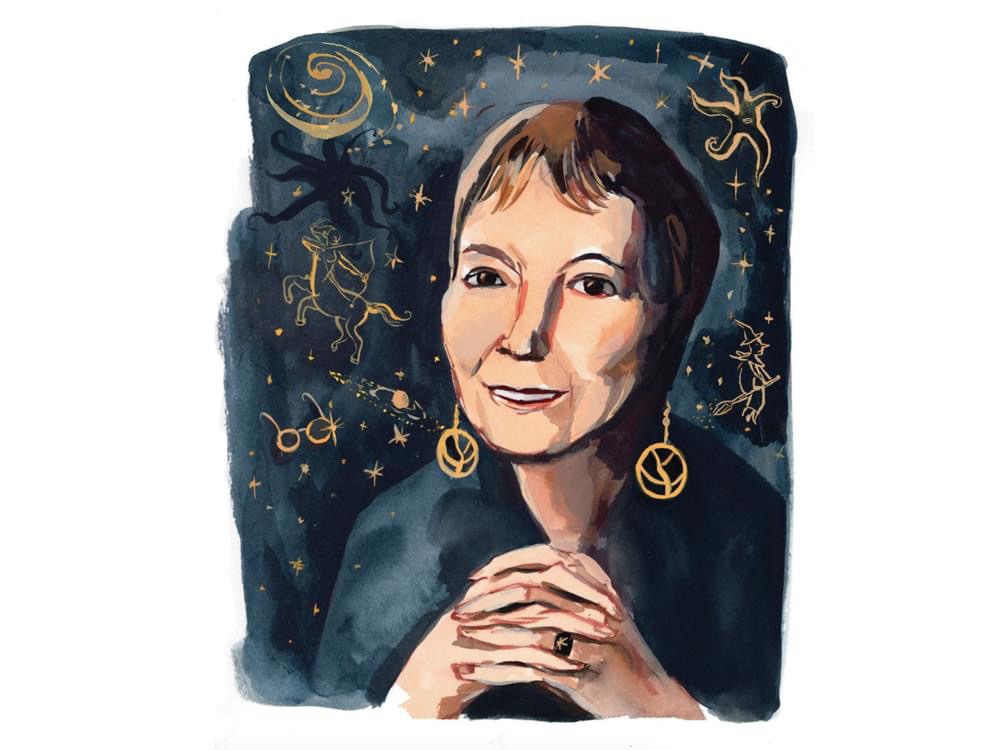
Today I would lobby hard that the church remember one of its premier contemporary storytellers: Madeleine L’Engle, Writer, Dreamer, and Master of Imagination.

Born in New York City in late 1918, Madeleine L’Engle Camp (she would eventually drop the Camp) was born to a pianist mother and a writer father, and took up her own writing discipline at the young age of eight. She was known as an awkward and shy child, and did poorly in school mostly due to her inability to assimilate. Because of her poor marks, her parents moved her around from school to school (and even physically moved, themselves) in an attempt to find the right fit for their family. Due to her social dis-ease, Madeleine found her home within the pages of the books that brought her comfort and friendship.

Madeleine graduated from Smith College and moved back to New York City to live as a writer and stage performer. She published her first two novels there, married actor Hugh Franklin, and birthed their first child, Josephine. Desiring a change of pace, the young family moved to Connecticut and became merchants of a small general store there as their family grew to add a son Bion and an adopted daughter, Maria.

It should be noted that even though she was writing this whole time, Madeleine had very little success getting her work published.

Because money was tight, the family moved back to New York City in 1959 so that Hugh could resume his acting career, and by 1960 L’Engle had finally finished what would become her seminal work: A Wrinkle in Time.

It was rejected by 30 publishers before finally being picked up.

I’ll say that again for those in the back who fear that their work is no good: A Wrinkle in Time was rejected 30 times before being published. It would go on to win the Newberry Medal for Junior Fiction in 1962.

Madeleine would continue to give herself away for those she loved even after having attained international literary success. She taught at a local school, volunteered at a local library, and was very active in her Episcopalian parish where she not only served with the community but also accepted a few writer-in-residence opportunities. All the while she continued to write for audiences young and old, both in fiction and memoir form, tantalizing the imagination of so many in this world.

L’Engle understood that fantasy is the language we use to tell truths that are just too hard or deep to understand through common symbolism. Fantasy is not an escape from , but an invitation deeply into, the heart of reality.

Children get this. Adults…not so much.

Madeleine was a convinced Christo-centric Universalist, claiming that no God could “punish people forever.” She said she could not do that as a parent, nor wish it upon her children, so how could a loving God do so with their own creation?

After a lifetime of writing, speaking, and creating for humanity, Madeleine L’Engle slowly slowed her pace and died on this day in 2007. She remains a beloved author by so many and an ever-present voice of challenge to humanity. In a world obsessed with “did it actually happen?” L’Engle reminds us that a much more important and interesting question is, “It doesn’t matter if it happened, does it happen?”

Madeleine L’Engle is a reminder for me, and should be for the church (and indeed the whole world), that fantasy tells deep truths, and perhaps religion would do well to not only acknowledge that fact, but lean into a bit.

Let those with ears to hear, hear.

-historical bits gleaned from public sources

-icon written by Jenny Kroik

Blessed Doubting Teresa

Today the church remembers a woman who had a small frame but was a giant in the life of so many around the world: Saint Mother Teresa, Servant, Renewer of Society, and Woman full of Existential Doubt.

Born Gonxha Agnes Bjoaxhiu in Skopje, Albania in the year 1910, this slight saint was raised in the faith by her mother, as her father died when she was just eight. In September of 1928 Gonxha left home intending to become a missionary and entered the Institute of the Blessed Virgin Mary in Ireland. Being only eighteen at the time, she changed her name to Sister Mary Teresa after St. Therese of Lisieux, and prepared to head to India that December.

In January of 1929 Saint Teresa arrived in Calcutta and began her formal ministry with the people she would eventually identify with.  In 1937 she made her final vows and was given the title “Mother,” an homage to not only her status within the ecclesial body of the church, but also as a testament to her outlook: tender, heart-felt, and courageously fierce when it came to the care of her people.

It is no exaggeration to say that many of us were the children of Mother Teresa.

On September 10th (it’s really amazing how many of the events of her life happened in September until we realize that this month is really a month of transitions in all creation) in the year 1946 she received a nudge from the Holy Spirit that a religious community should be formed in Calcutta, dedicated to serving the lowest caste of the societal system there. 

In August of 1948 she officially received permission to found the Missionaries of Charity, with their white a blue bordered garb as a tell-tale sign of their work.

By 1950 her movement to serve the poorest of the poor in the world had spread from Calcutta to Venezuela, Rome, Tanzanie, and eventually to every continent throughout the known world. She truly inspired a movement that can be called world-changing.

In 1979 she was honored with the Nobel Prize for Peace and gained larger international fame.  What is less-known about Saint Teresa, our common Mother, is that she was plagued by doubt and existential questions.  Even as she gained fame as a woman of faith her private life was one of wrestling with the God she professed and the destitute poverty she witnessed.  Only after her death did we all realize the deep struggle she faced daily to profess a God of love when so many in the world went without.  

In this way, she truly is the Mother of so many of us.

In 1997, having served Calcutta for so many years, Mother Teresa died.  She was given a state funeral in India and buried in the motherhouse there at the Sisters of Charity.  She remains both an inspiration and an honest participant in both the service that Christ calls us to and the questions surrounding the idea of a benevolent God when there is so much hurt and pain and sorrow in the world.

Saint Mother Teresa is a reminder for me, and should be for the whole church, that no amount of faith can shield us from the honest questions that come when we’re proximity of those who go without in this world.

Honestly, anyone without questions has not examined their faith…and this saint is a reminder of that.

Let those with ears to hear, hear.

-historical bits gleaned from Pfatteicher’s _New Book of Festivals & Commemorations_

Don’t Count Out the Underdog

Today I would lobby hard that we remember St. Freddie of the Mercury, Reformer and Musician.

Freddie (birth name Furrohk), was born in Zanzibar (modern day Tanzania) to Parsi-Indian parents. During the Zanzibar Revolution, Furrohk’s family fled and settled in Middlesex, England.

In 1970 he formed the rock band Queen and became the unlikeliest of frontmen. With an amazing four-octave range, which is almost unheard of, Freddie’s stage persona was as lively as his personal life, despite his intense shyness when not on stage. He interacted with his audience. He craved the spotlight while performing, but had few people he considered true friends. And despite having a serious overbite, never sought dental intervention for fear it would ruin his voice.

Mercury wrote 10 of Queen’s 17 greatest hits. His ambiguous and fluid sexuality caused many tabloids to stir with rumors. In a day when anything but heterosexuality was seen as deviant, he kept people guessing. He was diagnosed with AIDs in 1987, and confirmed he had the disease the day before his death in 1991. He was 45 years old. His birthday, September 5th, is still revered by rock enthusiasts and activists alike.

Mercury is a reminder to the world that the underdog in life should never be underestimated nor counted out. He challenged contemporary tropes relating to masculinity and what it means to be a rock star, and with a unique voice changed the way we think about both.

He was born to sing, and he did what he was born to do…may we all be so fortunate.

Pivots are Possible

Today the church honors someone theologians have called “a better doctor,” and who doctors have called “a better theologian,” Albert Schweitzer, Physician and Theologian.

St. Albert was born in Upper Alsace (which is now a part of France, but was German land at the time) in 1875, the eldest son of a Lutheran pastor. He studied philosophy and theology, and was even known to tickle the organ keys during his schooling at Stasbourg. He earned his doctorate in philosophy, and was a lecturer in the field. He then earned his doctorate in theology, and was also ordained as a pastor.

He, apparently, had a lot of time on his hands.

He also found the energy to study organ performance in Paris and, while there, wrote a book on the life and art of J.S. Bach. Around that same time he also wrote his seminal Quest for the Historical Jesus, which remains a foundational text for the historical-critical study of theology. He dared to suggest that Jesus’ own working theology was shaped by his belief in a “soon and very soon to be realized eschatology.” In other words: Jesus thought the world was going to end pretty quickly.

In 1905 St. Albert did a nice little pivot in his life and career and announced that he was going to become a medical missionary. He abandoned his lecture circuit and his scholarly appointments, married a nurse, and went to medical school.

One wonders about the amount of debt he incurred…

On Good Friday in 1913 he and his partner embarked on a journey through French Equatorial Africa and constructed a hospital near the Ogooue River.

During the first World War, Schwietzer was interned as an enemy alien due to his German heritage. While imprisoned he wrote Philosophy of Civilization which encouraged a “reverence for life” in all its forms. After the war he eventually returned to Africa to rebuild the hospital, and added a leper colony as part of the expansion.

He won a Nobel Prize for Peace in 1952.

Though he was sometimes known for being patriarchal and difficult to work with, and despite the fact that his medical knowledge appears to have been, er, lacking and lagging behind the best advanced practices, he was an undeniable humanitarian. The world was not ready for most of his thoughts, in both theology and in medicine, where he focused more on the comfort and dignity of the patient over cold progress. He spoke against the practice of using atomic bombs in the years after the second World War, and stuck to his belief that all humanity deserved dignity.

St. Schweitzer died at the age of 91 in 1965.

Fun fact: my internship parish had a statue of him in the sanctuary.

He is a reminder to me that it is never too late to follow the interests of your heart, and that dignity is worth fighting for.

Even if it takes a lifetime.

-history gleaned from Pfatteicher’s New Book of Festivals & Commemorations

Bringing in the Sheaves

As it approaches midday on September 2nd, I’m meditating on my ancestors (like I find myself doing a lot).

The ancient Celts viewed September as the month of hard field-toil and transition. You gave thanks for the harvest as you took it in…there would be time for a formal celebration at the end of autumn.

But right now? Right now was meant for nose-to-the-grindstone, hard work. August was spent picking the early crops, but now the field is ripe and ready. The rich berries are plump against the azure sky, even as the sun takes its time getting up now, and heads to bed early.

They labeled September as the month of “creative fire,” because the hands were hard at work creating a way through winter, and as the month drew on, the need for morning and evening fires came earlier and earlier.

It is a month of changes, both in the atmosphere and in the home, as we begin turning our full attention to the coming winter.

September is a month where humanity began to regain some balance with the Earth.

The old hymn “Bringing in the Sheaves” reminds me of this. That song was based off of a Psalm, but truly the rhythm of the Psalmist was known in those northern islands even before they knew any part of the Psaltery: this is the rhythm of life, Beloved.

We sow, we wait, we reap, and we celebrate.

Now is the time for reaping, working, regaining balance as we head back into the habits on the far side of summer.

You’ve Never Heard of Most of Them…

Today the church honors often overlooked saints, but ones close to my heart, The Martyrs of Papua New Guinea.

I know…you’ve never heard of them, which is too bad.

They’re relatively recent additions to the calendar of commemorations, added in the late 70’s.

When the Axis Powers invaded New Guinea in 1942, a number of the European missionaries on the island nation had already been called back to their countries of origin.

The Anglican Bishop of New Guinea, Philip Strong, challenged his clergy to remain with the people. Eight missionaries and two Papuan laymen were betrayed to the Axis Powers and martyred in August of 1942 for their defiance and insubordination.

In 1948 the Martyrs Memorial School was opened in Sangara as a living memorial to these brave souls. The school continues today and can be found in Agenahambo.

Often included in this memorial day are the 15 Lutheran 24 Methodist, and 168 Roman Catholic Missionaries in Papua New Guinea, New Britain, and the Solomon Islands who died during the WW II.

-historical pieces gleaned from Pfatteicher’s New Book of Festivals & Commemorations

Welcome September

For the ancient Celts, September marked the mid-point of their Autumn life. In these blazing days that might sound strange to our ears (it hardly feels like Autumn to most of us), but on the wheel of the year this quarter is earmarked for “harvest.” Their wheel, their internal rhythm even (and ours!) has the mid-month of every season as the transitional one:

February-Mar-April-Spring
May-June-July-Summer
August-Sep-Oct-Autumn
Nov-Dec-Jan-Winter

That middle month is the one of transitions with the equinox or the solstice of the season lying in its belly.

September is a season of invention and harvest. The crops are pulled in fully in this month. The fireplace starts to roar at night not only around dinner time, but longer into the evening as cool air sweeps through the house and the canning and drying and preserving that needs to happen for the coming Winter gets underway.

The fire in the hearth is mirrored by the fire starting to show up in the leaves now gloried on their way to death, and the drying fields calming themselves, preparing for new birth next year.

Toward the end of this month, to honor the final bit of the harvest, dried pieces of wheat and barley would be woven into a crown and hung on doors and windows, or worn on the heads of children.

The whole town would come together as the last sheaf was brought in and they’d have a large feast where the last sheaf of the field was woven and decorated. They’d toast the sheaf, saying “Here’s to the one that helped us with the harvest!” Then they’d take the decorated sheaf and hang it in a place of prominence.

This is where we get our modern day “autumn wreaths” that adorn our own doors and fill up your local Michael’s or Kohl’s in the “home decor” section. Today we see these as pretty and festive. For the ancient Celts they were a sign of thanksgiving and triumph, as the harvest gods had once again provided.

Welcome, September, the month of transitions. We thank you once again for the harvest.