
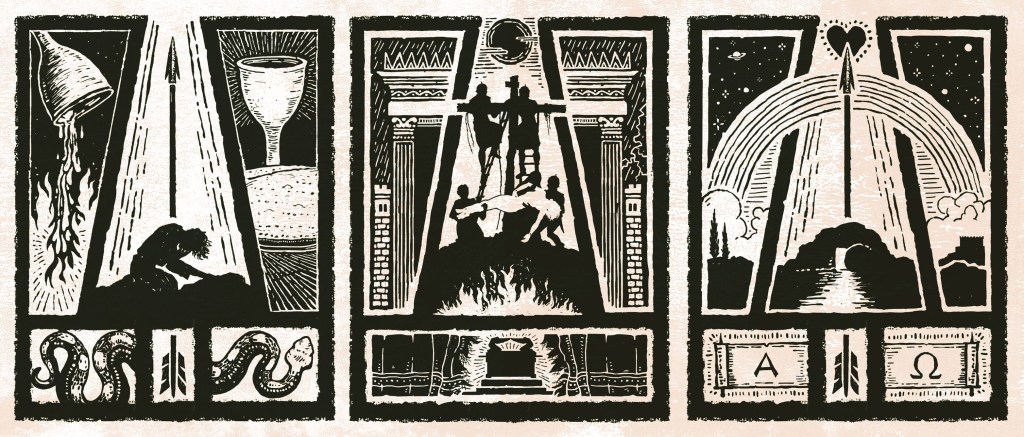
As we enter Holy Week, a thought on the events to come:
The Triduum, or Great Three Days, is the antidote to an overly saccharine Easter.
Maundy Thursday gathers the disciples, including you, around a shared table where we all get our feet washed and we all share in dipping our bread in the same bowl as Jesus.
Then the sanctuary is stripped, like our souls now feel stripped, as we realize not only what is about to happen, but also that we must stay to bear witness.
On Good Friday we come not to church, but, with everything bare and the lights low, to a darkened tomb. There we encounter the story of that fateful night, a story we know well not only because we’ve heard it every year, but also because we’ve lived it. It’s familiar.
We’ve all been betrayed by our friends, and have all betrayed a friend. We’ve all been falsely accused and accused others without evidence, let alone our unspoken shame knowing our justice system does this, and profits from it all the time.
We’ve all seen power prey on the powerless. This is that story, but instead of the local courtroom it’s the courtroom of the cosmos.
The reproaches are sung where we’re challenged to answer unanswerable questions of eternal proportions, and the service ends with the cross alone left in the room.
We are, in the end, left only with the cross: this twisted tool of torture to which we now cling, hoping that something good can yet come from it.
Sound familiar?
And then we spend the whole next day in the quiet of non-answers. And at dusk we stream back to that tomb, create a new fire to keep our souls warm, and tell campfire stories of salvation to console ourselves.
“Remember that time that God created the world?” we ask around the fire. “And remember when God saved those folks from the fiery furnace?” We retell these stories as a way to spark hope that, as in those impossible moments, God might be able to do something new with this impossible moment. We teach these stories to our babies, even as we reteach it to ourselves.
And then before we know it, the tomb has turned into a lush garden, and that tomb that was full of death is suddenly full of life: flowers, water, and yes, living bodies.
Our bodies.
Our bodies who now gather around the body of the risen Christ now seen in bread, wine, water, and the faces around us. And we baptize people who have newly heard all of this. And we sing and dance and party because, yup, resurrection has happened again, by God!
The whole arc has import. Every scene plays a part.
Easter is not a day, it’s a journey


 Reluctant Xtian