November 30th: In the Shadow

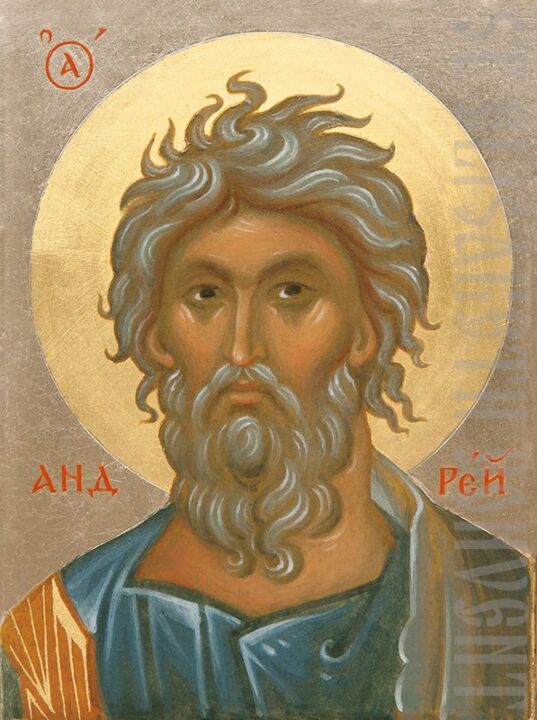
I feel bad for St. Andrew. He’s kind of like the B-side of the record.

In the lore of the church, not much is known about Andrew other than he was the brother of St. Peter…about whom much is known.

Imagine being known only in relation to your sibling to whom you’re always being compared. I imagine some of you don’t have to imagine too hard…this happens. Lots of people live in the long shadow of someone else.

But St. Andrew gets a bit of the historical last laugh. His feast day, November 30th, is the day by which the church sets the Advent calendar every year: the Sunday that falls closest to St. Andrew’s day is always the first Sunday of Advent.

Author and erstwhile theologian, Frank Schaeffer knows a bit about growing up in a long shadow. His fundamentalist pastor of a father, going by the same name, was a leading crusader in the early movement of the Religious Right. The younger Schaeffer has spent a lifetime coming to terms with that heritage, rejecting it, and finding his own voice.

Stumbling headlong into a kind of atheism (or, perhaps, “a/theism” as metaphysicist Peter Rollins would say), Schaeffer has been a prolific writer and voice in a kind of “in-between-belief” system that walks the fine line of faith and doubt. His book, _Why I Am An Atheist Who Believes in God_ is a wonderful reflection on the struggle to make sense of life in the shadow of religion.

“A/theism,” by the way, is a term coined by philosopher Peter Rollins to describe someone who believes in God but isn’t sure quite *what* to believe about God. They question what they’ve been taught about the Divine.

Advent is a season where we get to dip our toe into a bit of a/theism, a bit of “not-yet” when it comes to Divine promises being fulfilled and the whole notion of certainty.

Advent, with it’s focus on “hope,” is about not being certain, after all.

Advent is about clinging to bits and pieces of hope when there aren’t many to be found, repeating the promises of old again and again until you start to believe them, by God.

Or not.

I wonder if St. Andrew believed them, in all honesty. We know Peter doubted…but Andrew? He’s historically silent on the matter, except to say that he gets to usher us into this season of candle-lit waiting, wondering, and uncertainty.

Artist Joshua Radin’s hauntingly beautiful “Winter” kind of embodies the feeling of lostness and longing that St. Andrew’s day fills me with. Radin’s notion of a “name like a splinter” being lodged in his being is evocative of this wrestling with faith and straddling the line of belief and doubt.

Could God’s name be a splinter in us that is hard to get rid of? Is this why we’re continually drawn back to matters of the spirit and the heart?

Add the song to your Advent playlist, and ponder along with St. Andrew, with Schaeffer, with Radin, and with me.

November 29th: Day-dream

The ancient Celts understood all time as having meaning. The time of year helped you know how to behave, how to organize your activities, how to live and love and move in the world.

We’ve lost some of this, what with our inability to unplug and our unwillingness to turn off the lights when it gets dark. There is something special, human even, in living with the cycles of the sun, moon, and stars. The closest I ever got to this kind of rhythm was when I was a camp counselor and, due to the rustic nature of our setting, when the sun went down, we went down. When the sun rose, we would rise.

It was a different way of being in the world.

I find the church season of Advent to be an invitation back into that kind of orientation in spirit, if not in our body. The reading for today from the Gospel of Mark sets the scene:

“In those days, after that suffering, 
 the sun will be darkened,
  and the moon will not give its light,
25and the stars will be falling from heaven,
  and the powers in the heavens will be shaken.” (Mark 13:24)

Indeed the readings that the church provides to start off the season of Advent all begin in chaos, with sun and moon failing and flailing. It’s not surprising, though, when you think about it: for the church Advent is about “beginning” and “birth,” so it makes sense to start in the swirling chaos of the cosmos.

Advent starts in the shadows, Beloved, because most all of light starts in the shadows: the enclosed womb, the enclosed tomb, the seed deep under ground, the miring muck out of which life first crawled…it’s all in the shadows.

So, today, at the outset we have the opportunity to daydream in the shadows. We get to daydream about what kind of world can be birthed if we all take a step back (and, perhaps we have in this pandemic!) to take stock and think a bit.

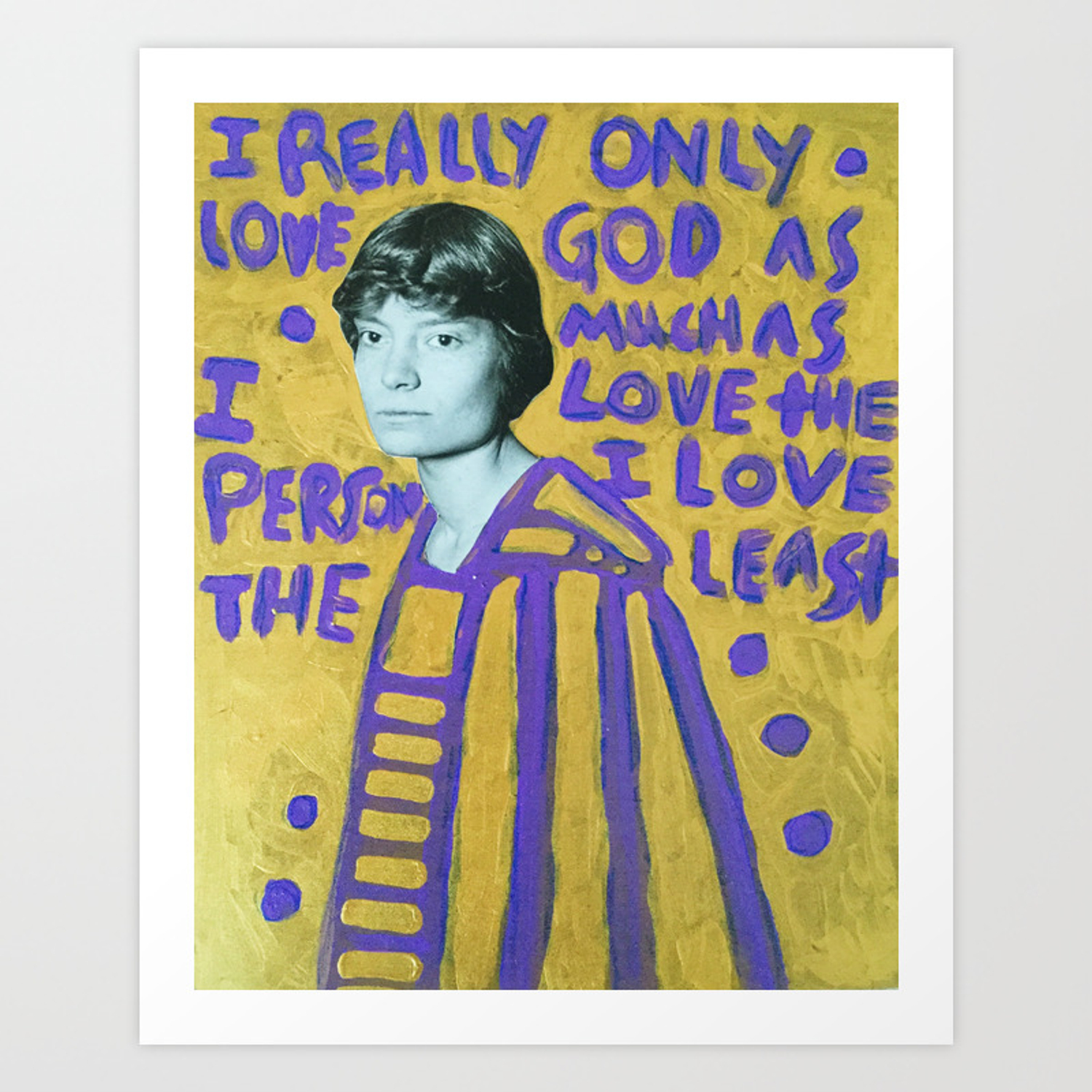
Coincidentally, the first Sunday of Advent this year is also the feast day of St. Dorothy Day, known to befriend the poor and the outcast. In her daydream, Dorothy saw a world where the distinction between poor and wealthy, “in” and “out,” mentally-ill and mentally-well, were erased.

In the swirling chaotic shadows of this pandemic Advent, could we imagine such a world? Could we live in the rhythm of such a world? Could we orient our lives around such permeable lines of boundless love? Could Dorothy Day’s dream become our reality?

A good addition to your Advent playlist might be this unusual choice from the 60’s, Spanky and Our Gang’s “Give a Damn.” The lyrics feel ever-green to me…

If you’d take the train with me
Uptown, thru the misery
Of ghetto streets in morning light
It’s always night
Take a window seat, put down your Times
You can read between the lines
Just meet the faces that you meet
Beyond the window’s pane

And it might begin to teach you
How to give a damn about your fellow man
And it might begin to teach you
How to give a damn about your fellow man

As the sun decides to set a bit early tonight, take a moment to daydream about what this world could be if you…if all of us…just gave a damn.

Coming: Advent Devotions with Music Suggestions

For the season of Advent (beginning in earnest quite soon!) I’ll be posting daily short devotions, just a few paragraphs, that will straddle the line between sacred and secular. My intention is to write some thoughtful pieces around the themes of time, waiting, anticipation, shadows, joy/sorrow, and yes, a/theism to make this Advent a ponderful one.

If you’re looking for something relentlessly cheery, it’s probably not the Advent devotional for you. But it will always be thoughtful and hopeful, that I promise you.

My desire is that these will be read by both the faithful and those who have who have left faith behind.

Along with my own thoughts, I’ll dot in some poetry suggestions, and most every day will have a song, secular or sacred, to add to your Advent playlist.

If you want them in your inbox, just click on the page to follow along and, boom, there they’ll be. And if you know someone who you think would enjoy this kind of work, feel free to pass along, post on social media, or print out and snail-mail a reflection to your Cousin Mel.

In this really tough year, as we enter into what I feel is a really sacred time of the calendar, whether you’re religious or not it is…it’s human to feel it in your bones, I wish you a blessed holy/holiday season.

Imma!: A Review of _Embodied: Clergy Women and the Solidarity of a Mothering God_ by Lee Ann M. Pomrenke

Full disclosure: I know Pr. Lee Ann Pomrenke. We first met in college way back when we were young and full of dreams, and we’ve reconnected over the years through our shared vocation in the Lutheran Church and our shared love of writing. So, when I found out she was going to be publishing her first book, I was eager to not only read it but offer some thoughts on it.

_Embodied: Clergy Women and the Solidarity of a Mothering God_ (New York/Church Publishing Incorporated, 2020) is one of those works that weaves together the practical and the theoretical delving deeply into how our conception of the Divine is not only parental, but explicitly motherly. And she doesn’t have to do much convincing, by the way. Through anecdote and story, Pr. Pomrenke just lays out the territory of how we not only conceive of God, but also interact in the church, and the result will be startling to many readers: God, in practice, is most motherly.

The brief work begins with powerful reflections on her life as an adoptive parent where she touches all the untouchable issues the church seems to shy away from, especially infertility. As we head into the Advent season, this first chapter is supremely prescient. I’ve heard from more than one family that Advent, that “season of waiting” where we celebrate miraculous conceptions and births can be a struggle for families whose waiting has lasted way past their 40 days and 40 nights.

The author addresses both the joyful beauty of parenting, and the well of grief in longing for it but feeling it is unrequited by the Divine hand. She dispels the notion that God withholds fertility outright, bring us back into righteousness (right-relationship) with the Biblical witness on the matter. “I am convinced,” she writes, “that fertility is not actually the point in many of these stories, nor are they preaching some kind of fertility gospel of pleasing God to get pregnant.” Instead, Pr. Pomrenke describes God as friend and fellow-journeyer on the road of waiting and heartache, not instigator.

The theme of “re-birth” and “new-life” run rampant through our scriptures, so why do we shy away from the idea of God as mother and, as Pr. Pomrenke points out, the Holy Spirit as doula and mid-wife to the new creations all around us? The examples are there, we just don’t see them for what they are because we’ve wired our brains toward the masculine.

Jesus, too, is more mothering than not, as the author points out. His use of touch as a way to comfort and heal brought me back to the healing touch of my own mother, cradling and rocking, and to the images of a God cradling the earth in more icons than I can remember. In this way the female pastor is indeed the embodiment of the God they point to, as the lead the gathered community to care and heal one another as a mother tending to her babies. The vulnerability of the Christ, the honesty of the Christ (as Pr. Pomrenke points out, mothers tell the truth…and so should we, in the church), and the centrality of the Christ all point toward a motherly orientation for Jesus toward his disciples and the world.

Beyond noting the glaring Biblical examples of a mothering Divine throughout our faith-narrative, I especially appreciate that the author deftly inter-mingles that deep theology with our practical congregational polity. By that I mean that she always brings the highly theoretical down to the ground of experience (embodiment at its core), and notes how the local congregation relates to the themes of family (for good and ill), adoption, and being mothered. In doing so, Pr. Pomrenke has written a book that is both useful for clergy (as they will absolutely identify with her vocational examples) as well as people in the pew, who get more than their share of tidbits to reflect on as they think about how they interact with their pastor and fellow parishioners.

Of all the chapters, I found Chapter 7, “Emotional Labor,” especially resonant with me. Parenting in general, and mothering specifically, is emotionally laborious, as is pastoring and leading a faithful life. Within the church there is much anxiety about our shared future, a taxing reality that weighs on most everything within the local parish nowadays, like a family knowing there is an impending crisis in its midst. How do we mother one another through it and stay sane? How do we retain empathy with one another while also tell each other difficult truths? This chapter is both intensely personal and universal in scope, and, along with the first chapter “Waiting” stands out as my favorite parts of the book.

_Embodied_ is half theological primer and half memoir, blending the two together in a way that engages and moves the reader. It is in no way a treatise on using feminine pronouns for God (but I think we should, hence why I titled this piece Imma), nor is it an apologetics piece for female clergy or feminist theology. It does something much more powerful, I think: it just lays out the facts.

Clergy, even those who identify as male, are motherly. God is motherly. The church, when it’s at its best, is guided by the thundering velvet hand of a mother. And the fact that we have historically had issues with this is not an indication of outright denial (though there is that), but one of consciously or unconsciously overlooking the obvious.

Pr. Pomrenke reorients us here, and does so with skill and thoughtfulness.

Which begs the very real question: why are there so few female Senior Pastors in church leadership today? Why does it take longer for female clergy to be placed in congregations, and why do they get paid less than many of their male counterparts?

While the book doesn’t explicitly ask any of these questions, I bet you will after reading it. In fact, if there’s a minor critique I would make of the piece, it’s that it doesn’t ask these questions outright.

But perhaps that’s her point. Like a good parent, a good mother, Pr. Pomrenke entrusts the decision making to us, walking with us along the way.

So, who should read this book?

I would offer it to most anyone. Clergy will find a work that names many of the joys and struggles of the vocation, especially clergy who are parents themselves and struggle with the Sunday morning wrestling of our children in the pew. Parishioners will find thoughtful examples that expand our notions of God beyond the conventional, and will be given wonderful food for thought regarding how parishes organize themselves and operate. Book groups and study groups (as well as individual readers) are offered questions at the end of each chapter that spur further conversation and reflection.

I’ve not yet read a work that so deftly intermingles mothering, parenting, and theological reflection as this work does. I commend it to you with confidence and great joy, and think it’s an especially wonderful book to pick up as we head into the Advent season.

On Not Believing Impossible Things and How Religion Doesn’t Help

“Alice laughed: “There’s no use trying,” she said; “one can’t believe impossible things.” “I daresay you haven’t had much practice,” said the Queen. “When I was younger, I always did it for half an hour a day. Why, sometimes I’ve believed as many as six impossible things before breakfast.” (Lewis Carroll, _Alice Adventure’s in Wonderland_)

To believe in “impossible things” is quite human, I think. There is a sense of hopefulness, a kind of counter-balance to our fear instincts, that lives strong in our brain chemistry.

But even within the realm of believing in “impossible things” there are some categories. Like, it’s one thing to believe that there is a Divine Being in the universe, and quite another thing to believe that someone gravely ill with little medical probability to recover will, somehow, do so.

The first, a belief in a Divine Being, is a kind of life-assent to some sort of higher power’s existence. The second is trusting that a miracle (which, by definition, means it doesn’t happen except so rarely it can barely be documented and is taken out of statistical probabilities) will happen.

The first kind of belief is existential.

The second kind of belief is banking on the improbable at best, and impossible when it comes right down to it.

Religion has played fast and loose with these kinds of ideas over the years. As recently as last year the Lutheran Church-Missouri Synod reaffirmed the Doctrine of Creation which pushes the idea that, due to the Genesis account, the world was created in six, literal, days.

The President of the denomination, Matthew Harrison, wrote in defense of the affirmation, concluding that he is compelled to believe in the doctrine of creation because, in his words, “I believe in Jesus Christ as my Savior. And I hear in the words of Jesus that He himself believes the creation accounts are historical. (See MATT. 19:3–9.) I hear in the words of Scripture, both Old and New Testaments, the voice of my Savior. And both He and the Scriptures bear witness to their absolute inerrancy and infallibility.” (The Lutheran Witness, January 3rd, 2018)

Not only do I find his position theologically lazy, but I find it utterly senseless! As in, it makes absolutely no rational sense. And I get that his big thing is that faith trumps rationality in all things, but that position is dangerous when it comes to matters of science and life and death.

This is but one example of denominations who still hold and teach this “impossible belief” that flies in the face of so many branches of science and so many years of dedicated scholarly inquiry that I can’t even name all the branches, lest I leave any out.

Add to this the idea that there was a world-wide flood and Noah’s ark somehow preserved creation, that there were giants like Goliath in the ancient world, and that Joshua’s horns fell the walls of Jericho…I mean, you can name six impossible things before getting through the first chapter of Genesis if we’re talking literally.

I remember being in a Bible study once and explaining to the class that the particular book we were reading was an example of “Biblical story,” a tale meant to teach the lesson. It contained many truths, but did not actually, factually happen. And I remember a few souls in there widening their eyes in disbelief at my statement. Their dismay was palpable.

The story was an impossible tale, by the way. A great tale, a truthful tale, but not a factual tale. And were it to be read outside of the religious context, it’d clearly be identified in that way.

One person raised their hand, “But,” they said, “if God can do anything, then I’ll just believe it happened, OK?”

“One can certainly take that approach,” I said, “but it opens up the doors for a lot of problems if you do. Because we live in a world of norms, by and large. And if we give God the big ‘anything is possible’ card, then we might start to disregard the norms that govern our world and society, norms like science, witness, and historical precedence.”

I don’t know if that was the right answer. I don’t know that there is one.

But I bring this all up because we are certainly, as a people and as a society, moving away from a culture of fact and truth and increasingly becoming a culture that “believes impossible things” because they’re convenient.

Like, it’s convenient to believe that mask-wearing is all about control and this pandemic virus is a hoax and, if God can do anything, then we don’t need to fear it because God can protect us.

It’s convenient because it let’s you live in a world where you don’t have to take responsibility for the safety of others, let alone yourself, because you can live in your delusion without question.

But it’s also very dangerous.

And I worry, in the deep parts of my heart, that religion that pushes a literal Noah’s ark has enabled this type of thinking.

Blind optimism has allowed people to believe that, contrary to every authority, the 2020 vote was rigged and stolen. Authority is not held in esteem anymore, but rather is subject to desires and wishes, it seems.

I worry that blind optimism pushed by so much religion, with the “pie in the sky” escapism, has laid the neural irrigation ditches for this kind of thinking to be possible.

What culpability does religion have in the impossible thinking going on in our world today?

I’m not sure, but I’m wrestling with it.

Because while I do believe it is possible to have a critically-thinking faith, I also know (from experience) that it’s more difficult. The easy way out, in many ways, is to not think about it at all and take religious texts, doctrines, and dogmas as gospel truth (pun intended).

The critic of that statement would claim that it’s harder because so much of the texts, doctrines, and dogmas fly in the face of scientific discoveries, sociological progress, and philosophical thought.

“Exactly,” is my response. “So why believe it?”

It’s believed because it’s convenient to do so, and immediately beneficial: you don’t have to wrestle out the truth because it’s given to you.

But our world is not one to give gifts like that. Truth has never been served on a silver platter, but rather wrestled out, verified, re-verified, put to the test, and eventually come out on top.

A religious system that encourages wrestling is sorely needed in this world today, but I fear it may be too late. As the pockets of society that embrace science and those that reject it retreat to their different corners, we’re forced to look at the wasteland gap in-between us all and wonder how the ways we’ve taught faith, spoken about “truth,” and pushed impossible beliefs has led to this in America.