“Ash Kicking” or “Why I Don’t Think Ash Wednesday is a Good Day for Peddling Religious Goods”

I know this post might not be popular with many of my colleagues, but it is timely…so I’m going to put it out there.  ashes

I get why pastors and church people stand by the bus stop and the train stop and on busy thoroughfares for Ash Wednesday.  We “get out of the church and into the world” by doing this, right?  We “take the ministry to the streets.”

I get the rationale; I get it.  And I get that it probably can be pretty powerful for the ashers, and possibly the ashees, too.

But here’s my concern, specifically with Ash Wednesday: I fear it is cheap.

Yes, cheap.

Ash Wednesday is a day of solemnity when we hear the prophet Joel encourage people to “return to the Lord.”  The liturgy involves a movement from the Kryie (Lord, have mercy) to hearing Joel’s encouragement to Matthew’s prayerful penitent beat his chest, and then we take last year’s Hosanna’s, burn them as a sign that we’ve burned so much of our praise in pursuit of the dust of this world, and mark ourselves again as dust.

It is a movement of stark realism.  It is a movement, like a carefully put together album, that leads you from the realization of mortality to a hopeful life despite the fact that you are dust.

Beautiful stardust…but dust nonetheless.

But more than anything, it is a movement.  And it takes a bit of time.  Not much time, but some time.  Mortality does not sink in so quickly (without sudden tragedy, of course).  And we should allow the time.  Not much time, but time nonetheless.  As the beginning of Lent, a season of intentionality, it seems odd to me that we would start out with such slack intentionality…

It is much more than a simple smudge at the bus stop.  Sure, there are many who will also offer prayer in that time.  Sure, there are many who will also offer information about how the individual seeking to be “ashed” (or get the “ash kicking” as I like to say) can hook up with a faith community.

I’m not saying you shouldn’t do it.

I’m just saying why I’m not going to…and I want to ask the question publicly.

Because despite the prayer and the information on faith communities, I don’t think Ash Wednesday is the day to do it.

We don’t see people out on Easter passing out lilies.  Actually, that makes a ton more sense to me…

I don’t want Ash Wednesday…I don’t want my mortality…to be a gimmick.  And I worry that the church can turn it into that.

And there’s something important about having Ash Wednesday with other people of faith, all together, in one place.  There’s something important about me, the individual hearing “Memento, homo, quod pulvis es, et in pulverem reverteris” but then also having all of us, communally, hear it.

It’s not just about me; it’s about us.  All of us.  We are all stardust…and our systems of power and “isms” and phobias have reinforced it.

And there is something powerful about having a train full of cross-smudged commuters.  I won’t deny that.  But what does it mean that they got it running for the 8:05am?

Have an early morning Ash Wednesday service.  Or a noon one, where people can do it at lunch hour.  Or, have a full one at the bus stop, 20 minutes long.  Or point people toward a service that happens right as work gets out downtown.  I think these are good options.  But not as they’re running by…

Because I want to know: what do we think we’re saying when we’re offering a reminder of mortality on the fly?

You’re Married, Not Besties

So, I hear “I’m marrying my best friend”…and I cringe just a bit.

It’s said honestly, and I don’t mean to belittle the sentiment at all.  But, just in time for V-day, perhaps knowing that you don’t have to share your bed with your best friend will provide some comfort to someone.

My best friend and I would never write in the sand.  Probably.

My best friend and I would never write in the sand. Probably.little bit.

And I’m not against you and your partner being, in some ways, friends.  Or even “best __________” in many ways.

But I do not think that you must (or maybe even should) be “best friends” with the person you marry.

You need to be great partners.  You need to be great lovers.  You need to be great confidants and plan out a common trajectory.

But you need a different best friend.

See, many marriages fall into the trap of “all-needs-met.”

“All-needs-met” is the syndrome where one, or both persons, in a relationship feel that all their needs will be met by this one person, in this one relationship.

And it’s just not going to happen.

Especially needs that fall within the realm of “social needs.”

Sexual needs, deep emotional needs, partnership needs…these can be met within the marriage unit.

But many friendship needs can’t, and probably shouldn’t, be met there.

Why?

Because you need to dance well together.

There was an interesting interview last night during the Olympics where a reporter was grilling a couple competing in ice dancing.  She said, “We know you spend so much time together, and that you’re best friends…”

And the couple gave such a look to the woman and to one another, you’d have thought that lobsters were crawling out of the interviewer’s ears.

They weren’t best friends.

They had a deep bond, an emotional bond, and they spent a lot of time together working hard at their craft, laughing, joking, crying, helping one another up, and making beautiful movements gliding through this world.

But they weren’t best friends because they needed to dance together, and to do that well, they couldn’t be best friends.

The term “best friends” probably has a different meaning to most everyone, I think.  So perhaps the confusion is on my end.  I may not need to cringe when I hear it.

But, then again, perhaps it’s just a truth that needs to be named: you don’t need to be best friends to be married.  In fact, maybe you shouldn’t be.

The marriage covenant is deeper than friendship.  And your marriage cannot meet all your social needs.

It shouldn’t meet all your social needs.

Because you need to dance with intimacy and having/being a family and setting a common life trajectory and, well, a complex support system needs to surround you because those things are hard enough without trying to throw “being besties” in there.

And I think this confusion lies especially within the church who often sets marriage up as the container that holds all relational meaning.  The church has set marriage up on this pedestal, has made it the culmination of everything and all things, and doesn’t mention enough that marriage is a call that not everyone feels, and that marriage will not satisfy every human longing within the heart.

We all need friends, I would say “best friends,” outside of marriage.  And we all need to know that that is OK.  It does not make your marriage anything less to say that your spouse is not your best friend.

They are more important than that.  They are your partner.  They are your lover. They are your family.

They don’t have to be your bff even if you have covenanted to be together forever.

Because you have to dance together, and even in dancing you need a certain amount of distance between the people to do it well.

Otherwise you’re just tripping over one another…

My Obligatory Post about the “Evolution vs. Creatonism” Debate

…I didn’t watch it live.earth-space

We watched Dallas Buyers Club instead, starring a gaunt Matthew McConaughey and even more gaunt Jared Leto.  And ate pork tacos that I made myself from ingredients I cobbled together from the store.

It was a great movie, based on a true story.  And I make great tacos.

And, dare I say, the movie and the tacos had more to do with reality than the so-called debate.

I’m an evolutionist when it comes to how things have ended up the way they have; no mistake about that.  It’s the theory I think best explains the questions it sets out to explain (at least, so far). But to think that these two people were actually debating the same topic is naive (I watched the debate online this morning).

They weren’t debating the same topic.  It might have appeared like they were, but they weren’t.

It appeared like they were debating how the world came to be and why there is “something” rather than “nothing.”

But really, Ham was talking about a worldview, and Nye was talking about science as a way of discovering truth.

Those are not the same thing.

Science is a method of discovery.  A worldview is composed of convictions on what the person feels has already been discovered.

So it’s no wonder why, when asked what would change each of their minds on the supposed topic, Ham said “Nothing” and Nye said “Evidence.”

Science is a method of discovery based off of evidence. It changes because more, different, or better evidence is found (or previous evidence appears unfounded). We could say that the sum total of Nye’s thoughts, some of which are informed by science, comprise his worldview (so far).  Nye’s worldview includes science, but I wouldn’t say that science is his worldview.  Science probably answers the “how” questions for Nye, like it does for most of us, but it doesn’t answer every question.

A worldview, however, is the total sum of all conceptions in one place.  Ham was debating his worldview.

Changing a worldview doesn’t take evidence. It takes a life-changing encounter…or a series of life-changing encounters. And Ham was describing his worldview where everything (dare I even say even relationships and love?) are contained within what he considers to be Scripture.  Especially questions like “how.”  His worldview says that “how” questions are found in Scripture. He’d have to encounter something that would dramatically shift him out of that way of thinking for his worldview to change.

An encounter is not a discovery; it is the absolute disruption of a worldview regardless of the method of discovery used.

Suffice to say, anyone who makes a “Creationism Museum” (and I use”museum” here in the sense that “things are on display”…like a thimble museum…it is not, in my opinion, a museum in the same way as The Field Museum here in Chicago) is not open to many life-changing encounters, I would think.

That’s just my assumption, but I think there is evidence to support it.

I would venture to guess that Ham feels like he’s already had his life-changing encounter…and doesn’t need any other ones.

And that, by and large, is my biggest beef with that mindset.  It’s the idea that things are “settled.”  So Nye could have shown him anything, said anything, and Ham still wouldn’t budge.  Because his worldview doesn’t allow for that…doesn’t allow for more, better, or different evidence.  It’s not based on evidence.  It’s based on being, and remaining, settled.

And a worldview that is settled is static, not dynamic.

And I think that we, the church, should encourage dynamic worldviews. And we need to be encouraging dynamic faith, too.

Evolution is mysterious.  It’s amazing.  In fact, Nye used “mysterious” multiple times when speaking! It’s how a simple thing becomes complex in structure and, yet, retains some simplicity even amidst it all.  It’s so interesting!

Creationism is static.  “Boom,” it is said, “a fully developed tree with rings and everything.”

It’s…uninteresting to say the least.

One of the common critiques about accepting evolution as an answer to” how things are as they are” is that it erodes “God’s glory” (although I’m unclear of what the critics mean by that phrase).

God’s glory isn’t diminished because God might use a mechanism like evolution to create.  In fact, I think that enhances God’s glory (and by “glory” here I mean God’s “awe-inspiring traits”).

God’s glory is diminished, I think, when we assume God would take the road that we would take…the road of least resistance.

Because, let’s be honest, I often just want things to *poof* be as I’d want.  Creationism is what I would do.  Hopefully God is more inventive than me…more awe-inspiring than me.

This reluctant Christian hopes people don’t think last night was a real debate.  Real debates need to be on the same topic intending to influence people. I would be astounded to hear that anyone changed their mind about creationism or science by hearing it.

You want to know what I think would be a good debate?  The debate between static faith and dynamic worldviews; between static and dynamic faith.  What are the pros and cons between thinking you have it all figured out and continually searching?

Tag, NPR, you’re it.

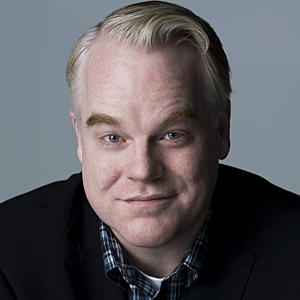
On Naming the Dead and why I’ll say Philip Seymour Hoffman’s Name Next Sunday in Church

There are only two community worship experiences that we do where we name a list of all of the recently departed in a row: All Philip-Seymour-Hoffman-Saints (in November) and the Easter Vigil (the night before Easter).

And slowly and surely I’ve started to include not just the saints of the church who have passed on in recent years, but also celebrities, activists, politicians, and local heroes.

And I’ve started naming them on Sundays, too, when we give thanks for the saints who have gone before us. Like today I read out Pete Seeger’s name as a faithful witness in this world to the life of God shown in the Christ.

Was Seeger a Christian?  I don’t know.  I know he had a godchild.  I heard an interview with her on NPR. But there are plenty of people who have godchildren and don’t identify as “Christian.” I don’t think it matters in this case.  If there’s anyone who lived into the Beatitudes as a peacemaker, I feel Seeger is it.

We named him.  And we’ll name Philip Seymour Hoffman next week, too. Because it is less about how they identified themselves, and more about how God has identified them: child of God.

And, to be honest, Philip Seymour Hoffman touched me, and so many people, in his work that I think we’d do collective harm in not publicly grieving for him in some way; in some faithful way.  And I’m a firm believer that one of the ways that the Holy Spirit works in this world is through the arts, and I believe that God moved through him and his gifts.

Lord, he had gifts…

We name the saints not because of what they did  in life (though that is certainly part of it), but more because of who God claims them to be.

And there were demons there, now come to light, which we all have.  And if people knew the full truth of any of us, I think they’d balk at having our names read in any list of so-called “saints.”

And yet, my name is there.  And so is yours.  And so is any of ours.

So, if you worship in a community and there is a time to call out the dead, name him.  Do it.  Or when the Vigil comes around to your community and your pastor knocks on the parish door to invite the dead to worship in the resurrection, make sure his name is there along with Pete’s (we don’t ever do last names, so technically I’ll just say “Philip Seymour”).

Or if you’re making a list for All Saints, include him there.

Him, along with everyone else you know personally who has died this year.  Him, along with every other faceless, nameless person suffering from addiction who will die this week that we won’t ever hear about.

Because, and here’s the main point, in naming Phillip Seymour, I hope and pray I’m also naming about 100 other people who will die this week in Chicago of an OD that we’ll never hear about, and no one will care about.

And if we can’t care, in some small way, who will?  If we can’t point to this and all other deaths, especially tragedies, and say, unequivocally, “there lies a child of God, loved and redeemed even now,” of what use is the church in truth-telling?

May light perpetual shine upon Pete and Philip and all the other nameless ones we’ve lost this week. Amen.