
I trust that the Jonah story is myth and not a real event. I trust that the resurrection of Jesus was/is not myth, but a real event.
I trust that they are both true.
This is a difficult concept to grasp, I think, especially if you come out of a tradition where the Bible is taken very literally.
 Bear with me a bit on this, though, because the binary thinking of “true/untrue” or “fact/fiction” is not as clear cut as we like to make it out to be.
If we take the Bible absolutely, unequivocally literally, we do it, it’s teachings, and ourselves a disservice.
Primarily we do a disservice because we know that the Bible was not meant to be taken literally in it’s origins. How do we know this? Because it contains different types of writings: histories, prose, poetry, legend, and yes, myth.
And Jonah is a myth. An instructive myth, a myth worth being in the Bible, but a myth. It’s form is mythic. It’s pattern is mythic. It’s characters, narration, plot, all of it is mythic. It’s not meant to be taken literally. It’s to be read and learned from and pondered over and thought over…but not in the way you’d ponder over a math problem. Not in the way you’d ponder over how someone could be stuck in a whale for days and not eaten by stomach acid.
So, we do Scripture a disservice when we hold all of it’s parts (written over hundreds of years) as all the same type of writing.
Secondly, we do it’s teachings a disservice by holding the whole Bible as being all the same type of writing to be held at the same status. Why? Well, if I can’t bend my mind around how Jonah can sit in a whale and not be eaten by stomach acid, and that story is just as real as a Jesus story, then I have to throw the whole thing out.
This line of thinking is a byproduct (an unfortunate one) of the Enlightenment.
Finally, we do ourselves a disservice by thinking that it all is the same because we either force our brain to believe something that we know isn’t…and isn’t supposed to be…true, or we keep ourselves from deep riches found in Scripture because, if we can’t buy all of it the same, we’ll buy none of it the same. In this case we don’t allow ourselves the great love of God shown in the Scriptures, and a relationship with God informed by these ancient writings, specifically around the message of the Christ.
So, how then are we to take the resurrection? Here’s how this pastor sees it.
For the Christian, something should be honored at the outset: the resurrection is central to the faith whereas the story of Jonah is not.
I think that’s just true.
Were Jonah missing from Scripture, the Christian faith would largely go on with all systems normal (for better or for worse).
I feel that, without the resurrection, the central tenet that God’s work moves into a future where nothing is lost, specifically the very people God has come to hold in love through eternity, would be missing. In short: the bookend of the salvation story would be lost, leaving everything before it in a heap on the theological floor without any sense, order, or telos.
And thus we end up with Saturday morning Christians: the Christ is crucified, time to hideout in an upper room because there’s nothing left.
It’s also worth noting that, for Jewish-Christians to propose that someone singularly rose from the dead is not only unthinkable, 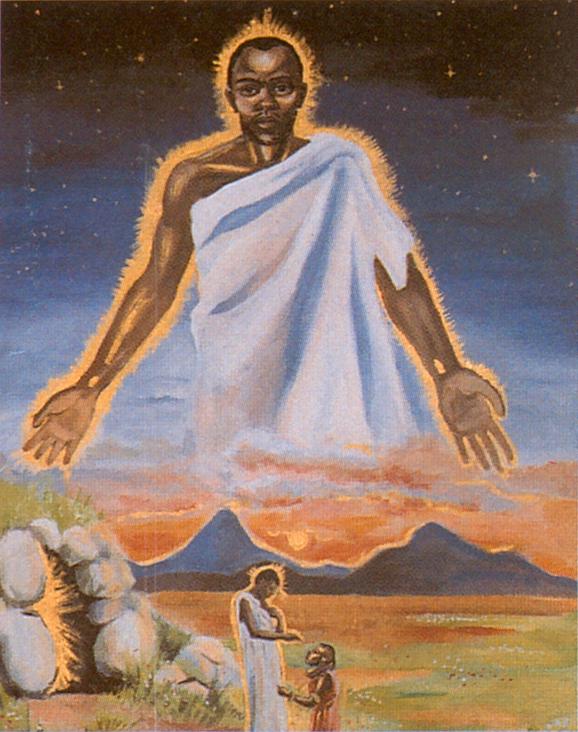 but would most likely initiate charges of blasphemy and result in death or expulsion from the Jewish community of faith. If they were willing to risk talking in this way, that’s telling. The masterful theologian N. T. Wright goes to great lengths on this in his book Surprised by Hope, which I found myself agreeing with.
This all being said, do I think that you have to believe in the bodily resurrection to be a Christian? No. The calls from Tony Jones and other theologians (even in my tradition) for those who may not subscribe to a bodily resurrection to “re-think” and recant on their take of a metaphorical/mystical or otherwise-known interpretation are wrongheaded.
As if the Christian faith was ever meant to be one with a list of beliefs that one had to check-off to be considered a Christ follower. If that is the case, the most literal Christ-followers in Scripture, both the Magi in Matthew and the disciples pre-Easter in all of the Gospels, fail the test. The Magi were pagan and the disciples were clueless.
Any attempt to coerce another person into trusting the veracity of a certain story, historical, mythical, or otherwise, is not creating trust and faith, it is trying to force fact.
A story can be true without being fact. I’m reluctant Christian because much of the church has forgotten this.
For this Christian I think it is intellectually honest to acknowledge that not all of scripture is meant to be read the same way. We do all sorts of disservices when we do.
But, for this Christian, a healthy dose of mystery surrounding the central stories is also important, especially those written so as to be a history of the salvation story. After all, the resurrection is not a “problem” to be solved. It is a mystery to be pondered over, embraced, and loved.
Jonah is a great fire-side tale that tells many truths and should be embraced and loved and pondered over (and should be acted out by persons to get the whole picture). But it wasn’t written to be history, and we shouldn’t have to take it as history to be faithful.
 Reluctant Xtian