
Why I Dislike Mega-Churches (No, Really…)

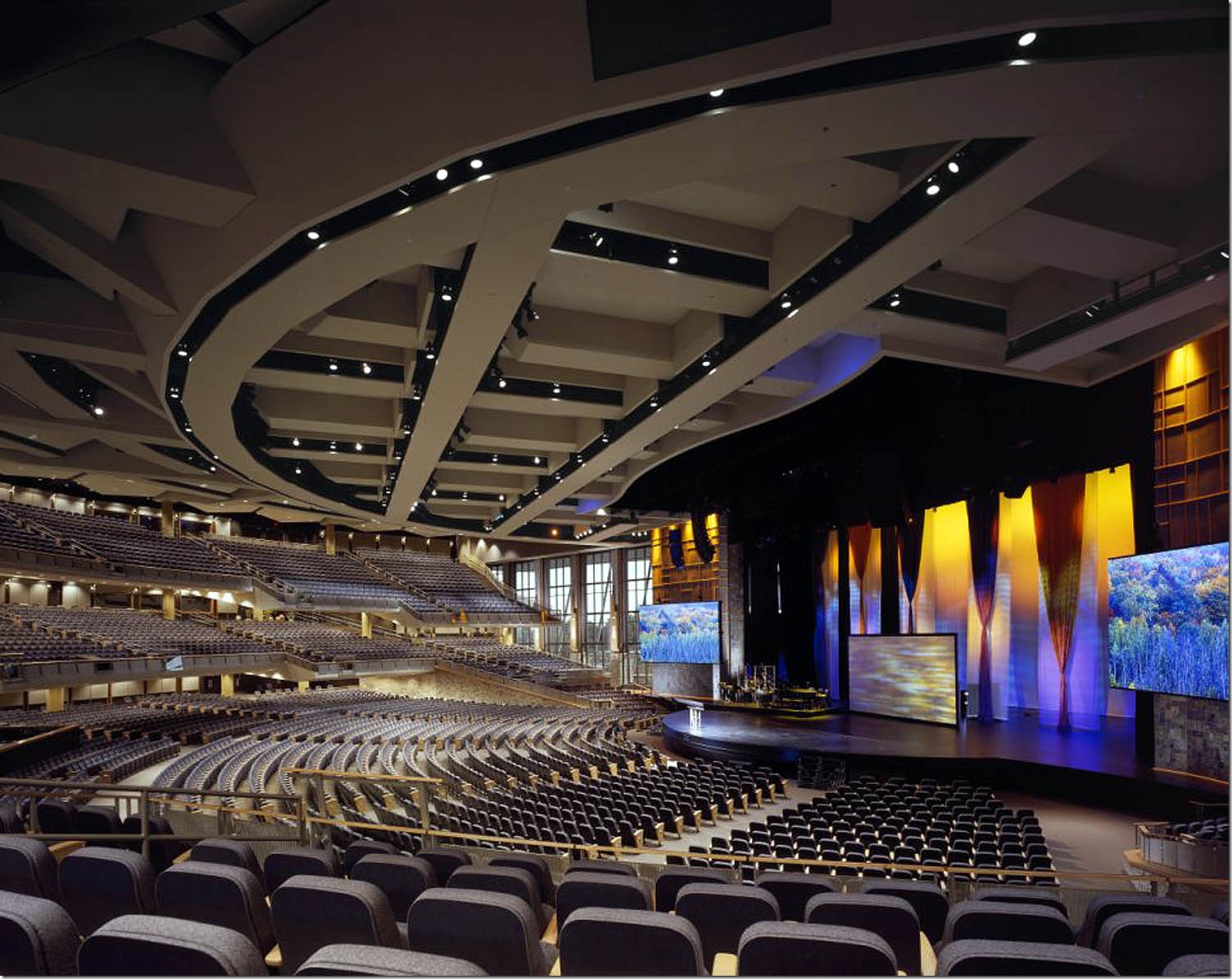
willowcreek-megachurch_thumb

A colleague of mine wrote a blog post today entitled, “Why I Hate Mega-Churches.”

But it’s a bait-and-switch (which he admits halfway through).  He likes mega-churches and, by his writing (in this and other pieces I’ve read), would probably like to lead one or build one.

Fine, I guess.  But when I look around the world, one thing I don’t tend to say to myself is, “Gosh, this world needs another mega-church.”

Just saying.

A good thing about mega-churches?  They have a lot of resources to do a lot of good in the world (should they choose to).

The consolidation of people and money under one mega-roof creates mega-possiblities (a quick qualifier: if one does some math to subtract the ecological and sociological impact from a mega-building, mega-pastors, mega-salaries, mega-parking lots, and mega-messaging-machines that often tout a message that I’d consider more damaging than helpful, the possible good shrinks considerably).

A bad thing about mega-churches?

They’re mega.

No, seriously, I think that’s a bad thing.  The anonymity that’s possible by slipping into stadium seating creates this wonderful silo-effect for the participant.  It makes you feel like the mega-speaker in the mega-space is speaking directly to you…and yet you never actually interact.

And there’s no need to!  You have thousands of others around you who can take up their time.  Why should you?

Also, I imagine it’s a little difficult to talk about giving yourself up for your neighbor when you’re sitting on a building whose footprint is effectively the size of a neighborhood.  Can we talk about the God who empties for the sake of humanity if we’re looking to fill our lives with mega?  Is there no cognitive dissonance there?

And, from my office, another problem with mega-churches is that it’s mega-taxing as a pastor to care for so many people…so, often you don’t.  It doesn’t happen.  The voice of Sunday morning is not the voice of the hospital or home visit. That’s not always bad, mind you.  Lots of people can and should do such care.  But there’s something about knowing the people you’re serving, and knowing them well.

Listen, I feel taxed enough keeping 300 people’s issues, concerns, schedules, and needs clear in my head. The possibility of 10,000 people sends me into convulsions.

Another problem I have with mega-churches is that I think  mega-churches teach, implicitly or explicitly, that mega-blessings and mega-sized programs and mega-sized hopes and dreams are what fuels the world and counts for success in life.

And they’re not.

My colleague says in his opinion piece that mega-churches seem to understand that God is found amongst the poor and the lonely because of all the good work they do for the poor and the lonely with their mega-resources.

If I may be so blunt: bull.

Such romanticizing of mega-sized resources  and mega-sized programs for the poor is a mega-sized dream.

If it is true that mega-sized churches really did believe God is best found amongst the poor and the lonely, the pastors would lead the charge there by putting the mega-sized buildings up for auction or, as a little church here in Wrigleyville (Chicago) has done, take out the pews and allow the homeless to sleep on the floor during the week.

That’s mega-voice with a congregation of 40 on a Sunday morning.

Finally, I guess I’ll also say that I don’t like mega-churches because it just feeds the mega-monster in the American (not exclusively, but largely) personality that bigger is better, success is godly, and fancy is freeing.

Again, bull.

Jesus, who had a large following but just over a dozen main players, who had no job, no home, and by any modern measure of success was, well, not successful, gives me no indication that mega-churches are anything but mega.

They are no more church than any other size gathering, no matter how you spin it.  And despite my colleague’s parsing of “God in mystery” and “God that repels” as motivating factors for church size,  I don’t think the argument for building church empires lies in how people relate to God.

By and large I think the truth lies in how people relate to egos, to money, and to what typical “success” is supposed to look like.  This is why we have mega-churches: because we like mega for all the wrong reasons.

But, lets be honest, I don’t like many small churches, either.

Mostly because I usually find that they think they should be mega, and get depressed because they’re not.  Or because they say they don’t want to be mega, but secretly do.

I like churches who are honest about themselves, who they are, and confident that in God, they can do all they are called to do in this world.

Mega is so attractive on paper…

Funny.  Nothing about Jesus is attractive on paper.

“Obscenity” or “On Why I Discourage People from Writing Their Own Marriage Vows”

I do a lot of weddings. I have a young community that I serve; it comes with the territory.writing-wedding-vows

And marriage is certainly on the radar these days in the States as more and more parts of the Union have legalized the union of same-sex couples.

I support same-sex marriage.  I should just say that off the bat.  I support it because, despite what you might hear out there, the Bible doesn’t have a thing to say about marriage.  It has many things to say.  And many of those things run contrary to modern notions of marriage.

What I don’t support, though, is for couples to write their own vows.  Sometimes I allow it…with conditions.  But, by and large, I don’t support it.  I’ll just come out of the proverbial closet on this: I’m against crappy vows.

If you want me to use my special designation by the State to do marriages, I’m going to force you to do pre-marital counseling with me.  Each session focuses on a different aspect of life together (and life, in general): family, finances, friends, and intimacy.

(If you want to keep going with “f” words it become obscene).

Another “f” word, faith, is woven through all of those.  Faith as trust: trust in the Divine and one another.

The very first session, though, is where we plan out the ceremony itself.  We spend a little while talking about order and structure, and then we look at words.  I think words are important (as you may know from previous posts).

I think words are so important, in fact, that I don’t continue with my string of “f” words when describing the different pre-marital counseling sessions…even though it would fulfill my great delight in alliteration.  The “f” word we commonly associate with intimacy is anything but intimate.  And although it’s a curse word that spices up language (and I’ve been known to curse), let’s not kid ourselves: we don’t feel particularly intimate with the “f” word in a way that is lasting.

If we did, we wouldn’t use it so liberally.  It is an obscene word that we use to indicate that something is just that: obscene.

“Love” is by far a scarier word to say.   And intimacy is not obscene, it’s scary.

So, because words are important, I always take the couple through the various words that I can/will use in the service: the declaration of intention, the prayer of the day, the blessings.

And then we get to the vows. And at this point I usually say something like this, “Now, I’m going to give you some options for vows and I want us to talk about them.  I want you to use one of these options. If you want to write your own vows, that’s a possibility…but I need to see them before hand.  And we need to talk about them.”

In all honesty, most couples aren’t interested in writing their own vows.  They’d rather have someone write something for them on a day when they’re already more visible than they’d like to be.

But every so often a couple will want to write their own…and that’s when I do my damnedest to try to talk them out of it.

See, this is the thing: in marriage, you can’t just promise whatever you might want.  And because love is scary, we often don’t know exactly what we want…and so we just go with what we know.

And so much of what we know is just sentimental generalist crap.

A vow is something very specific.  I had one of my best couples consider writing their own vows because, as the future bride put it, they wanted to “publicly express their love for one another.”**   Of course they do.  But that’s what the marriage ceremony is in and of itself.

A vow is not an expression of love, and yet so many labor under the delusion that it is.

A vow is a sacred promise, a statement that you say in front of people who, if they are at their best, will hold you accountable to them.  A vow is you saying, “Hey everyone listen up! I’m going to pledge some very specific things to this person across from me, and I want you to hear them and hold me accountable to them.”

Expressions of love are not vows.  Expressions of love are emotionally based.  Vows are not emotionally based, no matter what popular culture tries to tell you.

Vows don’t come from your heart, nor do they come from your head.  Vows come from that place that exists somewhere between rationality and emotionality, because you keep them even when it doesn’t make sense, and even when you don’t feel like it.

So many couples want to write their vows in secret, apart from one another, and then surprise the other with them.  Such surprises are best left for other points in the service, or other times in the whole event of the marriage day.  If you write your vows in secret, how are you to ensure that you’re vowing the same things to one another?

One of you cannot vow to be with the other to the bitter end, while the other only mention staying together in sunny times.  That happens, you know.  I’ve heard self-stylized vows that had very little to say about “the worst that is to come.”

And that’s when the vow is so important!

In a day and age of choice, which is what we are in, I’m sorry…I’m not willing to provide you with this particular choice.  You cannot choose what you vow to one another in marriage; marriage cannot mean whatever you want it to mean.

And I know that may seem to trample on individuality, but I’m trying my hardest to impart one thing and one thing only on you two: this is important.  You will make of your journey together what you will, but I want to hear how you’re going to make the journey, and I’d prefer you use ancient words that people have leaned on throughout all of time.

Because for as much as this is about you and your love, it’s also about all of us who witness it.  Because you invited us to be there.  So I’m going to try to hold you accountable to these things to the best of my ability.

And I’m not one who believes a couple should “stay together at all costs.”  Sometimes an amicable divorce is healthier than an acrimonious marriage.  But, at the very least, can we not look at the vows you made and figure out where things went wrong?  Let’s not pretend that people divorce over irreconcilable differences.

We divorce because vows are difficult to keep and we have trouble living together in covenants.

And so, instead of vows, too often we just have statements of love and intention because other people are really really difficult to live with.

No one marries intending not to stay together; I know what you intend.  I want to know what you vow.  I want to know what you promise from that place between your head and heart, that place of deep yearning that leads people to come together in marriage in the first place.

I don’t think marriage is under threat because people of the same sex want to marry.  Any two people can make a vow; gender doesn’t have much to do with it.  Marriage is under threat because people, of any sex, want to marry on their own terms.

And so much of the church is missing the boat here, I think.  We shouldn’t stand against same sex marriage, we should stand against shoddy vows and a society unwilling to comment on them in a meaningful (read: not judgmental) way when they fall apart.

I think the Bible has many things to say about marriage, most of them absolutely foreign to our modern ears and notions about the institution.  The question for the church isn’t, “What does the Bible say about marriage?” It is rather, “What does our faith say about marriage?”

And our faith, the Christian faith, says vows and covenants are important.  This thread flows through both testaments.

I’m a reluctant Christian at times because, well, we’ve been silent on the vows…but have a heck of a lot to say about who should marry.

And to not see the difference?  That’s just obscene.

**The couple eventually decided to have some statements of love that they had written to one another read before the vows themselves.  This is a great option, I think.

The Pews Stink (and So Do the Chairs)

There is so much going on in faith communities.girl-church-pews_8615_990x742

…and so much NOT going on…

Arguments pop up all over the place in mainline protestant churches (mpc’s) over the stupidest things: where an American flag is placed, where a baptismal font is placed, whether guitars or organs are appropriate in services.

By and large I look at these things and think, “Holy crap, folks.  We have enough dysfunction in our families outside of the church doors, we don’t need more inside.”

No wonder the rumor is that mpc’s are dying if these are the things they’re arguing about (I say “rumors” because, well, every bush needs some pruning to grow so all the fervor over “dying” is just anxiety over “changing”).

But it is true: I’m not interested in inviting spiritual dysfunction in my life.  I think spirituality is about me and about others and about the Divine.  Too often churches focus on just one of the three (“God loves YOU…it’s all about YOU and YOU’RE decision to invite Jesus into your heart (the physics of which boggle the mind)” or “God loves your neighbor and you must, too!  Community is God and God is community!” or “You owe God a hell of a lot…don’t you feel bad about that?  Don’t you want to ask forgiveness and be shown mercy? God is angry…”)

I mean, there is a lot in all three of those statements, but by and large I find most churches choose one to focus on and ignore the others.  Like churches who only mention “God” or only mention “JEEEHESUS” or only mention “Slain by the Spirit!” and forget about the other two.

As if faith can be parsed so crassly and simply…

But there is one argument I’m wanting to have, but it’s difficult to have.  I want to have it for practical reasons and spiritual reasons.

In short: I hate pews.

They’re uncomfortable.  They’re difficult to navigate (bump your knee recently?). They force you to face only one way.  They’re immovable.

But…I also hate chairs.

They take a long time to set up.  They’re sloppy looking when set up.  Their style doesn’t lend itself to formal settings (no matter how you gussy up that seat cushion).

The church I serve is a cathedral-style church.  A bunch of chairs in there looks like a mistake.  The pews, though, are immovable and too close together and breaking.  But we can’t just do chairs because it wouldn’t work. One of my marginally-churched friends noted one day that they’d far prefer a pew to a chair if given the choice because your butt can take up the room it takes up instead of being confined to a chair seat.

Plus, I don’t want to do just chairs.  They stink just as much as pews.

I know it seems like so much dysfunction to chat about how you sit in a worship service, but I actually think how our bodies are will impact how our spirits and minds are.

Flexible seating disorients us enough that we subconsciously begin to realize that it’s not all about us, or all about our neighbor, or even all about God.  Different arrangements highlight different foci…and that’s an important thing to acknowledge about faith that the church usually refuses to acknowledge: at different points in life faith takes on different foci.

And then I came across St. Peter’s Lutheran in NYC.

St. Peter’s has short pews that can sit three to four butts…and are moveable.

You have to sit close, but you can change the seating.  You can’t think it’s all about you sitting so close (the benefit of a pew), and yet you can use them flexibly (the benefit of a chair).  You can turn them for intimacy at times that call for intimacy.  You can face them all in the same way for times that call for that, too (and, yes, sometimes that is called for, I think).

And for mpc’s that are “dying”, often times the struggle is how to build intimacy in a cavernous space.  When our second service at the church I serve was launched, this was one of the problems for my community.  We had about 30 folks in a space that seats 200.

What to do?

We took out some pews to make some gathering spaces.  And we gathered.  We gathered around the altar for communion.  We gathered in the aisle for prayer.  We gathered around the font for baptism.

We got our butts out of the seats and into flex space.

And, lo and behold, the intimacy created energy…and now we’re at the point where we can’t do that anymore because there are too many people.

…but I still want to.  How to do it now?  I think I have an idea…but it’ll be a hard sell.  Because we like things we can rely on.  We like things the same.

And if there’s one thing most people rely on, it’s that church is a place where they won’t be confronted with discomfort.  It’s all about them, after all.  Or all about community, so they don’t have to deal with their own crap.  Or all about God, and God loves them but is tired of their crap and the community’s crap.

It’s not about the uncomfortable tension that all three of those things combined causes, right?

Pews stink.  Chairs stink.  I want a hybrid.  I want flexibility.  I want to acknowledge that faith in post-modernity must be more flexible than most places want to acknowledge.  The conservative churches want you to think they’re linking you into unmoveable truth tenants, and yet most of them use chairs because they think they can anchor you theologically as long as you can move physically.

A nice bait and switch.

The so-called liberal churches suggest that nothing is fixed and all is fluid…and yet most use pews because you can change your religious views, but God forbid we change how we view the front of the sanctuary.

Mixed signals galore.

In truth, faith is a mixed bag of all that and a lot more…and how our bodies are can affect and reflect how our minds and spirits are (thanks yoga and t’ai chi for reminding the West of this).

So, how about we chop up our pews, un-anchor them from the floor, and start acknowledging something different in our lives? How about we ditch our silo-inducing chairs and start sitting closer so that our neighbor’s faith might affect ours? It might be uncomfortable.

But, hell, I’ve never been in the presence of God and felt comfortable…