
 The Script has a song, Breakeven, that starts out,
I’m still alive but I’m barely breathing
Just prayin’ to a God that I don’t believe in
When this song first came out, I had a friend call me up and ask if I’d heard it. “You’ll like the first two lines,” he said. I was in seminary at the time, and while this friend would be someone who would probably identify as skeptical, he would always come and hear me when I preached or taught.
He knew my theology, my style, my leanings.
He knew that I think that many people pray to a God that they don’t believe in. Perhaps he is one of them.
Perhaps we all are at one time or another.
We must remember that the opposite of faith is not doubt. The opposite of faith is certainty. Somewhere down the line of history we’ve lost sight of this, to the detriment of those of us who identify as religious and spiritual.
I’m a big proponent of changing the word “believe” into “trust” when we’re reading the scriptures. Our post-enlightenment habits have tended toward making everything that happens in this world begin in the brain. We use the words “belief” and “believe” in all ways as if it can be equated to “mental assent.”
But in the ancient world, no such corollary existed. Diana Butler Bass notes this in her most recent work Christianity After Religion. She writes,
Although Western Christianity would eventually be defined as a belief system about God, throughout its first five centuries people understood it primarily as spiritual practices that offered a meaningful way of life in this world-not as a neat set of doctrines, an esoteric belief, or the promise of heaven. By practicing Jesus’s teachings, followers of the way discovered that their lives were made better on a practical spiritual path…members of the community were not held accountable for their opinions about God or Jesus; rather, the community measured faithfulness by how well its members practiced loving God and neighbor. (p 149)
When I was going through my first wrestling period with faith, I felt terrible. I felt as if I had been fed these lies that I was supposed to mentally assent to and that I was finally coming out of a deep hole…only to find the world around me disordered and frightening. It felt as if I was breaking a relationship with someone.
It felt as if I couldn’t breathe.
But I still attended services. I still attended church. I still contributed in religious discussions.
I still prayed to a God that I didn’t believe in.
And those practices brought me back around to faith. Those practices, and some meaningful discussions with people who took faith seriously enough to fight with it, brought me back around to a space in this world where I could once again interact with God.
But it wasn’t belief, per se. It was much more powerful than belief.
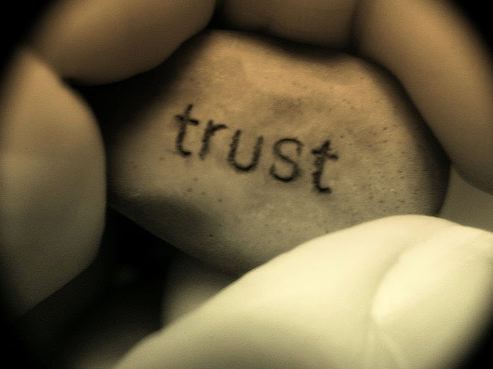
It was trust.
This is why, when Rick Warren the pastor of the mega-church Saddleback Church and author of The Purpose Driven Life, writes in an article published early last year that “change always starts in the mind,” and “to help people change, we must change their beliefs,” I think he’s ridiculously lost in the post-enlightenment mindset that has led the church to this place where people are leaving in droves.
He goes on to write that, “trying to change behavior (without) changing belief is a waste of time.” I couldn’t disagree more. My story wouldn’t make sense if trying to change behavior without changing beliefs is a waste of time. Warren obviously doesn’t understand lex orandi, lex credendi…
Sometimes I think these pastors that go for the “belief then behavior” theory of Christianity are no more than self-help gurus that insert the word “God” where it’s convenient. “You can change your behavior. You can do it. God will help you, if only you believe…”
Take out the God wording in that sentence, and I think it exposes what they’re really saying.
I don’t want to invite people to believe in God. I want to invite people to trust in God.
We can believe all sorts of things about God, about God’s nature, about God’s action in the world. We can believe all sorts of things about God’s authority, about what God expects of us.
But if “belief” is equal to “mental assent,” then everything rests on whether or not I believe what you believe about God.
If not, we end up fighting or not talking.
But if we trust God, we can trust enough to ask questions about God, of God, of one another without being threatened.
And then trust enough to invite people into those questions as well. And trust is, I think, indicated through activities and practices.
I think that as we head into this next phase as people of faith, practices…activities of trust…will become more and more important.
I’m not sure how to invite Jesus into my heart, or even what that phrase means. But I strive to live as if God is already present inside of me. And you, too. And in the stranger, regardless of what they believe.
And I find it important to gather with other people who trust in that way, too. Or who want to trust. Or who don’t trust but think it’d be interesting to see what it looks like. We teach one another.
And as someone who has been there in the deep hole of not making sense of whats up or down because not everything that you’ve been taught to believe lines up with reality, it’s really important, when you find yourself barely breathing, to pray to God…even if you don’t believe.
Doing so you’re embodying something more powerful than belief. You’re trusting.
And trusting can change things.
 Reluctant Xtian